
Lo que busco ahora en un juego de té (después de haber comprado más de 15 juegos a lo largo de los años)
The Tea Set That Started Everything
I still remember the first tea set I ever bought. It was a glossy blue ceramic number with a cracked glaze effect, picked up from a department store because it looked “fancy” to my then-twenty-something self. I brewed a forgettable bag of Lipton, poured it into the matching cups, and felt very sophisticated for about fifteen minutes. That set ended up at the back of a cupboard within two years. The cups chipped, the lid didn’t seal properly, and the whole thing felt more like a prop than a tool.
That was the first of more than fifteen tea sets I’ve owned over the past decade. Some were impulse purchases, some were gifts, a couple were deliberate upgrades, and at least two arrived broken because I didn’t read the fine print about hand-wash-only construction. After all that trial and error, I finally know what I look for. Not what looks good in a product photo, but what actually holds up to daily brewing, occasional guests, and the quiet morning rituals where the tea set becomes a small partner in the day.
This is the buying guide I wish someone had handed me years ago.
The Three Questions I Ask Before Any Tea Set Purchase
When I started buying tea more intentionally — first loose leaf, then gongfu style, eventually exploring matcha — I realized that picking a tea set isn’t really about aesthetics at all. It’s about answering three quiet questions that the glossy product photos never quite address.
The first question is: who is this for, really? Am I brewing for myself during a slow morning, or am I hoping to host friends without scrambling for extra cups? The second is: what am I brewing in it? A dark roasted oolong needs a different vessel than a delicate green tea or a frothy whisked matcha. The third, and the one I used to skip entirely, is: how much friction am I willing to tolerate? Some sets are gorgeous but a pain to clean. Others feel plain but make the actual brewing effortless.
Buying a tea set is less about falling in love with a photo and more about imagining the next five hundred mornings with the thing in your hands.
If those three questions sound like the kind of thing I’d say now, after more than a decade of practice, it’s because they really are. Earlier in my tea journey I bought for the “wow” factor. Now I buy for the “Tuesday morning” factor. That’s a completely different purchase.
Glass Teapots When I Want to Watch the Leaves
I’ll start with glass because it’s the material that changed my entire relationship with loose leaf tea. Before I owned one, I thought steeping was something you did in secret. I’d pour water over leaves, set a timer, and trust that what came out the other end would be okay. Then I bought a glass teapot, and suddenly I could see everything — the leaves unfurling, the color shifting from pale straw to deep amber, the tiny bubbles rising through the water.
It sounds almost too simple, but watching tea brew visually made me a much better brewer. I started noticing when leaves were crowded, when the water looked flat, when the color peaked and started to fade. Glass doesn’t hide any of that. It’s the most honest material in tea, which is partly why I keep coming back to it.
If you’re drawn to that kind of transparency — literally and figuratively — our Teteras de Vidrio is where I usually start browsing when I’m tempted by something new. The category has everything from simple single-cup brewers to elaborate sets with built-in strainers.
The set I’ve leaned on most lately is the Juego de Vidrio Triangular. The triangular shape isn’t just a design choice — it gives the leaves room to expand without getting crammed against the walls, and the spout pours cleanly without that annoying drip you get on cheaper glass pots. The handle stays cool enough to grab without a towel, and the whole thing comes apart for washing, which is the small detail I appreciate most.
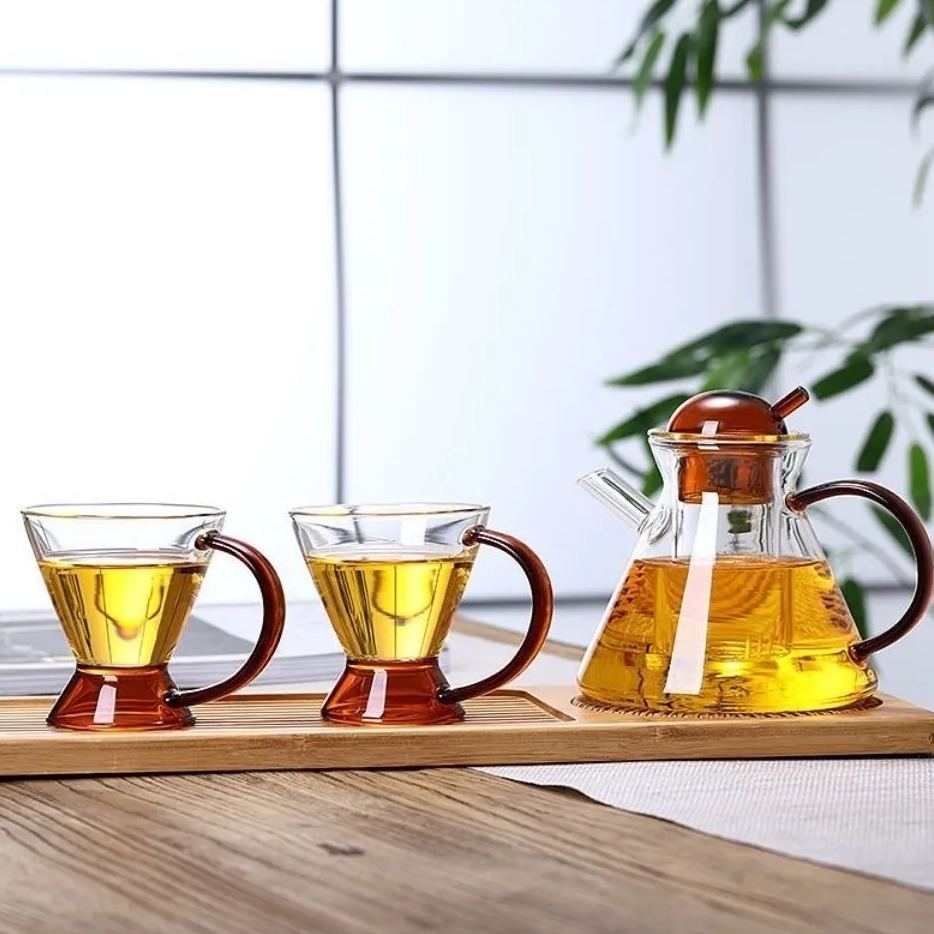
The honest drawback? Glass is fragile. I’ve chipped the rim of one glass teapot by accidentally knocking it against the kitchen faucet, and once I dropped a lid on a hard floor and watched it crack into three neat pieces. Glass also doesn’t retain heat as well as ceramic or clay, so if you’re brewing a tea that really benefits from warmth — a roasted oolong, for example — you’ll want to pre-warm the pot with hot water before steeping.
But for daily green tea, white tea, light oolongs, and any tea where you actually want to see what’s happening, glass remains my top recommendation.
Ceramic Sets When I Want a Quieter Brew
There are mornings when I don’t want to watch anything. I want the leaves to disappear, the brewing to feel mysterious, and the cup in my hands to feel substantial and warm. That’s when I reach for ceramic.
Ceramic tea sets are the workhorses of my collection. They retain heat beautifully, they’re forgiving if I forget to pre-warm them, and they develop character over the years — the glaze slightly changes tone, the inside stains in ways that look like memory rather than grime. A good ceramic set feels like an old friend who doesn’t need any introduction.
The set I reach for most often when I’m brewing gongfu style is the Juego de Té de Cerámica Gongfu. What I like about it is that it takes the ceremony out of the awkward parts. The built-in strainer means I don’t have to fiddle with a separate infuser, and the side handle stays cool even when the water is near boiling. The smaller cups are perfect for the short, repeated pours that gongfu brewing depends on. It’s a set that respects the method without making me feel like I’m performing it.
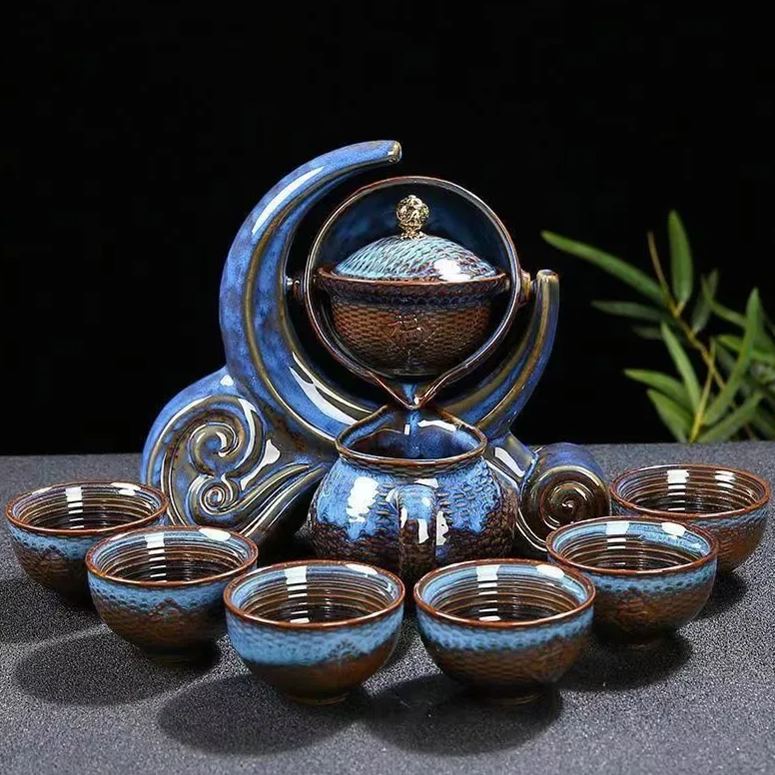
That said, ceramic isn’t perfect either. Heavier pieces take up more counter space, the glazes can sometimes hold onto flavors if I’m switching between very different teas (a strongly roasted oolong one day, a delicate green the next), and not all ceramic is created equal. Some cheaper sets have glazes that feel plasticky or come with cups that don’t sit flat on a saucer. The good ones, though, last for years.
If you’re brewing for one or two people most mornings, ceramic is probably the most versatile material you can buy. It works for nearly every tea type, holds heat, and feels right in the hand.
The Magnetic and Modern Sets I Didn’t Expect to Love
I was skeptical of magnetic tea sets for a long time. They looked clever but unnecessary — like someone had invented a problem just to sell a solution. Then I hosted a small gathering and watched a guest who had never brewed loose leaf tea confidently make a perfect cup using a magnetic set in under a minute. That moment changed my mind.
Magnetic sets use a magnetic filter that sits inside the pot and holds the leaves in place. You pour, the magnet pulls the leaves out of the stream, and the tea lands in the cup clean and grit-free. There’s no fiddling with strainers, no fishing leaves out of cups, and the whole process looks calm rather than chaotic.
If you’re someone who wants to share tea with friends who aren’t yet converts, the Juego Magnético Moderno is the one I’d recommend. The minimalist look makes it feel like something you’d see in a design magazine, but it’s genuinely easy to use. I’ve handed it to first-time brewers and watched them succeed without instructions.
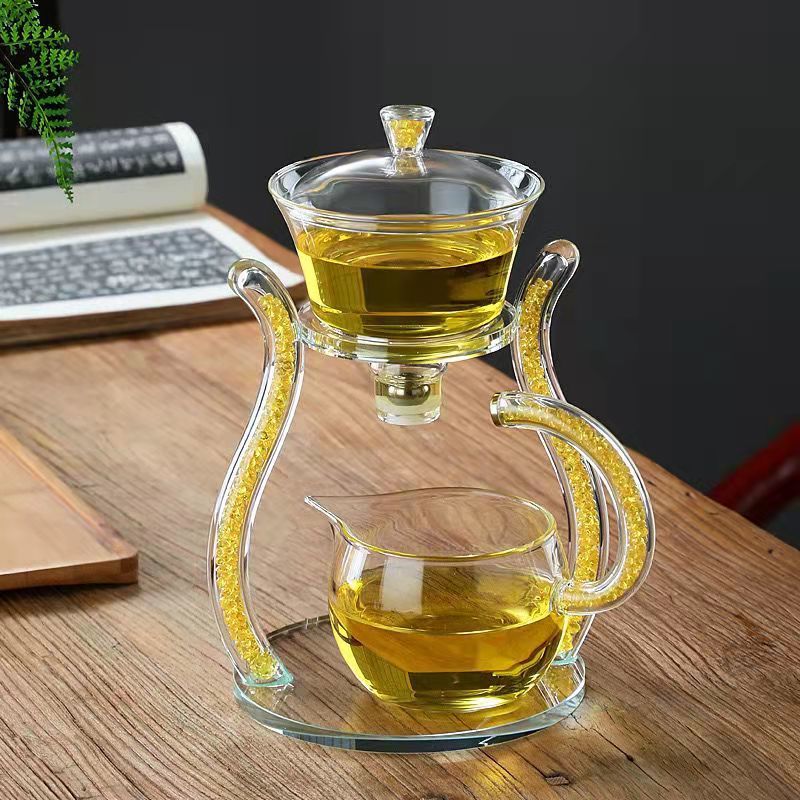
There are practical drawbacks, of course. The magnet needs to be cleaned thoroughly between uses or it picks up tea stains. Some cheaper magnetic sets have filters that don’t quite catch all the leaves, leaving a few escapees in the cup. And if you lose the magnet — which a friend of mine did within the first week — the whole system falls apart.
But the design has earned a permanent place in my rotation. If you’re curious about other options in this style, our Colección de Juegos de Té Magnéticos has a range of minimalist designs worth browsing.
The Novelty Piece I Bought on a Whim (And Don’t Regret)
Not every tea set in my cupboard is a serious tool. Some are pure joy. The Tetera Original Naranja sits on a wooden tree-trunk base and pours with a little mechanical motion that delights anyone who sees it for the first time. I bought it on a whim during a late-night browse, fully expecting to use it once and forget about it.
Instead, it became my favorite conversation piece for hosting. When friends come over, I brew a light oolong in it, and the gentle pour-through-the-tree-trunk motion turns tea time into a small performance. Nobody talks about the tea being exceptional. Everyone talks about the teapot.
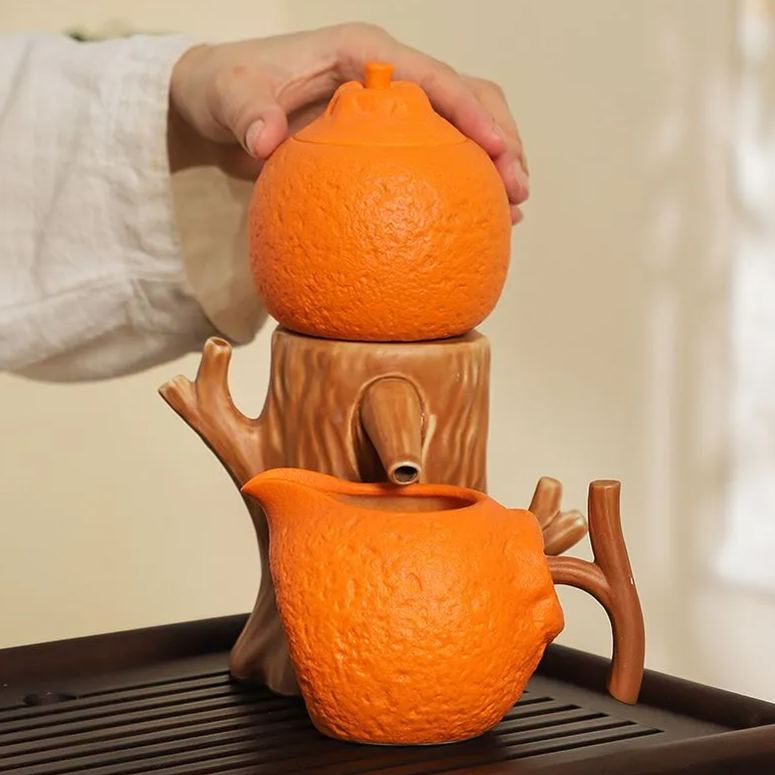
The honest drawback is that novelty pieces like this aren’t built for daily use. The moving parts need careful cleaning, the smaller brewing capacity means refills for any gathering over three people, and the porcelain body is more decorative than functional. It’s the kind of set you reach for when the moment matters, not when you’re brewing your fifth cup of the morning.
Which is exactly why it deserves a place in the collection. Not everything needs to be optimized.
Matcha and the Tools I Finally Stopped Fighting
I’ll admit I resisted matcha for years. The whisking looked fussy, the bowls felt oversized, and the whole setup seemed designed to make a simple cup of green tea more complicated. Then I tried it properly — good ceremonial grade matcha, sifted into a warm bowl, whisked with a proper bamboo chasen — and I understood what I’d been missing.
Matcha is its own ritual, and trying to make it in a regular teapot just doesn’t work. You need the bowl, you need the whisk, and ideally you need a sifter and a small scoop. Once I accepted that, I stopped trying to be a minimalist about it.
The wrong tool turns a beautiful ritual into a chore. The right tool disappears into the hands and lets the tea be the star.
If you’re curious about getting into matcha, or you’ve been using the wrong tools and wondering why it never clicks, our Matcha Tea Set Collection has the kits that actually work. The right set makes whisking feel less like a workout and more like meditation, which is the whole point.
Size: The Quiet Detail I Underestimated
For years I assumed bigger was better. A larger teapot meant more tea, more generosity, more value. Then I started brewing mostly for myself, and a 600ml teapot became a small burden. I’d pour one cup, the rest of the tea would cool down in the pot, and by the time I went back for a second pour it was lukewarm at best.
The fix was simple: I now own teapots in three sizes, roughly 200ml, 400ml, and 800ml, and I rotate based on the situation. The small one is for solo mornings and single-session gongfu brewing. The medium is for me and one other person. The large only comes out when I’m actually hosting.
If you live alone or mostly brew for yourself, a smaller teapot will dramatically improve your tea. The leaves stay hot longer, the pours feel right, and you waste less tea. If you’re hosting more often than not, then yes, size up — but consider getting two smaller sets rather than one oversized one. Smaller pots reheat faster and look more graceful on the table.
我犯过的错误,希望你不必重蹈覆辙
After fifteen-plus sets, the lessons aren’t all positive. Here are the mistakes I’d happily not repeat, in case any of them sound familiar.
Buying for the photo, not the feel. Half the sets I regret buying looked beautiful online and felt awkward in my hands. The handle was too small, the spout dribbled, the lid didn’t fit properly. You can’t feel a teapot through a screen. If possible, see one in person first.
Ignoring the cup size. Teapots get all the attention, but cups matter just as much. Cups that are too wide cool too fast. Cups that are too small make you refill constantly. The 60-90ml range is the sweet spot for most Chinese-style teas, while 120-180ml works better for Western-style brewing.
Skipping the lid test. A loose lid means heat escapes and tea cools faster. Every set I own with a properly seated, slightly snug lid brews noticeably better than the ones with rattly tops.
Buying “complete” sets I didn’t need. Some “complete” sets come with pieces I never use — an extra sugar bowl, a strange slotted spoon, a stand I don’t have counter space for. A simpler, smaller set often serves you better than a sprawling one.
Forgetting about storage and cleaning. If a set has too many small parts, it ends up in a cupboard rather than on the counter. The sets I use daily are the ones that come apart in two or three pieces and store flat.
What I Prioritize Now, in Order
When I look back at all the sets I’ve owned, the ones that earned a permanent spot in my kitchen shared a few specific qualities. Here’s the rough priority list I follow now, after years of figuring this out the slow way.
First is use case. What am I actually brewing, and for whom? This decides everything else. Second is material. Glass for transparency and visual brewing, ceramic for heat retention and versatility, novelty pieces for occasions, magnetic for ease and hosting. Third is size. Match the pot to the moment. Fourth is how it feels in the hand. If the handle is awkward or the balance is off, the set will quietly annoy me every morning. Fifth is how it cleans. If it’s a chore, I’ll stop using it.
Aesthetics matter too, but they matter last. Once the practical questions are answered, the design choices become personal preference. Some people love modern minimalism, others love traditional patterns, and both are valid as long as the set actually works for daily brewing.
The One I Reach For Most
If someone put me on the spot and said pick one, I’d hesitate — and then I’d probably reach for the Juego de Té de Cerámica Gongfu. Not because it’s the prettiest, and not because it’s the cheapest. It suits the way I actually drink tea most days — alone or with one other person, brewing oolong or pu’erh in short repeated pours, and wanting the process to feel calm rather than theatrical.
But that answer would have been different five years ago, and it’ll probably be different again in another five. The set that becomes your daily companion depends on the kind of tea drinker you are right now, not the kind you imagine becoming.
A Quiet Word Before You Buy
If you’ve read this far, you’re probably closer to choosing a set than you realize. The hardest part isn’t the decision — it’s resisting the urge to keep browsing until something “perfect” shows up. No tea set is perfect. Every single one in my cupboard has a small flaw somewhere, and I’ve made peace with each one.
The good ones become quiet tools that improve the small moments of the day. The bad ones get shoved to the back of the cupboard and eventually given away. If you trust your own answers to those three questions — who is this for, what am I brewing, and how much friction can I tolerate — you’ll probably land on something you’ll actually use.
If you’d like to keep exploring, our Teteras de Vidrio is a good place to see how transparent brewing compares across designs, and our Colección de Juegos de Té Magnéticos is worth a look if ease and clean pours matter most to you. There’s no rush. The right set has a way of becoming obvious once you know what you’re actually looking for.
 ES
ES  EN
EN  DE
DE  PT
PT  FR
FR  JA
JA