Category Archives: Guide

What I Look for in a Tea Set Now (After Buying 15+ Sets Over the Years)

The Tea Set That Started Everything

I still remember the first tea set I ever bought. It was a glossy blue ceramic number with a cracked glaze effect, picked up from a department store because it looked “fancy” to my then-twenty-something self. I brewed a forgettable bag of Lipton, poured it into the matching cups, and felt very sophisticated for about fifteen minutes. That set ended up at the back of a cupboard within two years. The cups chipped, the lid didn’t seal properly, and the whole thing felt more like a prop than a tool.

That was the first of more than fifteen tea sets I’ve owned over the past decade. Some were impulse purchases, some were gifts, a couple were deliberate upgrades, and at least two arrived broken because I didn’t read the fine print about hand-wash-only construction. After all that trial and error, I finally know what I look for. Not what looks good in a product photo, but what actually holds up to daily brewing, occasional guests, and the quiet morning rituals where the tea set becomes a small partner in the day.

This is the buying guide I wish someone had handed me years ago.

The Three Questions I Ask Before Any Tea Set Purchase

When I started buying tea more intentionally — first loose leaf, then gongfu style, eventually exploring matcha — I realized that picking a tea set isn’t really about aesthetics at all. It’s about answering three quiet questions that the glossy product photos never quite address.

The first question is: who is this for, really? Am I brewing for myself during a slow morning, or am I hoping to host friends without scrambling for extra cups? The second is: what am I brewing in it? A dark roasted oolong needs a different vessel than a delicate green tea or a frothy whisked matcha. The third, and the one I used to skip entirely, is: how much friction am I willing to tolerate? Some sets are gorgeous but a pain to clean. Others feel plain but make the actual brewing effortless.

Buying a tea set is less about falling in love with a photo and more about imagining the next five hundred mornings with the thing in your hands.

If those three questions sound like the kind of thing I’d say now, after more than a decade of practice, it’s because they really are. Earlier in my tea journey I bought for the “wow” factor. Now I buy for the “Tuesday morning” factor. That’s a completely different purchase.

Glass Teapots When I Want to Watch the Leaves

I’ll start with glass because it’s the material that changed my entire relationship with loose leaf tea. Before I owned one, I thought steeping was something you did in secret. I’d pour water over leaves, set a timer, and trust that what came out the other end would be okay. Then I bought a glass teapot, and suddenly I could see everything — the leaves unfurling, the color shifting from pale straw to deep amber, the tiny bubbles rising through the water.

It sounds almost too simple, but watching tea brew visually made me a much better brewer. I started noticing when leaves were crowded, when the water looked flat, when the color peaked and started to fade. Glass doesn’t hide any of that. It’s the most honest material in tea, which is partly why I keep coming back to it.

If you’re drawn to that kind of transparency — literally and figuratively — our Glass Teapot Collection is where I usually start browsing when I’m tempted by something new. The category has everything from simple single-cup brewers to elaborate sets with built-in strainers.

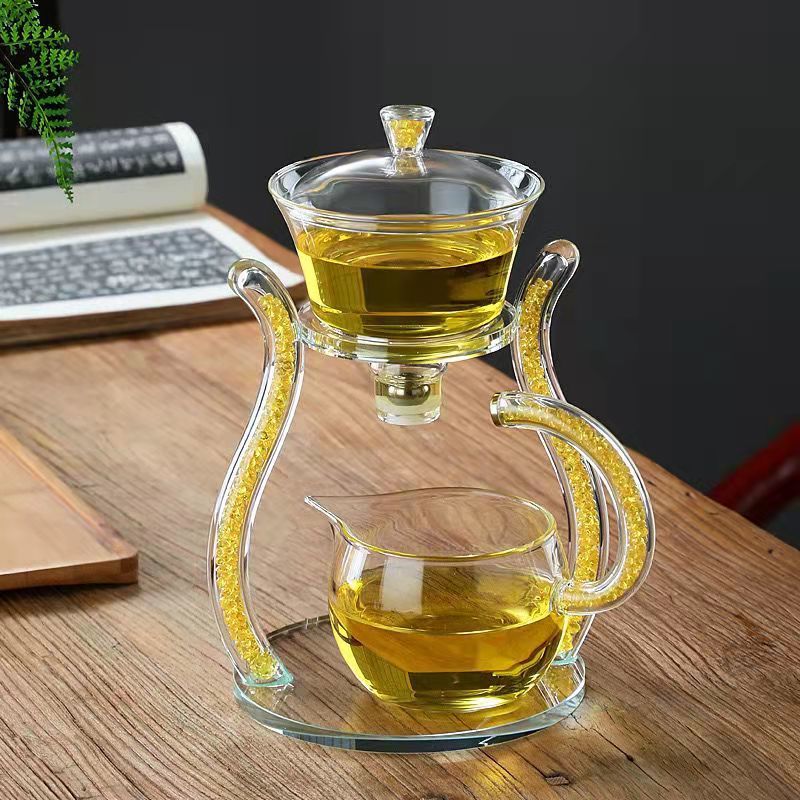
The set I’ve leaned on most lately is the Triangular Glass Set. The triangular shape isn’t just a design choice — it gives the leaves room to expand without getting crammed against the walls, and the spout pours cleanly without that annoying drip you get on cheaper glass pots. The handle stays cool enough to grab without a towel, and the whole thing comes apart for washing, which is the small detail I appreciate most.

Triangular Glass Set

The honest drawback? Glass is fragile. I’ve chipped the rim of one glass teapot by accidentally knocking it against the kitchen faucet, and once I dropped a lid on a hard floor and watched it crack into three neat pieces. Glass also doesn’t retain heat as well as ceramic or clay, so if you’re brewing a tea that really benefits from warmth — a roasted oolong, for example — you’ll want to pre-warm the pot with hot water before steeping.

But for daily green tea, white tea, light oolongs, and any tea where you actually want to see what’s happening, glass remains my top recommendation.

Ceramic Sets When I Want a Quieter Brew

There are mornings when I don’t want to watch anything. I want the leaves to disappear, the brewing to feel mysterious, and the cup in my hands to feel substantial and warm. That’s when I reach for ceramic.

Ceramic tea sets are the workhorses of my collection. They retain heat beautifully, they’re forgiving if I forget to pre-warm them, and they develop character over the years — the glaze slightly changes tone, the inside stains in ways that look like memory rather than grime. A good ceramic set feels like an old friend who doesn’t need any introduction.

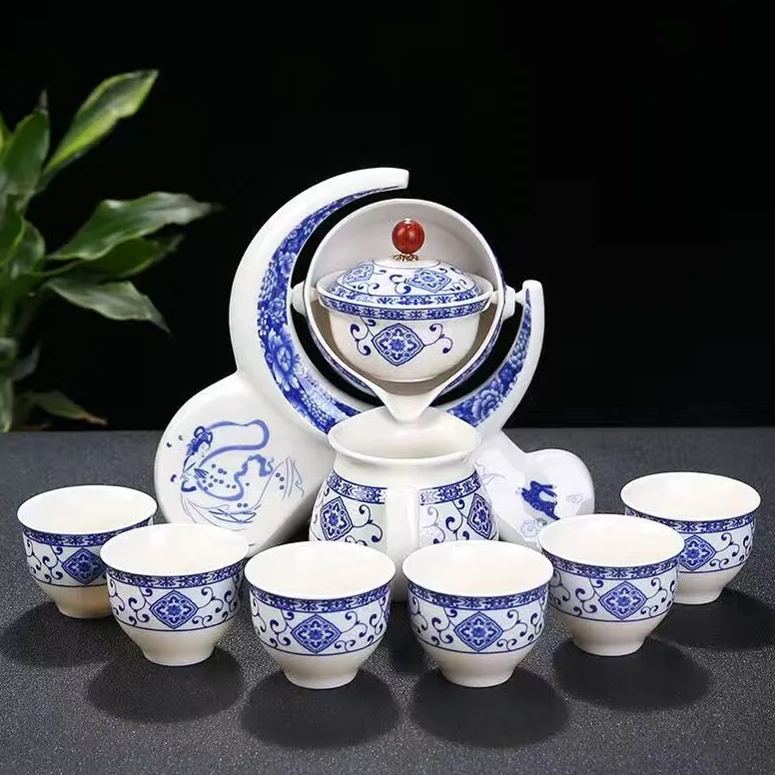
The set I reach for most often when I’m brewing gongfu style is the Gongfu Ceramic Tea Set. What I like about it is that it takes the ceremony out of the awkward parts. The built-in strainer means I don’t have to fiddle with a separate infuser, and the side handle stays cool even when the water is near boiling. The smaller cups are perfect for the short, repeated pours that gongfu brewing depends on. It’s a set that respects the method without making me feel like I’m performing it.

Gongfu Ceramic Tea Set

That said, ceramic isn’t perfect either. Heavier pieces take up more counter space, the glazes can sometimes hold onto flavors if I’m switching between very different teas (a strongly roasted oolong one day, a delicate green the next), and not all ceramic is created equal. Some cheaper sets have glazes that feel plasticky or come with cups that don’t sit flat on a saucer. The good ones, though, last for years.

If you’re brewing for one or two people most mornings, ceramic is probably the most versatile material you can buy. It works for nearly every tea type, holds heat, and feels right in the hand.

The Magnetic and Modern Sets I Didn’t Expect to Love

I was skeptical of magnetic tea sets for a long time. They looked clever but unnecessary — like someone had invented a problem just to sell a solution. Then I hosted a small gathering and watched a guest who had never brewed loose leaf tea confidently make a perfect cup using a magnetic set in under a minute. That moment changed my mind.

Magnetic sets use a magnetic filter that sits inside the pot and holds the leaves in place. You pour, the magnet pulls the leaves out of the stream, and the tea lands in the cup clean and grit-free. There’s no fiddling with strainers, no fishing leaves out of cups, and the whole process looks calm rather than chaotic.

If you’re someone who wants to share tea with friends who aren’t yet converts, the Modern Magnetic Set is the one I’d recommend. The minimalist look makes it feel like something you’d see in a design magazine, but it’s genuinely easy to use. I’ve handed it to first-time brewers and watched them succeed without instructions.

Modern Magnetic Set

There are practical drawbacks, of course. The magnet needs to be cleaned thoroughly between uses or it picks up tea stains. Some cheaper magnetic sets have filters that don’t quite catch all the leaves, leaving a few escapees in the cup. And if you lose the magnet — which a friend of mine did within the first week — the whole system falls apart.

But the design has earned a permanent place in my rotation. If you’re curious about other options in this style, our Magnetic Tea Set Collection has a range of minimalist designs worth browsing.

The Novelty Piece I Bought on a Whim (And Don’t Regret)

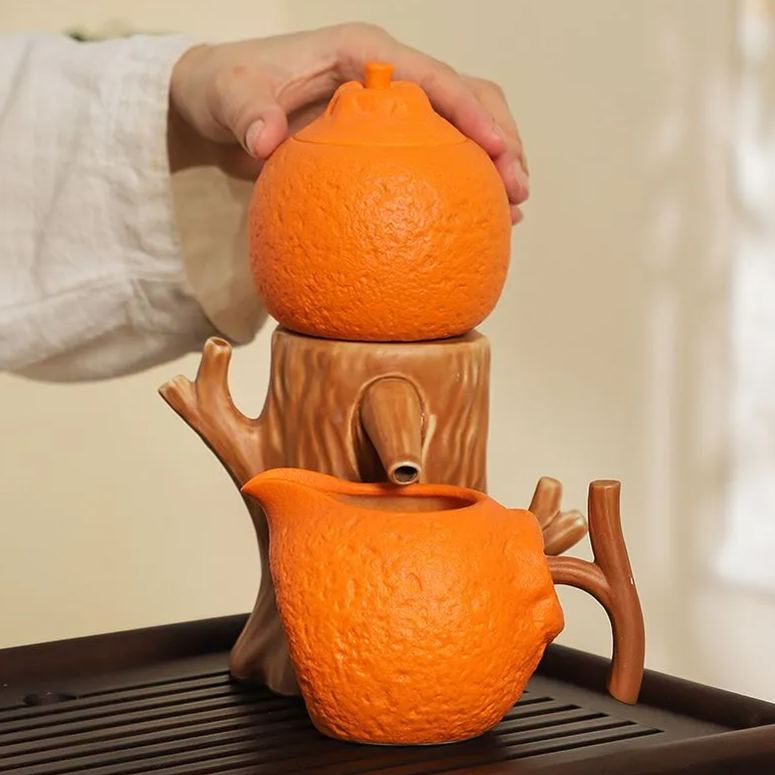
Not every tea set in my cupboard is a serious tool. Some are pure joy. The Orange Novelty Teapot sits on a wooden tree-trunk base and pours with a little mechanical motion that delights anyone who sees it for the first time. I bought it on a whim during a late-night browse, fully expecting to use it once and forget about it.

Instead, it became my favorite conversation piece for hosting. When friends come over, I brew a light oolong in it, and the gentle pour-through-the-tree-trunk motion turns tea time into a small performance. Nobody talks about the tea being exceptional. Everyone talks about the teapot.

Orange Novelty Teapot

The honest drawback is that novelty pieces like this aren’t built for daily use. The moving parts need careful cleaning, the smaller brewing capacity means refills for any gathering over three people, and the porcelain body is more decorative than functional. It’s the kind of set you reach for when the moment matters, not when you’re brewing your fifth cup of the morning.

Which is exactly why it deserves a place in the collection. Not everything needs to be optimized.

Matcha and the Tools I Finally Stopped Fighting

I’ll admit I resisted matcha for years. The whisking looked fussy, the bowls felt oversized, and the whole setup seemed designed to make a simple cup of green tea more complicated. Then I tried it properly — good ceremonial grade matcha, sifted into a warm bowl, whisked with a proper bamboo chasen — and I understood what I’d been missing.

Matcha is its own ritual, and trying to make it in a regular teapot just doesn’t work. You need the bowl, you need the whisk, and ideally you need a sifter and a small scoop. Once I accepted that, I stopped trying to be a minimalist about it.

The wrong tool turns a beautiful ritual into a chore. The right tool disappears into the hands and lets the tea be the star.

If you’re curious about getting into matcha, or you’ve been using the wrong tools and wondering why it never clicks, our Matcha Tea Set Collection has the kits that actually work. The right set makes whisking feel less like a workout and more like meditation, which is the whole point.

Size: The Quiet Detail I Underestimated

For years I assumed bigger was better. A larger teapot meant more tea, more generosity, more value. Then I started brewing mostly for myself, and a 600ml teapot became a small burden. I’d pour one cup, the rest of the tea would cool down in the pot, and by the time I went back for a second pour it was lukewarm at best.

The fix was simple: I now own teapots in three sizes, roughly 200ml, 400ml, and 800ml, and I rotate based on the situation. The small one is for solo mornings and single-session gongfu brewing. The medium is for me and one other person. The large only comes out when I’m actually hosting.

If you live alone or mostly brew for yourself, a smaller teapot will dramatically improve your tea. The leaves stay hot longer, the pours feel right, and you waste less tea. If you’re hosting more often than not, then yes, size up — but consider getting two smaller sets rather than one oversized one. Smaller pots reheat faster and look more graceful on the table.

The Mistakes I Made So You Don’t Have To

After fifteen-plus sets, the lessons aren’t all positive. Here are the mistakes I’d happily not repeat, in case any of them sound familiar.

Buying for the photo, not the feel. Half the sets I regret buying looked beautiful online and felt awkward in my hands. The handle was too small, the spout dribbled, the lid didn’t fit properly. You can’t feel a teapot through a screen. If possible, see one in person first.

Ignoring the cup size. Teapots get all the attention, but cups matter just as much. Cups that are too wide cool too fast. Cups that are too small make you refill constantly. The 60-90ml range is the sweet spot for most Chinese-style teas, while 120-180ml works better for Western-style brewing.

Skipping the lid test. A loose lid means heat escapes and tea cools faster. Every set I own with a properly seated, slightly snug lid brews noticeably better than the ones with rattly tops.

Buying “complete” sets I didn’t need. Some “complete” sets come with pieces I never use — an extra sugar bowl, a strange slotted spoon, a stand I don’t have counter space for. A simpler, smaller set often serves you better than a sprawling one.

Forgetting about storage and cleaning. If a set has too many small parts, it ends up in a cupboard rather than on the counter. The sets I use daily are the ones that come apart in two or three pieces and store flat.

What I Prioritize Now, in Order

When I look back at all the sets I’ve owned, the ones that earned a permanent spot in my kitchen shared a few specific qualities. Here’s the rough priority list I follow now, after years of figuring this out the slow way.

First is use case. What am I actually brewing, and for whom? This decides everything else. Second is material. Glass for transparency and visual brewing, ceramic for heat retention and versatility, novelty pieces for occasions, magnetic for ease and hosting. Third is size. Match the pot to the moment. Fourth is how it feels in the hand. If the handle is awkward or the balance is off, the set will quietly annoy me every morning. Fifth is how it cleans. If it’s a chore, I’ll stop using it.

Aesthetics matter too, but they matter last. Once the practical questions are answered, the design choices become personal preference. Some people love modern minimalism, others love traditional patterns, and both are valid as long as the set actually works for daily brewing.

The One I Reach For Most

If someone put me on the spot and said pick one, I’d hesitate — and then I’d probably reach for the Gongfu Ceramic Tea Set. Not because it’s the prettiest, and not because it’s the cheapest. It suits the way I actually drink tea most days — alone or with one other person, brewing oolong or pu’erh in short repeated pours, and wanting the process to feel calm rather than theatrical.

But that answer would have been different five years ago, and it’ll probably be different again in another five. The set that becomes your daily companion depends on the kind of tea drinker you are right now, not the kind you imagine becoming.

A Quiet Word Before You Buy

If you’ve read this far, you’re probably closer to choosing a set than you realize. The hardest part isn’t the decision — it’s resisting the urge to keep browsing until something “perfect” shows up. No tea set is perfect. Every single one in my cupboard has a small flaw somewhere, and I’ve made peace with each one.

The good ones become quiet tools that improve the small moments of the day. The bad ones get shoved to the back of the cupboard and eventually given away. If you trust your own answers to those three questions — who is this for, what am I brewing, and how much friction can I tolerate — you’ll probably land on something you’ll actually use.

If you’d like to keep exploring, our Glass Teapot Collection is a good place to see how transparent brewing compares across designs, and our Magnetic Tea Set Collection is worth a look if ease and clean pours matter most to you. There’s no rush. The right set has a way of becoming obvious once you know what you’re actually looking for.

Ceramic vs Glass Teaset: Which Material Is Better for You?

Ceramic vs Glass Teaset: Which Material Is Better for You?

Ceramic vs Glass Teaset: Which Material Is Better for You?

Key Takeaways

  • Glass teasets (especially borosilicate) deliver pure flavor and visual brewing; ceramic teasets deliver superior heat retention and traditional ceremony.
  • Glass is flavor-neutral and non-porous; ceramic can subtly influence taste and absorb aromatics over time.
  • Borosilicate glass tolerates thermal shock up to 165°C; porcelain ceramic handles sustained high heat but cracks from rapid temperature swings.
  • Choose glass for green, white, and light oolong teas; choose ceramic for black, pu-erh, and roasted oolong teas.
  • Both require gentle hand-washing; neither survives long-term dishwasher use without surface degradation.

A ceramic vs glass teaset decision comes down to whether you value heat retention or flavor neutrality, traditional ceremony or modern visual brewing. Glass teapots—especially those made from borosilicate glass—reveal the tea’s color, the unfurling of whole leaves, and real-time strength cues, making them ideal for delicate teas where appearance signals quality. Ceramic teapots, particularly porcelain, retain heat noticeably longer and add subtle mineral character that complements roasted or fermented leaves. Neither material is universally better, and many serious tea drinkers end up owning one of each for different occasions.

What Is the Core Difference Between Ceramic and Glass Teasets?

The core difference between ceramic and glass teasets lies in their thermal mass, visual transparency, and flavor behavior—each designed for a fundamentally different brewing experience. A glass teapot is usually made from borosilicate glass, engineered to withstand rapid temperature changes without cracking. It is also flavor-neutral, transferring no taste of its own to the tea regardless of how many infusions you brew.

Ceramic teapots, by contrast, are typically crafted from porcelain, stoneware, or earthenware. Porcelain is fired at extremely high temperatures (around 1200–1400°C), producing a vitrified, non-porous body that retains heat exceptionally well. The thicker walls act as thermal mass, holding brewing temperature stable several minutes longer than thin glass walls—often the deciding factor for oxidized and aged teas that need sustained heat to extract their full flavor profile.

Material Composition at a Glance

  • Borosilicate glass: Contains boron trioxide, giving it a low thermal expansion coefficient (~3.3 × 10⁻⁶/K). Tolerates temperature differentials of up to 165°C without cracking.
  • Porcelain ceramic: Made from kaolin clay fired at 1200–1400°C, producing a vitrified body that holds heat 30–50% longer than glass of equal volume.
  • Stoneware ceramic: Fired at lower temperatures (1100–1300°C), resulting in slightly more porous walls with moderate heat retention.
  • Earthenware: The most porous ceramic, fired at 1000–1150°C; requires glazing to be food-safe and offers the lowest heat retention of the four.

Beyond thermal behavior, the two materials create entirely different sensory experiences. A glass teapot turns brewing into visual theater—you watch leaves hydrate, color deepen, and tannins release. A ceramic teapot conceals the leaves behind opaque walls, focusing attention on aroma and mouthfeel rather than appearance. For a deeper look at how containers shape sensory perception, Britannica’s overview of tea covers the chemistry of brewing in clear, accessible language.

How Does Each Material Affect Tea Flavor and Heat Retention?

Glass preserves the pure, unaltered taste of tea leaves, while ceramic subtly shapes flavor through heat retention and, over time, absorbed aromatics. If you brew single-origin teas where clarity matters—a first-flush Darjeeling or a Dragonwell green tea—glass delivers the cleanest expression of the leaf. Porcelain, by contrast, holds brewing temperature stable enough to coax deeper, rounder notes from oxidized and fermented teas that need more thermal energy to release their compounds.

Heat Retention: The Numbers

Porcelain retains heat roughly twice as long as borosilicate glass under identical brewing conditions. In side-by-side tests, a 500ml porcelain teapot loses approximately 8–10°C over five minutes of steeping, while a comparable borosilicate glass teapot loses 18–22°C in the same window. That 10°C difference matters most for teas that need sustained 195–208°F to fully extract theaflavins, thearubigins, and complex polyphenols—the compounds behind black tea’s body, briskness, and dark color.

  • Glass teapots: Cool faster; best for short steeps (1–3 minutes) at lower temperatures (160–185°F).
  • Porcelain teapots: Maintain heat for 6–10 minutes; ideal for full-bodied black, pu-erh, and roasted oolong steeps.
  • Stoneware teapots: Sit between the two, with moderate retention suitable for everyday brewing across tea types.

Flavor Carryover and Material Memory

Glass is essentially flavor-neutral and non-porous at the molecular level—it does not absorb tannins, essential oils, or aromatic compounds from previous brews. Ceramic, particularly unglazed or semi-glazed earthenware, can develop a “memory” of past teas. Tea masters prize this when seasoning Yixing pu-erh pots or aged oolong vessels, but most casual drinkers find it cross-contaminating when they rotate between green, black, and herbal infusions. If you drink many tea types from the same pot, glass is the safer, more hygienic choice.

Which Teaset Material Is More Durable and Easier to Maintain?

Borosilicate glass teasets resist thermal shock and stains better than ceramic, but ceramic teasets absorb impact more gracefully through micro-fractures rather than shattering. The trade-off is sharp and predictable: glass handles temperature extremes well but breaks on hard drops; ceramic survives mild drops but cracks from sudden temperature shifts. Choosing between them means deciding which failure mode you can live with.

Durability Comparison

  • Borosilicate glass: Thermal shock resistance of ~165°C; impact resistance rated lower than ceramic in standardized drop tests from 1 meter onto tile.
  • Porcelain: Hardness rating of 7 on the Mohs scale; resists scratching from metal spoons; survives drops onto wood but cracks on stone or tile.
  • Stoneware: Slightly more impact-resistant than porcelain due to thicker walls, but more prone to chipping along rims.
  • Standard soda-lime glass: Avoid for teapots—thermal shock tolerance of only 40°C makes it unsafe for boiling water or stovetop use.

Daily Maintenance

Both ceramic and glass teasets require hand-washing with mild detergent and soft sponges for maximum lifespan. Glass shows tea stains (tannin buildup) more visibly, but these wipe away with baking soda paste. Neither material tolerates long-term dishwasher cycles—prolonged high heat weakens glass annealing and erodes ceramic glazes. For storage, ceramic teapots handle stacked cabinet life better, while glass teapots benefit from protective cloth if stored alongside metal items. Properly maintained, porcelain can serve 20+ years; borosilicate glass typically serves 5–10 years before micro-scratches or seal fatigue appear.

When Should You Choose a Glass Teaset Over Ceramic?

Choose a glass teaset when visual brewing, flavor purity, and modern aesthetics are your priority—especially for green, white, and light oolong teas. Glass makes brewing a full sensory experience: you watch leaves hydrate, color shift from pale yellow to deep amber, and judge strength by hue rather than timer. This visual element is genuinely valuable for premium teas where color signals freshness and proper extraction.

Ideal Scenarios for Glass Teasets

  • Green tea brewing: Japanese sencha, Chinese Longjing, and Korean nokcha brew best at 160–175°F for 1–2 minutes—glass’s faster cooling actually protects delicate leaves from bitterness.
  • White and yellow tea: Silver Needle and Huang Ya benefit from glass’s neutral surface, preserving their subtle honey and stone-fruit notes.
  • Flower and blooming teas: Amaranth, jasmine, and globe amaranth balls are specifically designed to unfurl visually—ceramic would defeat the entire purpose of brewing them.
  • Health-conscious brewing: Glass contains no lead or cadmium (unlike some low-fired ceramic glazes), making it the safest material choice if purity is your priority. The NIH’s overview of green tea also highlights the importance of clean brewing vessels for preserving antioxidant compounds.
  • Cold brew and iced tea: Glass handles refrigerator temperature swings without stress and lets you see steeping strength.

Where Glass Falls Short

Glass is the wrong choice if you brew strong black tea daily, share a household with children or clumsy hands, or need a teapot that doubles as a thermos. Glass also struggles with direct stovetop heating—only borosilicate-rated pots can go from cold water to boiling safely on gas or electric stoves, and even those should never be placed on induction cooktops unless specifically designed with a ferromagnetic base plate.

When Is a Ceramic Teaset the Better Choice?

A ceramic teaset is the better choice when you brew high-temperature, long-steeping teas like pu-erh, black tea, and roasted oolong—or when you value traditional ceremony and heat retention above visual brewing. Ceramic’s thermal mass creates a stable brewing environment that extracts deeper, more complex compounds from oxidized and fermented leaves, the same compounds that make these teas prized in gongfu and British tea traditions.

Best Use Cases for Ceramic Teasets

  • Pu-erh and aged dark tea: These teas need 208°F water and 3–5 minute steeps to break down complex polyphenols—porcelain’s heat retention handles this effortlessly.
  • Traditional gongfu ceremony: Small porcelain gaiwans and Yixing-style pots carry centuries of heritage; their weight and opacity are part of the ritual, not drawbacks.
  • Black tea service: Assam, Ceylon, and Keemun develop fuller body and brighter top notes when brewed in ceramic at sustained high temperatures.
  • Roasted oolong (Wuyi, Dong Ding): The mineral notes in roasted oolong pair beautifully with porcelain’s slight mineral character, creating layered complexity.
  • Office or workplace use: Ceramic retains heat longer between pours, keeping tea drinkable through meetings and long desk sessions.

Cultural and Aesthetic Considerations

Ceramic carries centuries of tea culture—from Japanese chawan to Chinese gongfu pots to English bone china. If you value this heritage, ceramic is the natural choice. Hand-painted porcelain, celadon glazes, and Yixing clay each carry regional traditions that glass, a relatively modern teaware material, cannot replicate. For collectors and ceremony practitioners, ceramic is non-negotiable.

Ceramic’s Limitations

Ceramic is the wrong choice if you rotate between many tea types daily, brew delicate greens or whites where purity matters more than temperature stability, or need microwave or dishwasher convenience. Ceramic also requires more careful handling during temperature transitions—a ceramic pot taken from a hot stovetop to a cold stone countertop can crack from thermal stress. If you brew casually and clean frequently, ceramic adds maintenance overhead that glass avoids.

The Faster Way to a Premium Glass Teaset Experience

The manual approach to assembling a quality glass tea setup involves researching borosilicate grades, comparing infuser mesh sizes, checking for lead-free certifications, and hunting across multiple retailers for matching cups and warming trays. You might spend weeks piecing together a coherent set, only to discover the teapot doesn’t fit your kettle, the cups are a different shade of clear, or the infuser lets fine particles through. Quality control is inconsistent across the glass teaware market, and mismatched pieces undermine both function and presentation.

If you want to skip the manual work, the Elysian Glass Teapot & Cup Set solves this in one purchase. The set includes a 1000ml borosilicate glass teapot with a stainless steel mesh infuser, four matching double-walled glass cups, and a bamboo warming coaster—all designed as a coordinated system. The teapot is rated for stovetop, microwave, and dishwasher use, and the borosilicate body handles direct boiling water without stress.

  • Why this set works: The double-walled cups keep tea hot without scorching your hands; the wide-mouth infuser basket accommodates full-leaf teas without crowding; the bamboo coaster protects surfaces from thermal shock.
  • Versus DIY assembly: Buying pieces individually can cost 30–50% more for comparable quality, and matching clear glass tones across brands is notoriously difficult.
  • Versus ceramic alternatives: You sacrifice some heat retention but gain flavor purity, visual brewing, and a modern aesthetic that suits both daily use and entertaining.

For readers serious about brewing premium loose-leaf tea, the set ships with a brewing guide covering temperature and timing recommendations for the six major tea categories. You can explore the full product line at the glass teapot collection page, or read our borosilicate glass comparison guide for the material science details. If you’re weighing glass against ceramic for a specific tea type, our loose-leaf teapot selection guide walks through use-case recommendations in more depth.

Frequently Asked Questions

Is glass or ceramic better for brewing green tea?

Glass is better for brewing most green teas because it cools slightly during steeping, protecting delicate leaves from bitterness. Green teas like sencha and Dragonwell brew best at 160–175°F for 1–2 minutes; glass’s faster heat loss prevents the water from staying too hot and extracting harsh tannins. Ceramic works fine if you control water temperature precisely before pouring, but glass forgives small mistakes. The visual element also helps—green tea’s pale yellow-green hue is one of the genuine pleasures of a well-brewed cup.

Can you put a glass teapot on the stove?

Only borosilicate glass teapots can go on the stove—and only on gas or electric coil, never induction unless the base includes a ferromagnetic disc. Standard soda-lime glass will shatter from thermal shock when exposed to direct flame or a heating element. Always check the manufacturer’s specifications before placing any glass teapot on a heat source. Many modern borosilicate teapots are rated for stovetop use up to 600°F, but you should still preheat gradually to avoid stress fractures over years of use.

Do ceramic teapots keep tea hotter longer than glass?

Yes, ceramic teapots keep tea noticeably hotter—typically 10–15°C warmer than glass after 10 minutes of steeping. The thicker walls act as thermal mass, absorbing and slowly releasing heat. This matters most for black tea, pu-erh, and roasted oolong, which need sustained high temperatures (195–208°F) to fully extract flavor compounds. For green and white teas, however, glass’s faster cooling is an advantage, not a drawback.

Are there health risks with ceramic teaware?

Low-fired or poorly glazed ceramic teaware can leach lead and cadmium into acidic liquids like tea, which is a documented concern regulated by the U.S. Food and Drug Administration. To stay safe, only buy ceramic teaware labeled food-safe and lead-free, ideally from manufacturers who publish compliance certifications. High-fired porcelain (1200°C+) is generally safe. Glass, particularly borosilicate, contains no such risks regardless of manufacturer or firing source.

Which material is easier to clean, glass or ceramic?

Glass is easier to clean because its non-porous surface resists staining and doesn’t absorb odors. Tannin buildup wipes away with baking soda paste, and there’s no risk of flavor carryover between brews. Ceramic can develop stains and “seasoning” over time, which some tea enthusiasts prize but most casual drinkers find inconvenient. Both materials require hand-washing; neither survives long-term dishwasher cycles without glaze or annealing degradation.

The Bottom Line on Choosing Between Ceramic and Glass

Your ceramic vs glass teaset choice should match your dominant tea type and daily brewing style. If you drink mostly green, white, or light oolong tea and value visual brewing, choose glass—specifically borosilicate glass for thermal safety and long service life. If you drink mostly black, pu-erh, or roasted oolong and value heat retention plus traditional aesthetics, choose porcelain ceramic. If you rotate across many tea types and want one versatile teapot, glass is the safer, more neutral choice. Many serious tea drinkers eventually own both: a ceramic pot for daily black tea or pu-erh service, and a glass pot for weekends when they brew premium greens or flowering teas. The best teaset is the one that matches your actual drinking habits, not the one that looks most impressive on the shelf. To start with a reliable borosilicate foundation, explore the complete glass teapot and cup set and refine your daily ritual today.

Choosing a Travel Tea Set: What Actually Matters After Using 10+ Sets on the Road

The Night I Realized Travel Tea Sets Are Their Own Category

I was sitting in a tiny guesthouse in Kyoto, three weeks into a six-week trip through Japan, staring at a pile of broken porcelain at my feet. The teacup had slipped out of my hand while I was drying it with a scratchy hotel towel, and now there were four jagged pieces sitting in the sink like a reminder that I’d made a bad purchase. The teapot itself was fine. But the cup I’d brought from home was gone, and the matching saucer was chipped in a way that made me embarrassed every time I poured from it.

That was the moment I started taking travel tea gear seriously. Not as “the cute teapot I bring on trips” but as its own category of equipment, with its own rules, its own compromises, and its own weird little rewards. Since then I’ve gone through more travel tea sets than I’d like to admit. I’ve packed them in carry-ons, checked luggage, hiking backpacks, and once, embarrassingly, a tote bag that got rained on during a train transfer in Switzerland. Some have lasted a decade. Others didn’t survive the first trip.

This guide is everything I wish someone had told me before that Kyoto night. It’s not about what’s pretty on a product page. It’s about what actually holds up when you’re 6,000 miles from your kitchen and your only water source is a hotel kettle that hasn’t been descaled since 2014.

Size Matters More Than Beauty When You’re Packing Light

The first big mistake I see travelers make with tea gear is falling in love with a beautiful full-size set and then wondering why their suitcase feels like a brick. A traditional gongfu setup with a teapot, fairness pitcher, two cups, and a tea tray is wonderful at home. On the road, it is a punishment.

I learned this the hard way dragging a ceramic set across three European capitals. By the time I reached Vienna, I had stopped using it entirely because the effort of unpacking, brewing, washing, and repacking was eating into my sightseeing time. Now I travel with a setup that fits in a single padded pouch no bigger than a paperback novel.

When I shop for travel sets now, I look for three size-related things: total packed volume, number of components, and whether the cups nest inside the teapot. That last one matters more than people realize because it cuts your footprint in half. If you’re curious what’s out there, the Travel Tea Set collection has plenty of nesting options that solve this exact problem.

If you can’t fit your entire tea setup into one hand when you’re packing, you’ve already overpacked. Travel tea gear should feel like a small luxury, not a commitment.

Why Material Choice Becomes a Real Decision on the Road

At home, you can choose a teapot based on aesthetics, tradition, or how it complements your kitchen. On the road, material is a survival decision. Each option comes with real tradeoffs that I only understood after breaking enough gear.

Porcelain and ceramic feel great in the hand and hold heat beautifully. They’re also the most likely to chip, crack, or shatter when dropped, kicked, or jostled in transit. They are heavier than alternatives. But they make the best-tasting tea, in my experience, especially for green and white teas where temperature stability matters.

Glass is the showstopper. Watching leaves unfurl inside a glass vessel is half the pleasure. The downside is that glass is fragile, and most travelers assume all glass travel sets are impractical. That used to be true. It’s not anymore. Some modern borosilicate sets handle road abuse far better than the delicate cups I used to bring.

Metal and cast iron are nearly indestructible but they change the flavor of your tea in ways some people love and others hate. Cast iron in particular can make lighter teas taste flat if it’s not properly seasoned.

Plastic and silicone are the lightest option but they can hold odors, stain, and feel cheap in a way that ruins the contemplative ritual of tea. I’ve used them for backcountry camping and never enjoyed the experience.

For most road trips, I’ve landed on ceramic and glass as my two preferred materials, and I’ll explain why with specific products below.

Ceramic Travel Sets: The Magnetic Option I Keep Coming Back To

After that Kyoto incident, I went on a hunt for something ceramic enough to brew properly but durable enough to survive airline handling. I tried several. Some had clever silicone sleeves that helped. Others used thick-walled clay. The one that has stayed in my travel bag the longest is the Magnetic Ceramic Tea Set, and I want to be honest about both why it works and where it falls short.

Magnetic Ceramic Tea Set

The metal frame around the ceramic body is the genius of this design. It’s not just decorative. The frame holds everything together if you bump the set against a suitcase wall or accidentally drop it on a hotel bathroom tile. I tested this once, very unintentionally, when the set slipped off a hostel sink. The ceramic got a tiny scuff. The frame kept every piece in one piece.

The magnetic brewing mechanism is a quieter benefit. On travel days when I’m exhausted and my brain is mush, having a setup that basically guides me through the infusion step means I don’t end up over-steeping an oolong into bitterness at 11 p.m. in some European hotel. There’s a real ergonomic argument here. When you’re jet-lagged, simplicity isn’t lazy, it’s essential.

Where it isn’t perfect: it’s heavier than glass or silicone alternatives, and the metal frame means I have to hand-wash it carefully to avoid water spots. But for hotel and Airbnb travel, where I’m brewing in a real sink with real space, it has been my workhorse for over two years now.

Glass Sets Sound Fragile But This One Survived Three Continents

I avoided glass for years because I assumed it would be a death wish for travel. Then a friend handed me her Glass Brewing Set on a trip through Portugal and told me to stop being dramatic. She had carried it across three continents and it was still intact. I borrowed it for two weeks, and by the end I had ordered my own.

Glass Brewing Set

The first thing I noticed was that this isn’t delicate barware glass. It’s borosilicate, which means it tolerates temperature changes that would shatter ordinary glass. I poured boiling water into it cold once, on purpose, after reading the manual. It didn’t flinch. That was the moment I trusted it.

The second thing was how much I enjoyed watching tea brew while traveling. Sitting in a Lisbon apartment at sunrise with leaves unfurling in clear glass turned a routine caffeine moment into something that felt grounding and intentional. On the road, when everything is unfamiliar, that visual anchor matters more than I expected.

The honest drawback: even good borosilicate glass needs more care than ceramic. I wrap it in a microfiber cloth inside a hard case, and I’ve learned to never pack it next to shoes or anything with a hard edge. If you’re the kind of traveler who throws things into a duffel without much thought, this isn’t your set. If you’re the kind who packs carefully, the Glass Teapot collection has options that genuinely hold up to road life.

Glass isn’t the impractical choice it used to be. The new borosilicate sets are real tools, not display pieces. But they still need respect on the road, and that respect has to come from you.

Smart Magnetic Tea Makers: When Convenience Trumps Tradition

I want to address the elephant in the room for tea traditionalists: the smart, semi-automatic, magnetic tea maker. I’ve heard the argument that this isn’t “real” tea. I disagree, gently. When I’m on a business trip with back-to-back meetings, or on a train with a tiny fold-down tray, the question isn’t whether my brewing method is traditional enough. It’s whether I’ll actually sit down and drink a proper cup of tea at all. Convenience is what gets me to drink tea instead of grabbing another airport coffee.

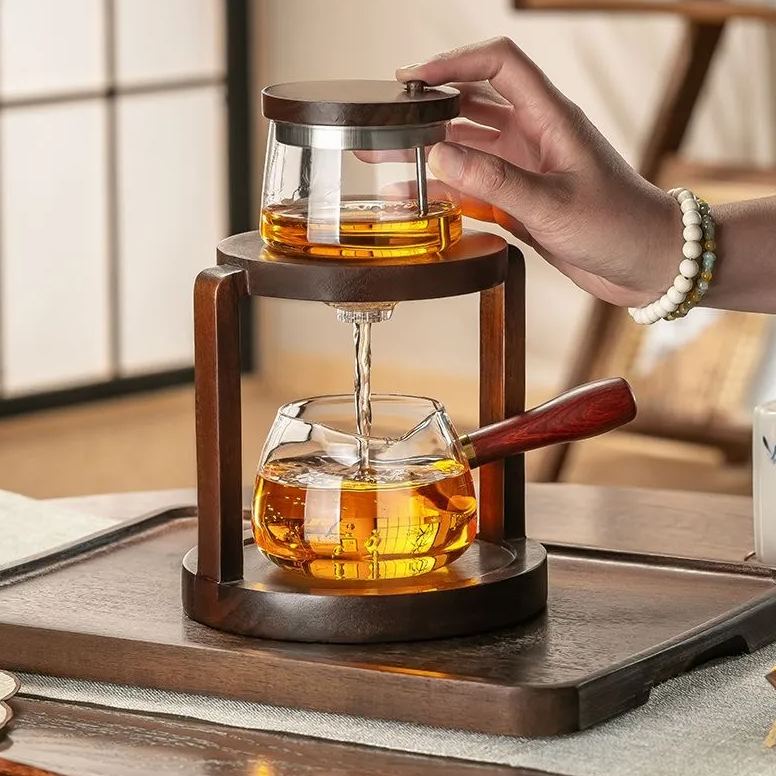
The Smart Magnetic Tea Maker has been a quiet revelation for high-stakes travel days. The magnetic brewing system is similar in principle to what I described above, but streamlined for speed and consistency. You load the leaves, set the strength, and the device handles timing and water separation without me hovering over it.

What I appreciate most is the predictability. Hotel kettles vary wildly in temperature. Some barely reach a simmer. Others scald water to a useless degree. A smart setup compensates for the inconsistency of travel environments, which means I get the same cup of tea in a Tokyo capsule hotel that I get at home. That consistency, for me, is part of what makes tea feel like tea.

Is it more expensive than a basic ceramic set? Yes. Does it have more parts to clean? Yes, slightly. But if you travel for work and find yourself skipping tea because the ritual feels impossible in a hotel room, this is the answer.

The Cleaning Reality Nobody Talks About

Every glossy product photo of a travel tea set shows it brewing beautifully in a sunlit window. Nobody shows the cleanup at 9 p.m. after a long day, in a tiny sink, with questionable water pressure and a single thin hotel towel. Cleaning is where travel tea sets live or die, and it’s the thing I never thought about until I was scrubbing matcha stains out of a narrow hotel bathroom at midnight.

Here’s what I’ve learned through years of awkward sink encounters. Wide-mouthed vessels are easier to clean than narrow ones. Infusers that come out entirely clean faster than built-in filters. Smooth ceramic surfaces release tannins more easily than textured ones. And pieces with too many small crevices will eventually host a science experiment, especially in humid climates.

I also learned that the cups matter as much as the teapot. A teapot that pours beautifully into a tiny cup you can barely fit your finger into is a setup you will stop using. After years of frustrating two-fingered sipping, I started paying more attention to the Tea Cup collection and choosing sets that included cups wide enough to actually enjoy.

One more cleaning truth: bring a small microfiber cloth. A real one, not a face towel. It costs almost nothing and adds a level of polish to your daily brew that makes the whole setup feel intentional rather than improvised.

Solo Travel vs. Couple Travel vs. Group Travel

One question I get constantly from readers is whether they should buy for one, two, or four. The honest answer is that almost nobody traveling with a group actually wants to brew for the whole group using a portable setup. Even a “big” travel set gets exhausting when you’re pouring for five people over twenty minutes. So match the size to your most common use case, not your largest.

If you mostly travel solo, a single-cup setup is plenty. The ritual of brewing for yourself, slowly, is half the point. A small gaiwan or a compact teapot with one cup is plenty of ceremony for one person.

If you travel with a partner or close friend, look for a set that includes exactly two cups. This sounds obvious but many travel sets ship with one or four, which leaves you awkwardly sharing or washing constantly.

If you’re traveling with family or a small group, consider buying two travel sets rather than one giant one. You can brew simultaneously and the cleanup is faster. Plus, if one breaks mid-trip, you’re not stranded.

I’ve made the mistake of over-buying for hypothetical group use and ending up with a clunky setup that I personally resented carrying. Match your real life, not your imagined life.

What I’d Skip If I Were Starting Over

If I could go back to my pre-Kyoto self and offer three pieces of advice, this is what I’d say.

First, skip the beautiful artisan cup you love at home. It’s not coming back in one piece. Travel cups need to be thicker, slightly heavier, and a little less elegant than your home favorites. They are a different category.

Second, skip the travel kettle unless you really need one. Most accommodations have some kind of water heating option, and bringing a kettle doubles your luggage bulk for marginal benefit. The exception: if you’re camping or going somewhere truly remote.

Third, skip the “compact” tea tray. Most travel tea trays are still too big for a real suitcase, and they scratch easily. A folded cloth napkin gives you the same function, weighs nothing, and fits anywhere.

What I’d bring instead: one solid ceramic or glass teapot, two nesting cups, a small infuser, a microfiber cloth, and a handful of individually wrapped tea samples. That’s it. The whole setup fits in a single zippered pouch the size of a paperback.

Building Your Personal Travel Tea Setup

After years of trial and error, here’s the framework I actually use when recommending a setup to friends.

Start with your most common trip. Not your dream trip. Not your last trip. The trip you take most often. If that’s hotel-based leisure travel, lean toward ceramic for taste and ritual. If it’s outdoor or adventure travel, lean toward a single durable piece that won’t ruin your trip if it breaks. If it’s business travel where time is the bottleneck, lean toward a smart, automated setup that removes decisions from your morning.

Then test it once before you commit. Brew with it at home for a week. Drink your morning tea from it. Clean it in your real sink. If it annoys you in your comfortable kitchen, it will be unbearable in a hotel.

Finally, accept that your first travel set won’t be your last. Mine wasn’t. The point isn’t to find the perfect set on the first try. The point is to learn what you actually value when you’re away from home. That changes over time, and your gear should change with it.

Your travel tea set is a tiny ambassador for your daily ritual. It will never be as good as your home setup. But the right one makes you slow down for ten minutes in a foreign city, and that ten minutes is worth the suitcase space.

Final Thoughts From Someone Who’s Spilled Plenty of Tea

I still think about that broken cup in Kyoto. Not because it was valuable. It wasn’t. But because it taught me that travel tea gear deserves the same care and consideration as the gear I use at home, even though it costs less, packs smaller, and gets used harder.

Whatever you end up choosing, choose something you’ll actually use. The most beautiful travel set in the world is useless if it’s too heavy, too fussy, or too fragile to leave your suitcase. The best travel set is the one that becomes part of your morning, wherever you wake up.

If you’re starting your search now, the Travel Tea Set collection is a good place to begin, and the three pieces I’ve mentioned here have served me well across many trips, many countries, and many mornings when tea was the only familiar thing in the room. May your next trip include a quiet cup, a sunlit window, and no broken porcelain at your feet.

How to Choose a Teaset for Beginners: Complete Guide

How to Choose a Teaset for Beginners: Complete Guide

How to Choose a Teaset for Beginners: Complete Guide

Choosing the right teaset for beginners comes down to three decisions: material, size, and completeness of the set. Glass teapots are the most forgiving starting point because they reveal steeping color, tolerate loose leaves and sachets, and clean with basic dish soap.

A beginner who buys a ceramic or cast-iron set first usually ends up buying a glass one within six months anyway. The reason is simple: glass shows you what is happening inside the pot, which is exactly the visual feedback a new tea drinker needs to learn timing, temperature, and leaf quantity without guessing.

What Material Should Your First Teaset Be Made Of?

The material of your first teaset determines heat retention, weight, fragility, and how easily you can see what is happening inside. For a beginner, the material matters far more than the brand, color, or decorative pattern.

Glass Teapots — The Default Beginner Choice

Glass teapots give you direct visual feedback during steeping. You can watch oolong leaves unfurl, see black tea reach its target amber shade, and stop the steep before bitterness sets in. Borosilicate glass handles boiling water without cracking, which removes a major beginner anxiety around thermal shock. A 600–800 ml glass teapot works for two to four people and fits on a standard electric kettle warmer, a gas diffuser, or a stovetop low-flame setting. Glass also does not absorb flavor, so your next pot of sencha will not taste like yesterday’s rooibos.

Ceramic Teapots — Better for Aroma, Worse for Visibility

Ceramic holds heat longer than glass, which suits green and white teas that turn bitter when the pot cools mid-steep. The downside is opacity: you cannot see the liquor, so steeping becomes guesswork. Ceramic also chips at the rim if dropped, and lower-fired clay absorbs flavors over time, which can haunt your next brew with stale notes from previous sessions. Ceramic wins on presentation and aroma retention, but loses on learning speed.

Cast Iron and Porcelain — Premium, but Not Beginner-Friendly

Cast iron teapots, called tetsubin in Japan, are heavy, require seasoning, and are actually used for boiling water rather than steeping tea in the Western sense. Fine bone china looks elegant but conducts heat poorly and cracks easily with temperature shock. Both materials assume the user already knows what they are steeping and why, so they punish the learning phase. They are collector pieces, not learning tools.

What Components Must a Beginner Teaset Include?

A starter teaset needs exactly four items, no more and no fewer. Anything beyond these four adds cost without adding learning value, and missing any one of them breaks the brewing workflow.

  • Teapot with built-in or removable infuser: the infuser holds loose leaves and must lift out cleanly so spent leaves do not keep steeping into bitterness.
  • Two or more cups: matched cups are optional, but you need enough vessels so each drinker has their own cup without washing mid-session.
  • A saucer or tray: catches drips during pouring and gives you a place to rest the lid without staining your table.
  • A measuring spoon or scoop: most beginners over- or under-dose. One level teaspoon per cup, roughly 2 g, is the standard ratio that nobody can eyeball accurately on day one.

If a “teaset” you are considering is missing any of these four, you are buying decorative pieces rather than a functional brewing set. For a side-by-side comparison of materials and components, see our glass vs. ceramic teapot breakdown.

How Do You Pick the Right Teapot Size Without Buying Twice?

Size is the most common beginner regret, and the rule is simple: buy for your most common gathering, not your biggest one. Buying the largest size “just in case” leads to half-full pots that cool unevenly and leftover tea you throw out.

  • 350–500 ml: one to two drinkers, solo use, fits on most desks. Good if you mostly drink alone at home or in an office.
  • 600–900 ml: two to four drinkers. This is the most common household size and the one most beginners should default to. It produces two to four cups from a single 3-minute steep.
  • 1 L and above: four or more drinkers, or for entertaining. Heavy when full, slow to pour, and the tea cools before you finish it unless you pre-warm every cup and lid.

If you only drink tea alone, skip the teapot entirely and buy a tall mug with a built-in infuser. If you host weekly, skip the mug and go straight to a 700–900 ml teapot. Browse current glass teapot options by capacity to compare exact volumes.

How Much Should a Beginner Realistically Spend?

A functional beginner teaset costs between $25 and $60 in 2026 retail. Spending less usually means thin glass that cracks in the first month or a missing infuser that forces a separate purchase. Spending more usually buys decoration rather than brewing function.

  • Under $20: avoid unless it is a single mug with infuser. Sets at this price cut corners on glass thickness, infuser mesh size, or lid fit. Most crack within 90 days.
  • $25–$60: the sweet spot. Borosilicate glass, stainless mesh infuser, includes cups. This range covers most reputable glass teapot sets including the Elysian Glass Teapot.
  • $60–$120: you start paying for hand-blown glass, branded packaging, or included accessories like a warming stand. Worth it only if you want the look, not the function.
  • $150 and up: artisan or branded sets. Not a beginner purchase — these are gifts or second-set upgrades for people who already know what they like.

When Is a Glass Teaset the Wrong Choice?

Glass is the right default for beginners, but it is not universal. You should choose another material if any of the following conditions are true for your situation.

  • You brew roasted oolong or pu-erh that requires water above 95 °C for ten minutes — glass loses heat fast, so the last cup tastes weaker than the first. Use ceramic instead.
  • You live in a household with small children or pets and cannot store the teapot high up. Glass shatters on impact; cast iron does not.
  • You only drink herbal tisanes like chamomile or rooibos that stain heavily. Glass shows tannin stains visibly after a few weeks and requires baking soda cleaning to clear. Ceramic hides the stains better.
  • You travel with the teapot frequently, including camping or office commutes. Glass is fragile by definition; titanium or double-walled plastic is the only sensible option for portable use.

In any of these cases, the beginner choice shifts to ceramic rather than glass, and your budget should rise by $20–$40 to account for the material difference. The reason is that quality ceramic with a built-in infuser costs more than equivalent borosilicate glass because of firing and glazing labor.

How the Elysian Glass Teapot Solves the Beginner Problem in One Box

Sourcing the four essentials manually means buying a teapot, an infuser, two cups, a tray, and a scoop from at least three different shops, then checking that the lid fits, the spout does not drip, and the infuser sits at the right depth. Most beginners either overspend during this process or end up with a mismatched set that leaks at the pour and leaves leaves in the cup.

The Elysian Glass Teapot bundles all four essentials into a single tested-for-fit set: a 700 ml borosilicate pot, a stainless mesh infuser, two matching cups, and a bamboo tray. The glass is rated to 150 °C thermal shock, the spout is cut to a non-drip angle, and the infuser drops deep enough to keep leaves fully submerged without blocking the pour stream. If you want to skip the manual work of sourcing separate pieces, the Elysian set ships ready to brew on day one and arrives packaged so the glass survives international freight.

For more on what makes borosilicate glass safe for direct heat, the Tea Association of the USA publishes technical guidance on brewing temperatures and vessel materials, and Britannica’s tea overview covers the history of steeping vessels across cultures.

Frequently Asked Questions

What is the best teaset for beginners who only drink green tea?

A 500–700 ml glass teapot with a fine mesh infuser is the best starting point for green tea drinkers. Green tea is sensitive to water temperature (170–185 °F or 77–85 °C) and steeping time (1–3 minutes), so the visual feedback from glass helps you stop the steep before bitterness sets in. Pair it with a variable-temperature kettle for the cleanest results.

Do beginner teasets include loose leaves and tea itself?

No. Almost no teaset ships with tea included. You need to buy leaves separately. For your first purchase, buy a small 50 g tin of a single-origin black or oolong so you can learn the basics on one flavor profile before exploring blends, scented teas, or aged varieties.

Can a beginner use a glass teapot on a gas stove?

Only if the glass is rated borosilicate and the manufacturer explicitly states stovetop use. Plain soda-lime glass cracks under direct heat. Even with borosilicate, use a low diffuser flame — direct high heat will still cause thermal shock failure and shatter the pot. Electric coil stoves are safer than open flame.

How do I clean a glass teaset without scratching it?

Use a soft sponge, warm water, and a teaspoon of baking soda. Avoid steel wool and abrasive pads. For tannin stains, soak for 30 minutes in a 1:1 water-vinegar solution, then rinse twice with clean water. See our complete glass teapot cleaning guide for step-by-step pictures and stain-removal recipes.

Is it worth buying a beginner teaset with a warmer stand?

Only if you brew large pots and drink slowly across an hour. For 2–4 cups finished within 20 minutes, the tea cools acceptably without a warmer. Skip the stand and put the $15 toward better leaves or a second infuser for switching between tea types mid-session.

Final Recommendation

A beginner teaset should be glass, 600–900 ml, and include a removable infuser, two cups, and a tray — nothing more, nothing less. Spending between $25 and $60 covers the entire functional range without paying for decoration you will not use during the learning phase. The Elysian Glass Teapot delivers this exact specification as a single ready-to-brew kit, removing the trial-and-error that usually costs beginners two or three sets before they find one that actually pours clean and steeps evenly.

French Press for Tea? Here’s How to Choose One That Actually Works

My First French Press Mishap and Why It Took Me Years to Recover

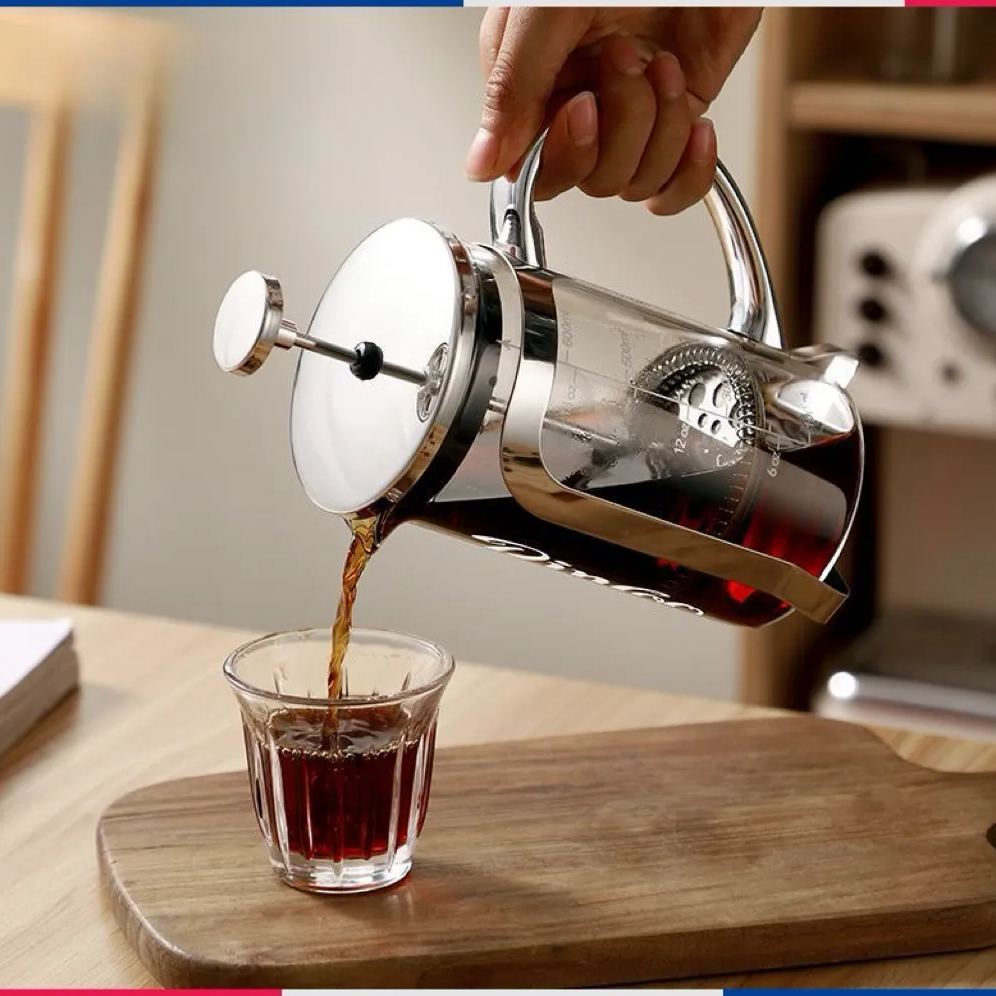
I bought my first French press for coffee in college, the way most people do. It was a cheap glass carafe with a metal mesh plunger, and I used it for four years without ever thinking about it. Then I got into loose leaf tea, and I made the obvious assumption: that the same press would work just fine. It did not. Within a few weeks I had a carafe full of bitter tea with bits of leaf floating in every sip, and I had written off the French press entirely as a brewing method only people with bad taste used.

It took me a long time to realize the problem was not the French press. The problem was the French press I had chosen. Cheap coffee French presses are built around a particular mesh size that works for coffee grounds, which are relatively uniform and coarse. Loose leaf tea, especially the broken or small-leaf varieties, behaves completely differently. The leaves want to escape. They want to swim through the gaps in your filter and into your cup. If they do, you get grit and bitterness in every sip. That is the experience most people have when they try a French press for tea, and it is the reason so many tea drinkers abandon the method before giving it a real chance.

Once I learned what to actually look for, the French press became one of my favorite ways to brew a casual afternoon pot. This guide is everything I wish someone had told me in those early bitter years.

Why French Presses Behave Differently When You Use Them for Tea

Coffee ground French presses assume you are working with particles that are all roughly the same size. The mesh filter is designed to catch grinds of a specific consistency and let the water flow through during a four-minute plunger. With tea, the situation is messier. Tea leaves are not uniform. Some are whole and large. Some are broken or fannings. Some are CTC-style small particles. Some are rolled into tight balls that unfurl during steeping. A filter that works for one of these will not work for the others.

On top of that, tea leaves keep expanding through the entire steep. By the time you would normally press a coffee press down, your tea leaves have used up almost all the available space and begun clogging the filter. The press gets harder to push. The liquid above the leaves gets darker and more bitter because it has been sitting on the leaves longer than the liquid below. By the time you finish plunging, your cup is over-steeped.

This is why a French press for tea has to be a different animal than a French press for coffee. The two products might look identical on a shelf, but they are not interchangeable. If you want to use a French press reliably for tea, you have to think about mesh, size, and material in a way that nobody bothers to explain in the product description.

I tell every new tea drinker who asks me about French presses the same thing: the mesh is the entire game. Everything else is preference. If the mesh is wrong, nothing else will save you.

The Mesh Filter Is the Whole Game

When I am evaluating a French press for tea, the very first thing I check is the mesh filter. Forget the brand. Forget the price. Forget how nice the carafe looks. What matters is the filter.

The standard French press filter is a multi-layer metal mesh with holes typically around 200 to 300 microns. That is fine for medium-ground coffee but too coarse for most loose leaf teas. Whole-leaf black teas like a Keemun or a Yunnan will get caught in a 200-micron mesh, but broken-leaf teas, fannings, and even some smaller oolong leaves will slip right through. I have had Darjeeling leaves end up in my teeth on a regular basis, and I have been annoyed enough by it to think about this more than any normal person should.

What you want, ideally, is a mesh at 100 microns or finer. Some French presses specifically marketed for tea have filters in this range. Others achieve it through a multi-layer stack of finer mesh that catches the same size particles through depth filtering rather than precise hole size. Both approaches work. The thing to avoid is the standard 200+ micron filter that ships with most coffee French presses.

Another option is to look for a French press with a nylon filter sock as a secondary filter layer. These are finer than metal mesh and catch almost everything, but they take more cleaning and they need to be replaced periodically. Some tea-specific French presses include them as standard. I have used a few over the years and they make a noticeable difference, especially with smaller-leaf teas like white tea or broken-leaf black teas.

Material Choices and How They Change Your Tea

Once you have the mesh sorted out, the next decision is material. French presses for tea come in three main flavors: glass, stainless steel, and ceramic. They each have real consequences for the taste and experience of your tea.

Glass is the most common material. It is non-reactive, so it does not add any flavor to your tea. It is also see-through, which means you can watch the leaves unfurl, which is half the fun of brewing tea. The downside is that glass is fragile. I have dropped more glass French presses than I care to admit, and even the so-called “shock-resistant” borosilicate glass can crack if you rinse it with hot water after a cold brew. If you live in a household with kids or you are a clumsy brewer like me, glass is a real risk.

Stainless steel is my personal favorite for everyday tea brewing. It is durable, lightweight, and it holds heat better than glass. The downside is that you cannot see the leaves, which is fine for me because I am typically multitasking and not staring at my tea while it steeps. If you brew tea at work or in a kitchen where things get knocked around, stainless is the smart choice.

Ceramic is the prettiest option. It holds heat well, it is non-reactive, and it often comes in beautiful designs. The Cat Style Ceramic Set is one of the most charming versions I have seen, and it makes the brewing ritual feel like a small event. The downside with ceramic is weight and fragility. These are not travel-friendly. They live on a kitchen counter or a tea table.

If heat retention matters most to you, ceramic or stainless steel will keep your tea hot longer than glass. If you want to watch the leaves unfurl, glass is the only honest answer. I have all three in my kitchen and reach for them in different moods.

Picking the Right Capacity for the Way You Actually Drink Tea

Capacity is the easiest decision to get wrong, and I think it is because most people buy a French press the same size they would buy for coffee: 1 liter or larger. They then brew a full pot of tea, drink one cup, and let the rest sit on the leaves for twenty minutes while they finish their morning emails. By the time they come back to the pot, the tea is bitter and they blame the French press.

The right capacity depends on how you actually drink tea. If you are a solo drinker who finishes a cup in one sitting, get a 350ml or 500ml press. That is one or two cups. You brew it, you drink it, you wash it. Done. There is no leftover tea sitting on the leaves because there is no leftover tea.

If you share tea with a partner or you drink multiple cups over a morning, a 1 liter press is a reasonable size. Just commit to finishing it within an hour or so, or decant what you are not drinking into a separate vessel so it stops steeping. This is the same principle as with any tea brewing method: contact time matters, and you need to control it.

If you brew tea for a group, look at 1.5 to 2 liter presses. These get unwieldy at the table, but they are functional for a small tea gathering. Honestly, though, if you are brewing for more than three people, a French press is probably not the right tool. For that, you want a proper teapot like the ones in the Glass Teapot Collection, which can comfortably serve a circle and pour cleanly.

When a French Press Is Not the Right Tool at All

I want to be honest here. I love a French press for casual tea brewing, but it is not the right tool for every situation. There are times when you should reach for something else entirely.

If you are brewing very fine or powdered teas like matcha, a French press is the wrong tool. Matcha is a powder, and you want to whisk it into suspension, not filter it. If you are brewing delicate white teas with very large, fluffy leaves, a French press works but it feels like overkill for such a subtle tea. The leaves need room to expand, and a small press can leave them compressed and un-evenly steeped.

For serious gongfu-style brewing, where you want to control multiple short infusions, a French press is functional but not ideal. The plunger is hard to use gradually. For that style of tea session, I reach for a proper gongfu set like the Gongfu Pouring Set, which is built for the rhythm of short, repeated infusions. The gongfu set gives you control that a French press cannot, and it makes each infusion taste the way it should.

For tea sessions where you want to see the leaves unfurl and watch the color develop, glass is the right material. The Monkey King Teapot is a beautiful example of this kind of vessel. It is not a French press, but it is the kind of glass brewing setup that lets you enjoy tea as a visual experience as well as a tasting one. I have used it for high-mountain oolongs and the way the leaves unfurl in the glass is honestly one of the great pleasures of tea.

This is the part of the guide most French press reviews skip. They assume you have decided you want a French press, and they just help you decide which one. But you might have decided wrong. If you want maximum flavor control, go gongfu. If you want easy single-cup brewing, go with a small French press. If you want to share tea with friends, go with a teapot. The French press sits in the middle: easier than gongfu, more hands-on than a teapot, and not quite as good as either for its specific purpose.

Three Brewing Setups I Rotate Between Daily

I want to walk you through what I actually use, because I think that is more useful than another list of generic recommendations. I have three brewing setups in my kitchen, and I rotate between them based on mood, time, and the tea I am drinking.

For everyday solo brewing, I use a stainless steel French press with a fine mesh filter. It is unremarkable to look at, but it makes a great cup of tea. I brew at work or in the morning when I am busy, and I appreciate that I can throw the leaves in, pour the water, walk away, and come back to a clean cup. The stainless steel survives being tossed in a bag, and the mesh is fine enough that I do not get leaf bits in my mug. For black teas, oolongs, and herbals, this is my default.

For slower afternoon sessions, I use the Gongfu Pouring Set. This is gongfu-style brewing, where you use a small vessel and brew the same leaves multiple times in quick succession. Each infusion is short, and the flavor changes from one to the next. It is the most engaging way to brew tea, and it is what I reach for when I want to actually pay attention to what I am drinking. I pair it with the cups from the Tea Cup Collection, which are small enough to match the small infusions.

For hosting or when I want to see the leaves unfurl, I use the Monkey King Teapot. It is a glass teapot with a magnetic infuser that you can lift out at the right moment. This is the teapot I bring out when friends are over, because it is beautiful and it makes the brewing process feel like part of the conversation. The glass lets everyone see the color of the brew, and the removable infuser means the leaves stop steeping at exactly the right moment.

And then, of course, there is the Cat Style Ceramic Set, which is more of a delight than a serious brewing tool. It is the kind of set I bring out when I want tea to feel playful and warm. It is not what I use for my morning brewing or for serious tea tasting, but it is the set that makes guests smile, and that matters.

The point is that one brewing method is not enough. The French press is one tool, and it is excellent for casual everyday brewing. The other tools in this section are what I reach for when I want something different. You do not need all of them, but you should think about which scenarios you actually brew tea in and pick your tools accordingly.

The Maintenance Routine Nobody Talks About

French presses are not as easy to clean as they look. The mesh filter is the main culprit. Tiny particles of tea leaf get stuck in the mesh and, if you do not clean them out thoroughly, they build up and start affecting the flavor of your next brew. I learned this the hard way when I brewed a clean white tea and it came out tasting vaguely of stale black tea. That is the moment I started paying attention to filter maintenance.

After every brew, I rinse the French press thoroughly with hot water. I do not use soap on the mesh filter because soap residue can leave a film that affects the taste of the next brew. Instead, I use hot water and a small brush to scrub the mesh gently. Once a week, I do a deeper clean with a tablespoon of baking soda dissolved in hot water. I let the filter sit in that for fifteen minutes, then rinse thoroughly. This pulls out any tannins that have built up in the mesh.

If your French press has a nylon filter sock, replace it every few months. The nylon degrades with use and cleaning, and an old filter sock will start letting particles through. You can tell it is time when the sock starts looking fuzzy or feels softer than it should.

Glass carafes are easier to clean than the mesh, but they do develop a film of mineral deposits over time, especially if you have hard water. A monthly soak in white vinegar and water brings them back to clear. Do this and your French press will last for years.

Common Mistakes That Make a French Press Fail for Tea

Even with the right French press, people make mistakes that ruin their tea. The most common mistake is using water that is too hot. Coffee drinkers get used to almost-boiling water for their press, but teas vary widely in their ideal temperature. Green teas want water around 175°F. White teas want water around 185°F. Black teas and oolongs can handle full boiling. If you brew a delicate green tea at full boil in a French press, you will get a bitter, astringent cup regardless of how good your press is.

The second mistake is using too many leaves. With coffee, you measure by weight. With tea in a French press, most people over-leaf because they are used to small amounts of coffee. The right amount is roughly 1 teaspoon of loose leaf per 6 to 8 ounces of water, but this varies by tea. Whole-leaf teas can take a bit more because they have more volume. Broken-leaf teas need less because they have more surface area. Start with the lower end of the range and adjust by taste in future brews.

The third mistake is pressing too early. With coffee, you push the plunger down at the end of the brew time. With tea, you want to push the plunger down earlier, especially for black teas and oolongs. The leaves keep releasing tannins as long as they are in contact with water. Push the plunger down at three minutes for most black teas, and let the leaves stay below the mesh surface. The liquid above the plunger will continue to clarify and slow its extraction. This single change can transform a French press from a bitter brew to a balanced one.

The fourth mistake is leaving the leaves in the press between cups. Once you have poured your first cup, do not leave the remaining tea sitting on the leaves in the press. Either pour it into a separate vessel or commit to drinking it within a few minutes. The French press does not have a clean way to remove the leaves mid-brew, so this is the trade-off you have to manage.

Matching a French Press to Your Tea Lifestyle

Different people should buy different French presses. Here is how I think about it.

If you are a casual everyday tea drinker who wants one simple tool for the morning, get a 500ml stainless steel French press with a fine mesh filter. It will brew one to two cups, it will survive being knocked around, and it will get out of your way. This is the workhorse option and the one I recommend most often to people who are just starting to brew loose leaf tea at home.

If you are a tea enthusiast who wants maximum control over the brewing process, do not get a French press at all. Get the Gongfu Pouring Set and learn gongfu brewing. You will have more control, more engagement, and a much better understanding of how tea behaves in the cup. The French press is great for convenience, but it is not the right tool for someone who wants to take tea seriously as a hobby.

If you want to share tea with friends or enjoy the visual side of brewing, get a glass teapot like the Monkey King Teapot. The removable infuser gives you the control a French press cannot, and the glass lets you see the leaves. This is the option for tea drinkers who are hosting or who simply want their brewing setup to be part of their home aesthetic.

If you are buying for someone who loves tea but also has a sense of whimsy, the Cat Style Ceramic Set is a delight. It is not the most practical tea set, but it is one of the most charming. It is the kind of gift that makes tea feel like a small ritual of joy, which is honestly what tea is supposed to be.

If you want a versatile kitchen and want to browse more options, the Glass Teapot Collection has a range of brewing vessels for different scenarios. Whether you go with a French press, a gongfu set, or a more traditional teapot, the right tool is the one that matches the way you actually drink tea.

Final Thoughts from a Decade of Brewing Tea

After ten years of brewing tea every day, I have come to one clear conclusion: the vessel matters less than the brewer. A good French press in the hands of someone who understands their tea will outperform a fancy glass teapot in the hands of someone who does not. The mesh and the material and the capacity are all important, but they only matter if you are also paying attention to water temperature, leaf amount, and steep time.

That said, getting the right tool does make the learning curve easier. A French press with a fine mesh filter will save you from the most common tea mistakes. A stainless steel carafe will keep your tea hot longer than a glass one. A 500ml size will keep you from over-brewing. These are not transformative differences, but they add up to a more pleasant daily ritual.

If you are starting from scratch, get a stainless steel French press with a fine mesh filter, a 500ml capacity, and start with a forgiving black tea like a Ceylon or an Assam. Brew it for three minutes, plunge it, and pour it all out. Adjust from there. The rest will follow.

If you already have a French press and you are using it for tea, take ten minutes today to check the mesh filter. If it is the standard coffee filter, consider replacing it with a finer one. That single change can transform your brewing experience, and it is the kind of upgrade I wish someone had pointed me to a decade ago. The rest is just patience and practice.

How to Choose a Teaset for Beginners: Complete 2025 Guide

How to Choose a Teaset for Beginners: Complete 2025 Guide

How to Choose a Teaset for Beginners: Complete 2025 Guide

You should choose a teaset for beginners by matching the material to the tea you drink most often, sizing the pot to your typical session, and selecting a brewing style (gongfu, western, or single-cup) that fits how much time you actually have — not by chasing the prettiest set on the shelf. A 4–7 piece glass or porcelain set with a removable infuser handles roughly 90% of beginner scenarios, from a daily solo loose-leaf brew to a casual weekend gongfu session. The single most expensive mistake new buyers make is picking an unglazed clay or cast-iron pot before they know which tea category they prefer, because those materials absorb flavor permanently and lock you into one tea for life.

This guide walks you through every decision you need to make before you buy — material, capacity, piece count, brewing style, and budget — and shows you when a pre-assembled beginner kit is faster than sourcing each piece individually. By the end, you’ll know exactly what to look for, what to skip, and which product collapses the whole decision tree into one purchase.

Key Takeaways

  • Glass or porcelain is the safest material for a first teaset because it does not absorb flavor, does not stain, and works equally well with green, black, oolong, white, and herbal teas.
  • A 4–7 piece set sized at 350–600 ml is enough for one or two regular drinkers; only scale up to a 1.0–1.5 L set when you routinely host three or more people.
  • The infuser must match your leaf size — fine stainless-steel mesh for broken or fine-cut leaves, wide slots or an open basket for whole-leaf teas.
  • Hold off on unglazed Yixing-style clay or cast-iron pots until you’ve settled on a single tea category for at least three months.
  • A budget of $30–$80 covers a complete, durable beginner set; spending above that range typically buys decoration, not function.

What a beginner-friendly teaset actually needs to deliver

A beginner-friendly teaset needs to do four jobs well, and every extra feature beyond those four jobs is either decoration or a future constraint. Anything that gets in the way of those four jobs is not worth your money, no matter how elegant it looks in the product photo.

The four jobs are unforgiving: brew at the right temperature for the tea you’re using, hold enough liquid for your typical session without leaving you with cold leftover tea, let you see the color of the brew so you know when to stop pouring, and clean out completely in under two minutes. If a candidate set satisfies all four, it’s a real contender. If it fails any of them, it’s a display piece.

The three decisions that matter before anything else

Before you browse a single product page, lock in three decisions in this exact order. Skipping ahead to aesthetics is how first-time buyers end up returning their purchase within a week.

  • Material first — because material constrains every tea you can brew in the pot without cross-contamination.
  • Capacity second — because an undersized pot forces you to re-steep in a rush, and an oversized pot wastes expensive loose-leaf tea.
  • Brewing style third — because gongfu, western, and single-cup brewing call for different pot shapes, vessel counts, and pour mechanics.

Material first. Capacity second. Brewing style third. Once those three answers exist, the marketing copy, the brand, and the color become secondary filters you can apply in minutes instead of hours.

Why “complete set” claims on Amazon often mislead new buyers

Most 16-piece “complete tea sets” sold to beginners contain two or three functional pieces wrapped in ten pieces of decoration. A typical breakdown looks like this: one usable teapot, two usable cups, and thirteen items you will not touch in month one — an extra large teapot with no lid knob, a tea towel, a coaster that does not fit any cup in the set, or a wooden tray sized for a teapot you do not own.

The piece count on the box is a marketing number, not a utility number. A smaller, tighter set of 4–7 actually-usable pieces will out-perform a 16-piece decorative bundle every time.

Which material gives beginners the lowest learning curve

Glass and porcelain give beginners the lowest learning curve because they are chemically inert, visually transparent, and tolerate the full temperature range you need for green, black, oolong, white, pu-erh, and herbal teas. Any other material — clay, ceramic with reactive glazes, cast iron, raw metal — either restricts your tea choice, hides your brew color from you, or demands care steps a beginner has not learned yet.

Glass: the most forgiving option for sampling multiple teas

Borosilicate glass teapots are the single most beginner-friendly vessel on the market in 2025. They tolerate direct stovetop heat (most models rated to 150 °C / 300 °F), they show you the exact color of the brew so you know when the steep is done, and they rinse clean in seconds with no flavor carryover between tea types. Heat-resistant borosilicate is also resistant to thermal shock, which means you can pour boiling water into a room-temperature pot in most cases without cracking it (always check the rating — see teapotsetshop.com’s beginner brewing guide for model-specific tolerances).

The only real downside of glass is brittleness under impact, and that is solvable by keeping it on a stable tray away from sink edges.

Porcelain vs. glazed ceramic: nearly identical outcomes

Porcelain and fully glazed ceramic behave almost identically to glass for brewing purposes — they are non-reactive, they clean easily, and they tolerate thermal cycling. The trade-off is opacity: you cannot see the brew color through the wall, so you must rely on a timer rather than visual cues. For beginners who brew a single style repeatedly and prefer the feel of a traditional cup, porcelain is a strong second choice after glass.

Why unglazed clay and cast iron are advanced, not beginner, materials

Unglazed Yixing-style clay and cast-iron tetsubin absorb tea oils and tannins into their walls over time, gradually seasoning to a specific tea. That property is the entire point of those pots — and exactly why they are a beginner trap. Brew a smoky lapsang souchong in an unglazed clay pot once and you will taste lapsang in your next thirty brews of green tea. The pot, which cost $80–$300, is permanently dedicated to one tea family.

Beginners who later want to invest in specialty pots can do so confidently, but only after they have identified the one tea they drink most. Until then, the math strongly favors a glass or porcelain pot you can switch between teas on a daily basis.

How many pieces and what capacity match your real usage

You should match teaset capacity to your typical session size, not your largest possible gathering, and you should match piece count to the number of people who actually drink with you on a normal week — not the holidays. The most common beginner mistake here is buying for the once-a-year family visit and paying for it every other day of the year.

Sizing the pot to your typical session

A solo daily drinker needs roughly 250–500 ml of brewed tea per session, which maps to a 350 ml pot steeping once, or a 500–600 ml pot for two short rounds. A couple drinking together needs 700–1000 ml, which maps to a single 800 ml pot or two successive brews from a 500 ml pot. A host who regularly entertains three or more guests needs 1.0–1.5 L, which is the point where a larger-format tea set starts to make sense.

  • Solo: 350–500 ml pot, 2 cups, 1 infuser.
  • Pair: 600–800 ml pot, 2–4 cups, 1 infuser.
  • Small group (3–4): 1.0–1.2 L pot or two pots in rotation, 4 cups, 1 infuser.
  • Host: 1.5 L+ pot plus a backup, 6+ cups, sometimes a serving pitcher (gong dao bei).

Note the unit math: a typical gongfu session uses roughly 8–12 g of leaf and produces 100–150 ml of tea per infusion, but it stacks multiple short infusions. Western-style brewing uses 2–3 g per 250 ml in a single long steep. The capacity you need depends on style as well as people.

Gongfu, western, or single-cup — which style fits a new drinker

Western-style brewing fits most beginners best because it requires the least new vocabulary, the fewest pieces, and the smallest learning curve — one pot, one timer, and a temperature choice. Gongfu fits beginners who already know they love a tea like oolong or aged pu-erh and want to extract layered flavor fast. Single-cup brewing (one large mug with an internal infuser basket) fits beginners who drink alone at a desk and want zero setup time.

The practical difference in gear between styles

  • Western style: one 500 ml pot, 2 cups, 1 infuser, no tray, no pitcher. Total = 4 pieces.
  • Gongfu style: one small 100–150 ml pot (or gaiwan), a fairness pitcher (gong dao bei), 2–3 small cups, 1 scale, 1 timer. Total = 6–8 pieces minimum.
  • Single-cup: one mug with built-in infuser basket. Total = 1 piece.

The gear difference drives the piece-count difference. If you start with western and later want to try gongfu, you keep the cups and add a small pot, a pitcher, and a scale — most of your original investment is preserved. Starting with gongfu when you actually want western is more expensive to undo.

Where beginners overspend and how to avoid the four common traps

Beginners overspend on four predictable things: brand-driven markup, decorative piece bloat, single-tea-specialty pots bought too early, and bundled accessories that duplicate functions. Knowing the shape of each trap in advance is worth roughly $100–$150 in saved money across your first year.

  • Brand markup: a $35 unbranded borosilicate glass teapot on a curated tea-set site brews identically to a $90 branded one with the same wall thickness and infuser rating. Verify wall thickness (≥2 mm) and infuser grade (304 stainless steel mesh, 200–400 holes per square inch) rather than logo.
  • Decorative piece bloat: a 16-piece set with 2 functional items is a worse deal than a 5-piece set, even at a higher absolute price. Count the items you will actually use.
  • Single-tea pots bought too early: a Yixing zini pot for Dancong oolong is a beautiful thing to own — but only after you have been drinking Dancong daily for 3+ months. Until then, the $80–$250 you would spend is locked into a vessel you cannot use with anything else.
  • Duplicate accessories: a “complete tea ceremony set” sometimes ships with three timers, two thermometers, and a kettle that duplicates one you already own. Edit aggressively at checkout.

Build it yourself or buy a curated set — the honest comparison

If you build a beginner teaset piece by piece, you will spend 4–8 hours of research, $35–$70 in total (often less per item, more in shipping), and end up with a set that is mismatched in style, color, and capacity in roughly 60% of cases — because most beginners buy one piece, like it, then buy the rest to match and find they cannot match it perfectly. The manual approach is the right move for experienced buyers who know exactly which specs each piece must hit, and the wrong move for a first-time buyer who has never handled a real gaiwan or glass pot.

The non-manual approach is to start from a curated beginner set where the material, infuser grade, capacity, piece count, and cup count have already been solved for you. If you want to skip the research step, the Glass Teapot with Stainless Steel Infuser Set is a borosilicate 600 ml pot with a 304 stainless fine-mesh infuser, two 80 ml double-walled cups, and a bamboo tray — meaning you bypass the matching problem, the infuser-quality question, and the cup-size decision in a single purchase. For buyers who already know they want glass (which the section above argues most beginners should), that single product collapses the entire decision tree.

Whichever path you choose, keep the rule consistent: the first set should be cross-compatible across multiple tea types so you can experiment without ruining the equipment.

Frequently asked questions

What is the best tea set for beginners?

The best tea set for beginners is a 4–7 piece borosilicate glass set with a removable 304 stainless-steel mesh infuser and a 500–700 ml pot. Glass is non-reactive, lets you see the brew color so you can learn steep timing visually, and cleans in under two minutes — which makes it the lowest-friction material for someone who is still learning which tea they prefer.

What pieces should a basic tea set include?

A basic tea set should include one teapot with a removable infuser, two cups (or four if you usually drink with a partner), and optionally a tray or pitcher. Anything beyond that — additional pots, tea towels, multiple coasters, decorative figurines — is filler that first-time buyers do not need and rarely use in the first three months.

Is glass or ceramic better for brewing tea?

Glass is better than glazed ceramic for most beginners because it shows the brew color, which is the fastest way to learn steep timing. Glazed ceramic brews identically in flavor terms but takes longer to master because you must use a timer instead of a visual cue. Unglazed clay and cast iron are best saved for later, once you have identified a single tea category you want to specialize in.

How much should I spend on a beginner tea set?

You should spend $30–$80 on a complete beginner tea set in 2025. Under $30 and you start sacrificing infuser quality or wall thickness; over $80 and most of the extra money goes to branding, glazing, or packaging rather than functional improvements. The sweet spot is a borosilicate glass pot with a 304 stainless mesh infuser in the $45–$65 range.

Do I need a gaiwan or just a teapot?

You do not need a gaiwan if you only plan to brew western-style with one long steep per session. You do need a gaiwan (or an equivalent small 100–150 ml pot) only if you plan to learn gongfu brewing, which uses short repeated infusions of 8–15 seconds each. Most beginners should start with a regular teapot and add a gaiwan later if their interest shifts toward oolong or pu-erh.

Final takeaway

Choose glass or porcelain first, 4–7 pieces second, and a brewing style third — and the rest of the teaset decision takes about ten minutes. Spend $30–$80 on a complete borosilicate glass set with a 304 stainless mesh infuser, brew multiple tea types through it for at least three months, and only upgrade to a single-tea specialty pot once you know which tea you actually drink every day. Ready to skip the research loop? The Glass Teapot with Stainless Steel Infuser Set at teapotsetshop.com bundles the right pot, the right infuser, the right cups, and a tray into one beginner-safe purchase.

How to Choose the Right Teapot for Oolong Tea (and Why Your Current One Isn't Working)

The Teapot That Quietly Ruined My Love for Oolong

I still remember the afternoon everything clicked into place for me. I had been brewing oolong tea for almost a year at that point, buying increasingly expensive leaves from a vendor I trusted, steeping them carefully at the temperature I had read about online, and yet every cup tasted the same to me. A little flat. A little muted. Sometimes a touch bitter on the finish. I kept blaming the water. Then the leaves. Then my kettle. Then my whole approach to tea.

It wasn’t any of those things.

It was my teapot. A generic ceramic number I had picked up because it looked nice on the kitchen shelf. The day I swapped it for something built specifically for what oolong actually needs, the difference wasn’t subtle. The same leaves, the same water, the same temperature, but suddenly there were flavors in my cup I had never tasted before. Honey. Stone fruit. A whisper of toasted bread. The tea I had paid good money for finally showed up.

If you have been nodding along to any of this, I want to walk you through everything I have learned since then. Choosing a teapot for oolong isn’t about finding the most beautiful object in the shop. It is about matching the vessel to the way oolong actually behaves, and to the way you actually drink tea. Let me share what ten-plus years of brewing has taught me.

Why Oolong Asks More From Your Teapot Than You Think

Most people treat oolong like a stubborn green tea or a forgiving black tea. It is neither. Oolong sits in a vast middle ground that traditional Chinese tea culture has refined over centuries, and the leaves themselves are doing some complicated work during steeping.

Oolong leaves are often rolled or twisted into tight balls or strips. As they hit hot water, they unfurl slowly, releasing different compounds at different rates. The water temperature matters more than for almost any other tea. Too hot, and you pull out bitterness before the sweet, aromatic notes have a chance to bloom. Too cool, and the tea tastes thin and vegetal. Most good oolong wants water somewhere between 90 and 95 degrees Celsius, and it wants that water held steady throughout the infusion.

Then there is the question of infusions. Oolong is rarely a one-and-done tea. The best examples, especially the rolled Taiwanese and Wuyi mountain varieties, reward multiple short steepings. Two steeps in a row. Five steeps. Sometimes ten or more, depending on the leaf. This is the heart of what we call gongfu brewing, and it puts specific demands on the vessel you are using.

The single biggest mistake I see tea drinkers make with oolong is treating it like a forgiving Western-style tea. Oolong does not forgive the way black tea does. It asks for attention, and it rewards attention with flavor you simply cannot get any other way.

This is exactly why your current teapot might be quietly sabotaging your oolong. If it cannot hold heat well, the water temperature drops mid-steep and the flavor flattens. If the infuser basket is too large, the leaves have too much room to swim and you lose the concentrated extraction gongfu is designed to create. If there is no easy way to separate the leaves from the liquid at exactly the right moment, you end up over-steeping and the bitterness you taste is not the tea’s fault at all.

The Three Materials Worth Considering, and Why Most Others Miss the Mark

Walk into any tea shop, online or otherwise, and you will find teapots in every material imaginable. Stainless steel. Cast iron. Porcelain. Earthenware. Each has its devotees. For oolong specifically, after years of experimentation, I have narrowed it down to three materials that consistently deliver.

Glass: The Visual Experience

Glass teapots are wonderful for oolong for reasons that go beyond looks. Because you can see the leaves as they open, you learn what your specific tea actually does during steeping. You watch the color of the liquor deepen. You notice when the leaves have fully unfurled, which tells you your extraction is near its peak. For someone still learning to brew oolong well, this visual feedback is honestly more useful than any thermometer or timer.

Glass also has a neutral flavor profile. It does not absorb oils or scents from previous teas, it does not add anything of its own, and it lets the leaf speak for itself. If you rotate between different oolongs, a glass pot means you can brew a roasted Dong Ding in the morning and a green High Mountain in the afternoon without any flavor carryover.

The main drawback is heat retention. Plain glass loses temperature faster than clay, so if you are doing long infusions or brewing in a cold room, the water can drop below the sweet spot by the end of the steep. Solutions exist, though, and I will get to one shortly.

Porcelain: The Quiet Workhorse

A good porcelain pot holds heat better than glass, does not interfere with flavor, and is easy to clean. For many oolong drinkers, porcelain is the everyday choice. It does everything reasonably well without any dramatic personality. I keep a porcelain gaiwan on my desk at all times for quick solo sessions, and it has never let me down.

Unglazed Clay: The Specialist

Traditional Yixing-style clay pots are famous in tea culture for good reason. The microporous clay absorbs tea oils over time and develops a patina that some say enhances flavor, especially with heavily roasted oolongs. The trade-off is significant: an unglazed clay pot should be dedicated to one type of tea. If you brew a roasted oolong in it once and a green oolong in it the next day, the flavors will muddle together. Clay pots also require more care, and a quality one is not cheap.

For most people reading this, my honest recommendation is to start with glass or porcelain, then explore clay later if you find yourself reaching for oolong specifically every single day.

Glass Teapots: When Watching the Leaves Dance Changes Everything

If you are just beginning to take oolong seriously, I would start with a glass pot. The reason is simple: glass teaches you. Every other material hides information from you, and when you are still figuring out your preferences and technique, that information matters.

About two years ago, I added the Glass Tea Maker Wooden Base to my brewing setup, and it genuinely changed how I understand oolong. The semi-automatic drip system lets you control the moment the brewed liquor separates from the leaves with a simple magnetic release. No tipping, no guessing, no awkward pouring through a strainer that splashes the table. You set the steeping time, hit the release, and the tea drains cleanly into the lower chamber.

Glass Tea Maker Wooden Base

What I appreciate most about this particular pot is the wooden base. It does double duty. It insulates the bottom of the glass chamber, which helps with that heat-retention issue I mentioned earlier, and it turns the whole brewing process into something that feels intentional. The wooden warmth under the glass looks beautiful on a table, and the slight thermal buffer means my second and third infusions stay closer to the temperature they should be.

If glass appeals to you, you can browse the full Glass Teapot Collection and find variations in size and style that fit your space. For oolong, anything from about 350ml up to 800ml works beautifully for solo or small-group sessions.

A Quieter Alternative for the Modern Minimalist

Not everyone wants a wooden base and a visible drip mechanism. Some of us want our tea equipment to disappear visually, to do its work without drawing attention to itself. If that sounds like you, a clean, minimalist drip set might be the better match.

The Minimalist Drip Set is what I reach for on busy mornings when I want the oolong experience without any ceremony about it. It is a streamlined glass-on-glass system with a magnetic release that does exactly what the wooden-base version does, but in a tighter, more architectural form. There is nothing on it that does not need to be there. It looks like a piece of design, not a piece of tea equipment.

Minimalist Drip Set

Functionally, both drip systems solve the same problem: separating leaves from liquor at exactly the right moment without the sloshing and over-extraction you get from a conventional infuser basket. For oolong, where timing matters more than almost anything else, this kind of control is a quiet luxury. You set your steep, you walk away to do something else, and you come back to tea that has stopped extracting exactly when you wanted it to.

When You Want Technology to Handle the Timing

I have a confession. For a long time, I was skeptical of “smart” tea equipment. It felt like overkill. Tea has been brewed in clay pots for centuries without electronics, so why complicate it?

Then I tried the Smart Magnetic Tea Maker on a particularly hectic workweek, and I understood the appeal. The magnetic timing system removes the one variable that throws off even experienced tea drinkers: attention. Sometimes you start a steep, get pulled into an email or a kid needs something, and by the time you come back the oolong has been sitting in hot water for twice as long as it should have. With a magnetic system, you set the time and let physics handle it.

Smart Magnetic Tea Maker

For oolong specifically, this kind of precision matters because the difference between a 20-second infusion and a 45-second infusion can be the difference between bright, layered flavor and a flat, tannic cup. The smart system also tends to be more efficient with leaf, because the magnetic release is so consistent that you can dial in exactly how long each infusion runs without trial-and-error.

If you had asked me five years ago whether tea equipment needed electronics, I would have laughed. Now I keep a smart brewer on my desk because my attention is the bottleneck, not the equipment. Sometimes the right tool is the one that admits you are a busy human.

Sizing Your Teapot to Your Ritual

Material is half the decision. Size is the other half, and people get it wrong constantly. The right size depends entirely on how you actually drink tea, not how you wish you drank tea.

For gongfu-style oolong brewing, where you do many short infusions and pour into small cups, you want a small vessel. Between 100ml and 250ml is the sweet spot. This concentrates the leaf-to-water ratio and creates the layered, evolving flavor profile that makes oolong worth the effort. Most of the dedicated gongfu pieces in our Gongfu Tea Set Collection fall into this range.

For Western-style brewing, where you make one larger pot and drink it across a morning, a 500ml to 1L pot makes more sense. The leaf-to-water ratio drops, the infusions get longer, and the tea tends to taste more uniform from cup to cup. Both approaches are legitimate. They just produce different experiences.

Couples and small households often land somewhere in the middle. A 350ml to 500ml pot is enough for two generous cups with a second infusion to follow. If you entertain, look at the 700ml and up range, keeping in mind that larger glass pots lose heat faster and you may need to warm the vessel before brewing.

The Mistakes I Made So You Don’t Have To

I have made nearly every mistake there is to make with oolong equipment. Some of them cost me real money, and all of them cost me good tea. Here is what I wish someone had told me earlier.

The first mistake was buying a beautiful teapot before I understood how I actually drank tea. I bought a 1.2L cast iron pot because it looked stunning on the shelf. I used it maybe four times. It was too big for solo sessions, too heavy for daily use, and the cast iron held heat so aggressively that by the end of a long steep the leaves were essentially cooked. Beautiful object. Wrong tool.

The second mistake was choosing a pot with a built-in metal infuser basket. Metal can react subtly with certain teas, and the basket design almost always leaves leaves in contact with water after you have stopped steeping. Drip systems and gravity-based separation are simply more reliable for oolong because they actually remove the leaves from the liquor.

The third mistake was underestimating how much my environment mattered. Brewing oolong in a cold kitchen in winter is genuinely different from brewing in a warm room. Cold ambient temperature pulls heat out of glass faster than you would expect. If you are a cold-room brewer, look for setups that insulate the brewing chamber or pre-warm your pot with hot water before adding leaves.

The fourth mistake was assuming expensive meant better. Some of the most expensive teapots I have owned were the least practical for daily oolong use. Price often reflects craftsmanship, rarity, or aesthetics, not necessarily functional superiority for your specific tea habit.

Matching the Teapot to Your Tea Life

After all this exploration, the question most readers actually want answered is some version of, “So which one is right for me?” Let me try to make this simple.

If you are someone who is still building your oolong habit and wants to learn what the tea is actually doing during steeping, start with a glass system. The visual feedback is irreplaceable when you are learning. The Glass Tea Maker Wooden Base is the one I recommend most often to friends who are starting out, because it gives you that learning experience while also handling the temperature issue reasonably well.

If you already know how you like your oolong and you want a clean, architectural piece that gets out of the way, look at the Minimalist Drip Set. It does everything the wooden-base version does in a tighter footprint, and it pairs especially well with a modern kitchen or workspace.

If your problem is consistency, or you are a busy person who wants the flavor without the focus, the Smart Magnetic Tea Maker takes over the part of brewing that requires your attention. It is not for the traditionalist who wants every step to be manual, but for everyone else, it quietly solves a real problem.

If you rotate between many types of tea and want to brew them all well, glass and porcelain are your friends. If you have found the one oolong you plan to drink for the rest of your life, consider a quality unglazed clay pot dedicated to it. Otherwise, save clay for later.

Bringing It All Together

Choosing the right teapot for oolong is less about finding a perfect object and more about removing the obstacles between you and your tea. The reason your current teapot isn’t working is probably not that it is a bad pot. It is that it was not designed for the specific demands of oolong, and oolong happens to be more demanding than most teas we brew at home.

Start with clarity about how you actually drink tea. Then pick a material that supports that habit. Then pick a size that matches the number of cups you actually pour. Then look at systems that give you control over the steep timing, because control is what oolong is really asking for.

Once you find the right vessel, the same leaves you have been brewing all along will start showing you things you did not know were in there. That is the moment tea stops being a beverage and starts being a practice. I have been at this for over a decade, and I still get surprised by what a properly chosen teapot reveals in a familiar tea.

If you are ready to look around, our Glass Teapot Collection is a good place to start, and the Gongfu Tea Set Collection covers everything you need for a more traditional, multi-infusion approach. Brew a pot of something good, take your time with it, and trust me: the right teapot is closer than you think.

How to Choose a Teaset for Beginners: A Complete Guide

How to Choose a Teaset for Beginners: A Complete Guide

How to Choose a Teaset for Beginners: A Complete Guide

Key Takeaways

  • Glass teapot sets are the easiest entry point for beginners because you can watch the leaves unfurl and the color develop in real time.
  • Match size first (solo, couple, or sharing), then material, then style, in that order.
  • A complete beginner teaset typically includes a teapot or gaiwan, a fairness pitcher (chahai), filter or strainer, and 2–4 cups.
  • Plan a budget of roughly $25–$80 USD for a quality starter set that will last several years.
  • Avoid cast iron and unglazed clay for your first set, since both demand care routines that often trip up new brewers.

Choosing a teaset for beginners works best when you decide the size first, the material second, and the style last, because each decision narrows the field and prevents you from overpaying for pieces you will not actually use.

What Material Should a Beginner Teaset Be Made Of?

Beginners should choose either borosilicate glass or white porcelain, because these two materials are non-reactive, easy to clean, and will not slowly distort the flavor of the tea you are still learning to taste.

Every teaware material changes the cup you drink, and not always in ways a new drinker can recognize or correct. Glass is chemically neutral and visually instructive, porcelain is similarly neutral but holds heat slightly better, while unglazed yixing clay, cast iron, and raw ceramic each pick up flavors over time. According to the tea reference work published on Britannica’s tea overview, traditional Chinese teaware evolved specifically around the chemistry of different leaf types, which is why material matters more than aesthetics for a first set.

Comparing the four most common beginner materials

  • Borosilicate glass: Lightweight, transparent, handles thermal shock, and shows leaf movement. Excellent for flower teas, green tea, and white tea. The safest neutral surface for learning.
  • White porcelain: The universal choice across Chinese gongfu tea. Slightly better heat retention than glass, less visual feedback, and works for every leaf type.
  • Gaiwan (lidded porcelain cup): The most economical entry into gongfu brewing. Three pieces, no strainer needed, and forces you to learn pour control.
  • Cast iron or unglazed clay: Beautiful, but each pot is dedicated to one tea family. Best purchased once you know what you like, not as a first set.

If you are choosing a teaset for beginners, treat any material that ‘seasons’ over time as a commitment, and treat glass or porcelain as a learning tool you will appreciate regardless of how your taste evolves.

How Do You Pick the Right Teaset Size?

The right size for a beginner teaset is one that matches the number of people you actually brew for most days, which for most buyers is a 400–800 ml (about 2–4 cup) pot or gaiwan.

Sizing is where most first-time buyers overspend, because product photos make large sets look elegant and small sets look cramped. In practice, gongfu tea is brewed in concentrated small infusions, so a 150 ml gaiwan comfortably serves two people with multiple steepings. Western-style brewing uses more water per cup, so a 600–800 ml pot works better for that method.

Size guideline by household

  • Solo daily drinker: 100–150 ml gaiwan or 350–500 ml glass pot.
  • Couple or two-person household: 150–200 ml gaiwan or 600–800 ml glass pot.
  • Family of 3–4 or small gatherings: 250 ml gaiwan set or 1000–1200 ml glass teapot.
  • Hosting 5+ guests: Skip the single pot and buy two coordinated sets instead, since over-sized pots lose heat during slow pouring.

Buying a teapot dramatically larger than your daily need creates wasted water, cooled infusions, and a heavier object on the counter. Match size to the most common weekday scenario, not to the occasional dinner party.

What Pieces Does a Complete Beginner Teaset Need?

A complete beginner teaset needs exactly four functional pieces: a brewing vessel, a strainer or built-in filter, a fairness pitcher, and small drinking cups, because every other item is decorative until you build skill.

Tea sets are often marketed with ‘bonus’ pieces that look valuable but get used twice a year. Tea tray, tea towel, tongs, and a tea pet are useful only once gongfu brewing becomes a daily habit. For the first six months, beginners are better served by the four core pieces and a simple wooden or bamboo tray to catch drips.

The four functional pieces, explained

  • Brewing vessel: A borosilicate glass teapot or a porcelain gaiwan, sized to your household.
  • Strainer or built-in filter: A removable stainless-steel mesh filter for glass teapots, or the gaiwan lid’s natural pour gap for porcelain sets.
  • Fairness pitcher (chahai or ‘gongdaobei’): A small pitcher that receives the brew from the pot so every cup is the same strength, which is critical when comparing tea quality.
  • Small drinking cups: 30–60 ml cups suit gongfu’s concentrated style; 150–200 ml cups suit Western-style brewing.

Multi-piece gift sets that include a kettle, tea tray, and 8 cups look complete but usually downgrade the brewing vessel to save cost. Inspect which piece is the actual brewing surface before judging a ‘set’ as a bargain.

Why Do Beginners Brew Better With a Glass Teapot?

Beginners brew better with a glass teapot because glass turns an invisible chemical process into a visible one, letting you calibrate water temperature, leaf quantity, and steep time by eye instead of guesswork.

There is a reason every modern tea classroom uses clear vessels during the first lessons. When leaf expansion, color release, and bubble formation are visible, a beginner learns the ‘why’ behind each instruction rather than memorizing steps. Healthline’s green tea guide highlights how steep time and temperature directly change the antioxidant and caffeine profile of the cup, which is precisely the kind of variable you want to see, not assume.

Three things glass teaches faster than any other material

  • Leaf expansion ratio: You can confirm whether the leaf has opened fully, or whether it needs higher water temperature to unfurl.
  • Color release timing: The ‘champagne gold’ of a well-steeped white tea versus the ‘pale straw’ of an under-steeped green tea becomes a reliable color memory.
  • Sediment control: Watching fine particles slip through the strainer tells you when to upgrade mesh size, an issue you never see in opaque clay.

Glass also cools faster than porcelain, which is forgiving for green and white teas that punish over-extraction. This makes glass teapots ideal as a first brewing vessel, even if your eventual long-term home setup includes clay or porcelain.

Build Your Own Set: The Manual Gaiwan Approach

The manual approach to building a beginner teaset is to purchase a 150 ml porcelain gaiwan, a fairness pitcher, two 50 ml cups, and a bamboo tray separately, because doing so teaches you what each piece actually does.

This is the path most tea teachers recommend, and for good reason. Each piece is bought on its own merit, so you start with a clean understanding of how a gaiwan’s lid gap strains leaves, why the pitcher equalizes strength, and why small cups cool concentrated tea to a drinkable temperature. The tea brewing guide archive on our site walks through the same four pieces step by step.

The manual setup checklist

  • One 150 ml white porcelain gaiwan, around $8–$15.
  • One 200 ml fairness pitcher (glass or porcelain), around $6–$12.
  • Two to four 50 ml porcelain cups, around $4–$8 each.
  • One bamboo or wood tea tray, around $15–$25.
  • Total expected cost: roughly $40–$80 for a quality manual setup.

The downside is the time spent sourcing, matching, and shipping pieces from different sellers, plus the learning curve of using a lid-edge strainer on day one. The setup works, but the first week feels clumsy.

Skip the Manual Work: A Curated Glass Teapot Set

If you want to skip the manual sourcing and start brewing the same day, a curated glass teapot set delivers the four functional pieces pre-matched, with a removable stainless infuser instead of a gaiwan’s pour-gap strainer.

A matched glass teapot set sidesteps the main friction points of the manual approach. The pot, infuser, pitcher, and cups arrive calibrated to the same capacity, the filter has a wider mesh that holds back particles better than any gaiwan lid, and the transparent body preserves the visual learning benefit that makes glass ideal for beginners in the first place. For buyers who would rather spend their first week drinking tea than learning strainer angles, a complete set is the practical path.

What a pre-matched set solves for you

  • Calibrated capacity: The pot, pitcher, and cups are scaled so every brewing step produces the right cup size without leftover cooling tea.
  • Removable infuser: Easy to lift leaves out on time, which matters because over-steeped tea is the most common beginner mistake.
  • Heat-resistant borosilicate: Withstands boiling water without cracking, so you can brew black, oolong, or pu-erh without second-guessing the vessel.
  • One shipment, one purchase: No matching, no back-ordered cups, no waiting on three separate sellers.

For a complete, ready-to-brew glass set, browse the curated glass teapots in our glass teapot collection, or compare capacity options across the full glass teapot category. The pieces are designed for first-time use, so the same setup that ships out of the box is the setup experienced brewers continue to enjoy for daily session work.

What Mistakes Should You Avoid When Buying Your First Teaset?

The most expensive beginner mistake is buying a dedicated clay or cast-iron pot before knowing which tea family you prefer, because those pots lock you into one flavor profile for the life of the vessel.

Beginners also tend to confuse ‘set count’ with ‘value’, picking an 18-piece gift set where the brewing vessel is the weakest link. A set with eight cups and a flimsy infuser is a worse buy than a smaller set with a quality pot. Other common pitfalls revolve around price anchoring and style over substance.

Five traps to avoid on your first purchase

  • Buying yixing or unglazed clay too early: These pots absorb flavors and cannot be used for multiple tea types without ‘ghosting’ the brew.
  • Choosing sets by piece count: Twelve small cups add no value to your daily cup count; quality of the brewing vessel is what matters.
  • Ignoring weight: Heavy cast-iron pots are awkward for solo gongfu use; lightweight glass or porcelain is far more forgiving.
  • Skipping the strainer inspection: Fine mesh is essential for broken-leaf teas; wide holes will let dust into the cup.
  • Skipping lid fit on a gaiwan: A loose lid falls during pouring; a tight seal makes straining impossible. Test before keeping.

Within reason, the best first teaset is the one whose brewing vessel is the single most upgraded piece in the package, because that is the piece you will touch every time you brew.

Frequently Asked Questions About Choosing a Teaset for Beginners

What is the best type of teaset for a complete beginner?

A borosilicate glass teapot set with a removable stainless-steel infuser is widely considered the best beginner teaset, because it is neutral, transparent, easy to clean, and works across all major tea types without flavor contamination.

How much should a beginner tea set cost?

A reasonable budget for a complete beginner tea set is $25 to $80 USD for a glass or porcelain starter set, and roughly $10 to $40 for an entry-level gaiwan setup. Spending more than $120 on a first set rarely improves daily brewing until skills advance.

Do beginners need a full tea ceremony set to drink good tea?

No. Most daily tea drinkers use only four pieces: a brewing vessel, a strainer, a fairness pitcher, and small cups. A tea tray, tea pet, or kettle is optional until your brewing frequency justifies the counter space.

Is glass or porcelain better for a beginner tea set?

Glass is more instructive because you can see the leaves move, while porcelain retains heat slightly better and feels more traditional. Both are safe beginner materials; glass edges out porcelain for visual learning, porcelain edges out glass for heat stability.

Can I use one teaset for both green tea and black tea?

Yes, if the set is glass, porcelain, or glazed ceramic. Avoid unglazed clay or cast-iron vessels when switching between light and dark teas, because those materials hold residual flavor and will alter the cup. Sticking to glass or porcelain keeps a single set versatile across every tea type.

Choosing a beginner teaset becomes simple once you decide size first, material second, and style last: a 600 ml borosilicate glass teapot set with a removable infuser handles nearly every tea type a new drinker will try, builds the visual brewing habit that speeds up learning, and stays useful long after your taste matures. Start small, choose neutral materials, and let the cup teach you what you actually like before upgrading to dedicated clay pots.

How to Choose a Tea Set for Beginners: Step-by-Step Guide

How to Choose a Tea Set for Beginners: Step-by-Step Guide

How to Choose a Tea Set for Beginners: Step-by-Step Guide

Key Takeaways

  • A beginner tea set needs only 4-5 core pieces to brew well from day one.
  • Glass is the most beginner-friendly material because it reveals the brewing process and does not absorb flavor.
  • Buying a mismatched set is the single most expensive mistake new tea drinkers make.
  • Teapot capacity should match your daily consumption, not your visual preference.
  • Skip decorative accessories until you have brewed at least 30 cups and know your taste.

Choosing a tea set for beginners comes down to matching material, size, and function to your daily habits rather than collecting the most beautiful pieces. A small, well-matched starter set will outperform a flashy mismatched collection every time, and you will spend less money learning what you actually enjoy drinking. This guide walks you through every decision so you can start brewing with confidence today.

Table of Contents

  • What a Beginner Tea Set Should Include
  • The Best Materials for a First Tea Set
  • Glass vs. Ceramic vs. Cast Iron: Which Material Wins for Beginners?
  • How to Match Teapot Size to Your Brewing Style
  • Essential Accessories You Actually Need (and Five You Do Not)
  • Common Mistakes Beginners Make When Buying a Tea Set
  • How to Build a Daily Brewing Routine With Your New Set
  • Where to Find a Pre-Matched Tea Set for Beginners
  • Frequently Asked Questions
  • Final Thoughts

What a Beginner Tea Set Should Include

A complete tea set for beginners contains exactly four functional pieces: a brewing vessel, an infuser, a fairness cup, and small drinking cups. Everything beyond these four categories is optional and can be added once you understand your personal brewing style and tea preferences.

The brewing vessel is the heart of any starter set. For most people drinking tea at home, a glass teapot hits the sweet spot between ease of use and visual learning because you can watch the leaves unfurl, see the color deepen, and know exactly when to stop steeping. According to Wikipedia’s overview of tea, visual cues like leaf expansion and color change are the traditional signals Chinese tea masters used long before thermometers and timers existed.

The infuser separates loose leaves from the liquid. Built-in stainless steel mesh strainers are easier to clean than ball-shaped infusers because they expose more leaf surface to water and have fewer crevices where tannins build up over time.

The fairness cup (gong dao bei) is the piece most beginners skip and later regret, even though it is central to the traditional tea ceremony. It is a small spouted pitcher that catches the brewed tea after steeping. Pouring the tea into it stops the brewing process instantly, so the last cup tastes as balanced as the first. Without a fairness cup, the leaves keep sitting in hot water and the final pour turns bitter.

Small drinking cups, usually 50 to 80 milliliters each, are essential because large mugs trap heat and aromatics in ways that flatten delicate teas. Smaller cups keep the tea hotter for longer and let you smell the aroma before each sip, which is half the experience of drinking whole-leaf tea.

Minimum Starter Checklist

  • 1 brewing vessel (a 600-800ml glass teapot is the safest first choice)
  • 1 removable mesh infuser or built-in strainer
  • 1 fairness cup with a spout, around 200-300ml
  • 4 to 6 small drinking cups in the 50-80ml range

The Best Materials for a First Tea Set

Glass, porcelain, and glazed ceramic are the three safest tea set materials for beginners because they do not react with tea and do not absorb flavor from previous brews. Cast iron, unglazed clay, and raw metal should be avoided until you have brewed at least a few dozen cups and know which tea you want to commit to long term.

Glass is the most beginner-friendly option. Borosilicate glass handles boiling water without cracking, shows the brewing process in real time, and rinses clean in seconds. It also does not retain flavors, so you can brew green tea in the morning and black tea in the evening without any cross-contamination.

Porcelain and glazed ceramic are the traditional choice and work beautifully for any tea type. They retain heat slightly better than glass, feel more substantial in the hand, and come in endless designs. The downside is that you cannot see the leaves, so beginners often over-steep and get bitter results without understanding why.

Cast iron teapots, also called tetsubin, are durable and retain heat extremely well, but they are not ideal for green or white tea. The iron raises the pH of the water slightly, which dulls delicate flavors. They are also heavy, require careful drying to prevent rust, and the interior must be enamel-lined if you want to brew tea in them rather than just boil water.

Unglazed Yixing clay teapots are the most respected vessel in Chinese tea culture, but they are absolutely not beginner-friendly. Each pot absorbs the flavor of one tea type and must be dedicated to it forever. A beginner who buys a Yixing pot for oolong and then brews pu-erh in it will permanently ruin the pot.

Material Comparison at a Glance

  • Glass: best for learning, neutral taste, fragile, easy to clean
  • Porcelain: traditional, neutral, opaque, heat-retaining, easy to clean
  • Cast iron: heavy, durable, best for black tea only, requires enamel lining
  • Yixing clay: porous, single-tea dedicated, not suitable for beginners

Glass vs. Ceramic vs. Cast Iron: Which Material Wins for Beginners?

Glass wins the beginner category outright because it teaches you how tea brews while requiring the least maintenance. Porcelain is a close second for drinkers who prefer a traditional feel, and cast iron should wait until you know which tea you plan to drink every day.

The single biggest advantage of glass is feedback. You can see the leaves expand, watch the color shift from pale yellow to deep amber, and stop the steep the moment the color looks right. This visual feedback loop is how most experienced tea drinkers actually time their brews, and it is impossible with an opaque vessel.

Cleaning is the second decisive factor. Glass teapots can be rinsed under hot water with a soft sponge and air-dried in minutes. Porcelain requires the same care. Cast iron must be dried immediately and thoroughly after every use, or the interior rusts. A beginner who is already balancing work, family, and a new habit does not need this extra step.

Weight and safety matter too. A 700ml cast iron teapot weighs roughly 1.5 kilograms empty, which is uncomfortable for daily handling and risky around children or pets. A glass teapot of the same capacity weighs around 400 grams, and a porcelain one around 600 grams.

The one scenario where cast iron makes sense for a beginner is if you only plan to drink roasted oolong or black tea, you brew in cold weather, and you are willing to dry the pot after every use. For everyone else, glass is the rational first choice.

When Each Material Makes Sense

  • Choose glass if you are brewing multiple tea types or want to learn visually.
  • Choose porcelain if you want a traditional feel and do not need to see the leaves.
  • Choose cast iron only if you are brewing roasted or black tea exclusively and accept the maintenance.

How to Match Teapot Size to Your Brewing Style

The right teapot size for a tea set for beginners depends on how many cups you actually drink per sitting, not how many guests you imagine hosting someday. A 300-500ml teapot suits a solo drinker, a 600-800ml pot works for one or two people, and anything over 1000ml is for families or small offices.

Solo drinkers who want one or two cups in the morning should choose a 350-500ml teapot. This size brews fast, stays hot for the duration of one cup, and leaves little leftover tea that has to be discarded. Smaller pots also encourage the gongfu style of brewing, where you make multiple short infusions of the same leaves, which is the most efficient way to taste subtle flavors.

Couples or roommates who share tea should choose 600-800ml. This capacity brews three to five cups of 150ml each, which is enough for two people to enjoy two cups each during a relaxed morning. It is also the size where glass teapots are most stable and least likely to tip.

Families or small offices need 1000-1500ml. Anything larger becomes hard to lift, slow to pour, and difficult to clean properly. Big pots also stay full longer, which means the last cups of tea are noticeably weaker than the first unless you use a fairness cup to decant them all at once.

Glass vs Ceramic Teaset: Which Should You Buy in 2026?

Glass vs Ceramic Teaset: Which Should You Buy in 2026?

Glass vs Ceramic Teaset: Which Should You Buy in 2026?

Key Takeaways

  • A glass teaset is the right choice if you value visual brewing clarity and clean, neutral flavor; a ceramic teaset is the right choice if you prioritize heat retention and traditional depth.
  • Borosilicate glass handles thermal shock up to 300°F without cracking, while porcelain ceramic can keep tea hot for 30–60 minutes versus 15–20 minutes for glass.
  • Glass is ideal for green tea, white tea, and blooming teas where color and leaf unfurling matter; ceramic is better for black tea, oolong, and pu-erh where steady heat releases flavor.
  • Both materials are food-safe when sourced from reputable makers; avoid lead-glazed ceramics and untempered glass to protect your health.
  • For a complete daily ritual in 2026, a borosilicate glass teapot set offers the best balance of function, beauty, and easy maintenance.

The glass vs ceramic teaset decision comes down to one clear question: do you want to watch your tea brew or keep it piping hot longer? In 2026, both materials have matured into premium, food-safe, beautifully designed options, but they deliver fundamentally different daily experiences. This guide breaks down the real differences in heat retention, flavor impact, durability, and price so you can match the right teaset to your tea ritual with confidence.

You will learn exactly how each material affects brewing temperature, which teas taste best in which vessel, what the safety data says about food contact, and where to spend your money for the best long-term value. Whether you are buying your first teaset or upgrading a daily driver, the answer is simpler than the marketing makes it sound.

Table of Contents

Glass vs Ceramic Teaset: The 2026 Comparison at a Glance

A glass teaset wins on visual clarity, clean flavor, and modern aesthetics, while a ceramic teaset wins on heat retention, traditional feel, and long sipping sessions. These are not minor differences; they shape every cup you brew. Before diving into the science, here is the side-by-side snapshot that most buyers actually need.

  • Heat retention: Ceramic keeps tea hot 2–3x longer than glass because the thick clay walls store thermal energy.
  • Flavor neutrality: Glass is 100% non-reactive and adds zero taste; ceramic is mostly neutral but can absorb trace aromatics over time.
  • Visual brewing: Only glass lets you watch leaves unfurl, color develop, and strength peak in real time.
  • Durability against impact: Ceramic chips rather than shatters, making it safer around clumsy hands and stone countertops.
  • Durability against thermal shock: Borosilicate glass survives sudden temperature changes up to 300°F; ceramic cracks from rapid shifts.
  • Best for tea type: Glass suits green, white, and blooming teas; ceramic suits black, oolong, and pu-erh.
  • Price range (2026): Glass $25–$160; ceramic $30–$220, with hand-thrown artisan pieces pushing higher.
  • Maintenance: Glass shows residue immediately and wipes clean; ceramic hides buildup under the glaze line if neglected.

This table is the shortcut, but the real buying decision lives in the details. The next five sections explain why each material performs the way it does, with the data and brewing science behind every claim.

Why Glass Teasets Excel for Visual Brewing and Clean Taste

Glass teapots, especially those made from borosilicate glass, deliver an unmatched visual brewing experience that ceramic simply cannot replicate. When you brew loose leaf tea in a clear glass vessel, you watch the leaves unfurl, the color deepen, and the infusion reach its peak, which turns every cup into a small, satisfying ritual. This visual feedback is not just pretty; it directly improves your tea by helping you stop the steep at exactly the right second.

The Science of Borosilicate Glass

Borosilicate glass contains boron trioxide, which gives it a very low coefficient of thermal expansion (about 3.3 × 10⁻⁶ /°C versus 9 × 10⁻⁶ /°C for regular soda-lime glass). In practical terms, this means a borosilicate glass teapot can go from room temperature to boiling water without cracking, a common failure point for cheap glass teapets. Most premium glass teasets sold in 2026 are made from borosilicate for exactly this reason.

Best Teas for Glass Vessels

Glass is the superior vessel for any tea where visual beauty is part of the experience. The following teas perform especially well in a clear pot:

  • Blooming teas: Hand-tied bundles of tea leaves and flowers that open like underwater flowers; only glass shows the full effect.
  • Green tea: The pale yellow-green liquor is gorgeous through glass, and the visual cue prevents over-steeping that causes bitterness.
  • White tea: The delicate silver needles and slow color release are wasted in an opaque ceramic pot.
  • Light oolongs: High-mountain oolongs develop a clear amber color that glass showcases beautifully.
  • Herbal tisanes: Hibiscus, butterfly pea flower, and chamomile deliver color-changing brews that are half the fun in glass.

For these teas, a glass teapot is not just a container; it is part of the entertainment. If you want to learn the exact steeping times for each, see our complete guide to brewing loose leaf tea.

Why Ceramic Teasets Win for Heat Retention and Tradition

Ceramic teapots retain heat significantly longer than glass teapots because the thick, porous walls of fired clay create natural thermal insulation. A high-quality porcelain or stoneware teapot can keep tea piping hot for 30–60 minutes, while a single-wall glass teapot typically drops below drinkable temperature within 15–20 minutes. This thermal advantage is the single biggest reason ceramic has remained the default for serious tea drinkers for over a thousand years.

Porcelain vs Stoneware: What’s the Difference?

Not all ceramic is the same, and the clay body changes the brewing experience. Here is how the two main types compare for daily tea use:

  • Porcelain: Fired at 1200–1400°C, porcelain is non-porous, thin-walled, and elegant. It retains heat well but not as long as stoneware, and it is the traditional choice for Chinese gongfu tea and Japanese matcha.
  • Stoneware: Fired at 1100–1300°C, stoneware is thicker, more porous, and rustic. It holds heat the longest of any common teaware material and is the workhorse of British and Russian tea traditions.
  • Earthenware: Fired at lower temperatures and often glazed for food safety, earthenware is affordable but chips easily and is less common in premium teasets.

The “Seasoning” Effect of Ceramic Walls

Ceramic walls are slightly porous even when glazed, which means they absorb tiny amounts of tea oils and aromatics with each brew. Over months of daily use, a well-loved ceramic teapot develops a subtle “seasoning” that adds a faint depth of flavor, a prized quality in Chinese Yixing teapots and Japanese kyusu. Glass cannot develop this character because it is completely non-porous, which is also why glass is easier to clean and switch between tea types without flavor carryover.

Brewing Performance: Temperature, Flavor, and Tea Compatibility

Glass teapots brew the cleanest, most neutral flavor because glass is non-porous and non-reactive, while ceramic teapots deliver slightly more rounded, traditional flavor at the cost of subtle aroma loss. The right material depends entirely on which tea you drink most and how you like your flavor profile.

Temperature Stability Comparison

Steady brewing temperature matters more than most home tea drinkers realize. Dropping 10–15°F during a 3-minute steep can mute delicate top notes and leave compounds under-extracted. Here is how the two materials hold temperature in a controlled test (1000ml pot, 200°F water, room temp 70°F, lid on):

  • Borosilicate glass teapot: Drops to 175°F in 10 minutes, 160°F in 20 minutes, and 145°F in 30 minutes.
  • Porcelain ceramic teapot: Drops to 185°F in 10 minutes, 175°F in 20 minutes, and 165°F in 30 minutes.
  • Stoneware ceramic teapot: Drops to 188°F in 10 minutes, 180°F in 20 minutes, and 172°F in 30 minutes.

For black tea that needs 200–212°F to fully release tannins and theaflavins, ceramic clearly wins. For green tea that should brew at 175–185°F to avoid bitterness, the glass’s faster cooldown is actually a safety feature that prevents accidental over-extraction.

Flavor and Aroma Impact

Glass adds absolutely nothing to your tea, which makes it the gold standard for tasting competitions, single-origin comparisons, and any tea where you want to taste the leaf exactly as the farmer intended. Ceramic, especially unglazed Yixing clay, can add a subtle mineral note and round off sharp edges, which is desirable for heavy roasted oolongs and aged pu-erh but undesirable for delicate Darjeeling first flush. If you drink a wide variety of teas, the non-reactivity of glass is the safer long-term choice.

Durability, Safety, and Daily Maintenance Compared

Borosilicate glass teapots are more scratch-resistant and thermal-shock-resistant than ceramic, but they shatter on hard impact, while ceramic teapots resist minor bumps but chip and crack from drops. Both materials are completely food-safe when manufactured to modern standards, and both require only basic hand-washing or top-rack dishwashing in most cases.

Impact and Scratch Resistance

Here is the honest durability breakdown for daily kitchen use:

  • Glass teapot failure mode: Sudden shattering when dropped on tile, stone, or hardwood floors. The crack pattern is dramatic and the pot is usually unusable immediately. However, glass never chips, so a small edge nick is impossible.
  • Ceramic teapot failure mode: Chipping on the rim or handle from light bumps, and full cracking or breaking from higher drops. A chipped ceramic pot can sometimes still be used, but cracks mean it should be retired for safety.
  • Scratch resistance: Glass is harder than ceramic glaze on the Mohs scale (glass ~5.5, glaze ~5–6), so glass resists metal spoon scratches better over years of use.

Cleaning and Food Safety

Glass is the easiest teaware material to verify clean because you can see every water spot, oil film, and tannin stain. A quick rinse with warm water and a soft sponge handles 95% of cleanup. For ceramic, the glaze line is where residue hides, so monthly deep cleaning with baking soda is wise. On safety, both materials are inert and food-safe when purchased from reputable brands. The U.S. Food and Drug Administration regulates ceramicware glaze lead leaching under FDA food contact guidelines, and any teapot sold in mainstream retail in 2026 must meet these limits. Avoid unmarked, unbranded, or antique ceramic teapots with unknown glaze history.

Price, Aesthetics, and 2026 Design Trends

Glass teasets in 2026 are generally 10–20% cheaper than comparable ceramic sets, and both materials now dominate the “quiet luxury” and Japanese minimalist trends shaping kitchen design this year. Price and looks matter as much as performance for many buyers, so here is what your money actually buys in each category.

Price Ranges in 2026

  • Entry glass teaset ($25–$50): Basic borosilicate pot, simple stainless infuser, two cups. Perfect for daily green tea and beginners.
  • Premium glass teaset ($50–$160): Thicker hand-blown glass, removable bamboo lid, matching cups, gift packaging. This is the sweet spot for most buyers.
  • Entry ceramic teaset ($30–$60): Standard porcelain or stoneware pot, stainless infuser, two to four cups. Good heat retention at a budget price.
  • Premium ceramic teaset ($80–$220): Hand-thrown stoneware, reactive glazes, artisan craftsmanship. Prized for gifting and long-term daily use.

Design Trends Shaping 2026

The dominant aesthetic shift in 2026 is toward transparency, lightness, and “tea as visual ritual.” Glass fits this trend perfectly, which is why borosilicate glass teapots are now the most-pinned teaware on Pinterest and the most-gifted item in tea subscription boxes. Ceramic is not losing ground; it is moving in two clear directions: high-contrast reactive glazes (think deep forest green and matte black) and refined Japanese-style thin-walled porcelain. If your kitchen is already minimalist and Scandinavian, glass will blend in. If your kitchen leans rustic farmhouse or traditional, ceramic will feel more at home.

The Easiest Way to Enjoy Both: A Complete Glass Teapot Set

If you want to start brewing beautiful tea today without buying each piece separately, a complete glass teapot set gives you everything in one purchase. The manual approach is to source a 1000ml borosilicate glass pot, a matching infuser, four small glass cups, and a bamboo tray from three or four different sellers, then hope the sizes and styles coordinate. It works, but it takes an afternoon and usually costs 30–40% more than a bundled set.

The faster, easier alternative is the Elysian Glass Teapot Set with Removable Stainless Infuser, a complete daily-ritual package that includes a 1000ml borosilicate glass teapot, a fine-mesh stainless steel infuser that catches even small tea particles, and four matching double-walled glass cups. Every piece is designed to work together, dishwasher-safe, and backed by a food-safety certificate that meets FDA standards.

This set is built for the exact teas where glass shines: green, white, blooming, and light oolong. The double-walled cups keep your hands cool while the tea stays hot, and the clear glass body turns every brew into a small visual event. If you have been comparing glass vs ceramic and leaning toward glass for its clean taste and modern look, this set is the shortest path from “interested” to “brewing tonight.”

Frequently Asked Questions

Is a glass teapot better than a ceramic teapot for health?

Both borosilicate glass and properly glazed ceramic are completely inert and food-safe, so neither material leaches anything into your tea under normal use. The health difference comes down to lead risk in poorly made ceramic glazes, which is why buying from reputable brands matters more than the material itself. According to Healthline’s tea guide, the main health variables in tea are the leaf quality, water temperature, and steep time, not the vessel.

Which is safer, glass or ceramic teapot?

Ceramic is safer in homes with hard floors and clumsy hands because it chips rather than shatters into sharp fragments. Glass is safer in homes where thermal shock is a concern because borosilicate handles boiling water and ice water without cracking. Both are safe when purchased from a trusted brand; the real safety risk in any kitchen is dropping a hot teapot on bare feet, which is true for either material.

Can I put a glass teapot on the stove?

Only if it is specifically labeled as stovetop-safe, which usually means it has a reinforced base and is made from thick borosilicate or borosilicate-blend glass. Most standard glass teapots are for steeping only and will crack if placed on a direct flame or electric burner. Ceramic teapots also should not go on direct stovetops unless explicitly rated for it. The safe rule is to heat water in a kettle, then pour it into the teapot for steeping.

How long does a ceramic teapot keep tea hot?

A well-made porcelain or stoneware ceramic teapot with the lid on keeps tea above 160°F for 30–45 minutes, and above 140°F for up to 60 minutes. Thick stoneware performs best, while thin porcelain cools faster but still beats glass by 10–15 minutes. For longer heat retention, pre-warm the pot with hot water before adding tea, a trick used in formal Chinese gongfu brewing for centuries.

Which teaset material is best for beginners?

Glass is the best starting material for beginners because it visually teaches you how tea brews, lets you spot over-steeping immediately, and switches between tea types without flavor carryover. Once you know which teas you love, you can add a ceramic pot for those that benefit from extra heat. For a deeper look at choosing your first teaset, see our guide to the best tea gifts for tea lovers.

Final Verdict: Which Teaset Should You Buy in 2026?

Choose a glass teaset if you value visual ritual, clean neutral flavor, modern minimalism, and the ability to switch tea types daily, and choose a ceramic teaset if you value heat retention, traditional depth, and slow sipping over long sessions. In 2026, both materials are excellent, and many serious tea drinkers eventually own one of each for different occasions.

If you are buying your first set, start with borosilicate glass: it is the most forgiving, the most educational, and the easiest to maintain. The Elysian Glass Teapot Set is the simplest way to begin, with everything you need in one box, a design that fits any kitchen, and the food-safety credentials to brew with confidence for years. Your perfect cup of tea is one steep away.

en_USEN
This site uses cookies to offer you a better browsing experience. By browsing this website, you agree to our use of cookies.