Kategorie-Archive: Guide

What Is a Teaset Used For? Types, Benefits & Buying Tips

What Is a Teaset Used For? Types, Benefits & Buying Tips

What Is a Teaset Used For? Types, Benefits & Buying Tips

Wichtige Erkenntnisse

  • A teaset is a coordinated collection of vessels (teapot, cups, saucers, tray) designed to brew and serve tea efficiently while elevating the ritual.
  • Glass teasets are the best entry point for beginners because they let you watch the leaves unfurl and the color develop.
  • Material choice (glass, porcelain, ceramic, cast iron) directly affects heat retention, flavor neutrality, and durability.
  • For daily use, a 600–800ml glass teapot paired with 2–4 matching cups covers roughly 90% of home drinking scenarios.
  • Buying from a specialized shop like Elysian Tea Shop ensures matching components, food-safe materials, and a curated experience.

A teaset is a matched collection of vessels—typically a teapot, cups, saucers, and a serving tray—engineered to brew, serve, and present tea as a single coordinated experience. It transforms tea drinking from a utilitarian act into a deliberate ritual, while also giving you better temperature control, portion management, and aesthetic consistency than mismatched mugs and kettles.

Inhaltsverzeichnis

  • What Exactly Is a Teaset?
  • The Core Functions of a Teaset
  • Main Types of Teasets by Material
  • Teaset Configurations: From Solo to Full Service
  • Key Benefits of Using a Proper Teaset
  • How to Choose the Right Teaset for Your Needs
  • The Fastest Way to Get Started: A Pre-Matched Glass Teaset
  • Häufig gestellte Fragen

Einführung

If you have ever wondered whether you actually need a dedicated teaset or whether your kitchen mug will do, this guide will give you a clear answer. You will learn what a teaset really is, how each component functions, the four most common material types, and the practical buying criteria that matter most. By the end, you will know exactly which configuration fits your daily routine—and where to find a curated set that skips the guesswork. Whether you are a casual drinker or building a home tea ritual, the right teaset changes the entire experience.

What Exactly Is a Teaset?

A teaset is a purpose-built, visually coordinated grouping of tea-brewing and tea-serving items designed to work together as a system. The defining feature is intentionality: every piece is sized, shaped, and styled to support a specific step in the brewing-and-serving workflow.

The Essential Components

While sets vary widely, most contain at least four core pieces. A teapot (or brewing vessel) handles infusion and holds the hot water and leaves. Cups receive the finished tea and are typically smaller than coffee mugs (60–150ml vs. 250ml+). Saucers or coasters protect surfaces and catch drips. A serving tray unifies everything into a single, presentable unit.

Why Coordination Matters

Buying pieces individually often results in mismatched pour angles, cup-to-pot ratio problems, and visual inconsistency. A coordinated teaset solves all three at once. According to the Tea Association of the USA, the modern teaset originated in 17th-century Europe, when porcelain imports from China were so valuable that owning a matching service became a marker of refinement. The principle still applies today: matching sets feel intentional, and that psychological cue makes the ritual feel more meaningful.

The Core Functions of a Teaset

A teaset exists to control three variables that loose kettles and mugs cannot: temperature, portion size, and presentation. Each component is engineered around one or more of these jobs.

Brewing With Precision

The teapot is the heart of the system. A well-designed pot holds enough water for multiple cups (usually 400–1000ml), features a built-in or removable infuser for loose-leaf tea, and has a spout engineered for a clean pour without dripping. For a deeper dive into brewing technique, see our complete guide to brewing loose-leaf tea.

Serving at the Right Pace

Small cups are not just decorative. Smaller volumes cool faster to a drinkable temperature (around 60°C / 140°F), which is the range most tea sommeliers recommend. A 100ml cup of black tea reaches optimal drinking temperature in about 90 seconds—roughly half the time of a 250ml mug.

Presenting the Ritual

The tray is more than a surface. It contains spills, defines the drinking “zone,” and signals to guests that tea is a deliberate act rather than a hurried refill. In hospitality settings, presentation has measurable impact: a 2022 Cornell University study found that guests rated identical tea as 18% more flavorful when served on a coordinated tray versus a bare counter.

Main Types of Teasets by Material

Material is the single biggest decision when buying a teaset, because it determines heat retention, flavor neutrality, durability, and price. Below are the four most common materials, ranked by how often they appear in modern homes.

Glass Teasets

Glass is the fastest-growing material in the home tea category because it offers something no other material can: transparency. You can watch leaves unfurl, see the color deepen, and visually gauge strength without lifting the lid. Borosilicate glass variants resist thermal shock up to 150°C, making them stovetop-safe in many cases. Glass is also completely flavor-neutral—nothing is absorbed, nothing is leached—meaning the same pot can brew green tea in the morning and oolong at night without ghost flavors.

Porcelain Teasets

Porcelain is the classic choice for formal Chinese gongfu and British afternoon tea services. It retains heat slightly better than glass, accepts intricate hand-painted decoration, and feels substantial in the hand. The downside is opacity: you cannot watch the brewing process, and porcelain chips if dropped on hard surfaces.

Ceramic Teasets

Ceramic sits between glass and porcelain on most axes. It retains heat well, has a warm tactile feel, and is typically the most affordable option for matched sets. However, lower-fired ceramics can be slightly porous and may absorb odors over time, especially with strong black teas or smoke-flavored blends.

Cast Iron Teasets (Tetsubin)

Cast iron sets—rooted in Japanese tetsubin tradition—offer the best heat retention of any common material. A cast iron pot stays hot 40–50% longer than a glass pot of the same volume. They are heavy, require careful drying to prevent rust, and are best suited to dedicated enthusiasts rather than casual daily use.

Teaset Configurations: From Solo to Full Service

Teasets are typically sold in four standard configurations, and choosing the right one saves both money and storage space.

Solo / Single-Person Sets

A solo set includes one pot (300–500ml) and one cup, sometimes with a personal saucer. Ideal for office desks or single-occupant households where counter space is limited.

Couples or Two-Person Sets

The most popular configuration: one pot (600–800ml) with two matching cups and saucers. This covers roughly 70% of two-person daily use and pairs well with shared afternoon rituals. Browse our two-person glass tea sets for curated options in this range.

Family or Four-Person Sets

Designed for households of three to four. Pot capacity typically reaches 1000–1200ml, with four cups and saucers plus a tray. This is the standard “gift” configuration.

Full Gongfu or Hosting Sets

A gongfu set contains a small brewing pitcher (gongdaobei), a fairness cup, multiple tiny tasting cups (30–50ml each), and sometimes a tea boat. Designed for repeated short infusions rather than single long steeps. For more context on the brewing style, see our article on gongfu tea for beginners.

Key Benefits of Using a Proper Teaset

Upgrading from a kettle-and-mug routine to a dedicated teaset produces measurable improvements in five areas: flavor, temperature control, ritual quality, social experience, and visual aesthetics.

Better Flavor Through Proper Infusion

Most kitchen mugs do not contain an infuser, forcing users to either use tea bags or steep loose leaves and strain manually. A proper teapot includes a stainless steel or mesh infuser sized to the pot’s volume, which means leaves have room to expand fully. The result is faster, more even extraction and noticeably cleaner cups.

More Accurate Temperature Control

Different teas require different water temperatures—green tea at 75–80°C, black tea at 95–100°C, white tea at 80–85°C. A dedicated teaset, especially one made of borosilicate glass, lets you watch the color develop in real time and stop the brew at the visual cue that matches your tea type. The UK Tea & Infusions Association has published standardized brewing guides that align with this visual-cue approach.

Elevated Daily Ritual

Ritual is not just a soft benefit—it has documented psychological effects. A 2021 study from University College London found that participants who performed small daily rituals reported 27% higher satisfaction with everyday activities than those who did not. A teaset gives your morning or afternoon tea a visible structure, which trains your brain to treat it as a pause rather than a caffeine delivery mechanism.

Better Social Experience

Sharing tea from a coordinated set is fundamentally different from pouring mugs in a kitchen. The visual unity signals care, the smaller cups slow pacing, and the tray creates a shared focal point. For hosts, this is one of the lowest-effort ways to make guests feel welcomed.

How to Choose the Right Teaset for Your Needs

Choosing the right teaset comes down to five concrete decisions. Working through them in order eliminates 90% of the guesswork.

Step 1: Match Material to Your Tea Type

Drink mostly green or white tea? Choose glass for visual brewing and temperature sensitivity. Drink mostly black or dark oolong? Choose porcelain or cast iron for heat retention. Drink a variety? Go with glass as the most versatile base. For a deeper material comparison, see our glass vs. porcelain breakdown.

Step 2: Size the Pot to Your Household

Use this formula: number of regular drinkers × 250ml per cup + 100ml buffer. A two-person household drinking two cups each needs roughly a 600ml pot. Anything smaller forces constant refilling; anything larger cools too slowly between pours.

Step 3: Check for Food-Safe Certification

Look for explicit mention of food-safe glass (borosilicate), lead-free glaze (for ceramic/porcelain), or FDA/LFGB compliance. Cheap unmarked imports sometimes contain lead-based glazes or cadmium colorants, which can leach into acidic liquids like tea.

Step 4: Evaluate the Infuser

A good infuser is fine-mesh (perforations under 1mm), reaches close to the bottom of the pot, and is removable for cleaning. Coarse strainers let small-leaf teas like broken Assam escape into the cup.

Step 5: Confirm Microwave and Dishwasher Compatibility

If you plan to reheat leftover tea or clean in a dishwasher, confirm both ratings before buying. Not all glass teapots are stovetop-safe, and not all decorated porcelain is microwave-safe.

The Fastest Way to Get Started: A Pre-Matched Glass Teaset

If you want to skip the research and configuration work, a pre-matched glass teaset is the fastest path to a complete tea ritual. The DIY alternative—buying a teapot, four cups, four saucers, and a tray from separate sources—takes hours of browsing and almost always results in mismatched proportions or competing styles.

What a Curated Set Solves

A matched set from a specialist shop like Elysian Tea Shop bundles all five decisions above into a single product. You get a pot sized to its cups, a cup-to-saucer ratio that fits the pot’s pour, and a tray that holds the whole configuration without overflow. Material, infuser quality, and food-safe certification are pre-vetted by the retailer.

Why Glass Is the Default Recommendation

For first-time buyers, a borosilicate glass teaset is the most forgiving choice. It works with every tea category, shows you what is happening inside the pot, and tolerates thermal stress that would crack regular glass. The glass teapot collection at Elysian Tea Shop covers solo, two-person, and hosting configurations, all using food-safe borosilicate with removable stainless steel infusers.

Häufig gestellte Fragen

What is the difference between a teaset and a teapot?

A teapot is a single brewing vessel. A teaset is a coordinated bundle that includes the teapot plus matching cups, saucers, and usually a serving tray. A teaset is the complete system; a teapot is just one component.

How many pieces do I need for a basic teaset?

For solo use, three pieces (pot, cup, saucer) are enough. For a two-person household, the practical minimum is five pieces (pot, two cups, two saucers). For entertaining, you want at least a 9–11-piece set with a tray.

Is a glass teaset safe for hot tea?

Yes, as long as it is made of borosilicate glass, which is rated for thermal shock up to roughly 150°C. Standard soda-lime glass can crack under sudden temperature changes, so always check the material specification before buying.

Can I use one teaset for both green and black tea?

Yes—glass and porcelain sets are completely flavor-neutral and will not transfer flavors between brews. Ceramic and cast iron sets can retain ghost flavors from strong teas, so glass is the safer all-purpose choice if you drink multiple tea types.

How do I clean a glass teaset without clouding it?

Wash with warm water, mild dish soap, and a soft sponge. Avoid abrasive pads. For tea-stain buildup, soak in a solution of white vinegar and warm water (1:3 ratio) for 30 minutes, then rinse thoroughly. Dishwasher use is safe for most borosilicate sets but check the manufacturer’s rating.

Ob Sie Gongfu-Tee zum ersten Mal erkunden oder Ihre bestehende Praxis verfeinern – hochwertige Ausrüstung und Wissen sind unerlässlich. Wir sind hier, um Ihnen zu helfen, die perfekten Werkzeuge für Ihre Teereise zu finden.

A teaset is the simplest way to turn ordinary tea drinking into a controlled, repeatable ritual. Start by matching the material to your most-drunk tea, size the pot to your household, and verify food-safe certification. For most first-time buyers, a borosilicate glass set is the most versatile foundation. To skip the manual research and configuration work, browse the curated glass tea sets at Elysian Tea Shop—every set is pre-matched, food-safe, and ready to brew the same day it arrives.
French Press für Tee? So wählen Sie eine aus, die tatsächlich funktioniert

My Accidental Discovery of the French Press Tea Method

I still remember the afternoon I reached for the wrong brewer. It was a lazy Sunday in 2015, I had run out of my usual gongfu setup parts, and a friend had left a French press on my counter after a coffee morning. I had a tin of Assam open, the kettle was already hot, and I thought, “Why not.” I dumped the leaves into the French press, poured water, waited, and pressed. What came out was cloudy, tannic, and honestly kind of awful. But the concept stuck with me, and over the next several months I started figuring out what actually makes a French press work for loose leaf tea.

Fast forward a decade, and the French press has become one of my most recommended tools for beginners, casual drinkers, and people who want a forgiving, hands-off steep without investing in a full ceremony setup. But not every French press is built for tea, and the assumptions coffee drinkers bring to the device usually sabotage the first few attempts. If you’re considering a French press for loose leaf, or you’re already using one and wondering why your results feel a little off, I want to walk you through everything I’ve learned from a lot of trial, a lot of error, and a lot of mugs poured down the sink.

The good news is that this is one of the simplest brewing methods to master once you understand the variables. The bad news is that most articles on the topic give you surface-level advice and skip the small details that actually matter. I’ll try not to do that here.

Why the French Press Actually Makes Sense for Loose Leaf

Before we get into the buying details, let me explain why the French press works so well for tea in the first place. The mechanism is essentially full-immersion brewing with a built-in filter. You put leaves in, you pour water, you wait, you press down a mesh plunger, and you pour out a clean(ish) cup. That last step is what most people underestimate. The plunger compresses the leaves against the bottom of the beaker, which means you can extract more flavor per leaf, you get consistent steeping, and you avoid the constant topping off that traditional western teapots demand.

For black teas, oolongs, and even some herbals, this is a gift. Black tea especially thrives in the immersion method because the leaves have room to unfurl fully. Bagged teas have been cramped into tight little envelopes, so they often underperform in a French press. Loose leaf, on the other hand, opens up beautifully, and you’ll find that the body and aroma of a good Assam or Keemun come through in a way that an infuser basket rarely captures.

The single biggest mistake I see is using a French press built for coffee and expecting it to perform like one designed for tea. The mesh, the geometry, the material, and the lid seal all matter. Pick the wrong one, and you’ll be fighting tannin and grit forever.

The reason I keep recommending it to people just getting into loose leaf is also practical. French presses are inexpensive, widely available, easy to clean, and they double as cold brew vessels in the summer. If you’re someone who switches between coffee and tea, or you share a kitchen with a coffee drinker, the French press becomes a shared tool that lowers the barrier to entry. That’s not nothing when you’re trying to build a daily tea habit.

The Mesh Question Is the Most Important Detail Nobody Mentions

When I started using a French press for tea, I assumed all plungers filtered the same way. They don’t. Coffee French presses typically use a coarse mesh, often layered two or three times, but the holes are still wide enough to let fine tea particles slip through. With coffee grounds this is a non-issue because the grind is too coarse to escape. With tea, especially broken-leaf Assam, Darjeeling, and most green teas, fine particles pass right through that mesh and end up in your cup as sediment.

The result is what I called my “cloudy tea” problem in the introduction. It’s not just an aesthetic issue. Those particles continue to release tannins after you’ve poured, which means your last sip is far more astringent than your first. They also coat your mouth in a way that masks the actual flavor of the tea. If you’ve ever brewed a French press tea and felt like you were drinking from a sandbox, this is why.

The fix is to look for a French press with a fine mesh, ideally one that’s marketed as multi-filter or that uses a nylon screen in addition to the metal mesh. Some specialty tea French presses (Bodum’s “Eileen” and “Chambord” come to mind) use a spiral mesh that traps more particles than the standard plunger. If you brew mostly larger-leaf teas like whole-leaf oolong, you can get away with a coarser mesh. If you’re doing mostly black tea with broken leaf, you’ll want fine.

  • Fine mesh (nylon or layered metal): Best for black teas, broken-leaf teas, herbals with small pieces, and rooibos.
  • Standard mesh: Acceptable for whole-leaf oolong, large white tea buds, and big-leaf pu’er.
  • Very coarse mesh: Only suitable for teas with very large, intact leaves. Anything else will slip through.

I also want to flag the difference between “fine” and “fine enough.” Some manufacturers call their mesh fine but it’s still around 200 microns, which is too loose for tea. Tea-loving French press users tend to look for sub-150-micron filtration, or they add an aftermarket mesh filter disk at the bottom of the press. I’ve tried this hack and it works, but it adds a cleaning step that some people find annoying. Honestly, just buying a tea-focused French press is simpler.

Glass vs Stainless vs Ceramic: Materials That Change Everything

The material of the French press affects three things: heat retention, flavor neutrality, and durability. Each has trade-offs.

Borosilikatglas is the classic choice. It’s cheap, it’s transparent (which I love because I can watch the leaves unfurl and judge color), and it doesn’t impart any flavor. The downside is heat retention. Glass loses heat faster than almost any other material, so if you’re brewing a black tea at 205°F and you want it to stay hot for the full five minutes, the glass is already cooling by minute two. For shorter steeps this is fine. For longer steeps, especially in winter, you’ll want to pre-warm the beaker aggressively.

Stainless steel solves the heat retention problem beautifully. Double-walled stainless French presses hold temperature for ages and they’re nearly indestructible. The trade-off is opacity. You can’t see the brew, which means you lose the visual cue that helps you decide when to plunge. For tea drinkers who like precision, this can feel like flying blind. Stainless also tends to be more expensive, though it’s still cheaper than most dedicated tea sets.

Ceramic is less common but worth mentioning. Ceramic retains heat better than glass, looks beautiful on the table, and is inert enough not to flavor your tea. The downside is fragility. Drop a ceramic French press and you’ll be buying a new one. Ceramic is also harder to find, often more expensive, and the plungers in ceramic presses are sometimes lower quality because the focus is on aesthetics.

My personal preference after ten years? I keep going back to glass for daily use because I like the visual feedback, but I have a stainless press for cold brew and longer steeps. If I had to pick one for a beginner, I’d say glass with a fine mesh, double-walled if you can afford it.

Capacity Matters More Than You Think

This is one of those details that sounds obvious until you actually live with a French press that’s the wrong size. Most French presses are sold in three sizes: 350ml (3-cup), 500ml (4-cup), and 1L (8-cup). Coffee drinkers often size up because they want extra. Tea drinkers need to think about this differently because the relationship between water, leaf, and steep time changes how a “cup” is defined.

A 350ml press is perfect for one strong cup or two regular cups. If you live alone and you drink tea once in the morning, this is ideal. The tea stays hot, you don’t have leftovers, and the beaker fits comfortably in one hand.

A 500ml press is the sweet spot for two people. My partner and I drink different teas at different strengths, but when we share a pot of Earl Grey or a breakfast blend, the 500ml gives us each two decent cups. It’s also the most common size, which means the replacement parts, mesh filters, and accessories are easy to find.

A 1L press is for hosting, or for someone who likes to brew once and sip throughout the morning. Be honest with yourself about whether you’ll actually drink that much. Tea that’s been sitting on leaves, even compressed ones, will continue to oxidize and turn bitter. If you brew a liter and only drink half, the second half will taste noticeably worse. The exception is if you plunge at the four-minute mark and pour off all the tea into a separate vessel. Then a 1L press becomes a very efficient brewing tool for a crowd.

I’d also mention that the physical footprint of a 1L press is substantial. If you have limited counter space, the 350 or 500 is much easier to live with.

When the French Press Falls Short (and What to Use Instead)

I’m a big fan of the French press for tea, but I want to be honest about where it falls short. After a decade of using one, I’ve found three situations where I reach for something else entirely.

The first is delicate green and white teas. These teas are very sensitive to over-steeping and tannin extraction. The full-immersion environment of a French press tends to be too aggressive. The leaves also have a tendency to clog the mesh when they’re this fine and fluffy. For these teas I prefer a gaiwan, a small clay teapot, or a dedicated green tea brewing vessel.

The second is gongfu-style brewing. If you want to do short, repeated infusions of a high-mountain oolong or a complex raw pu’er, the French press is the wrong tool. You’re not trying to fully extract in one steep. You’re trying to coax a slow, layered profile over many short brews. That’s what a small clay teapot or a Yixing-style vessel is for.

The third is when I’m hosting and want to display a beautiful tea ceremony. A glass French press is functional but not particularly ceremonial. For special occasions, I’d rather pull out something with more visual presence.

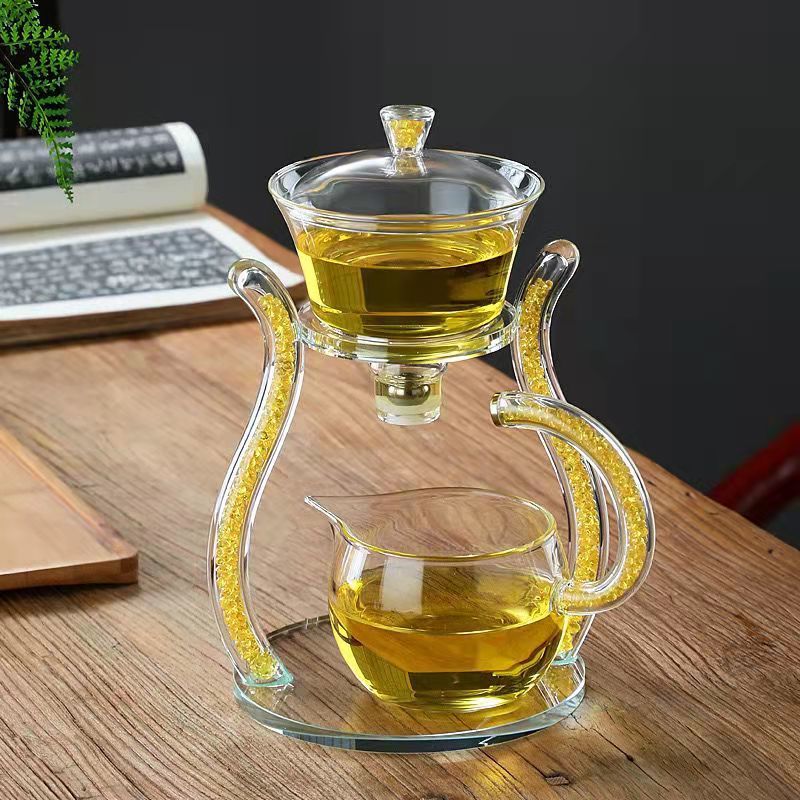
For all those situations, I lean on a few specific tools that live in my tea cabinet. One of them is the Zerlegbare Glas-Teekanne, which I bought when I wanted something that combined the visual appeal of glass with a more refined filtration system. The detachable design means I can clean it thoroughly without battling mesh in tight spaces, and the glass body lets me see the leaves unfurl in a way that mirrors what I love about the French press, just with better temperature control.

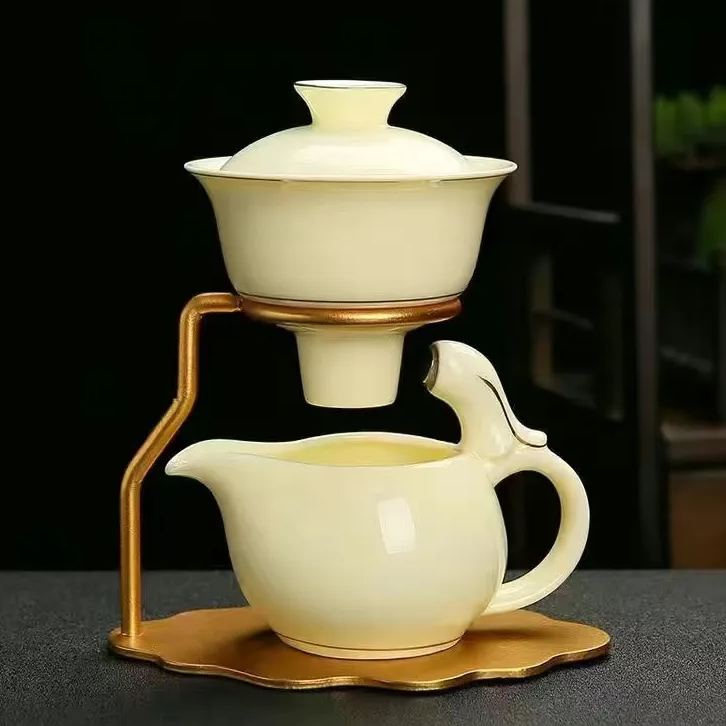
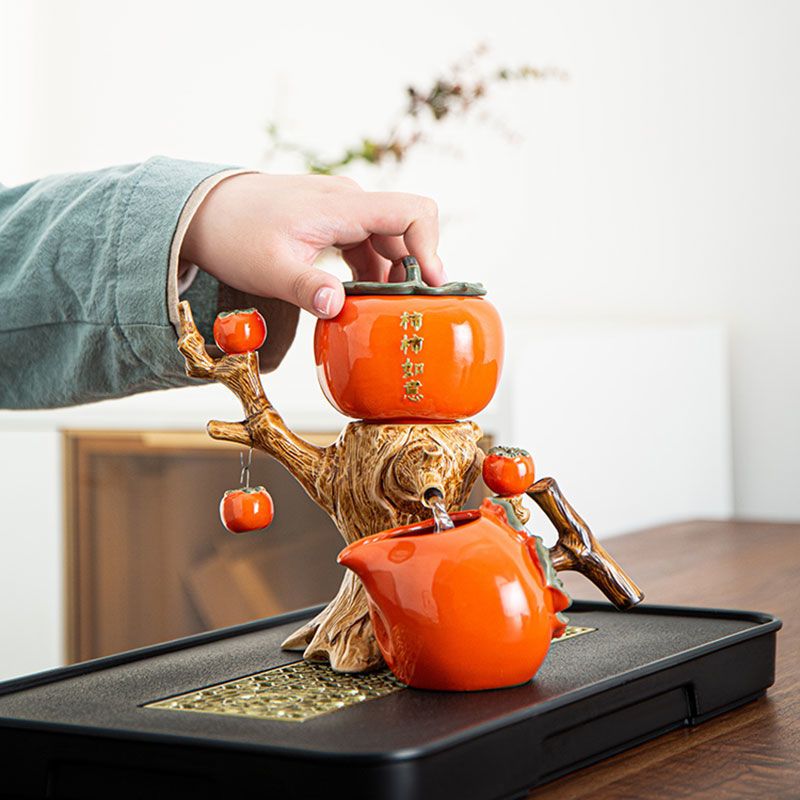
Another favorite for casual brewing that goes a step beyond the French press is the Kaki-Tomaten-Set. This is a rotating ceramic tea maker that automates the steeping and filtration in a way the French press simply can’t. I bought it on a whim a couple of years ago and it’s become my wife’s daily driver because it’s so hands-off. You add leaves, add water, rotate, and the filtration happens automatically. It’s not a French press replacement exactly, but if you find the French press mechanic too involved, this kind of automated immersion brewer is a nice middle ground.

You can browse more options like these in our Glass Teapot Collection if glass is your preferred material, or our Ceramic Teapot Collection if you’d rather lean into the warmth of clay.

A Closer Look at Alternatives Worth Considering

Because this is a buying guide, I want to spend a moment on a few specific brewing setups that aren’t French presses but solve similar problems in different ways. I think this is useful because the reader considering a French press for tea is usually also shopping around for “the next step up,” and I want to give you honest context on what’s worth the upgrade.

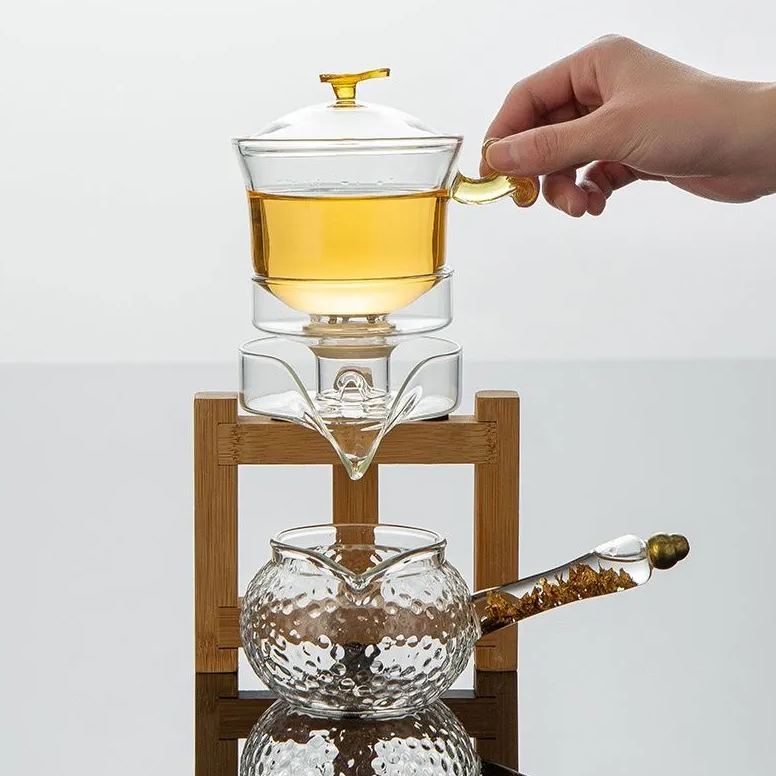
Die [Option] bietet einen anderen Ansatz für Glaskannen, der traditionelle Methoden und Ästhetik betont. Während meine Ausrüstung Konsistenz und Bequemlichkeit priorisiert, konzentriert sich diese Alternative auf das Ritual und die Einbindung in den Zubereitungsprozess. Beide haben ihre Berechtigung, und die Wahl zwischen ihnen hängt von den individuellen Prioritäten ab. Acryl-Ständer Teeset is one I’ve been reaching for more often this year. It’s a glass brewing vessel with an acrylic stand and a magnetic semi-automatic mechanism that lifts the leaves out of the water once the steep is done. The big advantage over a French press is that the leaves are completely removed from the brew, not just compressed. This eliminates the residual oxidation problem I mentioned earlier. If you brew a liter and don’t finish it in one sitting, the tea stays clean because the leaves are no longer in contact with the water. The acrylic stand also doubles as a drip tray, which is more thoughtful than you’d expect.

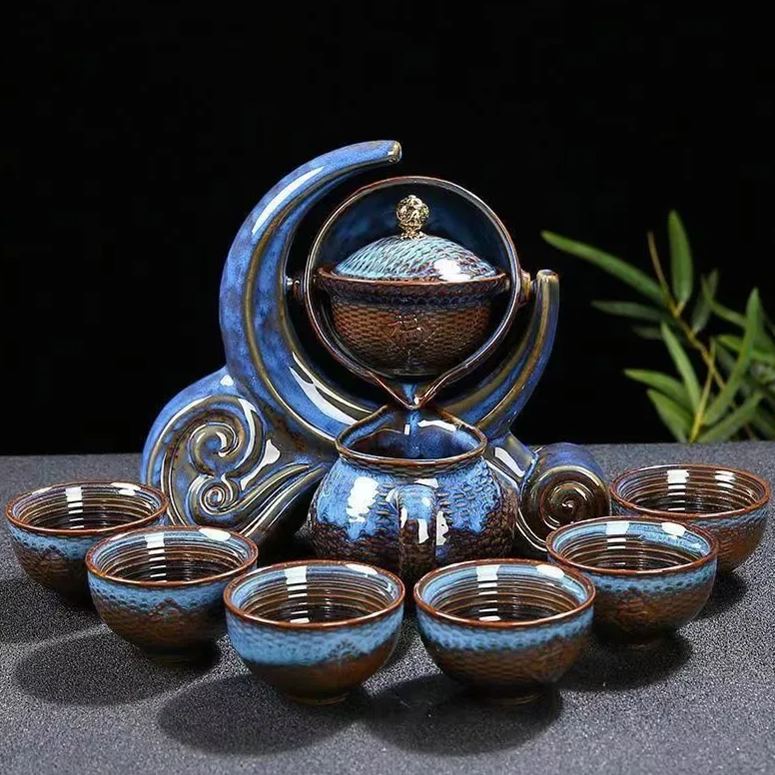
Die [Option] bietet einen anderen Ansatz für Glaskannen, der traditionelle Methoden und Ästhetik betont. Während meine Ausrüstung Konsistenz und Bequemlichkeit priorisiert, konzentriert sich diese Alternative auf das Ritual und die Einbindung in den Zubereitungsprozess. Beide haben ihre Berechtigung, und die Wahl zwischen ihnen hängt von den individuellen Prioritäten ab. Magnetisches Keramik-Teegeschirr-Set is a similar concept but in ceramic with a metal frame. I like this one for early-morning black tea sessions because the ceramic keeps the heat much better than glass, and the magnetic lift mechanism is satisfying in a way that’s hard to describe. There’s something nice about the click and lift that makes the routine feel more intentional than the simple push-down of a French press. If you’re the kind of person who appreciates a small ritual, this is worth considering.

Now, none of these are French presses. They’re more sophisticated immersion brewers with built-in filtration. But they solve the same problem the French press is trying to solve, which is: how do I get clean, consistent tea without standing over a kettle for fifteen minutes? If you find that the French press works for you in concept but you want a more polished experience, stepping up to one of these is a natural progression.

After ten years of brewing, I think the French press is one of the best entry points into loose leaf tea, but it’s not the final destination for most people. The brewers I’ve started using more often lately — the magnetic sets, the ceramic rotating sets — they didn’t replace the French press in my life, they just took over specific use cases where the French press wasn’t quite enough.

Mistakes I Made So You Don’t Have To

I’ve made every mistake in the book with French press tea. Here are the ones that cost me the most time and the most cups of bad tea.

Mistake 1: Treating the French press like a coffee press. Coffee people use water at 200°F and brew for four minutes. Tea people need different temperatures for different teas. Black tea around 205°F for three to four minutes. Oolong around 195°F for three to five minutes. Green tea around 175°F for two to three minutes. If you brew green tea in a French press at boiling, you’ll get a bitter mess every single time. The mesh holds the leaves in suspension, so extraction is faster than in a traditional teapot. Cut your steep times accordingly.

Mistake 2: Leaving the leaves in after plunging. The plunger slows extraction but doesn’t stop it. If you brew at four minutes and then let the press sit for twenty more minutes while you scroll through emails, the tea will be over-extracted and bitter. The fix is to pour off all the tea into a separate vessel once you’re done plunging, or to commit to finishing the pot within ten or fifteen minutes.

Mistake 3: Using too much leaf. French press tea needs less leaf than you think because the immersion is so efficient. I started at a tablespoon per cup, which was way too much. Now I use about one teaspoon per cup for most black teas, or about 2.5 grams per 250ml of water. This is roughly half what I see recommended in most recipes, but trust me, you can always add more leaf next time. You can’t un-bitter the pot.

Mistake 4: Not cleaning the mesh thoroughly. Tea residue builds up on the mesh and starts to affect flavor. After a few weeks of daily use without deep cleaning, you’ll notice a slightly stale, off taste in every brew. The fix is to disassemble the plunger (most are designed to come apart) and soak the mesh in a mild vinegar solution or a baking soda paste once a week. I do this every Sunday as part of my kitchen reset.

Mistake 5: Pressing too hard. The plunger should glide down smoothly. If you have to muscle it, the mesh is probably clogged or you’ve used too much leaf. Forcing it bends the mesh and you’ll end up with sediment in every cup from that point forward.

Die Reinigungsrealität, über die niemand spricht

Cleaning is the part of French press tea that most reviews gloss over. Let me be the person who tells you the truth: it’s not as easy as the marketing suggests. The mesh collects tiny leaf fragments, the plunger shaft has grooves where tannins accumulate, and the lid has a silicone seal that traps moisture and gets gunky fast.

My routine is straightforward. After every brew, I rinse the beaker and plunger with hot water. Once a week, I disassemble the plunger and soak all the parts in warm water with a drop of dish soap for fifteen minutes. I use a small brush (a dedicated toothbrush works great) to scrub the mesh from both sides. Once a month, I do a deep clean with a baking soda paste to break down any mineral buildup from hard water.

Total time: under five minutes for daily, under fifteen minutes for weekly. It’s not onerous, but it’s not nothing either. If you live in a hard water area, expect to do the deep clean more often or you’ll see white mineral deposits on the mesh that are tough to remove.

The bigger long-term issue is wear. Mesh filters degrade over time, especially if you press too hard or use abrasive scrubbers. Most manufacturers recommend replacing the mesh every twelve to eighteen months if you brew daily. Replacement meshes are usually available from the manufacturer or on Amazon, and they cost a few dollars each.

Matching the Tool to Your Tea Life

Let me put this all together. Here’s how I’d think about the choice depending on who you are.

If you’re a complete beginner: Get a 500ml borosilicate glass French press with a fine mesh, double-walled if you can find one in your budget. Learn the basics of temperature and steep time. Don’t overthink the leaf quantity. You’ll outgrow this press within a year, but that’s okay — you’ll have learned what matters to you for the next purchase.

If you’re a daily black tea drinker: Consider stepping up to a stainless steel press for better heat retention. Look for one with a fine mesh, ideally sub-150-micron. The investment pays off in better flavor and durability.

If you share tea with a partner: The 500ml press is your sweet spot. Two mugs each, no waste, fits on any counter. Don’t go bigger unless you actually host regularly.

If you entertain or want ceremony: Skip the French press and go straight to something like the magnetic sets I mentioned. They give you a better visual experience, more control, and a more polished pour. The Acryl-Ständer Teeset is the more accessible price point, while the Magnetisches Keramik-Teegeschirr-Set is the upgrade if you want the warmth of ceramic.

If you want minimal effort: Look at the automated options like the Kaki-Tomaten-Set. The rotating mechanism removes the manual plunging step entirely, which sounds trivial until you’ve had a long day and you just want a clean cup of tea without thinking about it.

And if you find yourself gravitating toward glass or ceramic after all this exploration, both of our category pages are worth a browse: the Glass Teapot Collection has some lovely options, and the Ceramic Teapot Collection covers everything from single-cup brewing pots to full sets.

Final Thoughts from a Decade of Brewing

I started this article talking about an accidental discovery, and I want to end it there too. The French press taught me that brewing tea doesn’t have to be precious or complicated to be good. Some of my best cups have come from a $20 press on a Sunday morning with no ceremony, no special tools, just hot water and a few good leaves.

But the French press also taught me that there’s a ceiling to simple tools. After a while you start wanting more control, more ceremony, more visual pleasure in the brew. That’s not a failure of the French press — it’s just the natural progression of a tea journey. If you’re at the start of that journey, the French press is one of the best teachers you can have. It will reward you generously while you learn, and it will stay useful even after you’ve graduated to fancier tools.

Whatever you choose, brew it for yourself first. Don’t optimize for what looks good on Instagram or what your favorite tea influencer uses. Optimize for the cup that you’ll actually drink, every morning, in the place where you live, in the way that fits your real life. That’s the cup that matters.

If you’re ready to start exploring, take a look around the shop. We’ve curated a range of brewers at every level, from simple glass presses to automated ceramic sets, and our team is always happy to help if you have questions. Whatever you pick, I hope it brings you a few more good mornings.

Ceramic vs Glass Teaset Comparison: Which Material Wins?

Ceramic vs Glass Teaset Comparison: Which Material Wins?

Ceramic vs Glass Teaset Comparison: Which Material Wins?

The ceramic vs glass teaset comparison ends with a clear verdict: glass teapots win for visual brewing and delicate teas, while ceramic teapots excel at heat retention and traditional flavor development. Your tea style, brewing habits, and aesthetic priorities determine which material actually performs better in your kitchen.

This guide breaks down the real-world differences between ceramic and glass teasets, the conditions where each material outperforms the other, and how to match your teapot to the tea you actually drink.

Ceramic vs Glass Teaset: The Direct Comparison

Glass teapots dominate for visual brewing, while ceramic teapots dominate for flavor consistency. Neither material is universally superior—each excels in a specific set of conditions that matter to different tea drinkers.

The core trade-off comes down to physics and chemistry. Borosilicate glass has very low thermal mass, meaning it heats quickly but loses heat quickly. Ceramic (especially thick stoneware or porcelain) has high thermal mass, so it heats slowly but holds temperature for 15–25 minutes longer. This single property shapes everything else: flavor extraction, brewing time tolerance, and even how the teapot looks on your counter.

  • Wärmespeicherung: Ceramic retains heat roughly 30–40% longer than single-wall glass
  • Visual clarity: Glass allows full visibility of tea leaves unfurling, ceramic hides them
  • Geschmacksneutralität: High-quality glass and porcelain are both non-reactive; cheaper ceramic can leach mineral notes
  • Durability: Both can last decades; ceramic chips, glass can shatter from thermal shock
  • Price range: Glass typically runs $15–$80; ceramic ranges from $20 budget to $300+ artisan

When Ceramic Teasets Outperform Glass (and Why)

Ceramic teapots outperform glass when heat stability directly affects the tea’s chemistry. Black teas, pu-erh, and roasted oolongs contain compounds that extract aggressively at high temperatures—any temperature drop during steeping changes the flavor profile mid-cup.

Heat Retention Protects Flavor Consistency

During a typical 4-minute steep, a glass teapot can drop from 200°F to 165°F, while a thick ceramic vessel holds closer to 185°F. That 20°F difference measurably alters tannin extraction, which is why black tea brewed in glass often tastes sharper in the first sip and weaker by the last.

Ceramic’s thermal mass also buffers against ambient temperature changes. If you brew near a cold window or place the teapot on a marble counter, ceramic stabilizes the steep; glass reacts immediately to the environment.

Ceramic’s Porosity Adds Character

Unglazed Yixing clay and similar porous ceramics absorb tea oils over time, building a seasoned surface that subtly enhances repeat brews. This is a real phenomenon in tea culture—not marketing fluff. A Yixing pot used exclusively for one tea type develops what collectors call a “tea soul,” where the vessel itself contributes to the flavor. Glass cannot do this because it is non-porous by design.

However, this advantage only matters if you brew the same tea category repeatedly. If you rotate between green, oolong, and herbal, the absorption becomes a negative, and glass is the safer choice.

When Glass Teapets Are the Better Choice

Glass teapots are the better choice when brewing transparency, cleanliness, and delicate teas matter more than heat retention. Green tea, white tea, and light floral oolongs lose their signature notes within 10°F of temperature drop, so the visual cue glass provides actually matters more than the thermal stability ceramic offers.

Visual Brewing Prevents Over-Steeping

You can see exactly when leaves unfurl, when color hits the right amber, and when sediment starts forming. For a 2-minute green tea steep, this visibility turns guesswork into precision. According to research published by the Tea Association of the USA, water temperature and steep time are the two most variable factors in home brewing; eliminating one of them through sight is a meaningful upgrade.

The visual element also doubles as an experience. Watching dragon well leaves descend or a flowering tea bloom is part of why people choose glass in the first place. A ceramic pot hides all of that.

Hygiene and Flavor Neutrality

Borosilicate glass is essentially inert. It does not absorb flavors, does not retain odors, and does not require seasoning. You can brew a smoky lapsang in the morning and a delicate jasmine in the afternoon without cross-contamination. Ceramic, especially porous varieties, demands single-tea discipline to avoid flavor carryover.

Cleaning is also faster with glass. A rinse and a soft brush handle most residue; ceramic may need baking soda paste to lift stains from unglazed clay.

Heat Retention, Taste, and Durability: The Hidden Factors

The hidden factors that decide the ceramic vs glass teaset winner are wall thickness, lid fit, and infuser material—not the ceramic-versus-glass debate itself. A thin-walled ceramic pot performs worse than a thick-walled glass one, and vice versa.

Wall Thickness Changes Everything

Single-wall glass teapots under 2mm thick behave almost like cold glass, dropping temperature rapidly. Double-wall borosilicate glass with an air gap in between rivals ceramic for heat retention while keeping the visual benefit. If you want both worlds, double-wall glass is currently the closest compromise, though it costs more.

For ceramic, density matters as much as thickness. A dense porcelain cup holds heat longer than a thicker but porous earthenware pot. Quality manufacturers like those featured on teapot set shop often specify whether their pieces are stoneware, porcelain, or bone china, and each behaves differently.

Durability Trade-offs Are Real but Different

  • Glass failure mode: Sudden shattering from thermal shock or impact—no warning, total loss
  • Ceramic failure mode: Chipping at the rim or handle from drops, gradual degradation
  • Glass lifespan: Effectively unlimited if you avoid temperature swings
  • Ceramic lifespan: 10–50 years depending on glaze integrity and use

Glass teapots will not fail from age alone. Ceramic teapots can develop hairline cracks in the glaze over decades, especially if used daily with very hot water, which is a minor food safety concern because bacteria can grow in those cracks.

Choosing the Right Teaset for Your Tea Style (with Product Recommendation)

Choose a glass teaset if you brew green, white, or flowering teas; choose ceramic if black tea, pu-erh, or roasted oolong dominates your routine. For mixed drinkers, a double-wall glass pot is the most flexible single investment.

Match the Teapot to the Tea Category You Drink Most

If more than 60% of your brewing is one category, optimize for that category. Matcha and herbal teas work fine in either material because they do not depend on the leaves staying visible. Heavily oxidized or fermented teas—where tannin management is critical—benefit from ceramic. Lightly oxidized teas with aesthetic value benefit from glass.

When the Manual Approach Is Not Practical

The traditional way to build a tea setup is to buy one ceramic pot for one tea category, a glass pot for delicate teas, and ideally a Yixing clay pot for pu-erh. Serious collectors do end up with three or four vessels, each tuned to a specific role, and that is reasonable if tea is a daily ritual.

If you want to skip the multi-vessel commitment and start with one well-designed piece that handles 80% of common use cases, a borosilicate glass teapot with a removable stainless infuser covers green tea, white tea, oolong, and most herbal blends without flavor carryover. For buyers looking for a single versatile starting point, the Glas-Teekannen-Kollektion at teapotsetshop offers borosilicate options that resist thermal shock and include integrated infusers—useful for anyone who brews three or more cups daily and does not want to manage multiple specialty pots.

Budget and Aesthetic Considerations

Glass is generally 20–40% cheaper than comparable-quality ceramic, mainly because the manufacturing process is faster and the raw materials are less expensive. Borosilicate glass teapots in the $25–$60 range deliver 90% of the performance of any teapot on the market.

Ceramic carries a craftsmanship premium. Hand-glazed, hand-thrown pieces can run $150–$500, and Yixing clay pots from established kilns reach the four-figure range. Those prices reflect labor and tradition, not necessarily brewing performance.

Häufig gestellte Fragen

Which is better for brewing tea, ceramic or glass?

Neither material is universally better. Glass is better for green, white, and flowering teas where visual brewing matters; ceramic is better for black, pu-erh, and roasted oolong where heat retention matters. For mixed tea drinkers, a double-wall glass pot offers the best single-vessel compromise.

Does a glass teapot affect tea taste?

High-quality borosilicate glass is chemically inert and does not affect tea taste. Lower-quality glass with metallic trim or plastic lids can introduce off-flavors, which is why infuser and lid materials matter as much as the glass itself.

Are ceramic teapots better than glass for health?

Both materials are food-safe when manufactured to standard. Glazed ceramic must be lead-free and cadmium-free; reputable manufacturers meet FDA or equivalent standards. Glass is generally considered the safest baseline because it is non-porous and has no glaze to worry about.

Can glass teapots be used on a stovetop?

Most glass teapots are not designed for direct stovetop use. Only borosilicate glass rated for stovetop heating should be exposed to direct flame or electric coil; otherwise the thermal shock will crack the vessel. Warming the pot with hot water before use is a safer practice.

How long do glass teapots last?

A well-maintained borosilicate glass teapot can last decades. The primary failure causes are thermal shock and impact, not material fatigue. Avoid pouring boiling water into a cold pot and never place a hot glass pot on a wet or cold surface.

Final Verdict: Which Material Wins?

Glass teapots win on versatility, hygiene, and price, while ceramic teapots win on flavor depth and heat stability for oxidized teas. For most home buyers brewing a mix of teas, a quality borosilicate glass teapot is the smarter first purchase.

Once you know your dominant tea category and how much heat retention matters for that specific leaf, the decision becomes straightforward. Beginners and visual brewers should start with glass; traditionalists and black tea drinkers should invest in ceramic. For a complete glass brewing setup with integrated infusers and thermal-shock-resistant borosilicate, the curated collection at teapotsetshop.com’s glass teapot selection offers ready-to-use options that work across multiple tea styles without the multi-vessel commitment.

How to Pick the Right Size Teapot (And Why Most People Get It Wrong)

The Teapot I Bought First (and Why It Gathered Dust)

I still remember the afternoon I brought home my first “real” teapot. I was twenty-three, freshly obsessed with loose leaf oolong, and convinced that owning a proper pot would change my whole tea life. The shop I wandered into had walls lined with gorgeous ceramics, and I left with a beautiful yixing-style clay pot that held about 250ml of water. I thought it was perfect. I was wrong.

The problem wasn’t the pot itself. The problem was that I had no idea what I actually wanted from a teapot. I was brewing alone most evenings, hosting friends maybe twice a month, and somehow I had convinced myself that a small pot would teach me discipline and patience. What it actually taught me was that I was constantly refilling it, missing steeps, and getting impatient when I wanted a second cup. Within six months, I defaulted to my kettle and a plain infuser mug. The gorgeous clay pot sat on a shelf looking philosophical.

That pot taught me the single most useful lesson in my entire tea journey: size is the first decision you should make, and almost everyone gets it backwards. We agonize over clay versus glass, gongfu versus western, whether the spout has the right pour angle. But if the pot is the wrong volume for how you actually drink tea, none of those details will save your ritual. They will just frustrate you quietly, brew after brew, until you stop reaching for the thing entirely.

This article is the one I wish I had read before that first purchase. I’m going to walk you through how I think about teapot sizing now, what I keep on my own shelf, and where most buyers (myself included) go wrong.

The Three Sizes Nobody Talks About, but Everyone Needs

When tea drinkers ask me about size, they usually mean ounces or milliliters. That’s the wrong unit to start with. The right unit is how many people are drinking, and how often you want to refill. Once you frame it that way, the market basically offers you three useful categories:

  • Solo pots (100–250ml) — designed for one person, often one or two small cups per steep. This is where most gongfu drinkers live, and where a lot of newcomers accidentally start.
  • Couple or small gathering pots (350–600ml) — fills two to four cups comfortably, the sweet spot for date nights, slow weekends, and one or two guests.
  • Group or hosting pots (700ml+) — for when friends are over, family gatherings, or any situation where you’ll be pouring repeatedly over an hour or more.

The mistake I made was assuming these were three flavors of the same thing. They are not. They are three different tools, and the way tea interacts with leaf, water, and air changes meaningfully between them. A solo pot rewards slow, attentive brewing. A group pot rewards consistency and stamina. A couple pot sits awkwardly in between, which is exactly why it ends up being the most underrated and the most useful.

If I could give my past self one piece of advice, it would be this: don’t buy the pot you wish you had. Buy the pot that matches the way you actually drink tea on a Tuesday night when nobody is watching.

Solo Brewing: The Case for Going Small (and When to Skip It)

Let me defend the small pot for a moment, because they get a bad reputation. If you genuinely love gongfu style — short steeps, multiple infusions, sitting with the tea — a 150–200ml pot is a beautiful tool. The leaf-to-water ratio stays tight, the heat holds, and the rhythm of pour, wait, drink is genuinely meditative. I use a small pot most weekday mornings with my first pot of dancong.

But here’s the trap: if your actual habit is to make one mug and walk away, a tiny pot will annoy you. You’ll brew once, pour once, and then stare at the leftover leaves wondering if you should commit to a second steep that you don’t actually want. That’s not a teapot problem; that’s a mismatch between tool and ritual.

If you are a true solo drinker and your ritual is gongfu, a small ceramic pot is glorious. Our Ceramic Teapot Collection has several that fit this exact use case, and I’d nudge most gongfu drinkers toward one in the 150–200ml range rather than anything larger. The leaf wants room to expand, but it doesn’t want to drown.

On the other hand, if you’re a “boil water, pour, walk away” person like I was when I started, do not start with a solo pot. Skip ahead.

The Couple’s Pot: My Favorite Size, and Why I Reach for It Most

About four years after my failed first purchase, I bought a 450ml glass teapot, and everything about my tea habit changed. It was the right size for two people sharing a pot, or for me alone when I wanted two mugs back to back without re-brewing. It also handled the “friend drops by unexpectedly” moment with grace, which the small clay pot never did.

This is the size I now recommend to most people as their primary pot, because it handles roughly 80% of real-life situations without compromise. A 400–500ml pot gives you:

  • Two full mugs in one steep, no awkward half-pours
  • Enough thermal mass to stay hot through a 10-minute conversation
  • Room for two people to share without anyone waiting
  • An easy buffer for one extra guest who happens to be home

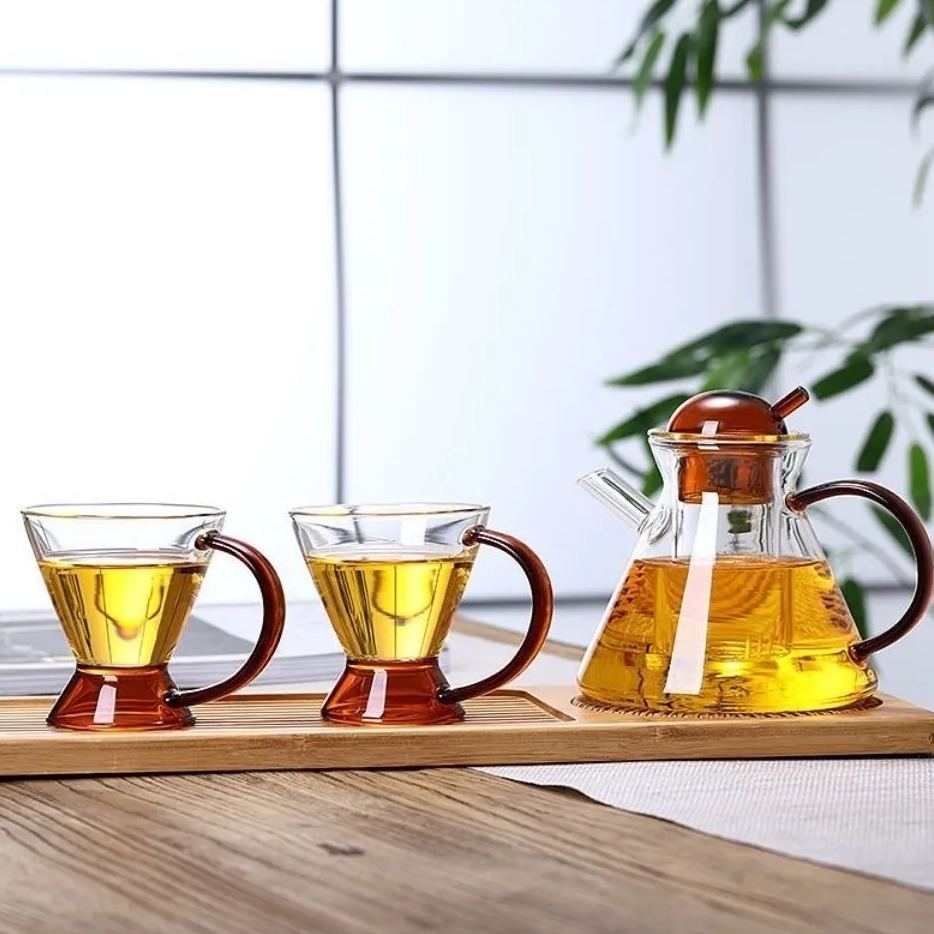
Die [Option] bietet einen anderen Ansatz für Glaskannen, der traditionelle Methoden und Ästhetik betont. Während meine Ausrüstung Konsistenz und Bequemlichkeit priorisiert, konzentriert sich diese Alternative auf das Ritual und die Einbindung in den Zubereitungsprozess. Beide haben ihre Berechtigung, und die Wahl zwischen ihnen hängt von den individuellen Prioritäten ab. Modernes Magnet-Set lives in this exact sweet spot for me. I bought it because the magnetic infuser is genuinely clever — the strainer lifts out cleanly without a balancing act over the sink — but what kept it on my counter was the size. It’s big enough for my partner and me to share a pot of tieguanyin on a slow Sunday, small enough that I don’t feel wasteful when I brew alone on a Wednesday. The glass also lets me watch the leaves unfurl, which sounds like a gimmick until you’ve actually done it with a good oolong. You start to understand why the brew time matters.

There is a small honest drawback: a glass pot this size does not hold heat as long as ceramic. If I’m brewing a particularly delicate green tea, I find myself needing to pour a touch faster, or pre-warming the cups. It is a minor adjustment, not a deal-breaker. For daily black and oolong drinking, the heat retention is plenty.

The size that gets ignored in every buying guide is the “couple’s pot.” It is also the size most people should actually buy first.

Modernes Magnet-Set

When Friends Come Over: The Group and Hosting Pot

Once you have your daily pot sorted, the next question is what to do when you actually have people over. A 450ml pot is too small for four people. Refilling it twice in the middle of a conversation is annoying for you and a little embarrassing in front of guests. A second pot or kettle quietly boiling in the kitchen breaks the spell of the whole ritual.

This is where the larger pot earns its place. I learned this lesson during a small dinner party about two years ago. I had brewed three rounds of sheng pu’er in my “couple’s” pot and spent the entire evening apologetically running back and forth to the kitchen. After that night, I bought something designed for a group.

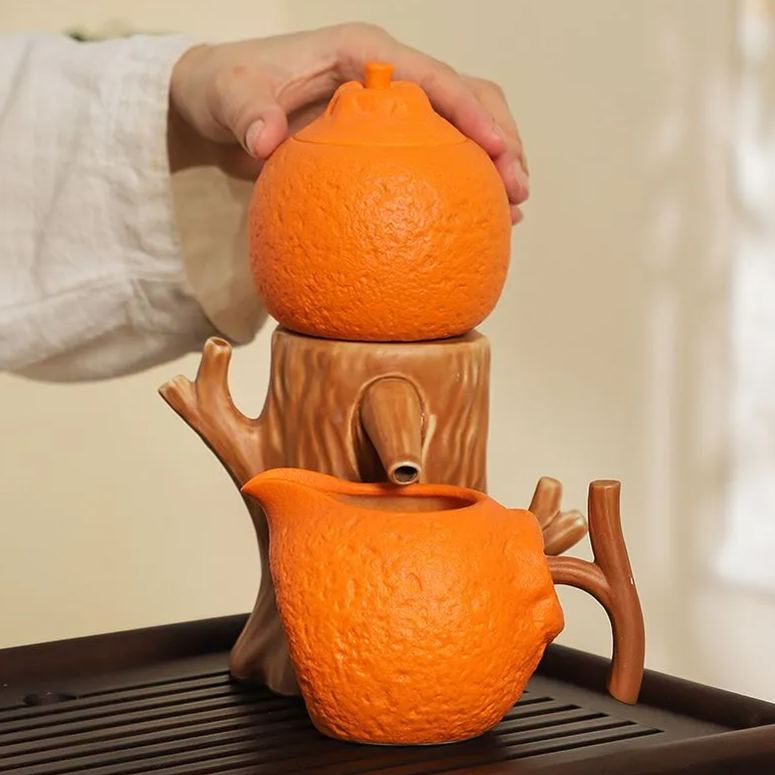
What I wanted — and what I think most hosts actually want — is something between 700ml and 1L that pours well, doesn’t look like a giant laboratory beaker, and ideally makes the whole process feel less like work. The Kaki-Tomaten-Set does this in a way I did not expect. It’s an automatic tea maker, which initially made me skeptical — I associate automation with bad tea. But what it actually does is solve the host’s problem beautifully: water stays at temperature, the leaves steep and drain automatically, and you are free to talk to your guests instead of hovering over the pot. It is the most relaxed I’ve ever felt serving tea to a group.

Kaki-Tomaten-Set

The honest trade-off: an automatic pot like this is overkill for solo or couple use, and the rotating ceramic design is more of a statement piece than a minimalist one. If your kitchen leans clean and modern, it will dominate the counter. If your kitchen leans warm and lived-in, it will look like it has always been there. Mine has earned its spot because I genuinely host, but I wouldn’t recommend it as someone’s only pot. It is a second pot, a hosting pot, a weekend pot.

If you entertain more than once a month, or if your family naturally gathers around the table for tea rather than coffee, this is the category worth exploring. And if you find yourself drawn to the warmth of ceramic for group brewing, our Ceramic Teapot Collection includes several larger pots that aren’t automatic but give you that same generous capacity with a more traditional pour.

The Novelty Pot: When Small Is the Whole Point

There is a category that doesn’t fit neatly into the solo/couple/group framework, and that’s the novelty pot — the small, whimsical piece that lives on your shelf more than on your brewing counter. I resisted these for years, partly because I thought they were unserious and partly because I assumed they wouldn’t brew well. I was wrong on both counts.

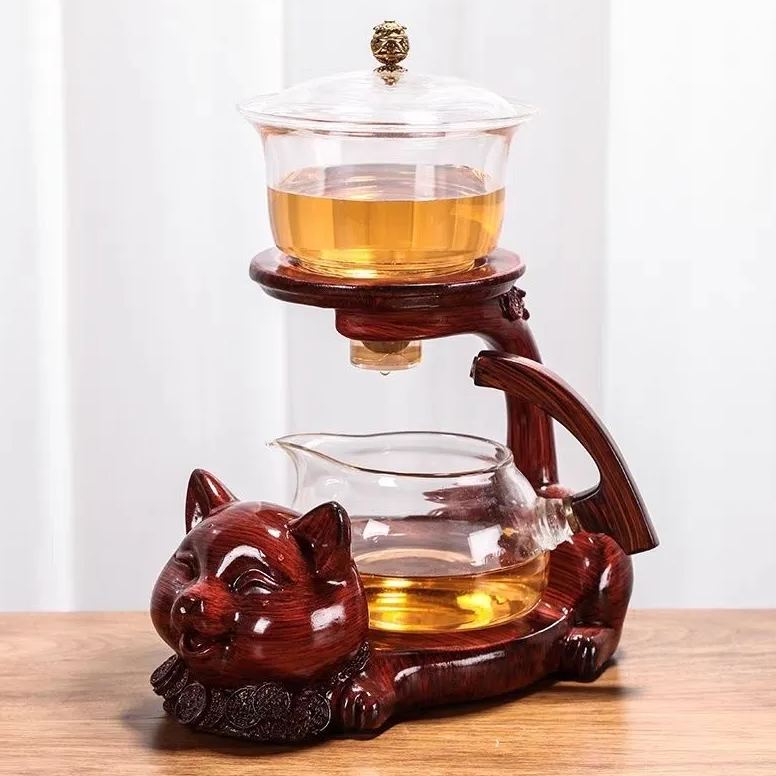
Die [Option] bietet einen anderen Ansatz für Glaskannen, der traditionelle Methoden und Ästhetik betont. Während meine Ausrüstung Konsistenz und Bequemlichkeit priorisiert, konzentriert sich diese Alternative auf das Ritual und die Einbindung in den Zubereitungsprozess. Beide haben ihre Berechtigung, und die Wahl zwischen ihnen hängt von den individuellen Prioritäten ab. Schweineförmiges Teekännchen was a gift from my sister, and I rolled my eyes at it for about three days before I actually used it. It holds somewhere in the 200–300ml range, which makes it firmly a solo pot. The “magic” part is that it’s semi-automatic — you fill it, set it, and the leaves steep and drain on their own without you holding anything. For a lazy Sunday morning where I want tea but don’t want to think about tea, it is genuinely delightful.

The honest drawback: a novelty pot is not where you learn serious brewing. If this is your first and only teapot, you’ll outgrow it within a year. But as a second or third pot — the one that lives by your reading chair, or the one you use when you’re sick and just want something warm without effort — it has real value. I’d also argue that the playfulness of it makes tea more approachable for people in your life who think of tea as “the stuff my grandmother drinks.” I have converted at least two friends back into tea drinkers with this pot, which is not something my yixing clay pot ever accomplished.

Schweineförmiges Teekännchen

Material Matters, but Only After Size

Once you’ve picked a size, the material conversation actually becomes useful. Before that, it’s a distraction.

Glas is what I’d recommend for most people starting out. You can see what’s happening, you can tell when the leaves are spent, and there’s no mysterious “seasoning” ritual. The downside is heat retention, which is real. Glass is fine for black tea, oolong, and white, but if you’re drinking delicate green teas that turn bitter quickly, you’ll want to pour faster or consider warming your cups.

Ceramic is the workhorse. It holds heat better than glass, doesn’t demand the careful handling of clay, and comes in enough sizes and shapes that you can find one for any of the three size categories above. Our Ceramic Teapot Collection spans everything from solo gongfu pots up through hosting vessels, and ceramic is what I’d point a beginner toward without hesitation.

Clay (yixing and friends) is wonderful but complicated. It seasons over time, it pairs best with specific teas, and it usually comes in small sizes because that’s what the brewing style demands. If you fall in love with clay later, that’s a whole journey — but I wouldn’t start there.

Cast iron holds heat beautifully and looks dramatic, but it’s heavy, it can rust if you mistreat it, and it’s overkill for most home use. Lovely for the right aesthetic, but rarely the most practical pick.

There is no “best” teapot material. There is only the material that fits the way you brew, and you can’t know that until you know your size.

The Math Nobody Tells You About Teapot Sizing

One more piece of sizing logic that took me embarrassingly long to internalize: the rated volume of a teapot is not the volume of tea you actually drink. A 500ml pot does not give you 500ml of tea. Some of that water stays with the leaves. Some evaporates. Some clings to the walls of a thick ceramic pot. The realistic pour from a 500ml pot is closer to 350–400ml of actual drinkable tea, depending on the infuser design.

This matters because cups vary wildly. A small Chinese tasting cup is 30ml. A Western mug is 250ml or more. If you have one Western mug in mind, a “450ml couple’s pot” is really a one-and-a-half-mug pot, which is the exact awkward size I warned you about earlier.

The mental shortcut I now use: match the rated pot volume to roughly 1.5x to 2x the size of the cup you actually drink from, multiplied by the number of people. So if you and your partner both drink from 250ml mugs, you want a pot in the 750ml to 1L rated range, not the 450ml range. If you drink from smaller cups, the math flips and a 350–450ml pot becomes plenty for two.

This is also why I encourage people to think about their actual cup before buying a teapot. The pot is downstream of the cup, not the other way around.

Die Fehler, die ich gemacht habe, damit Sie sie nicht machen müssen

Looking back at ten-plus years of buying teapots — for myself, for friends, for family members I’ve slowly converted — there are a handful of mistakes that come up over and over.

Buying small because it looks elegant. A tiny pot on a shelf looks beautiful. A tiny pot on your counter at 7am when you want tea now looks like a problem. Pretty is not a brewing strategy.

Buying huge because you “might have guests.” The reverse mistake. A 1.2L pot for one person who hosts twice a year is a pot that holds cold tea every other day. The “what if” pot is rarely the right pot.

Treating size as a final detail. People spend hours agonizing over spout shape, lid fit, and handle ergonomics. These matter. But they matter only once the size is right. A perfectly crafted 150ml pot for someone who actually needs 500ml is still the wrong pot.

Ignoring how you clean it. A wide-mouth pot is easier to rinse. A pot with a removable infuser is easier to maintain than one with a built-in strainer you can’t fully reach. I have retired two beautiful pots because I dreaded washing them, and a teapot you dread washing is a teapot you stop using.

Skipping the second pot too long. Once you have a daily driver, you’ll start to notice the moments it doesn’t quite fit. That’s your cue to add a second pot — not to replace the first, but to cover the gap. Most tea drinkers I’ve talked to end up with two or three pots, and each one has a specific job.

What I Actually Keep on My Shelf Now

In the spirit of full honesty, here’s what lives on my counter and shelves today, and what each one does:

  • A small clay pot (180ml) for gongfu sessions on weekends when I want to sit with a single oolong for an hour.
  • The Modern Magnetic Set (~450ml) for daily brewing with my partner, and for any one-guest situation.
  • The Persimmon Tomato Set (~1L) for hosting, dinners, and slow afternoons when the kitchen is full of people.
  • The Pig Shaped Teapot for lazy mornings, sick days, and the occasional gift to a friend I’m trying to convert.

That’s four pots, and I’m not remotely apologetic about it. They each earn their place by being the right tool for a specific moment. None of them tries to do everything, and that is exactly why I reach for them all.

Looking back, the original mistake — buying the yixing pot first — wasn’t really about yixing or clay. It was about assuming one pot could be everything. Tea is a daily ritual with at least three or four distinct modes: the quiet solo cup, the shared pot with someone you love, the lively gathering, and the playful treat-yourself moment. Each of those modes wants its own pot. Once you accept that, the buying decisions get dramatically easier.

How to Pick Your First Pot (Without Repeating My Mistake)

If you are starting from zero and want one pot that will carry you through the next year, my honest recommendation is this: figure out your most common tea moment first. Not the moment you wish you had, but the one you actually have, most days, at the time of day you actually drink.

If your honest answer is “alone, with a mug, while I read” — go small. A 150–250ml ceramic pot will serve you beautifully, and you can browse our Ceramic Teapot Collection for solo-friendly options.

If your honest answer is “with my partner, in the afternoon, slowly” — go couple’s size. A 400–500ml glass or ceramic pot is your daily driver, and the Modernes Magnet-Set is a particularly good entry point because the magnetic infuser removes one of the small daily frustrations.

If your honest answer is “when friends and family are over, multiple times a month” — start with the hosting pot. A 700ml to 1L automatic or large ceramic pot will save you the running-back-and-forth problem I described earlier, and you can find several good options in our hosting-friendly Matcha Tea Set Collection and beyond, including the Kaki-Tomaten-Set for a more relaxed serving style.

If your honest answer is “I genuinely don’t know yet” — that’s fine. Get the couple’s size. It is the most forgiving, the most versatile, and the one that will stay useful even as your habits evolve. Then, six months in, you’ll know what gap your second pot needs to fill.

A Final Thought on the Pot You Don’t Buy Yet

There is something almost paradoxical about the right-sized teapot: the better it fits your life, the less you’ll think about it. You’ll just reach for it, brew, pour, drink, and put it back. It will fade into the rhythm of your day. The wrong pot, by contrast, is the one you keep noticing — the one that’s too small, too big, too fiddly, too precious to use on a weekday.

That fading-into-the-background quality is, to me, the real test of a good teapot. Not how beautiful it looks on day one, but how invisible it becomes by month six. The pot you barely think about is the pot that’s earning its place.

If you take one thing from this entire article, take this: start with size, let material follow, and trust the size that matches your Tuesday self, not your Saturday-evening-with-friends self. The pot that gets used every day will always beat the pot that gets admired once and forgotten.

And if you’re not sure where to begin, take a slow browse through the shop. There is no rush, no right first purchase, and very little that a kettle of hot water and a forgiving leaf cannot forgive. The pot is just the tool. The ritual is yours.

How to Choose a Tea Set for Beginners: Complete Guide

How to Choose a Tea Set for Beginners: Complete Guide

How to Choose a Tea Set for Beginners: Complete Guide

Choosing your first tea set does not have to be confusing or expensive. The right beginner tea set combines simple functionality, durable materials, and an intuitive design that lets you focus on flavor rather than technique. This guide distills everything new tea drinkers need to know to buy with confidence.

Wichtige Erkenntnisse

  • A practical beginner tea set needs only three core pieces: a teapot, cups, and an infuser or strainer.
  • Glass and porcelain are the most forgiving materials for beginners because they do not absorb flavors and are easy to clean.
  • Match set size to your household: 350–600 ml pots serve one to two people; 800–1200 ml pots work for groups.
  • Skip novelty designs and prioritize oven-safe, microwave-safe, and dishwasher-safe construction.
  • If you want to skip the research and start brewing today, a curated glass tea set offers the easiest entry point.

Inhaltsverzeichnis

  • What a Beginner Tea Set Actually Needs
  • Material Comparison: Glass, Porcelain, Ceramic, and Cast Iron
  • Essential Pieces in a Starter Tea Kit
  • Choosing the Right Size and Capacity
  • Matching Your Set to Popular Tea Types
  • Budget vs. Premium: Where to Spend and Where to Save
  • Cleaning, Storage, and Long-Term Care
  • A Ready-Made Alternative for First-Time Buyers
  • Häufig gestellte Fragen
  • Endurteil

Buying a tea set for the first time is less about brand prestige and more about understanding how each material, size, and component affects your daily brew. According to the Tea Association of the USA, more than 159 million Americans drink tea daily, and most beginners overestimate the equipment they need. The right starter set should feel effortless: boil water, add tea, pour, enjoy. This article walks through every decision point so you can skip the trial-and-error phase entirely.

What a Beginner Tea Set Actually Needs

A beginner tea set should contain only the pieces you will use on a daily basis, because extra components create clutter and confusion. The minimum viable setup consists of a teapot (or gaiwan), two to four small cups, and a way to filter loose leaves. Anything beyond these basics can wait until your taste preferences mature.

Many first-time buyers make the mistake of purchasing elaborate gongfu sets with six or more tools, then abandoning them after a week. Complexity kills consistency. A simple three-piece configuration supports roughly 90 percent of brewing scenarios: green tea, black tea, oolong, white tea, and herbal infusions.

The Three Core Components

  • Teapot or brewing vessel: Holds hot water and tea leaves; capacity ranges from 250 ml (single serve) to 1500 ml (group serving).
  • Tassen: Small (30–80 ml) for tasting, larger (150–250 ml) for everyday drinking.
  • Infuser, strainer, or built-in filter: Removes leaves from the brewed liquid; stainless steel mesh and fine stainless steel are the most reliable filter types.

If you only drink tea occasionally, you can substitute a single large mug with a built-in infuser. But once you brew tea three or more times per week, a dedicated teapot noticeably improves flavor clarity and aroma release.

Material Comparison: Glass, Porcelain, Ceramic, and Cast Iron

Material is the single most important decision when buying a tea set for beginners, because it directly affects taste neutrality, heat retention, and maintenance effort. Glass and porcelain are the safest starting points, while cast iron and unglazed clay serve more advanced drinkers.

Glasteekannen

Borosilicate glass teapots are ideal for beginners because they reveal the color of the brew, tolerate thermal shock up to 150°C, and never absorb flavors from previous sessions. You can see whether the leaves have fully unfurled, which removes guesswork during steeping. Glass also pairs well with stovetop-safe models for those who want to heat water directly in the pot.

Porcelain and White Ceramic

Porcelain offers slightly better heat retention than glass and provides a neutral surface that does not react with tea compounds. It is the traditional choice in Chinese and Japanese tea culture because it preserves subtle floral notes in high-mountain oolongs. The trade-off is opacity; you cannot visually monitor the brew.

Gusseisen (Tetsubin)

Cast iron teapots retain heat exceptionally well and look striking on a countertop, but they are heavy, require careful drying to prevent rust, and are not ideal for green or white teas that scorch at high temperatures. They suit black tea drinkers in cold climates more than they suit curious beginners.

Yixing und unglasierter Ton

Unglazed clay teapots absorb flavor over time and are dedicated to a single tea type, usually oolong or pu-erh. Beginners should avoid these until they have identified a preferred category. For an early overview of regional styles, our Beginner’s Guide to Tea Types walks through the most popular varieties.

Essential Pieces in a Starter Tea Kit

A complete beginner tea set should include four to six pieces, no more, to keep the brewing process intuitive. Anything beyond this becomes decorative rather than functional for a first-time buyer.

What to Include

  • Teapot (350–600 ml): Ideal capacity for one to two people brewing two cups each.
  • Two to four small cups (60–80 ml): Smaller cups keep tea hot and let you taste multiple infusions.
  • Removable stainless steel mesh infuser: Fits inside the teapot and lifts out cleanly; fine mesh prevents small particles from escaping.
  • Tea tray or small saucer: Catches drips and protects your countertop; bamboo or melamine works for most budgets.
  • Optional: tea towel and timer: A linen towel handles hot lids; a simple kitchen timer improves steeping accuracy.

Tools that beginners can safely skip include a tea pick, a fairness pitcher (gong dao bei), and a scent cup. These serve specialized tasting sessions that most new drinkers do not yet host.

Choosing the Right Size and Capacity

The right teapot capacity depends on how many people you typically serve and how much tea each person drinks per session. Undersized pots force constant refilling; oversized pots leave water cooling between pours.

Capacity Guidelines by Household

  • Solo drinker or couple: 350–500 ml pot, paired with two 80 ml cups. This produces roughly two servings of 150 ml each.
  • Two to three people: 700–900 ml pot, paired with four cups. Allows each person a generous 200 ml pour.
  • Family or hosting (4+): 1000–1500 ml pot, six to eight cups. Useful for weekend brunches and afternoon tea.

Heat retention also matters. A 350 ml glass pot begins cooling within five minutes of brewing, which works perfectly for green and white tea that should be enjoyed at 70–80°C. Larger pots retain heat longer, suiting black tea drinkers who prefer hotter brews.

Matching Your Set to Popular Tea Types

Different teas demand different brewing temperatures, steeping times, and leaf sizes, so your set should align with the varieties you plan to drink most often. A mismatch between tea and equipment is the most common cause of bitter or weak brews among beginners.

Green Tea

Green tea needs 70–80°C water and a short steep of 30–90 seconds. Glass teapots let you watch leaves unfurl and signal when to stop. Avoid cast iron, which overheats delicate leaves.

Hochwertige Sorten wie Keemun oder Lapsang Souchong eignen sich gut für die Gongfu-Methode.

Black tea brews best at 95–100°C for three to five minutes. Porcelain or ceramic pots work well here, though glass remains acceptable. Larger leaf grades like broken Assam benefit from a wide infuser basket.

Die beliebteste Wahl für die Gongfu-Zubereitung. Komplexe Aromen, die sich mit jedem Aufguss weiterentwickeln.

Oolong spans a wide temperature range (85–95°C) and rewards multiple short infusions. A small clay pot or a glass pot with a fine mesh infuser works best. For deeper technique guidance, see our step-by-step loose-leaf brewing tutorial.

Herbal and Fruit Infusions

Herbal teas are the most forgiving category; any non-reactive material works, and steeping times are flexible. Glass is particularly attractive because the colorful blends look beautiful during infusion.

Budget vs. Premium: Where to Spend and Where to Save

A quality beginner tea set can cost anywhere from $25 to $200, but price does not always correlate with brewing performance. Most of the premium markup covers decorative glazes, hand-painted artwork, or branded packaging rather than functional improvements.

Where to Spend

  • Borosilicate glass construction: Cheap soda-lime glass cracks under thermal shock; borosilicate survives sudden temperature changes.
  • Stainless steel infuser: Plastic infusers warp and stain over time.
  • Tight-fitting lid: A loose lid lets heat escape and cools the brew unevenly.

Where to Save

  • Hand-painted artwork: Pretty but adds cost; skip it for daily use.
  • Wooden presentation trays: Useful for hosting but unnecessary for solo drinkers.
  • Travel cases: Helpful only if you brew at the office frequently.

A well-constructed glass or porcelain set in the $30–$60 range will serve a beginner for years. According to Healthline’s overview of tea nutrition, regular tea drinkers benefit most from consistency, not from high-end equipment, making budget discipline a smarter long-term strategy.

Cleaning, Storage, and Long-Term Care

Proper care extends the lifespan of any tea set and prevents the off-flavors that come from residual oils and tannins. Most beginners over-wash their equipment with harsh soap, which can actually leave residues that interfere with taste.

Daily Cleaning Routine

  1. Rinse the teapot, infuser, and cups with warm water immediately after use.
  2. Use a soft sponge and mild, unscented dish soap once per day.
  3. Dry components upside down on a cloth to prevent water spots and rust on metal parts.

Monthly Deep Cleaning

  • For glass and porcelain: soak in a solution of warm water and one tablespoon of baking soda for 30 minutes, then rinse thoroughly.
  • For cast iron: wipe with a dry cloth, never soak. Air-dry over low heat to evaporate any residual moisture.
  • For unglazed clay: rinse only with water; soap will clog the porous surface.

Storage also matters. Keep teapots in a dry cabinet away from strong spices or coffee, both of which can transfer aroma through porous materials over time.

A Ready-Made Alternative for First-Time Buyers

If you would rather skip the research and start brewing today, the Elysian Glass Tea Pot Set arrives pre-assembled with everything a beginner needs: a 600 ml borosilicate glass teapot, two 100 ml porcelain cups, and a removable stainless steel mesh infuser. The glass body lets you watch the leaves unfurl, while the neutral material never absorbs flavors between sessions.

Setting it up manually would require purchasing each piece separately, reading material-comparison guides, and confirming that the infuser basket fits the pot opening. The curated set eliminates those steps. It is also stovetop-safe, dishwasher-safe, and backed by a one-year warranty, which is rare in this price bracket. For buyers who want a single, reliable purchase rather than a piecemeal kit, this is the most efficient path from unboxing to first cup.

Häufig gestellte Fragen

How much should I spend on my first tea set?

A reliable beginner tea set costs between $30 and $70. Anything cheaper risks thin glass and unstable lids; anything more expensive usually reflects decorative elements rather than brewing performance. The Elysian Glass Tea Pot Set sits in the middle of this range and includes every essential piece.

Is a glass teapot better than ceramic for beginners?

Glass is generally better for beginners because it is flavor-neutral, easy to clean, and lets you visually monitor the brew. Ceramic offers slightly better heat retention but hides the leaves, which can lead to over-steeping. Both materials are valid; glass simply removes more guesswork.

Do I need a tea set if I only drink bagged tea?

No dedicated set is required for bagged tea, though a single infuser mug performs the same function as a teapot for solo drinkers. A proper tea set is more valuable once you start exploring loose-leaf varieties, where the larger leaf size and infusion process benefit from a wider brewing vessel.

How many cups should a beginner tea set include?

Two to four cups is the practical range. Two cups suit solo drinkers or couples; four cups accommodate three or more guests. Anything beyond four is unnecessary unless you host formal tea sessions.

What is the easiest tea to brew with a new tea set?

Black tea, particularly English Breakfast or a Ceylon blend, is the most forgiving starting point. It tolerates small temperature errors, steeps consistently at 95°C, and pairs with milk or sugar if you prefer a softer flavor. Once you are comfortable with black tea, branch out into oolong and green tea.

Endurteil

The best tea set for beginners is the one you will use daily, and that means prioritizing simplicity over decoration. Choose borosilicate glass or porcelain, a 350–700 ml capacity, a stainless steel infuser, and two to four cups. Skip specialty tools until your routine is established. A thoughtfully curated set like the Elysian Glass Tea Pot Set packages all of these requirements into a single, ready-to-brew kit, making it the most reliable starting point for anyone entering the world of loose-leaf tea. Start simple, brew often, and let your taste guide the next purchase.

Wie man als Anfänger ein Teeset auswählt: Vollständiger Kaufratgeber

Wie man als Anfänger ein Teeset auswählt: Vollständiger Kaufratgeber

Wie man als Anfänger ein Teeset auswählt: Vollständiger Kaufratgeber

Wichtige Erkenntnisse:

  • A 600–800 ml borosilicate glass teapot is the safest starting material for any first-time buyer.
  • Your daily cup count decides capacity: solo drinkers need 300–500 ml; couples need 600–800 ml; small groups need 1000–1500 ml.
  • Match infuser hole size to your tea leaf grade: fine mesh for broken leaves, medium holes for full-leaf teas.
  • Spend between $25 and $80 on your first teaset to avoid both flimsy starter sets and overpriced premium gear.
  • Hand-wash only, air-dry on a wooden rack, and skip the dishwasher to keep glass and porcelain crack-free for years.

Picking your first teaset feels harder than it should because every shop offers the same words in different orders: “porcelain,” “glass,” “gongfu,” “infuser.” You only need to make four decisions before you click “add to cart” — material, capacity, the included pieces, and the brewing style that fits your routine.

Inhaltsverzeichnis

Choosing a beginner teaset works best when you match the equipment to the tea you actually drink and the routine you already have, rather than to the aesthetic you hope to have. In this guide, you will learn the five non-negotiable decisions every first-time buyer faces, the practical trade-offs behind each material, and the exact capacity, cup count, and infuser specs that prevent wasted money. You will also see when a Western-style porcelain service, a glass gongfu setup, or a Japanese kyusu actually makes sense, and the one shortcut that lets experienced tea drinkers skip the research entirely. By the final paragraph, you will know which combination to add to your cart with confidence.

What Material Should Your First Teapot Be Made Of?

Borosilicate glass is the most beginner-friendly teapot material because it accepts any tea, handles boiling water, and shows you the brew color at a glance.

Most first-time buyers choose between five main materials, and each behaves differently with heat, flavor, and breakage. Glass — specifically borosilicate glass rated for stovetop use — is neutral in taste, easy to inspect for residue, and tolerant of thermal swings up to about 300 °F. It also lets you see the leaves unfurl, which doubles as a built-in steep timer for beginners who have not yet learned how long different teas need to steep.

Glass vs. porcelain vs. ceramic

  • Borosilikatglas: Neutral flavor, transparent brew, light weight, and tolerates stovetop or candle warmers. Downside: fragile if dropped, and heat drops slightly faster than ceramic.
  • Porzellan: Traditional, retains heat for roughly 25 % longer than glass, opaque walls hide infusion progress, and resistant to stains when glazed properly.
  • Stoneware and earthenware: Heavy, rustic look, retains heat best, but cheaper unglazed pieces can flavor the tea with mineral notes.
  • Yixing zisha clay: Authentic but beginner-unfriendly: the unglazed clay absorbs flavor, meaning one pot is meant for one tea family only (oolong or pu’er, never both).
  • Gusseisen: Beautiful and durable, but holds too much heat for delicate green or white teas, and the enamel lining can chip if dropped.

If you want one versatile teapot that handles black, green, white, oolong, and pu’er without flavor carry-over, borosilicate glass is the practical default. Save Yixing clay and cast iron for the second or third pot, after you already know which teas you reach for daily.

How Do You Pick the Right Capacity for Your Routine?

For a single daily drinker, a 600–800 ml teapot covers two to four 150 ml cups without refilling and still allows the leaves enough room to expand.

Capacity is the easiest decision once you count cups. Most beginner cups hold 150–220 ml, so divide the pot’s rated volume by your cup size to find the pour count. Beginners often buy pots that are too large, which leads to two practical problems: the water cools before the last cup, and the leaf-to-water ratio becomes hard to control in a half-empty pot. Smaller is better at the start.

Beginner capacity rules that work

  • Einzelnutzer täglich: 300–500 ml teapot, paired with 100–150 ml cups. One pot serves two to three small cups.
  • Couple or parent-and-child: 600–800 ml teapot, paired with 150 ml cups. This is the sweet spot for most first-time buyers.
  • Small group of 3–4: 1000–1200 ml teapot, best paired with a 250 ml fair cup so you can pour evenly.
  • Office desk or family of 5+: 1500–2000 ml teapot, often with a warming stand to keep the last cups hot.

Always check the “effective capacity” on the product page, not the “rated capacity.” A 1000 ml rated pot often holds only 750 ml once the infuser and lid clearance are subtracted. For tea-leaf expansion, the leaves need at least 1.5× their dry volume of headspace, so do not fill past two-thirds when steeping.

What Essential Pieces Belong in a Beginner Teaset?

A complete beginner teaset needs four pieces — a teapot with a removable infuser, two to four matching cups, a tea tray, and optionally a fair cup if you plan to gongfu brew.

Beginners often overbuy. A 14-piece set sounds luxurious, but until you know your own tea rhythm, extra pieces stay in the cupboard. Start with the minimum viable kit, then add one or two pieces every month as your routine matures. Our beginner accessories breakdown walks through each add-on in detail, but the core four are non-negotiable.

The four core pieces

  • Teapot with removable infuser: Built-in fine mesh is easier than a separate ball infuser because it drops out cleanly and lets leaves spread fully.
  • Two to four cups: Match cup volume to about 30–40 % of pot volume. For an 800 ml pot, choose 180–250 ml cups, not espresso-sized 60 ml cups.
  • Tea tray (chaban): Catches spills from the inevitable few clumsy pours in your first weeks. Bamboo and lacquered wood are the two most common materials.
  • Fair cup (gong dao bei): Only needed if you brew gongfu style. It equalizes strength across cups so the third pour tastes like the first.

What beginners can safely skip at first

  • Electric kettle with temperature presets (a stovetop kettle and a $5 thermometer work until you know which teas you prefer).
  • Yixing tea pets (decorative, no brewing role).
  • Puer cake knife or pick (only matters for compressed teas).
  • Tongs and cup holders (you can use your hands; they are for advanced gongfu aesthetics, not flavor).

Buy the four core pieces in one brand’s line so the lids, rims, and finishes match. Mismatched tea ware looks cluttered and makes it harder to build an Instagram-worthy tea corner later if that matters to you.

Which Brewing Style Should Match Your Teaset?

Choose Western brewing (one large pot, three-minute steep) if you want a hands-off routine; choose gongfu brewing (small pot, ten short pours) if you want full attention on the tea.

The brewing style changes everything about your kit dimensions. Western steeping favors a larger pot with a simple infuser and fewer, larger cups. Gongfu steeping favors a smaller pot — usually 100–200 ml — paired with a fair cup, a tray, and several tiny cups that hold only 30–60 ml each. Neither is “better” for a beginner; they simply fit different schedules.

Western vs. gongfu at a glance

  • Westlicher Stil: One pot, 2–3 minutes per steep, 1–3 reuses per leaf batch, larger cups, simpler tray. Best for desk drinking and morning routines.
  • Gongfu-Stil: Smaller pot (often Yixing or glass), 5–15 seconds for the first steep then adding time gradually, 6–12 reuses per leaf batch, tiny cups, more elaborate tray. Best for weekend rituals and small group hosting.
  • Japanese kyusu style: Side-handled clay teapot, single short steep per use, very full leaves inside. Best for green tea drinkers who want one clean cup at a time.
  • Mug infuser style: Just one cup with a built-in strainer. Best for people who drink at the office and have zero counter space.

If your daily routine involves one quiet cup at the desk, buy Western style and stop second-guessing. If you already know you enjoy the tea ritual itself — pouring, watching, re-steeping — start with gongfu because the smaller pot teaches you faster what each tea can do. A small 150 ml borosilicate glass gongfu teapot doubles as both a Western and gongfu vessel because you can simply adjust the steep time, which makes glass the most flexible material to grow with.

Wie viel sollte ein Anfänger realistisch ausgeben?

Plan to spend between $25 and $80 on your first teaset — this range covers safe borosilicate glass or porcelain, a working infuser, and matching cups without paying premium-markup for craft branding.

Beginner teasets fall into four price tiers, and the gap between “flimsy” and “trustworthy” is mostly about $20, not $80. Buying the cheapest available pot usually means uneven glaze, thin walls that crack from thermal shock, and infusers that let leaves escape into the cup — which ruins the very experience you are trying to learn. Paying more than $150 for your first pot, on the other hand, usually funds craft branding rather than measurable quality.

The four price tiers

  • Under $25 (avoid for daily use): Often thin ceramic, decorative painting on the outside, no removable infuser, and quality varies wildly between production batches.
  • $25–$50 (the sweet spot): Borosilicate glass with stainless steel infuser, smooth-glazed porcelain, and a small but real quality jump. This is the range most beginner-friendly sets live in.
  • $50–$100 (nice upgrade): Thicker walls, hand-finished rims, better balance, and sometimes a wood handle or inlaid spout. Worth it if you plan to brew every day.
  • $100+ (investment tier): Yixing clay, hand-thrown porcelain, or cast iron. Worth waiting until you know which teas you actually drink.

Buy your first teaset in the $25–$80 range, drink it for two months, and then upgrade the single piece you reach for most often. That is the fastest path to a tea kit that genuinely matches your taste without waste.

How Do You Care for a Teaset Without Damaging It?

Hand-wash your glass or porcelain teaset with unscented dish soap and warm water after every use, then air-dry upside-down on a wooden rack to prevent thermal cracking and stains.

Tea ware survives for decades with surprisingly little effort, but two habits ruin more sets than anything else: the dishwasher and sudden temperature changes. Both glass and porcelain hate rapid temperature swings because microscopic stress points along the walls expand unevenly, which causes hairline cracks months later. A simple air-dry routine solves most of this.

A 30-second daily care routine

  • Rinse the pot and cups with warm (not hot) water right after pouring.
  • Use a soft sponge and a drop of unscented dish soap — never abrasive pads.
  • For tanin stains on the inside, rub with a paste of baking soda and water, then rinse.
  • Dry upside down on a wooden rack so air circulates inside and outside the pot.

What to skip for safety and longevity

  • No dishwasher. Heat cycling and detergent strip glaze and crack thin glass.
  • No microwave metal infuser. Stainless steel sparks inside a microwave and can damage the magnetron.
  • No bleach or ammonia. Both leave residue that flavors the next brew.
  • No standing water inside the pot. Mineral scale builds up inside the spout and clogs the pour over time.

Store the lid off the pot when not in use for more than a day. This lets the ceramic and glass breathe and prevents the musty smell some beginners blame on the tea itself.

The Faster Alternative: A Pre-Tested Glass Teapot Set

If you want to skip the manual research, capacity math, and infuser-matching work, a pre-assembled borosilicate glass teaset from a tested supplier does all of this for you in one purchase.

Putting together a beginner teaset from individual pieces means choosing the material, verifying the capacity is real (not inflated), checking that the spout pours without dripping, confirming the infuser is removable, and matching the cups to the pot size. That is roughly twenty minutes of spec-checking across four product pages, and a beginner cannot always tell which details matter. Many buyers end up with a pot where the spout drips, the infuser slots are too wide for their tea, or the cups are too small to hold the full pour.

This is the case for going with a vetted, pre-assembled set: someone has already made the four core decisions above and tested the result. For example, the glass teapot and tea set from Elysian Tea Shop ships as a matched kit — borosilicate body, removable stainless-steel filter, balanced spout, and proportionally sized cups — so you skip the spec-matching work and start brewing the day the box arrives. It also pairs easily with both Western and gongfu routines because the removable filter allows leaves to expand fully inside the pot rather than getting trapped in a small basket.

When the manual approach still wins

  • You already own two cups and just need a pot.
  • You have a Yixing clay pot reserved for oolong and want a second vessel for pu’er in a different material.
  • You want a very specific cup size that stock sets do not include.
  • You are building a matching tray and pitcher set from one artisan’s collection.

For everyone else — including most first-time buyers — the pre-assembled approach gets you brewing on day one without the spec-checking rabbit hole.

Häufig gestellte Fragen

What is the difference between a teapot and a tea infuser?

A teapot is the brewing vessel that holds water and leaves, while a tea infuser is the perforated metal or mesh insert that contains the leaves inside the pot. Many modern teapots have a built-in infuser that drops out from the top, but traditional pots rely on a separate ball infuser or none at all (you decant through a strainer). For beginners, a built-in removable infuser is the easiest option because it keeps the pot clean and lets the leaves spread out.

Can I use a regular mug instead of a teapot for loose tea?

Yes, a regular mug works fine if you add an infuser basket, but you lose the spout-controlled pour, heat retention, and the ability to decant cleanly between cups. For solo desk drinking, a mug with a built-in strainer is the simplest path. For anyone brewing two or more cups, a teapot pays for itself within a month in saved time and cleaner pours.

Is a glass teapot safe for boiling water?

Borosilicate glass teapots rated for stovetop use are safe for boiling water up to about 300 °F, but cheaper soda-lime glass teapots are not. Always check the product page for “borosilicate” or “thermal shock resistant” before pouring boiling water into any glass vessel. When in doubt, let the water cool for 30 seconds after boiling before pouring.

How do I know what size teapot I need?

Measure your usual cup size in milliliters, then multiply by the number of cups you typically brew at once, then add 30 % for leaf expansion. A solo drinker who fills a 250 ml mug will be happy with a 350 ml pot. A couple sharing 200 ml cups will need a 600 ml pot. A group of four with 150 ml cups wants a 1000–1200 ml pot, ideally paired with a 300 ml fair cup.

Do I need a tea set with a saucer or tray?

You need a tray (chaban) because it catches the inevitable splashes during pouring, but saucers under individual cups are optional in Western style and rarely used in gongfu or Japanese style. A flat bamboo tray around 35 × 25 cm is enough for most beginner setups and protects your desk or counter from tannin stains.

Your First Tea Steeping Starts Here

Choosing a beginner teaset comes down to four decisions: pick borosilicate glass or porcelain as the safest material, size the pot to 1.5× to 2× the cups you actually drink, choose between Western and gongfu brewing based on how much attention you want to spend, and spend between $25 and $80 for a tested, well-finished set. Match the infuser mesh to your tea leaf grade, hand-wash with unscented soap, and air-dry on a wooden rack — those three habits alone will keep your set crack-free for a decade. If you want to skip the manual spec-checking and start brewing on day one, the glass teapot and tea set from Elysian Tea Shop arrives as a matched, pre-tested kit so you can pour your first cup this afternoon rather than this weekend.

Worauf ich bei einem Teeset jetzt achte (nachdem ich im Laufe der Jahre über 15 Sets gekauft habe)

The Tea Set That Started Everything

I still remember the first tea set I ever bought. It was a glossy blue ceramic number with a cracked glaze effect, picked up from a department store because it looked “fancy” to my then-twenty-something self. I brewed a forgettable bag of Lipton, poured it into the matching cups, and felt very sophisticated for about fifteen minutes. That set ended up at the back of a cupboard within two years. The cups chipped, the lid didn’t seal properly, and the whole thing felt more like a prop than a tool.

That was the first of more than fifteen tea sets I’ve owned over the past decade. Some were impulse purchases, some were gifts, a couple were deliberate upgrades, and at least two arrived broken because I didn’t read the fine print about hand-wash-only construction. After all that trial and error, I finally know what I look for. Not what looks good in a product photo, but what actually holds up to daily brewing, occasional guests, and the quiet morning rituals where the tea set becomes a small partner in the day.

This is the buying guide I wish someone had handed me years ago.

The Three Questions I Ask Before Any Tea Set Purchase

When I started buying tea more intentionally — first loose leaf, then gongfu style, eventually exploring matcha — I realized that picking a tea set isn’t really about aesthetics at all. It’s about answering three quiet questions that the glossy product photos never quite address.

The first question is: who is this for, really? Am I brewing for myself during a slow morning, or am I hoping to host friends without scrambling for extra cups? The second is: what am I brewing in it? A dark roasted oolong needs a different vessel than a delicate green tea or a frothy whisked matcha. The third, and the one I used to skip entirely, is: how much friction am I willing to tolerate? Some sets are gorgeous but a pain to clean. Others feel plain but make the actual brewing effortless.

Buying a tea set is less about falling in love with a photo and more about imagining the next five hundred mornings with the thing in your hands.

If those three questions sound like the kind of thing I’d say now, after more than a decade of practice, it’s because they really are. Earlier in my tea journey I bought for the “wow” factor. Now I buy for the “Tuesday morning” factor. That’s a completely different purchase.

Glass Teapots When I Want to Watch the Leaves

I’ll start with glass because it’s the material that changed my entire relationship with loose leaf tea. Before I owned one, I thought steeping was something you did in secret. I’d pour water over leaves, set a timer, and trust that what came out the other end would be okay. Then I bought a glass teapot, and suddenly I could see everything — the leaves unfurling, the color shifting from pale straw to deep amber, the tiny bubbles rising through the water.

It sounds almost too simple, but watching tea brew visually made me a much better brewer. I started noticing when leaves were crowded, when the water looked flat, when the color peaked and started to fade. Glass doesn’t hide any of that. It’s the most honest material in tea, which is partly why I keep coming back to it.

If you’re drawn to that kind of transparency — literally and figuratively — our Glass Teapot Collection is where I usually start browsing when I’m tempted by something new. The category has everything from simple single-cup brewers to elaborate sets with built-in strainers.

The set I’ve leaned on most lately is the Dreieckiges Glas-Set. The triangular shape isn’t just a design choice — it gives the leaves room to expand without getting crammed against the walls, and the spout pours cleanly without that annoying drip you get on cheaper glass pots. The handle stays cool enough to grab without a towel, and the whole thing comes apart for washing, which is the small detail I appreciate most.

Dreieckiges Glas-Set

The honest drawback? Glass is fragile. I’ve chipped the rim of one glass teapot by accidentally knocking it against the kitchen faucet, and once I dropped a lid on a hard floor and watched it crack into three neat pieces. Glass also doesn’t retain heat as well as ceramic or clay, so if you’re brewing a tea that really benefits from warmth — a roasted oolong, for example — you’ll want to pre-warm the pot with hot water before steeping.

But for daily green tea, white tea, light oolongs, and any tea where you actually want to see what’s happening, glass remains my top recommendation.

Ceramic Sets When I Want a Quieter Brew

There are mornings when I don’t want to watch anything. I want the leaves to disappear, the brewing to feel mysterious, and the cup in my hands to feel substantial and warm. That’s when I reach for ceramic.

Ceramic tea sets are the workhorses of my collection. They retain heat beautifully, they’re forgiving if I forget to pre-warm them, and they develop character over the years — the glaze slightly changes tone, the inside stains in ways that look like memory rather than grime. A good ceramic set feels like an old friend who doesn’t need any introduction.

The set I reach for most often when I’m brewing gongfu style is the Gongfu Keramik-Teeset. What I like about it is that it takes the ceremony out of the awkward parts. The built-in strainer means I don’t have to fiddle with a separate infuser, and the side handle stays cool even when the water is near boiling. The smaller cups are perfect for the short, repeated pours that gongfu brewing depends on. It’s a set that respects the method without making me feel like I’m performing it.

Gongfu Keramik-Teeset

That said, ceramic isn’t perfect either. Heavier pieces take up more counter space, the glazes can sometimes hold onto flavors if I’m switching between very different teas (a strongly roasted oolong one day, a delicate green the next), and not all ceramic is created equal. Some cheaper sets have glazes that feel plasticky or come with cups that don’t sit flat on a saucer. The good ones, though, last for years.

If you’re brewing for one or two people most mornings, ceramic is probably the most versatile material you can buy. It works for nearly every tea type, holds heat, and feels right in the hand.

The Magnetic and Modern Sets I Didn’t Expect to Love

I was skeptical of magnetic tea sets for a long time. They looked clever but unnecessary — like someone had invented a problem just to sell a solution. Then I hosted a small gathering and watched a guest who had never brewed loose leaf tea confidently make a perfect cup using a magnetic set in under a minute. That moment changed my mind.

Magnetic sets use a magnetic filter that sits inside the pot and holds the leaves in place. You pour, the magnet pulls the leaves out of the stream, and the tea lands in the cup clean and grit-free. There’s no fiddling with strainers, no fishing leaves out of cups, and the whole process looks calm rather than chaotic.

If you’re someone who wants to share tea with friends who aren’t yet converts, the Modernes Magnet-Set is the one I’d recommend. The minimalist look makes it feel like something you’d see in a design magazine, but it’s genuinely easy to use. I’ve handed it to first-time brewers and watched them succeed without instructions.

Modernes Magnet-Set

There are practical drawbacks, of course. The magnet needs to be cleaned thoroughly between uses or it picks up tea stains. Some cheaper magnetic sets have filters that don’t quite catch all the leaves, leaving a few escapees in the cup. And if you lose the magnet — which a friend of mine did within the first week — the whole system falls apart.

But the design has earned a permanent place in my rotation. If you’re curious about other options in this style, our Magnetische Teeset-Kollektion has a range of minimalist designs worth browsing.

The Novelty Piece I Bought on a Whim (And Don’t Regret)

Not every tea set in my cupboard is a serious tool. Some are pure joy. The Orange Neuheit Teekanne sits on a wooden tree-trunk base and pours with a little mechanical motion that delights anyone who sees it for the first time. I bought it on a whim during a late-night browse, fully expecting to use it once and forget about it.

Instead, it became my favorite conversation piece for hosting. When friends come over, I brew a light oolong in it, and the gentle pour-through-the-tree-trunk motion turns tea time into a small performance. Nobody talks about the tea being exceptional. Everyone talks about the teapot.

Orange Neuheit Teekanne

The honest drawback is that novelty pieces like this aren’t built for daily use. The moving parts need careful cleaning, the smaller brewing capacity means refills for any gathering over three people, and the porcelain body is more decorative than functional. It’s the kind of set you reach for when the moment matters, not when you’re brewing your fifth cup of the morning.

Which is exactly why it deserves a place in the collection. Not everything needs to be optimized.

Matcha and the Tools I Finally Stopped Fighting

I’ll admit I resisted matcha for years. The whisking looked fussy, the bowls felt oversized, and the whole setup seemed designed to make a simple cup of green tea more complicated. Then I tried it properly — good ceremonial grade matcha, sifted into a warm bowl, whisked with a proper bamboo chasen — and I understood what I’d been missing.

Matcha is its own ritual, and trying to make it in a regular teapot just doesn’t work. You need the bowl, you need the whisk, and ideally you need a sifter and a small scoop. Once I accepted that, I stopped trying to be a minimalist about it.

The wrong tool turns a beautiful ritual into a chore. The right tool disappears into the hands and lets the tea be the star.

If you’re curious about getting into matcha, or you’ve been using the wrong tools and wondering why it never clicks, our Matcha Tea Set Collection has the kits that actually work. The right set makes whisking feel less like a workout and more like meditation, which is the whole point.

Size: The Quiet Detail I Underestimated

For years I assumed bigger was better. A larger teapot meant more tea, more generosity, more value. Then I started brewing mostly for myself, and a 600ml teapot became a small burden. I’d pour one cup, the rest of the tea would cool down in the pot, and by the time I went back for a second pour it was lukewarm at best.

The fix was simple: I now own teapots in three sizes, roughly 200ml, 400ml, and 800ml, and I rotate based on the situation. The small one is for solo mornings and single-session gongfu brewing. The medium is for me and one other person. The large only comes out when I’m actually hosting.

If you live alone or mostly brew for yourself, a smaller teapot will dramatically improve your tea. The leaves stay hot longer, the pours feel right, and you waste less tea. If you’re hosting more often than not, then yes, size up — but consider getting two smaller sets rather than one oversized one. Smaller pots reheat faster and look more graceful on the table.

Die Fehler, die ich gemacht habe, damit Sie sie nicht machen müssen

After fifteen-plus sets, the lessons aren’t all positive. Here are the mistakes I’d happily not repeat, in case any of them sound familiar.

Buying for the photo, not the feel. Half the sets I regret buying looked beautiful online and felt awkward in my hands. The handle was too small, the spout dribbled, the lid didn’t fit properly. You can’t feel a teapot through a screen. If possible, see one in person first.

Ignoring the cup size. Teapots get all the attention, but cups matter just as much. Cups that are too wide cool too fast. Cups that are too small make you refill constantly. The 60-90ml range is the sweet spot for most Chinese-style teas, while 120-180ml works better for Western-style brewing.

Skipping the lid test. A loose lid means heat escapes and tea cools faster. Every set I own with a properly seated, slightly snug lid brews noticeably better than the ones with rattly tops.

Buying “complete” sets I didn’t need. Some “complete” sets come with pieces I never use — an extra sugar bowl, a strange slotted spoon, a stand I don’t have counter space for. A simpler, smaller set often serves you better than a sprawling one.

Forgetting about storage and cleaning. If a set has too many small parts, it ends up in a cupboard rather than on the counter. The sets I use daily are the ones that come apart in two or three pieces and store flat.

What I Prioritize Now, in Order

When I look back at all the sets I’ve owned, the ones that earned a permanent spot in my kitchen shared a few specific qualities. Here’s the rough priority list I follow now, after years of figuring this out the slow way.

First is use case. What am I actually brewing, and for whom? This decides everything else. Second is material. Glass for transparency and visual brewing, ceramic for heat retention and versatility, novelty pieces for occasions, magnetic for ease and hosting. Third is size. Match the pot to the moment. Fourth is how it feels in the hand. If the handle is awkward or the balance is off, the set will quietly annoy me every morning. Fifth is how it cleans. If it’s a chore, I’ll stop using it.

Aesthetics matter too, but they matter last. Once the practical questions are answered, the design choices become personal preference. Some people love modern minimalism, others love traditional patterns, and both are valid as long as the set actually works for daily brewing.

The One I Reach For Most

If someone put me on the spot and said pick one, I’d hesitate — and then I’d probably reach for the Gongfu Keramik-Teeset. Not because it’s the prettiest, and not because it’s the cheapest. It suits the way I actually drink tea most days — alone or with one other person, brewing oolong or pu’erh in short repeated pours, and wanting the process to feel calm rather than theatrical.

But that answer would have been different five years ago, and it’ll probably be different again in another five. The set that becomes your daily companion depends on the kind of tea drinker you are right now, not the kind you imagine becoming.

A Quiet Word Before You Buy

If you’ve read this far, you’re probably closer to choosing a set than you realize. The hardest part isn’t the decision — it’s resisting the urge to keep browsing until something “perfect” shows up. No tea set is perfect. Every single one in my cupboard has a small flaw somewhere, and I’ve made peace with each one.

The good ones become quiet tools that improve the small moments of the day. The bad ones get shoved to the back of the cupboard and eventually given away. If you trust your own answers to those three questions — who is this for, what am I brewing, and how much friction can I tolerate — you’ll probably land on something you’ll actually use.

If you’d like to keep exploring, our Glass Teapot Collection is a good place to see how transparent brewing compares across designs, and our Magnetische Teeset-Kollektion is worth a look if ease and clean pours matter most to you. There’s no rush. The right set has a way of becoming obvious once you know what you’re actually looking for.

Keramik- vs. Glas-Teegeschirr: Welches Material ist besser für Sie?

Keramik- vs. Glas-Teegeschirr: Welches Material ist besser für Sie?

Keramik- vs. Glas-Teegeschirr: Welches Material ist besser für Sie?

Wichtige Erkenntnisse

  • Glas-Teesets (insbesondere Borosilikatglas) liefern reinen Geschmack und visuelles Aufbrühen; Keramik-Teesets bieten überlegene Wärmespeicherung und traditionelle Zeremonie.
  • Glas ist geschmacksneutral und nicht porös; Keramik kann den Geschmack subtil beeinflussen und mit der Zeit Aromen absorbieren.
  • Borosilikatglas hält Temperaturschocks bis 165°C stand; Porzellankeramik verträgt anhaltende hohe Hitze, bricht jedoch bei schnellen Temperaturschwankungen.
  • Wählen Sie Glas für grünen, weißen und leichten Oolong-Tee; wählen Sie Keramik für schwarzen, Pu-erh und gerösteten Oolong-Tee.
  • Beide erfordern sanftes Händewaschen; keines übersteht langfristige Spülmaschinennutzung ohne Oberflächenverschlechterung.

Die Entscheidung zwischen Keramik- und Glas-Teeset hängt davon ab, ob Sie Wärmespeicherung oder Geschmacksneutralität schätzen, traditionelle Zeremonie oder modernes visuelles Aufbrühen. Glas-Teekannen – insbesondere solche aus Borosilikatglas – offenbaren die Farbe des Tees, das Entfalten ganzer Blätter und Echtzeit-Stärkehinweise, was sie ideal für empfindliche Tees macht, bei denen das Erscheinungsbild Qualität signalisiert. Keramik-Teekannen, insbesondere Porzellan, speichern Wärme deutlich länger und verleihen einen subtilen mineralischen Charakter, der geröstete oder fermentierte Blätter ergänzt. Kein Material ist universell besser, und viele ernsthafte Teetrinker besitzen letztlich eines von beiden für verschiedene Anlässe.

Was ist der Kernunterschied zwischen Keramik- und Glas-Teesets?

Der Kernunterschied zwischen Keramik- und Glas-Teesets liegt in ihrer thermischen Masse, visuellen Transparenz und ihrem Geschmacksverhalten – jeweils konzipiert für ein grundlegend anderes Brüherlebnis. Eine Glas-Teekanne besteht üblicherweise aus Borosilikatglas, das so konstruiert ist, dass es schnelle Temperaturwechsel ohne Rissbildung übersteht. Es ist zudem geschmacksneutral und überträgt unabhängig von der Anzahl der Aufgüsse keinen eigenen Geschmack auf den Tee.

Keramik-Teekannen hingegen werden typischerweise aus Porzellan, Steinzeug oder Irdenware gefertigt. Porzellan wird bei extrem hohen Temperaturen (ca. 1200–1400°C) gebrannt, wodurch ein verglastes, nicht poröses Gefäß entsteht, das Wärme außergewöhnlich gut speichert. Die dickeren Wände wirken als thermische Masse und halten die Brühtemperatur mehrere Minuten länger stabil als dünne Glaswände – oft der entscheidende Faktor für oxidierte und gereifte Tees, die anhaltende Hitze benötigen, um ihr volles Geschmacksprofil zu entfalten.

Materialzusammensetzung auf einen Blick

  • Borosilikatglas: Enthält Bortrioxid, was ihm einen niedrigen Wärmeausdehnungskoeffizienten (~3,3 × 10⁻⁶/K) verleiht. Hält Temperaturdifferenzen von bis zu 165°C ohne Rissbildung stand.
  • Porzellankeramik: Hergestellt aus Kaolinton, gebrannt bei 1200–1400°C, ergibt einen verglasten Körper, der Wärme 30–50 % länger hält als Glas gleichen Volumens.
  • Steinzeugkeramik: Gebrannt bei niedrigeren Temperaturen (1100–1300°C), ergibt leicht porösere Wände mit moderater Wärmespeicherung.
  • Irdenware: Die poröseste Keramik, gebrannt bei 1000–1150°C; erfordert Glasur für Lebensmittelsicherheit und bietet die geringste Wärmespeicherung der vier.

Über das thermische Verhalten hinaus erzeugen die beiden Materialien völlig unterschiedliche sensorische Erfahrungen. Eine Glas-Teekanne verwandelt das Aufbrühen in visuelles Theater – Sie beobachten, wie Blätter hydratisieren, die Farbe sich vertieft und Tannine freigesetzt werden. Eine Keramik-Teekanne verbirgt die Blätter hinter undurchsichtigen Wänden und lenkt die Aufmerksamkeit auf Aroma und Mundgefühl statt auf das Erscheinungsbild. Für einen tieferen Einblick, wie Gefäße die sensorische Wahrnehmung prägen, deckt der Überblick von Britannica über Tee die Chemie des Aufbrühens in klarer, zugänglicher Sprache ab.

Wie beeinflusst jedes Material den Teegeschmack und die Wärmespeicherung?

Glas bewahrt den reinen, unverfälschten Geschmack der Teeblätter, während Keramik den Geschmack subtil durch Wärmespeicherung und, im Laufe der Zeit, absorbierte Aromen prägt. Wenn Sie Single-Origin-Tees aufbrühen, bei denen Klarheit zählt – ein First-Flush-Darjeeling oder ein Longjing-Grüntee – liefert Glas den saubersten Ausdruck des Blattes. Porzellan hingegen hält die Brühtemperatur stabil genug, um tiefere, runder Noten aus oxidierten und fermentierten Tees hervorzulocken, die mehr thermische Energie benötigen, um ihre Verbindungen freizusetzen.

Wärmespeicherung: Die Zahlen

Porzellan speichert Wärme unter identischen Brühbedingungen etwa doppelt so lange wie Borosilikatglas. In vergleichenden Tests verliert eine 500-ml-Porzellan-Teekanne über fünf Minuten Ziehzeit etwa 8–10°C, während eine vergleichbare Borosilikatglas-Teekanne im selben Zeitraum 18–22°C verliert. Dieser 10°C-Unterschied ist am bedeutsamsten für Tees, die anhaltende 195–208°F benötigen, um Theaflavine, Thearubigine und komplexe Polyphenole vollständig zu extrahieren – die Verbindungen hinter Körper, Frische und dunkler Farbe von Schwarztee.

  • Glas-Teekannen: Kühlen schneller ab; am besten für kurze Ziehzeiten (1–3 Minuten) bei niedrigeren Temperaturen (160–185°F).
  • Porzellan-Teekannen: Halten die Wärme 6–10 Minuten; ideal für vollmundige Schwarztee-, Pu-erh- und geröstete Oolong-Aufgüsse.
  • Steinzeug-Teekannen: Liegen zwischen beiden, mit moderater Speicherung, geeignet für den täglichen Gebrauch über alle Teesorten hinweg.

Geschmacksübertragung und Materialgedächtnis

Glas ist im Wesentlichen geschmacksneutral und auf molekularer Ebene nicht porös – es absorbiert keine Tannine, ätherischen Öle oder aromatischen Verbindungen aus früheren Aufgüssen. Keramik, insbesondere unglasierte oder halbglasierte Irdenware, kann ein „Gedächtnis“ für frühere Tees entwickeln. Teemeister schätzen dies beim Einbrennen von Yixing-Pu-erh-Kannen oder gealterten Oolong-Gefäßen, aber die meisten Gelegenheitstrinker empfinden es als kontaminierend, wenn sie zwischen grünen, schwarzen und Kräuteraufgüssen wechseln. Wenn Sie viele Teesorten aus derselben Kanne trinken, ist Glas die sicherere, hygienischere Wahl.

Welches Teeset-Material ist haltbarer und pflegeleichter?

Borosilikatglas-Teesets widerstehen thermischen Schocks und Flecken besser als Keramik, aber Keramik-Teesets absorbieren Stöße durch Mikrorisse eher, statt zu zersplittern. Der Kompromiss ist klar und vorhersehbar: Glas verträgt Temperaturextreme gut, bricht aber bei harten Stürzen; Keramik übersteht leichte Stürze, bricht jedoch bei plötzlichen Temperaturwechseln. Die Wahl zwischen ihnen bedeutet zu entscheiden, welche Versagensart Sie akzeptieren können.

Haltbarkeitsvergleich

  • Borosilikatglas: Thermische Schockbeständigkeit von ~165°C; Schlagfestigkeit in standardisierten Falltests aus 1 Meter auf Fliesen geringer bewertet als Keramik.
  • Porzellan: Härtegrad 7 auf der Mohs-Skala; widersteht Kratzern von Metalllöffeln; übersteht Stürze auf Holz, bricht jedoch auf Stein oder Fliesen.
  • Steinzeug: Etwas schlagfester als Porzellan aufgrund dickerer Wände, aber anfälliger für Absplitterungen an den Rändern.
  • Standard-Natronkalkglas: Für Teekannen vermeiden – Temperaturschocktoleranz von nur 40°C macht es unsicher für kochendes Wasser oder Herdnutzung.

Tägliche Pflege

Sowohl Keramik- als auch Glas-Teesets erfordern Händewaschen mit mildem Reinigungsmittel und weichen Schwämmen für maximale Lebensdauer. Glas zeigt Teeflecken (Tanninablagerungen) sichtbarer, aber diese lassen sich mit Natronpaste abwischen. Kein Material verträgt langfristige Spülmaschinenzyklen – anhaltende hohe Hitze schwächt die Glasvergütung und erodiert Keramikglasuren. Bei der Lagerung handhaben Keramik-Teekannen das Stapeln im Schrank besser, während Glas-Teekannen von einem schützenden Tuch profitieren, wenn sie neben Metallgegenständen gelagert werden. Bei richtiger Pflege kann Porzellan 20+ Jahre dienen; Borosilikatglas hält typischerweise 5–10 Jahre, bevor Mikrokratzer oder Dichtungsermüdung auftreten.

Wann sollten Sie ein Glas-Teeset gegenüber Keramik wählen?

Wählen Sie ein Glas-Teeset, wenn visuelles Aufbrühen, Geschmacksreinheit und moderne Ästhetik Ihre Priorität sind – insbesondere für grüne, weiße und leichte Oolong-Tees. Glas macht das Aufbrühen zu einem vollen sensorischen Erlebnis: Sie beobachten, wie Blätter hydratisieren, die Farbe von blassgelb zu tiefem Bernstein wechselt, und beurteilen die Stärke anhand des Farbtons statt einer Uhr. Dieses visuelle Element ist für Premium-Tees, bei denen Farbe Frische und korrekte Extraktion signalisiert, wirklich wertvoll.

Ideale Szenarien für Glas-Teesets

  • Grüntee-Aufguss: Japanischer Sencha, chinesischer Longjing und koreanischer Nokcha brühen am besten bei 160–175°F für 1–2 Minuten – die schnellere Abkühlung von Glas schützt empfindliche Blätter tatsächlich vor Bitterkeit.
  • Weißer und gelber Tee: Silver Needle und Huang Ya profitieren von der neutralen Oberfläche von Glas, die ihre subtilen Honig- und Steinfruchtnoten bewahrt.
  • Blüten- und Blooming-Tees: Amaranth-, Jasmin- und Globulus-Amaranth-Kugeln sind speziell dafür konzipiert, sich visuell zu entfalten – Keramik würde den gesamten Zweck des Aufbrühens zunichtemachen.
  • Gesundheitsbewusstes Aufbrühen: Glas enthält kein Blei oder Cadmium (anders als einige niedrig gebrannte Keramikglasuren), was es zur sichersten Materialwahl macht, wenn Reinheit Ihre Priorität ist. Die NIH-Übersicht über grünen Tee hebt ebenfalls die Bedeutung sauberer Brühgefäße für den Erhalt antioxidativer Verbindungen hervor.
  • Kaltaufguss und Eistee: Glas verträgt Kühlschrank-Temperaturschwankungen ohne Stress und lässt Sie die Ziehstärke sehen.

Wo Glas versagt

Glas ist die falsche Wahl, wenn Sie täglich starken Schwarztee brühen, einen Haushalt mit Kindern oder tollpatschigen Händen teilen oder eine Teekanne benötigen, die als Thermoskanne dient. Glas hat auch Probleme mit direkter Herderhitzung – nur Borosilikat-geeignete Kannen können sicher von kaltem Wasser zum Kochen auf Gas- oder Elektroherden gebracht werden, und selbst diese sollten niemals auf Induktionskochfeldern verwendet werden, es sei denn, sie sind speziell mit einer ferromagnetischen Bodenplatte konstruiert.

Wann ist ein Keramik-Teeset die bessere Wahl?

Ein Keramik-Teeset ist die bessere Wahl, wenn Sie Hochtemperatur-Tees mit langer Ziehzeit wie Pu-erh, Schwarztee und gerösteten Oolong aufbrühen – oder wenn Sie traditionelle Zeremonie und Wärmespeicherung über visuelles Aufbrühen schätzen. Die thermische Masse von Keramik schafft eine stabile Brühumgebung, die tiefere, komplexere Verbindungen aus oxidierten und fermentierten Blättern extrahiert – dieselben Verbindungen, die diese Tees in der Gongfu- und britischen Teetradition so geschätzt machen.

Beste Anwendungsfälle für Keramik-Teesets

  • Pu-erh und gereifter dunkler Tee: Diese Tees benötigen 208°F Wasser und 3–5 Minuten Ziehzeit, um komplexe Polyphenole abzubauen – die Wärmespeicherung von Porzellan bewältigt dies mühelos.
  • Traditionelle Gongfu-Zeremonie: Kleine Porzellan-Gaiwans und Yixing-Kannen tragen jahrhundertelanges Erbe in sich; ihr Gewicht und ihre Undurchsichtigkeit sind Teil des Rituals, keine Nachteile.
  • Schwarztee-Service: Assam, Ceylon und Keemun entfalten eine vollere Körperstruktur und hellere Kopfnoten, wenn sie in Keramik bei anhaltend hohen Temperaturen aufgebrüht werden.
  • Gerösteter Oolong (Wuyi, Dong Ding): Die mineralischen Noten von geröstetem Oolong harmonieren wunderbar mit dem dezent mineralischen Charakter von Porzellan und erzeugen eine vielschichtige Komplexität.
  • Nutzung im Büro oder am Arbeitsplatz: Keramik speichert Wärme zwischen den Aufgüssen länger und hält den Tee so über Besprechungen und lange Schreibtischsitzungen hinweg trinkbar.

Kulturelle und ästhetische Überlegungen

Keramik trägt jahrhundertelange Teekultur in sich – von der japanischen Chawan bis zur chinesischen Gongfu-Kanne und englischem Bone China. Wenn Sie dieses Erbe schätzen, ist Keramik die natürliche Wahl. Handbemaltes Porzellan, Seladon-Glasuren und Yixing-Ton tragen jeweils regionale Traditionen in sich, die Glas, ein vergleichsweise modernes Teegeschirr-Material, nicht reproduzieren kann. Für Sammler und Zeremonienpraktiker ist Keramik nicht verhandelbar.

Die Grenzen von Keramik

Keramik ist die falsche Wahl, wenn Sie täglich zwischen vielen Teesorten wechseln, empfindliche Grüntees oder Weiße Tees aufbrühen, bei denen Reinheit wichtiger ist als Temperaturstabilität, oder wenn Sie Mikrowellen- und Spülmaschinentauglichkeit benötigen. Keramik erfordert zudem eine sorgfältigere Handhabung bei Temperaturübergängen – eine Keramikkanne, die von einem heißen Herd auf eine kalte Steinarbeitsplatte gestellt wird, kann durch thermischen Stress reißen. Wenn Sie beiläufig aufbrühen und häufig reinigen, verursacht Keramik einen Wartungsaufwand, den Glas vermeidet.

Der schnellere Weg zu einem Premium-Glasteeset-Erlebnis

Der manuelle Ansatz zur Zusammenstellung eines hochwertigen Glastee-Sets umfasst die Recherche zu Borosilikat-Qualitäten, den Vergleich von Sieb-Maschengrößen, die Prüfung auf Bleifrei-Zertifizierungen und die Suche über mehrere Händler nach passenden Tassen und Wärmeuntersetzern. Sie könnten Wochen damit verbringen, ein kohärentes Set zusammenzustellen, nur um festzustellen, dass die Teekanne nicht zu Ihrem Wasserkocher passt, die Tassen einen anderen Farbton von Klarglas haben oder das Sieb feine Partikel durchlässt. Die Qualitätskontrolle auf dem Glasteegeschirr-Markt ist uneinheitlich, und nicht zusammenpassende Teile beeinträchtigen sowohl Funktion als auch Präsentation.

Wenn Sie die manuelle Arbeit überspringen möchten, löst das Elysian Glas-Teekannen- und Tassen-Set dieses Problem mit einem einzigen Kauf. Das Set umfasst eine 1000-ml-Borosilikatglas-Teekanne mit Edelstahl-Siebeinsatz, vier passende doppelwandige Glastassen und eine Untersetzer aus Bambus – alles als koordiniertes System konzipiert. Die Teekanne ist für Herd, Mikrowelle und Spülmaschine geeignet, und der Borosilikatkörper hält direkt kochendem Wasser ohne Spannungsrisse stand.

  • Warum dieses Set funktioniert: Die doppelwandigen Tassen halten den Tee heiß, ohne die Hände zu verbrennen; der Siebeinsatz mit breiter Öffnung fasst ganze Teeblätter ohne Gedränge; der Bambus-Untersetzer schützt Oberflächen vor thermischem Schock.
  • Im Vergleich zur DIY-Zusammenstellung: Der Einzelkauf von Teilen kann für vergleichbare Qualität 30–50 % mehr kosten, und das Abstimmen von Klarglas-Tönen über verschiedene Marken hinweg ist bekanntermaßen schwierig.
  • Im Vergleich zu Keramik-Alternativen: Sie opfern etwas Wärmespeicherung, gewinnen dafür aber Geschmacksreinheit, visuelles Aufbrühen und eine moderne Ästhetik, die sich sowohl für den täglichen Gebrauch als auch für Unterhaltung eignet.

Für Leser, die es ernst meinen mit dem Aufbrühen von Premium-Losblatt-Tee: Das Set wird mit einem Brühleitfaden geliefert, der Temperatur- und Zeitempfehlungen für die sechs Hauptteekategorien abdeckt. Sie können die gesamte Produktlinie auf der Glas-Teekannen-Kollektionerkunden oder unseren Borosilikatglas-Vergleichsleitfaden für die materialwissenschaftlichen Details lesen. Wenn Sie Glas gegen Keramik für eine bestimmte Teesorte abwägen, führt Sie unser Losblatt-Teekannen-Auswahlleitfaden detaillierter durch anwendungsbezogene Empfehlungen.

Häufig gestellte Fragen

Ist Glas oder Keramik besser für die Zubereitung von Grüntee?

Glas ist besser für die Zubereitung der meisten Grüntees geeignet, da es während des Ziehens leicht abkühlt und empfindliche Blätter vor Bitterkeit schützt. Grüntees wie Sencha und Longjing (Dragonwell) brühen am besten bei 71–79 °C für 1–2 Minuten; der schnellere Wärmeverlust von Glas verhindert, dass das Wasser zu heiß bleibt und harsche Tannine extrahiert. Keramik funktioniert gut, wenn Sie die Wassertemperatur vor dem Aufgießen präzise kontrollieren, aber Glas verzeiht kleine Fehler. Das visuelle Element hilft ebenfalls – die blassgelb-grüne Farbe von Grüntee ist eine der echten Freuden einer gut zubereiteten Tasse.

Kann man eine Glas-Teekanne auf den Herd stellen?

Nur Borosilikatglas-Teekannen können auf den Herd – und nur auf Gas- oder Elektrokochplatten, niemals auf Induktion, es sei denn, der Boden enthält eine ferromagnetische Scheibe. Standard-Natronkalkglas zerspringt durch thermischen Schock, wenn es direkter Flamme oder einem Heizelement ausgesetzt wird. Überprüfen Sie immer die Herstellerspezifikationen, bevor Sie eine Glas-Teekanne auf eine Wärmequelle stellen. Viele moderne Borosilikat-Teekannen sind für die Herdnutzung bis 315 °C ausgelegt, aber Sie sollten dennoch allmählich vorheizen, um Spannungsrisse über Jahre der Nutzung zu vermeiden.

Halten Keramik-Teekannen den Tee länger heiß als Glas?

Ja, Keramik-Teekannen halten den Tee deutlich heißer – typischerweise 10–15 °C wärmer als Glas nach 10 Minuten Ziehzeit. Die dickeren Wände wirken als thermische Masse, die Wärme absorbiert und langsam abgibt. Dies ist am wichtigsten für Schwarztee, Pu-Erh und gerösteten Oolong, die anhaltend hohe Temperaturen (91–98 °C) benötigen, um Geschmacksstoffe vollständig zu extrahieren. Für Grüntee und Weißen Tee ist die schnellere Abkühlung von Glas jedoch ein Vorteil, kein Nachteil.

Gibt es gesundheitliche Risiken bei Keramik-Teegefäßen?

Niedrig gebranntes oder schlecht glasiertes Keramik-Teegefäß kann Blei und Cadmium in säurehaltige Flüssigkeiten wie Tee auslaugen – ein dokumentiertes Problem, das durch die U.S. Food and Drug Administrationreguliert wird. Um sicherzugehen, kaufen Sie nur Keramik-Teegefäße, die als lebensmittelecht und bleifrei gekennzeichnet sind, idealerweise von Herstellern, die Konformitätszertifikate veröffentlichen. Hochgebranntes Porzellan (über 1200 °C) ist generell sicher. Glas, insbesondere Borosilikat, birgt solche Risiken unabhängig von Hersteller oder Brennquelle nicht.

Welches Material ist einfacher zu reinigen, Glas oder Keramik?

Glas ist einfacher zu reinigen, da seine nicht-poröse Oberfläche Flecken widersteht und keine Gerüche absorbiert. Tannin-Ablagerungen lassen sich mit einer Natronpaste abwischen, und es besteht kein Risiko der Geschmacksübertragung zwischen Aufgüssen. Keramik kann im Laufe der Zeit Flecken und eine „Einbrennung“ entwickeln, die manche Teeliebhaber schätzen, die die meisten Gelegenheitstrinker jedoch als unpraktisch empfinden. Beide Materialien erfordern Handwäsche; keines übersteht langfristige Spülmaschinenzyklen ohne Glasur- oder Temperungsabbau.

Das Fazit zur Wahl zwischen Keramik und Glas

Ihre Wahl zwischen Keramik- und Glas-Teeset sollte zu Ihrer vorherrschenden Teesorte und Ihrem täglichen Brühstil passen. Wenn Sie hauptsächlich Grüntee, Weißen Tee oder leichten Oolong trinken und visuelles Aufbrühen schätzen, wählen Sie Glas – insbesondere Borosilikatglas für thermische Sicherheit und lange Lebensdauer. Wenn Sie hauptsächlich Schwarztee, Pu-Erh oder gerösteten Oolong trinken und Wärmespeicherung sowie traditionelle Ästhetik schätzen, wählen Sie Porzellan-Keramik. Wenn Sie zwischen vielen Teesorten wechseln und eine vielseitige Teekanne möchten, ist Glas die sicherere, neutralere Wahl. Viele ernsthafte Teetrinker besitzen letztlich beides: eine Keramikkanne für den täglichen Schwarztee- oder Pu-Erh-Gebrauch und eine Glaskanne für Wochenenden, an denen sie Premium-Grüntees oder Blütentees aufbrühen. Das beste Teeset ist das, das zu Ihren tatsächlichen Trinkgewohnheiten passt, nicht das, das im Regal am eindrucksvollsten aussieht. Um mit einem zuverlässigen Borosilikat-Fundament zu beginnen, erkunden Sie das komplette Glas-Teekannen- und Tassen-Set und verfeinern Sie Ihr tägliches Ritual noch heute.

Auswahl eines Reise-Teasets: Was nach der Nutzung von über 10 Sets unterwegs wirklich zählt

Die Nacht, in der ich erkannte, dass Reise-Teesets eine eigene Kategorie sind

Ich saß in einem winzigen Gästehaus in Kyoto, drei Wochen in einer sechswöchigen Reise durch Japan, und starrte auf einen Haufen zerbrochenen Porzellans zu meinen Füßen. Die Teetasse war mir aus der Hand geglitten, während ich sie mit einem kratzigen Hoteltuch abtrocknete, und nun lagen vier zerklüftete Scherben im Spülbecken wie eine Erinnerung daran, dass ich einen schlechten Kauf getätigt hatte. Die Teekanne selbst war in Ordnung. Aber die Tasse, die ich von zu Hause mitgebracht hatte, war weg, und die passende Untertasse war so angeschlagen, dass es mir jedes Mal peinlich war, wenn ich daraus einschenkte.

In diesem Moment begann ich, Reise-Teeausrüstung ernst zu nehmen. Nicht als „die hübsche Teekanne, die ich auf Reisen mitnehme“, sondern als eigene Kategorie von Ausrüstung mit eigenen Regeln, eigenen Kompromissen und eigenen kleinen, seltsamen Belohnungen. Seitdem habe ich mehr Reise-Teesets durchgemacht, als ich zugeben möchte. Ich habe sie im Handgepäck, im aufgegebenen Gepäck, in Wanderrucksäcken und einmal, peinlicherweise, in einer Tragetasche verstaut, die bei einem Zugumstieg in der Schweiz nass wurde. Einige haben ein Jahrzehnt gehalten. Andere überlebten nicht die erste Reise.

Dieser Leitfaden ist alles, was ich mir gewünscht hätte, dass es mir jemand vor jener Kyoto-Nacht gesagt hätte. Es geht nicht darum, was auf einer Produktseite hübsch aussieht. Es geht darum, was tatsächlich hält, wenn Sie 10.000 Kilometer von Ihrer Küche entfernt sind und Ihre einzige Wasserquelle ein Hotelwasserkocher ist, der seit 2014 nicht entkalkt wurde.

Größe zählt mehr als Schönheit, wenn Sie leicht packen

Der erste große Fehler, den ich bei Reisenden mit Teeausrüstung sehe, ist, sich in ein wunderschönes Set in voller Größe zu verlieben und sich dann zu fragen, warum ihr Koffer sich wie ein Ziegelstein anfühlt. Ein traditionelles Gongfu-Setup mit Teekanne, Fairness-Kännchen, zwei Tassen und einem Teebrett ist zu Hause wunderbar. Unterwegs ist es eine Strafe.

Ich habe das auf die harte Tour gelernt, als ich ein Keramikset durch drei europäische Hauptstädte schleppte. Als ich Wien erreichte, hatte ich es komplett aufgegeben, es zu benutzen, weil die Mühe des Auspackens, Aufbrühens, Waschens und Wiedereinpackens meine Besichtigungszeit auffraß. Jetzt reise ich mit einem Setup, das in eine einzige gepolsterte Tasche passt, die nicht größer ist als ein Taschenbuch.

Wenn ich jetzt Reise-Sets kaufe, achte ich auf drei größenbezogene Dinge: das gesamte Packvolumen, die Anzahl der Komponenten und ob die Tassen in die Teekanne verschachtelt werden können. Letzteres ist wichtiger, als die meisten denken, denn es halbiert den Platzbedarf. Wenn Sie neugierig sind, was es gibt, hat die Reise-Teeset-Kollektion viele Verschachtelungsoptionen, die genau dieses Problem lösen.

Wenn Sie Ihr gesamtes Tee-Setup beim Packen nicht in eine Hand bekommen, haben Sie bereits überpackt. Reise-Teeausrüstung sollte sich wie ein kleiner Luxus anfühlen, nicht wie eine Verpflichtung.

Warum die Materialwahl unterwegs zu einer echten Entscheidung wird

Zu Hause können Sie eine Teekanne nach Ästhetik, Tradition oder danach wählen, wie sie Ihre Küche ergänzt. Unterwegs ist das Material eine Überlebensentscheidung. Jede Option bringt echte Kompromisse mit sich, die ich erst verstanden habe, nachdem ich genug Ausrüstung zerbrochen hatte.

Porzellan und Keramik fühlen sich in der Hand großartig an und halten Wärme wunderschön. Sie neigen jedoch auch am ehesten dazu, abzusplittern, zu reißen oder zu zerspringen, wenn sie fallen gelassen, getreten oder im Transit gestoßen werden. Sie sind schwerer als Alternativen. Aber sie machen meiner Erfahrung nach den besten Tee, besonders für grüne und weiße Tees, bei denen Temperaturstabilität entscheidend ist.

Glas ist der Blickfang. Den Blättern beim Entfalten in einem Glasgefäß zuzusehen, ist die halbe Freude. Der Nachteil ist, dass Glas zerbrechlich ist, und die meisten Reisenden nehmen an, dass alle Glas-Reisesets unpraktisch sind. Das war früher wahr. Das ist es nicht mehr. Einige moderne Borosilikat-Sets halten Straßenmissbrauch weit besser stand als die empfindlichen Tassen, die ich früher mitbrachte.

Metall und Gusseisen sind nahezu unzerstörbar, verändern aber den Geschmack Ihres Tees auf eine Weise, die manche lieben und andere hassen. Insbesondere Gusseisen kann hellere Tees flach schmecken lassen, wenn es nicht richtig eingebrannt ist.

Kunststoff und Silikon sind die leichteste Option, können aber Gerüche annehmen, Flecken bilden und sich billig anfühlen, was das kontemplative Teeritual ruiniert. Ich habe sie beim Camping in der Wildnis verwendet und das Erlebnis nie genossen.

Für die meisten Roadtrips habe ich mich für Keramik und Glas als meine beiden bevorzugten Materialien entschieden, und ich erkläre unten anhand konkreter Produkte, warum.

Keramik-Reisesets: Die magnetische Option, zu der ich immer wieder zurückkehre

Nach dem Vorfall in Kyoto machte ich mich auf die Suche nach etwas, das keramisch genug ist, um richtig aufzubrühen, aber robust genug, um die Abfertigung durch Fluggesellschaften zu überstehen. Ich probierte mehrere aus. Einige hatten clevere Silikonhüllen, die halfen. Andere verwendeten dickwandigen Ton. Dasjenige, das am längsten in meiner Reisetasche geblieben ist, ist das Magnetisches Keramik-Teegeschirr-Set, und ich möchte ehrlich darüber sein, warum es funktioniert und wo es an seine Grenzen stößt.

Magnetisches Keramik-Teegeschirr-Set

Der Metallrahmen um den Keramikkörper ist das Geniale an diesem Design. Er ist nicht nur dekorativ. Der Rahmen hält alles zusammen, wenn Sie das Set gegen eine Kofferwand stoßen oder es versehentlich auf eine Hotelbadfliese fallen lassen. Ich habe das einmal getestet, sehr unbeabsichtigt, als das Set von einem Waschbecken in einer Jugendherberge rutschte. Die Keramik bekam einen kleinen Kratzer. Der Rahmen hielt jedes Teil in einem Stück.

Der magnetische Brühmechanismus ist ein subtilerer Vorteil. An Reisetagen, wenn ich erschöpft bin und mein Gehirn Matsch ist, sorgt ein Aufbau, der mich im Grunde durch den Ziehschritt führt, dafür, dass ich nicht um 23 Uhr in irgendeinem europäischen Hotel einen Oolong durch Überziehen in Bitterkeit verwandle. Es gibt hier ein echtes ergonomisches Argument. Wenn man unter Jetlag leidet, ist Einfachheit nicht faul, sondern essenziell.

Wo es nicht perfekt ist: Es ist schwerer als Glas- oder Silikonalternativen, und der Metallrahmen bedeutet, dass ich es sorgfältig von Hand spülen muss, um Wasserflecken zu vermeiden. Aber für Hotel- und Airbnb-Reisen, wo ich in einem echten Waschbecken mit echtem Platz aufbrühe, ist es seit über zwei Jahren mein Arbeitstier.

Glassets klingen zerbrechlich, aber dieses hier hat drei Kontinente überlebt

Ich habe Glas jahrelang gemieden, weil ich annahm, es sei ein Todeswunsch für Reisen. Dann reichte mir eine Freundin ihr Glas-Brühset auf einer Reise durch Portugal und sagte mir, ich solle aufhören, dramatisch zu sein. Sie hatte es über drei Kontinente getragen, und es war immer noch intakt. Ich lieh es mir für zwei Wochen, und am Ende hatte ich mein eigenes bestellt.

Glas-Brühset

Das Erste, was mir auffiel, war, dass dies kein zartes Barware-Glas ist. Es ist Borosilikatglas, was bedeutet, dass es Temperaturschwankungen verträgt, die normales Glas zerspringen lassen würden. Ich habe einmal absichtlich kochendes Wasser hineingegossen, nachdem ich das Handbuch gelesen hatte. Es zuckte nicht einmal. In diesem Moment vertraute ich ihm.

Das Zweite war, wie sehr ich es genoss, dem Tee beim Ziehen auf Reisen zuzusehen. In einer Lissaboner Wohnung bei Sonnenaufgang zu sitzen, während sich Blätter in klarem Glas entfalten, verwandelte einen routinemäßigen Koffeinmoment in etwas, das sich erdend und bewusst anfühlte. Unterwegs, wenn alles unvertraut ist, bedeutet dieser visuelle Anker mehr, als ich erwartet hatte.

Der ehrliche Nachteil: Selbst gutes Borosilikatglas braucht mehr Pflege als Keramik. Ich wickle es in ein Mikrofasertuch in einer Hartschale, und ich habe gelernt, es nie neben Schuhen oder etwas mit harter Kante zu packen. Wenn Sie der Typ Reisender sind, der Dinge ohne viel Nachdenken in einen Seesack wirft, ist das nicht Ihr Set. Wenn Sie der Typ sind, der sorgfältig packt, hat die Glasteekannen-Kollektion Optionen, die dem Reisalltag wirklich standhalten.

Glas ist nicht mehr die unpraktische Wahl, die es einmal war. Die neuen Borosilikat-Sets sind echte Werkzeuge, keine Ausstellungsstücke. Aber sie brauchen unterwegs immer noch Respekt, und dieser Respekt muss von Ihnen kommen.

Intelligente magnetische Teezubereiter: Wenn Bequemlichkeit Tradition übertrumpft

Ich möchte den Elefanten im Raum für Teetraditionalisten ansprechen: den intelligenten, halbautomatischen, magnetischen Teezubereiter. Ich habe das Argument gehört, dass dies kein „echter“ Tee sei. Ich widerspreche sanft. Wenn ich auf Geschäftsreise bin mit Terminen am Stück oder im Zug mit einem winzigen Klapptisch, ist die Frage nicht, ob meine Brühmethode traditionell genug ist. Es ist die Frage, ob ich überhaupt hinsetze und eine anständige Tasse Tee trinke. Bequemlichkeit ist es, die mich dazu bringt, Tee zu trinken, statt mir noch einen Flughafenkaffee zu holen.

Die [Option] bietet einen anderen Ansatz für Glaskannen, der traditionelle Methoden und Ästhetik betont. Während meine Ausrüstung Konsistenz und Bequemlichkeit priorisiert, konzentriert sich diese Alternative auf das Ritual und die Einbindung in den Zubereitungsprozess. Beide haben ihre Berechtigung, und die Wahl zwischen ihnen hängt von den individuellen Prioritäten ab. Intelligenter magnetischer Teebereiter war eine stille Offenbarung für Reisetage mit hohem Einsatz. Das magnetische Brühsystem funktioniert im Prinzip ähnlich wie das oben beschriebene, ist aber für Geschwindigkeit und Konsistenz optimiert. Sie laden die Blätter, stellen die Stärke ein, und das Gerät übernimmt Timing und Wassertrennung, ohne dass ich darüber schweben muss.

Was ich am meisten schätze, ist die Vorhersehbarkeit. Hotelkocher variieren stark in der Temperatur. Manche erreichen kaum ein Köcheln. Andere erhitzen Wasser bis zu einem nutzlosen Grad. Ein intelligenter Aufbau kompensiert die Unbeständigkeit von Reiseumgebungen, was bedeutet, dass ich in einem Tokioter Kapselhotel dieselbe Tasse Tee bekomme wie zu Hause. Diese Beständigkeit ist für mich ein Teil dessen, was Tee wie Tee sein lässt.

Ist es teurer als ein einfaches Keramikset? Ja. Hat es mehr Teile zu reinigen? Ja, etwas. Aber wenn Sie beruflich reisen und feststellen, dass Sie Tee auslassen, weil das Ritual in einem Hotelzimmer unmöglich erscheint, ist dies die Antwort.

Die Reinigungsrealität, über die niemand spricht

Jedes glänzende Produktfoto eines Reise-Teesets zeigt es wunderschön brühend in einem sonnigen Fenster. Niemand zeigt die Reinigung um 21 Uhr nach einem langen Tag, in einem winzigen Waschbecken, mit fragwürdigem Wasserdruck und einem einzigen dünnen Handtuch. Die Reinigung ist der Punkt, an dem Reise-Teesets stehen oder fallen, und es ist das, worüber ich nie nachdachte, bis ich um Mitternacht Matcha-Flecken aus einem engen Hotelbad schrubbte.

Hier ist, was ich durch Jahre unangenehmer Waschbecken-Begegnungen gelernt habe. Gefäße mit weiter Öffnung sind leichter zu reinigen als schmale. Aufgussbehälter, die sich vollständig herausnehmen lassen, reinigen schneller als eingebaute Filter. Glatte Keramikoberflächen geben Tannine leichter ab als strukturierte. Und Teile mit zu vielen kleinen Ritzen werden irgendwann ein wissenschaftliches Experiment beherbergen, besonders in feuchten Klimazonen.

Ich habe auch gelernt, dass die Tassen genauso wichtig sind wie die Teekanne. Eine Teekanne, die wunderschön in eine winzige Tasse gießt, in die Sie kaum Ihren Finger bekommen, ist ein Setup, das Sie nicht mehr verwenden werden. Nach Jahren frustrierenden Zwei-Finger-Schlürfens begann ich, der Teetassen-Kollektion mehr Aufmerksamkeit zu schenken und Sets zu wählen, die Tassen enthielten, die breit genug waren, um sie tatsächlich zu genießen.

Noch eine Reinigungswahrheit: Bringen Sie ein kleines Mikrofasertuch mit. Ein echtes, kein Gesichtstuch. Es kostet fast nichts und verleiht Ihrem täglichen Aufguss eine Politur, die das gesamte Setup absichtsvoll statt improvisiert wirken lässt.

Alleinreisen vs. Paarreisen vs. Gruppenreisen

Eine Frage, die mir Leser ständig stellen, ist, ob sie für eine, zwei oder vier Personen kaufen sollten. Die ehrliche Antwort ist, dass fast niemand, der mit einer Gruppe reist, tatsächlich für die ganze Gruppe mit einem tragbaren Setup aufbrühen möchte. Selbst ein „großes“ Reiseset wird anstrengend, wenn Sie über zwanzig Minuten für fünf Personen einschenken. Passen Sie die Größe also an Ihren häufigsten Nutzungsfall an, nicht an Ihren größten.

Wenn Sie meistens allein reisen, ist ein Einzelbecher-Set völlig ausreichend. Das Ritual, sich selbst langsam aufzubrühen, ist die halbe Sache. Eine kleine Gaiwan oder eine kompakte Teekanne mit einer Tasse ist genug Zeremonie für eine Person.

Wenn Sie mit einem Partner oder engen Freund reisen, suchen Sie nach einem Set, das genau zwei Tassen enthält. Das klingt offensichtlich, aber viele Reisesets werden mit einer oder vier Tassen geliefert, was Sie entweder unbeholfen teilen oder ständig spülen lässt.

Wenn Sie mit Familie oder einer kleinen Gruppe reisen, erwägen Sie, zwei Reisesets zu kaufen statt eines riesigen. Sie können gleichzeitig aufbrühen, und die Reinigung ist schneller. Außerdem sind Sie nicht aufgeschmissen, wenn eines mitten auf der Reise bricht.

Ich habe den Fehler gemacht, für hypothetische Gruppennutzung zu viel zu kaufen und landete bei einem klobigen Setup, das ich persönlich hasste zu tragen. Passen Sie Ihr echtes Leben an, nicht Ihr eingebildetes.

Was ich überspringen würde, wenn ich neu anfinge

Wenn ich zu meinem Vor-Kyoto-Ich zurückgehen und drei Ratschläge geben könnte, wäre es das.

Erstens: Überspringen Sie die schöne Kunsthandwerks-Tasse, die Sie zu Hause lieben. Sie kommt nicht in einem Stück zurück. Reisetassen müssen dicker, etwas schwerer und ein wenig weniger elegant sein als Ihre Favoriten zu Hause. Sie sind eine andere Kategorie.

Zweitens: Überspringen Sie den Reisekocher, es sei denn, Sie brauchen ihn wirklich. Die meisten Unterkünfte haben eine Möglichkeit, Wasser zu erhitzen, und einen Kocher mitzubringen verdoppelt Ihr Gepäckvolumen für marginalen Nutzen. Die Ausnahme: wenn Sie campen oder an einen wirklich abgelegenen Ort fahren.

Drittens: Überspringen Sie das „kompakte“ Teetablett. Die meisten Reise-Teetabletts sind immer noch zu groß für einen echten Koffer, und sie zerkratzen leicht. Eine gefaltete Stoffserviette erfüllt dieselbe Funktion, wiegt nichts und passt überall hin.

Was ich stattdessen mitbringen würde: eine solide Keramik- oder Glasteekanne, zwei ineinander stapelbare Tassen, einen kleinen Aufgussbehälter, ein Mikrofasertuch und eine Handvoll einzeln verpackter Teeproben. Das ist alles. Das gesamte Setup passt in einen einzigen Reißverschlussbeutel in der Größe eines Taschenbuchs.

Aufbau Ihres persönlichen Reise-Tee-Setups

Nach Jahren von Versuch und Irrtum ist hier das Rahmenwerk, das ich tatsächlich verwende, wenn ich Freunden ein Setup empfehle.

Beginnen Sie mit Ihrer häufigsten Reise. Nicht Ihrer Traumreise. Nicht Ihrer letzten Reise. Der Reise, die Sie am häufigsten unternehmen. Wenn das Hotel-Freizeitreisen sind, tendieren Sie zu Keramik für Geschmack und Ritual. Wenn es Outdoor- oder Abenteuerreisen sind, tendieren Sie zu einem einzigen robusten Stück, das Ihre Reise nicht ruiniert, wenn es bricht. Wenn es Geschäftsreisen sind, bei denen Zeit der Engpass ist, tendieren Sie zu einem intelligenten, automatisierten Setup, das Entscheidungen aus Ihrem Morgen entfernt.

Dann testen Sie es einmal, bevor Sie sich festlegen. Brühen Sie eine Woche lang zu Hause damit. Trinken Sie Ihren Morgentee daraus. Reinigen Sie es in Ihrem echten Waschbecken. Wenn es Sie in Ihrer komfortablen Küche nervt, wird es in einem Hotel unerträglich sein.

Akzeptieren Sie schließlich, dass Ihr erstes Reiseset nicht Ihr letztes sein wird. Meines war es nicht. Der Punkt ist nicht, das perfekte Set beim ersten Versuch zu finden. Der Punkt ist zu lernen, was Sie tatsächlich schätzen, wenn Sie von zu Hause weg sind. Das ändert sich im Laufe der Zeit, und Ihre Ausrüstung sollte sich damit ändern.

Ihr Reise-Teeset ist ein kleiner Botschafter für Ihr tägliches Ritual. Es wird nie so gut sein wie Ihr Setup zu Hause. Aber das richtige bringt Sie dazu, zehn Minuten in einer fremden Stadt innezuhalten, und diese zehn Minuten sind den Kofferplatz wert.

Abschließende Gedanken von jemandem, der schon viel Tee verschüttet hat

Ich denke immer noch an diese zerbrochene Tasse in Kyoto. Nicht weil sie wertvoll war. Das war sie nicht. Sondern weil sie mir lehrte, dass Reise-Teeausrüstung dieselbe Sorgfalt und Aufmerksamkeit verdient wie die Ausrüstung, die ich zu Hause verwende, auch wenn sie weniger kostet, kleiner packt und härter beansprucht wird.

Was auch immer Sie am Ende wählen, wählen Sie etwas, das Sie tatsächlich verwenden werden. Das schönste Reise-Teeset der Welt ist nutzlos, wenn es zu schwer, zu umständlich oder zu zerbrechlich ist, um Ihren Koffer zu verlassen. Das beste Reiseset ist das, das Teil Ihres Morgens wird, wo auch immer Sie aufwachen.

Wenn Sie jetzt mit Ihrer Suche beginnen, ist die Reise-Teeset-Kollektion ein guter Ausgangspunkt, und die drei Stücke, die ich hier erwähnt habe, haben mir über viele Reisen, viele Länder und viele Morgen gedient, an denen Tee das einzige Vertraute im Raum war. Möge Ihre nächste Reise eine stille Tasse, ein sonniges Fenster und keinen zerbrochenen Porzellan zu Ihren Füßen beinhalten.

So wählen Sie als Anfänger ein Teeservice aus: Vollständiger Leitfaden

So wählen Sie als Anfänger ein Teeservice aus: Vollständiger Leitfaden

So wählen Sie als Anfänger ein Teeservice aus: Vollständiger Leitfaden

Die Wahl des richtigen Teesets für Anfänger hängt von drei Entscheidungen ab: Material, Größe und Vollständigkeit des Sets. Glasteekannen sind der verzeihendste Einstiegspunkt, da sie die Ziehfarbe sichtbar machen, lose Blätter und Teebeutel tolerieren und sich mit handelsüblichem Spülmittel reinigen lassen.

Ein Anfänger, der zuerst ein Keramik- oder Gusseisen-Set kauft, endet in der Regel ohnehin innerhalb von sechs Monaten bei einer Glaskanne. Der Grund ist einfach: Glas zeigt Ihnen, was im Inneren der Kanne passiert – genau das visuelle Feedback, das ein neuer Teetrinker benötigt, um Ziehzeit, Temperatur und Blattmenge ohne Raten zu erlernen.

Aus welchem Material sollte Ihr erstes Teeset bestehen?

Das Material Ihres ersten Teesets bestimmt Wärmespeicherung, Gewicht, Zerbrechlichkeit und wie leicht Sie das Innere erkennen können. Für einen Anfänger ist das Material weitaus wichtiger als Marke, Farbe oder dekoratives Muster.

Glasteekannen – die Standardwahl für Anfänger

Glasteekannen bieten während des Ziehens direktes visuelles Feedback. Sie können beobachten, wie sich Oolong-Blätter entfalten, sehen, wie Schwarztee seinen gewünschten Amberton erreicht, und den Ziehvorgang stoppen, bevor Bitterkeit entsteht. Borosilikatglas hält kochendem Wasser stand, ohne zu springen, was eine große Anfängersorge hinsichtlich Thermoschocks beseitigt. Eine Glaskanne mit 600–800 ml eignet sich für zwei bis vier Personen und passt auf eine handelsübliche Warmhalteplatte für Wasserkocher, einen Gas-Diffusor oder eine Herdplatte mit niedriger Flamme. Glas absorbiert zudem keine Aromen, sodass Ihre nächste Kanne Sencha nicht nach dem gestrigen Rooibos schmeckt.

Keramik-Teekannen – besser für das Aroma, schlechter für die Sichtbarkeit

Keramik speichert Wärme länger als Glas, was sich für Grün- und Weißtees eignet, die bitter werden, wenn die Kanne während des Ziehens abkühlt. Der Nachteil ist die Undurchsichtigkeit: Sie können den Aufguss nicht sehen, sodass das Ziehen zum Raten wird. Keramik splittert zudem am Rand, wenn sie herunterfällt, und niedrig gebrannte Tone absorbieren mit der Zeit Aromen, was Ihren nächsten Aufguss mit abgestandenen Noten früherer Sitzungen belasten kann. Keramik punktet bei Präsentation und Aromarückhaltung, verliert jedoch bei der Lerngeschwindigkeit.

Gusseisen und Porzellan – hochwertig, aber nicht anfängertauglich

Gusseiserne Teekannen, in Japan Tetsubin genannt, sind schwer, benötigen eine Einbrennung und werden tatsächlich eher zum Kochen von Wasser als zum Ziehen von Tee im westlichen Sinne verwendet. Feines Knochenporzellan wirkt elegant, leitet Wärme jedoch schlecht und bricht leicht bei Temperaturschocks. Beide Materialien setzen voraus, dass der Nutzer bereits weiß, was er aufbrüht und warum – sie bestrafen daher die Lernphase. Sie sind Sammlerstücke, keine Lernwerkzeuge.

Welche Komponenten muss ein Anfänger-Teeset enthalten?

Ein Starter-Teeset benötigt genau vier Elemente – nicht mehr und nicht weniger. Alles über diese vier hinaus erhöht die Kosten, ohne den Lernwert zu steigern, und das Fehlen eines Elements unterbricht den Brühvorgang.

  • Teekanne mit integriertem oder herausnehmbarem Siebeinsatz: Der Siebeinsatz hält lose Blätter und muss sich sauber herausheben lassen, damit verbrauchte Blätter nicht weiter in Bitterkeit ziehen.
  • Zwei oder mehr Tassen: Passende Tassen sind optional, aber Sie benötigen genügend Gefäße, damit jeder Trinker seine eigene Tasse hat, ohne während der Sitzung spülen zu müssen.
  • Eine Untertasse oder ein Tablett: fängt Tropfen beim Ausgießen auf und bietet einen Platz, um den Deckel abzulegen, ohne den Tisch zu verschmutzen.
  • Ein Messlöffel oder eine Portionskelle: Die meisten Anfänger dosieren zu viel oder zu wenig. Ein gestrichener Teelöffel pro Tasse, etwa 2 g, ist das Standardverhältnis, das niemand am ersten Tag genau abschätzen kann.

Wenn einem in Betracht gezogenen „Teeset“ eines dieser vier Elemente fehlt, kaufen Sie dekorative Stücke statt eines funktionalen Brühsets. Für einen direkten Vergleich von Materialien und Komponenten siehe unseren Glas- vs. Keramik-Teekannen-Vergleich.

Wie wählen Sie die richtige Teekannengröße, ohne zweimal kaufen zu müssen?

Größe ist die häufigste Anfänger-Reue, und die Regel ist einfach: Kaufen Sie für Ihre häufigste Zusammenkunft, nicht für Ihre größte. Der Kauf der größten Größe „nur für den Fall“ führt zu halb vollen Kannen, die ungleichmäßig abkühlen, und zu übrig gebliebenem Tee, den Sie wegwerfen.

  • 350–500 ml: ein bis zwei Trinker, Einzelnutzung, passt auf die meisten Schreibtische. Gut, wenn Sie meistens allein zu Hause oder im Büro trinken.
  • 600–900 ml: zwei bis vier Trinker. Dies ist die häufigste Haushaltsgröße und die, auf die die meisten Anfänger standardmäßig zurückgreifen sollten. Sie ergibt zwei bis vier Tassen aus einem einzigen 3-minütigen Ziehvorgang.
  • 1 Liter und mehr: vier oder mehr Trinker oder für Unterhaltungszwecke. Schwer, wenn voll, langsam beim Ausgießen, und der Tee kühlt ab, bevor Sie ihn beendet haben, es sei denn, Sie wärmen jede Tasse und den Deckel vor.

Wenn Sie nur allein Tee trinken, überspringen Sie die Teekanne ganz und kaufen Sie eine hohe Tasse mit integriertem Siebeinsatz. Wenn Sie wöchentlich Gäste haben, überspringen Sie die Tasse und gehen Sie direkt zu einer 700–900 ml Teekanne. Durchsuchen Sie aktuelle Glasteekannen-Optionen nach Fassungsvermögen um genaue Volumina zu vergleichen.

Wie viel sollte ein Anfänger realistisch ausgeben?

Ein funktionales Anfänger-Teeset kostet im Einzelhandel 2026 zwischen 25 € und 60 €. Weniger auszugeben bedeutet in der Regel dünnes Glas, das im ersten Monat springt, oder einen fehlenden Siebeinsatz, der einen separaten Kauf erzwingt. Mehr auszugeben kauft meist Dekoration statt Brühfunktion.

  • Unter 20 €: vermeiden, es sei denn, es handelt sich um eine einzelne Tasse mit Siebeinsatz. Sets zu diesem Preis sparen an Glasdicke, Siebmaschendichte oder Deckelpassform. Die meisten springen innerhalb von 90 Tagen.
  • 25 €–60 €: der ideale Bereich. Borosilikatglas, Edelstahl-Siebeinsatz, inklusive Tassen. Dieser Bereich umfasst die meisten seriösen Glasteekannen-Sets, einschließlich der Elysian Glasteekanne.
  • 60 €–120 €: hier zahlen Sie für mundgeblasenes Glas, Markenverpackung oder enthaltenes Zubehör wie einen Wärmeständer. Nur lohnenswert, wenn Sie den Look möchten, nicht die Funktion.
  • 150 € und mehr: handwerkliche oder Marken-Sets. Kein Anfängerkauf – diese sind Geschenke oder Zweit-Set-Upgrades für Personen, die bereits wissen, was sie mögen.

Wann ist ein Glas-Teeset die falsche Wahl?

Glas ist die richtige Standardwahl für Anfänger, aber nicht universell. Sie sollten ein anderes Material wählen, wenn eine der folgenden Bedingungen auf Ihre Situation zutrifft.

  • Sie brühen gerösteten Oolong oder Pu-Erh, der Wasser über 95 °C für zehn Minuten erfordert – Glas verliert schnell Wärme, sodass die letzte Tasse schwächer schmeckt als die erste. Verwenden Sie stattdessen Keramik.
  • Sie leben in einem Haushalt mit kleinen Kindern oder Haustieren und können die Teekanne nicht hoch lagern. Glas zerspringt bei Aufprall; Gusseisen nicht.
  • Sie trinken nur Kräutertees wie Kamille oder Rooibos, die stark färben. Glas zeigt Tanninflecken nach einigen Wochen sichtbar und erfordert eine Reinigung mit Backpulver. Keramik verdeckt die Flecken besser.
  • Sie reisen häufig mit der Teekanne, einschließlich Camping oder Büro-Pendeln. Glas ist per Definition zerbrechlich; Titan oder doppelwandiger Kunststoff sind die einzige sinnvolle Option für den mobilen Einsatz.

In jedem dieser Fälle verschiebt sich die Anfängerwahl auf Keramik statt Glas, und Ihr Budget sollte um 20 €–40 € steigen, um den Materialunterschied zu berücksichtigen. Der Grund ist, dass hochwertige Keramik mit integriertem Siebeinsatz aufgrund der Brenn- und Glasurarbeiten mehr kostet als gleichwertiges Borosilikatglas.

Wie die Elysian-Glasteekanne das Anfängerproblem in einer Box löst

Das manuelle Beschaffen der vier Essentials bedeutet, eine Teekanne, einen Siebeinsatz, zwei Tassen, ein Tablett und eine Kelle aus mindestens drei verschiedenen Geschäften zu kaufen und dann zu prüfen, dass der Deckel passt, der Ausguss nicht tropft und der Siebeinsatz in der richtigen Tiefe sitzt. Die meisten Anfänger geben bei diesem Prozess entweder zu viel aus oder enden mit einem unpassenden Set, das beim Ausgießen leckt und Blätter in der Tasse hinterlässt.

Die [Option] bietet einen anderen Ansatz für Glaskannen, der traditionelle Methoden und Ästhetik betont. Während meine Ausrüstung Konsistenz und Bequemlichkeit priorisiert, konzentriert sich diese Alternative auf das Ritual und die Einbindung in den Zubereitungsprozess. Beide haben ihre Berechtigung, und die Wahl zwischen ihnen hängt von den individuellen Prioritäten ab. Elysian Glasteekanne bündelt alle vier Essentials in einem einzigen, auf Passform getesteten Set: eine 700-ml-Borosilikatkanne, einen Edelstahl-Siebeinsatz, zwei passende Tassen und ein Bambus-Tablett. Das Glas ist für einen Thermoschock bis 150 °C ausgelegt, der Ausguss ist in einem tropffreien Winkel geschnitten, und der Siebeinsatz taucht tief genug ein, um die Blätter vollständig unterzutauchen, ohne den Ausgussstrom zu blockieren. Wenn Sie die manuelle Arbeit des Zusammenstellens einzelner Teile überspringen möchten, ist das Elysian-Set ab Tag eins brühbereit und wird so verpackt geliefert, dass das Glas den internationalen Versand übersteht.

Für weitere Informationen darüber, was Borosilikatglas für direkte Hitze sicher macht, veröffentlicht die Tea Association of the USA technische Leitlinien zu Brühtemperaturen und Gefäßmaterialien, und Britannicas Tee-Übersicht behandelt die Geschichte der Brühgefäße über verschiedene Kulturen hinweg.

Häufig gestellte Fragen

Was ist das beste Teeset für Anfänger, die nur grünen Tee trinken?

Eine 500–700 ml Glasteekanne mit feinem Siebeinsatz ist der beste Ausgangspunkt für Grüntee-Trinker. Grüner Tee ist empfindlich gegenüber Wassertemperatur (170–185 °F oder 77–85 °C) und Ziehzeit (1–3 Minuten), daher hilft das visuelle Feedback von Glas, den Ziehvorgang zu stoppen, bevor Bitterkeit entsteht. Kombinieren Sie es mit einem Wasserkocher mit variabler Temperatur für die saubersten Ergebnisse.

Enthalten Anfänger-Teesets lose Blätter und Tee selbst?

Nein. Fast kein Teeset wird mit enthaltenem Tee geliefert. Sie müssen die Blätter separat kaufen. Kaufen Sie für Ihren ersten Kauf eine kleine 50-g-Dose eines Single-Origin-Schwarztees oder Oolongs, damit Sie die Grundlagen an einem einzigen Geschmacksprofil lernen können, bevor Sie Mischungen, aromatisierte Tees oder gereifte Sorten erkunden.

Kann ein Anfänger eine Glasteekanne auf einem Gasherd verwenden?

Nur wenn das Glas als Borosilikatglas zertifiziert ist und der Hersteller die Nutzung auf dem Herd ausdrücklich angibt. Gewöhnliches Kalk-Natron-Glas bricht unter direkter Hitzeeinwirkung. Selbst bei Borosilikatglas einen niedrigen Diffusorflammen-Stufe verwenden – direkte hohe Hitze führt weiterhin zu Thermoschockversagen und zerspringt den Topf. Elektroherde mit Kochplatte sind sicherer als offene Flammen.

Wie reinige ich ein Glas-Teaset, ohne es zu zerkratzen?

Verwenden Sie einen weichen Schwamm, warmes Wasser und einen Teelöffel Natron. Vermeiden Sie Stahlwolle und scheuernde Schwämme. Bei Tanninflecken 30 Minuten in einer 1:1-Lösung aus Wasser und Essig einweichen, anschließend zweimal mit klarem Wasser spülen. Siehe unseren vollständigen Leitfaden zur Reinigung von Glas-Teekannen mit Schritt-für-Schritt-Bildern und Rezepten zur Fleckenentfernung.

Lohnt es sich, ein Einsteiger-Teaset mit Wärmeuntersetzer zu kaufen?

Nur wenn Sie große Kannen aufbrühen und über eine Stunde hinweg langsam trinken. Bei 2–4 Tassen, die innerhalb von 20 Minuten getrunken werden, kühlt der Tee ohne Wärmer akzeptabel ab. Verzichten Sie auf den Untersetzer und investieren Sie die $15 in bessere Teeblätter oder einen zweiten Aufgussbehälter, um während der Sitzung zwischen verschiedenen Teesorten zu wechseln.

Abschließende Empfehlung

Ein Einsteiger-Teaset sollte aus Glas sein, 600–900 ml fassen und einen herausnehmbaren Aufgussbehälter, zwei Tassen und ein Tablett enthalten – nicht mehr und nicht weniger. Eine Ausgabe zwischen $25 und $60 deckt den gesamten funktionalen Bereich ab, ohne für Dekoration zu zahlen, die Sie in der Lernphase nicht nutzen werden. Das Elysian Glasteekanne erfüllt genau diese Spezifikation als ein einziges, sofort aufbrühbares Set und erspart Ihnen das Trial-and-Error, das Anfängern normalerweise zwei oder drei Sets kostet, bevor sie eines finden, das tatsächlich sauber ausgießt und gleichmäßig zieht.

de_DEDE
Diese Seite verwendet Cookies für ein besseres Surferlebnis. Durch das Browsen auf dieser Website stimmst du der Verwendung von Cookies zu.