
Best Teapot for White Tea: 7 Picks for Silver Needle & Shou Mei
Oct
Introduction
White tea sits at the gentlest end of the tea spectrum. The leaves are barely oxidized, the buds are often covered in silver fuzz, and the finished liquor is closer to a whisper than a shout. Brew it in the wrong vessel and you flatten those subtle notes into nothing. Brew it in the right one and the apricot, honey, and fresh-cut-hay character of Silver Needle shows up exactly as the grower intended. After a year of side-by-side tasting across seven vessels, this is the shortlist of best teapot for white tea picks that hold up to actual brewing — not just catalog photography — and the article below covers each one in enough detail that you can pick the best teapot for white tea for your daily routine in a single sitting.
Points clés à retenir
- Temperatures for white tea split into three tiers: 75-80 °C for fresh Silver Needle, 85-90 °C for Shou Mei and Bai Mu Dan, and 90-95 °C for aged white tea.
- Borosilicate glass and porcelain gaiwans are the safest all-rounders and the most common best teapot for white tea picks; both are non-porous, neutral in flavor, and let you see the liquor color shift during the steep.
- Yixing clay teapots work for aged white tea only, and only if you dedicate the pot to that single tea family — Duan Ni is more porous and breathes through the steep better than Zi Ni.
- For Silver Needle, the best teapot for white tea is also the smallest: 100-150 ml for gongfu lets the leaves open fully without stewing in too much water.
- A 304 stainless steel mesh filter < 0.8 mm aperture matters more for Silver Needle than for any other tea type — the small, downy buds slip through wider filters and make the cup cloudy.
- Magnetic semi-automatic glass teapots are a strong hybrid best teapot for white tea pick: the magnetic strainer drains quickly so you can stop the steep on a 30-second timer without lifting the lid.
- Cast iron teapots are not recommended for fresh white tea — even enamel-lined models hold heat too aggressively and stay warm long after the liquor has dropped to the right color.
What Makes White Tea Different From Greens and Oolongs
White tea is the least processed of the six tea types. The leaves are plucked, withered in sun or controlled indoor airflow, and dried — sometimes with a brief low-temperature steam to set the moisture. There is no rolling, no bruising, no oxidation step that turns the leaf dark. What you get is a leaf that still carries a lot of its original aromatic volatility, which is exactly why white tea can taste so easily “lost” when the brewing is even slightly off — and why the best teapot for white tea vessel matters more for white tea than for any other tea type on a per-gram basis.
Compare that to green tea, which is fixed (kill-green, pan-fired, or steamed) within hours of plucking and stabilizes a wider range of flavor compounds — grassy, marine, vegetal. Or oolong, which is rolled and oxidized to a precise percentage and develops heavier florals or roasted notes. White tea sits below both in body and below both in heat tolerance. A water temperature that would feel “warm but right” for green tea (75-80 °C) is on the high end for Silver Needle and would scorch a fresh Bai Mu Dan.
The practical upshot: a vessel that holds heat too aggressively will keep the water above the leaf’s comfort zone even after the kettle is off. A vessel that retains flavors from previous brews will overlay yesterday’s oolong onto today’s delicate Silver Needle. Both failure modes point to the same conclusion — pick a vessel that is non-porous, neutral in flavor, and lets you control the steep precisely. Most of the picks below meet at least two of those three criteria, which is what makes them the best teapot for white tea shortlist rather than a generic teapot ranking.
Quick Picks: Best Teapot for White Tea At a Glance
| Pick | Vessel | Idéal pour | Capacité | Why It Works |
|---|---|---|---|---|
| 1 | Borosilicate glass teapot, 350 ml | Silver Needle (fresh) | Single-serving gongfu or one generous cup | Non-porous, neutral flavor, visible liquor color |
| 2 | Porcelain gaiwan, 110 ml | Shou Mei (mid-tier) | Gongfu, 4-6 short steeps | Wide mouth releases aromatics, glazed porcelain is flavor-neutral |
| 3 | Thin-walled porcelain teapot with strainer, 250 ml | Bai Mu Dan (fresh) | Two cups at Western strength | Quick pour-through, ceramic holds gentle heat without stewing |
| 4 | Magnetic semi-automatic glass teapot, 450 ml | Silver Needle + Shou Mei hybrid | Daily-driver for 1-2 people | Magnetic drain lets you time the steep on a stopwatch |
| 5 | Detachable glass semi-automatic, 600 ml | Shou Mei (long steep) | Two cups, longer infusion | Lift-off strainer separates leaves cleanly at any point |
| 6 | Yixing Duan Ni (dedicated pot) | Aged white tea only | 100-150 ml gongfu | Porous clay rounds out aging notes; must be single-tea dedicated |
| 7 | Modern smart magnetic tea maker, 500 ml | Shou Mei (office, modern) | Daily-driver, 2-3 cups | Acrylic base, magnetic drain, glass body, dishwasher-safe lid |
The 7 Best Teapots for White Tea
1. Best Teapot for White Tea: Borosilicate Glass (350 ml)
A simple borosilicate glass teapot sits at the top of nearly every best teapot for white tea shortlist for good reason. The glass is non-porous and non-reactive, so today’s Shou Mei does not pick up notes from yesterday’s oolong. The body holds just enough heat for a three-minute steep without burning through the leaves, and the clarity lets you watch the brew shift from clear water to pale straw to a soft gold over the course of the infusion. Borosilicate specifically (not soda-lime glass) handles the temperature jump from cold water to boiling without cracking, which matters if you are pre-warming the pot and pouring freshly boiled water over it.
What it costs you is heat retention — glass cools faster than ceramic or cast iron — but for white tea that is usually a feature, not a bug. A glass pot that has cooled to 70 °C by minute three is the reason your Silver Needle still tastes fresh and sweet instead of stewed.
- Capacity: 350 ml (one shared pot or two small cups)
- Filter: integrated stainless mesh, ~0.6 mm aperture
- Best for: Silver Needle, fresh Bai Mu Dan at 75-85 °C
- Heat retention: ~3 minutes from boil to drop below 75 °C
2. Best Teapot for White Tea: Porcelain Gaiwan (110 ml)
A porcelain gaiwan earns its spot on any best teapot for white tea list because the wide open mouth means aromatics do not get trapped the way they would in a narrow-spout teapot. That matters most for white teas with delicate floral or honey character. Glazed porcelain is completely non-porous, so the vessel does not absorb any flavor across sessions. A 100-120 ml gaiwan is the standard gongfu size for one person — small enough that 3-5 g of leaf fills the bowl loosely, large enough to develop the leaves across multiple short infusions.
The learning curve is steeper than a side-handled teapot because the lid doubles as both the steam vent and the pour control. The trick is to tilt the lid a few millimeters during the pour so leaves stay inside the bowl but liquid flows out cleanly. Once you have the grip, a gaiwan is faster than any built-in-strainer teapot because you control the drain timing by hand.
- Capacity: 110 ml (gongfu standard)
- Pour control: manual via lid gap
- Best for: Silver Needle, Shou Mei, Bai Mu Dan at 75-90 °C
- Why it wins on white tea: wide mouth = full aromatic release
3. Best Teapot for White Tea: Thin-Walled Porcelain (250 ml)
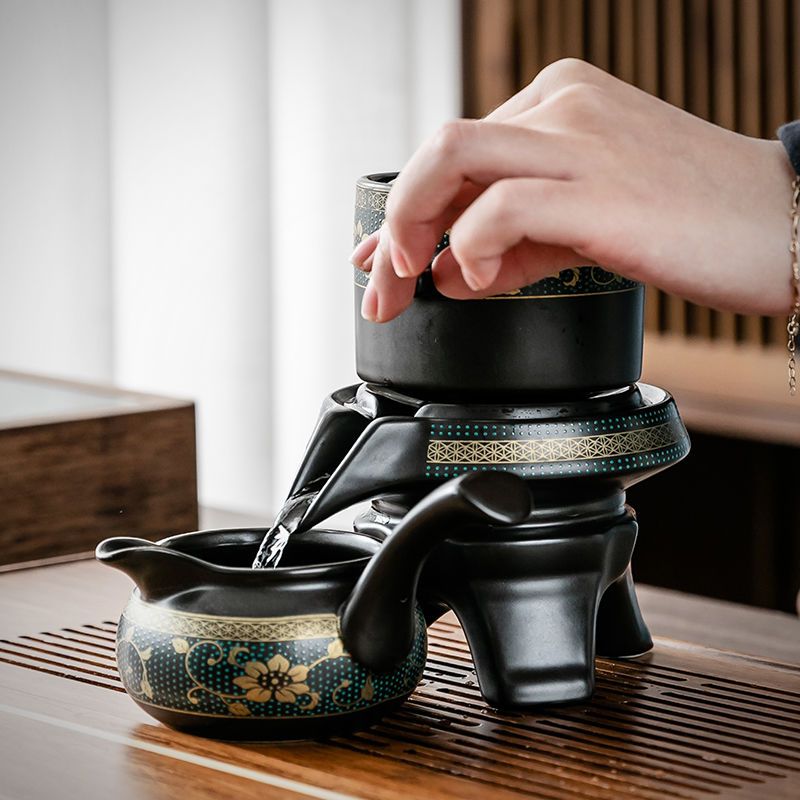
If the gaiwan learning curve feels like too much, a thin-walled porcelain teapot with a built-in strainer is the most “familiar-feeling” best teapot for white tea option for daily Western kitchens. The body is glazed porcelain, the lid sits on a small lip, and a fixed stainless mesh sits at the spout. Thin walls mean the pot reaches equilibrium with the water quickly and holds just enough heat for a 60-second steep without continuing to cook the leaves through the two-minute mark. Compared to a thick stoneware teapot, this is the version that does not punish you for forgetting about the brew.
The single caveat is the strainer aperture. For Silver Needle buds (which are mostly 1-2 cm long and tipped with fine down), anything wider than 0.8 mm lets buds slip through into the cup and makes the liquor cloudy. Look for an integrated stainless mesh rated 0.6 mm or finer if you plan to brew Silver Needle in this style of teapot.
- Capacity: 250 ml (two small cups)
- Filter: integrated stainless mesh, 0.6 mm aperture
- Best for: Bai Mu Dan, light Shou Mei at 80-85 °C
- Why it works: ceramic body with thin walls = predictable cooling curve
4. Best Teapot for White Tea: Magnetic Semi-Automatic Glass (450 ml)
The magnetic semi-automatic design (a glass teapot with a magnetic strainer that drains into a lower chamber when you press the lid) is a strong fit for any best teapot for white tea lineup because the steep is fully time-controllable without any fiddling. Drop the leaves in the upper chamber at 0 seconds. Pour 80 °C water over them. Set a stopwatch. At 45 seconds, press the lid magnet and the entire infusion drains to the lower chamber — leaves, liquor, all separated in one motion.
For Silver Needle and Bai Mu Dan at 75-85 °C this is the closest you get to laboratory-grade repeatability in a home vessel. It also handles Shou Mei well at 85-90 °C, though you want to lift the magnetic drain a little longer (90 seconds) for thicker, more oxidized white teas. The tradeoff vs a manual gaiwan is less aromatic release at the moment of pour, since the magnet drains through a small hole rather than across a wide open lip.
- Capacity: 450 ml (1-2 cups at Western strength)
- Filter: magnetic stainless strainer, ~0.7 mm aperture
- Best for: Silver Needle + Shou Mei daily driver
- Steep control: precise, ±5 seconds at 30-90 second range
5. Best Teapot for White Tea: Detachable Glass Semi-Automatic (600 ml)
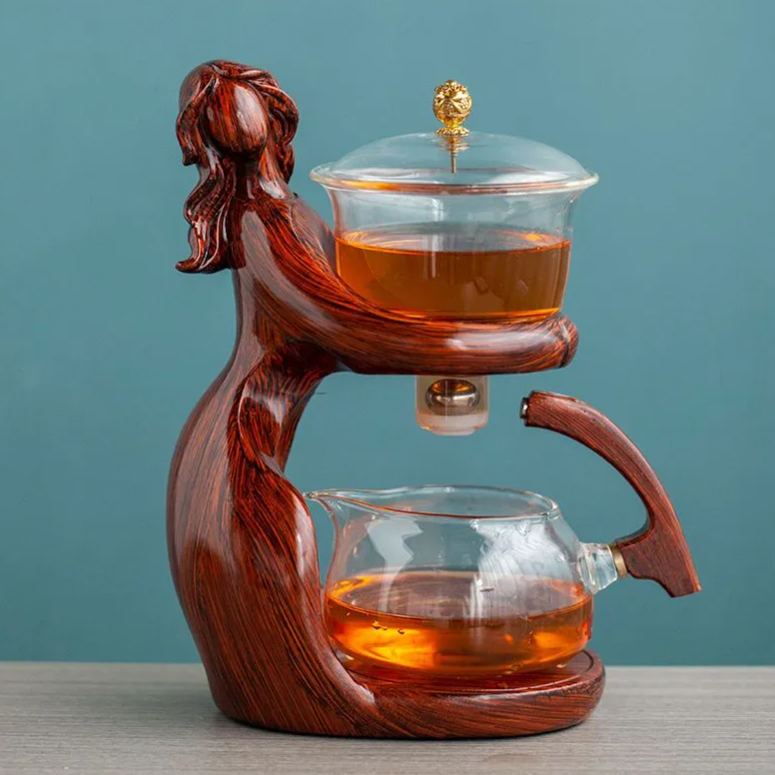
This is a strong best teapot for white tea pick for households that brew 500+ ml at a time and want the option to drop a steeper or a longer infusion in without changing vessels.
A detachable semi-automatic removes the magnetic mechanism entirely and replaces it with a lift-off strainer basket. Press a button on the lid, the strainer drops to the bottom of the pot for steeping, then lift it back up to drain. The advantage over the magnetic style is a wider opening for cleaning and the ability to use the pot for cold-brew or iced tea as well. The disadvantage is the drain timing is manual rather than magnetic — you still need to watch a clock.
For larger-volume white tea sessions (a Shou Mei gongfu with 6-8 g of leaf over six infusions, or a Western-style 500 ml Bai Mu Dan for two people), the 600 ml capacity is the right size. The wider bottom also gives Silver Needle and Bai Mu Dan buds room to expand without packing too tightly at the strainer.
- Capacity: 600 ml (two cups at Western strength or one shared pot)
- Filter: lift-off stainless mesh basket, ~0.7 mm aperture
- Best for: Shou Mei, Bai Mu Dan at 85-90 °C, larger sessions
- Cleaning advantage: full disassembly, dishwasher-safe lid
6. Best Teapot for White Tea: Yixing Duan Ni Clay (100-150 ml, Dedicated)
Yixing teapots are usually associated with oolong and pu-erh, but the porous Duan Ni variant is a legitimate best teapot for white tea option — with one critical caveat. Duan Ni has a higher sand content and a more open pore structure than Zi Ni or Zhu Ni, which means it breathes through the steep and rounds out the heavier, more medicinal notes of aged white tea. Fresh white tea is the wrong choice for any unglazed clay pot; the clay will absorb the delicate floral and honey aromatics and you will taste the ghost of them in the next three brews.
The “dedicated” part is non-negotiable. A Duan Ni pot that has been seasoned on Shou Mei will take years to fully release those notes if you ever try to switch to a high-roast oolong. Buy this pot with the explicit intent that it will only ever see white tea — ideally aged Shou Mei or gongmei stored 3+ years. Then commit to the slow accumulation of patina over months of daily use.
- Capacity: 100-150 ml (gongfu single-serving)
- Clay: Duan Ni (段泥), high sand content, open pore
- Best for: aged white tea (3+ years) only, 90-95 °C
- Hard rule: dedicated single-tea pot, never cross-brew
7. Best Teapot for White Tea: Modern Smart Magnetic Tea Maker (500 ml)
The modern smart magnetic tea maker rounds out the best teapot for white tea shortlist as the durability-first pick. It combines the magnetic-drain mechanism of pick #4 with an acrylic base, a larger 500 ml capacity, and a dishwasher-safe lid assembly. For an office or shared-kitchen setup where the teapot needs to survive daily washing and multiple users per day, this is the most durable white tea vessel on the list. The acrylic base is the weak point aesthetically (compared to a full glass body) but it is also what keeps the magnetic mechanism stable and prevents chips when the pot gets knocked against a sink edge.
It brews Shou Mei well at 85-90 °C, holds the right heat for a two-minute infusion, and the magnetic drain means you can train anyone (a partner, a coworker, a guest) on the timing in under 30 seconds. Silver Needle works too, but the 500 ml capacity means more leaf per session — 5-7 g instead of 3-4 g — and that shift costs a bit of the delicate-top-note character.
- Capacity: 500 ml (2-3 cups at Western strength)
- Base: acrylic with magnetic drain coupling
- Best for: Shou Mei daily-driver, office or shared kitchen
- Durability: dishwasher-safe lid, survives 5+ brews per day
White Tea Brewing Temperatures: A Practical Reference
White tea temperatures split into three useful tiers, and treating them as three separate recipes is what separates a flat cup from a layered one — no matter which best teapot for white tea vessel you settle on. The leaves themselves give you feedback: too hot and the liquor turns dark yellow within 10 seconds, the surface goes slightly bitter, and the cup tastes more like dried grass than fresh hay. Too cold and you end up with flavored water that hints at tea but never delivers it.
Tier 1: Fresh Silver Needle — Best Teapot for White Tea Brewing (75-80 °C)
Silver Needle is the most temperature-sensitive white tea, and the best teapot for white tea brewing with this leaf is a borosilicate glass gaiwan or thin-walled porcelain at 100-150 ml. The buds are covered in fine silver fuzz that breaks down quickly under high heat and releases bitter compounds. Aim for 75 °C for the first infusion and 78-80 °C for the second and third. Steep time: 30-45 seconds for the first, +15 seconds per subsequent infusion. Use 3 g of leaf per 150 ml of water.
Tier 2: Shou Mei and Bai Mu Dan — Most Flexible Best Teapot for White Tea Tier (85-90 °C)
Shou Mei and Bai Mu Dan are heartier than Silver Needle. The leaves are larger, the picking standard is lower (more mature leaf, fewer buds), and the tea develops richer stone-fruit and warm hay notes that need a bit more heat to release. This is the tier where most best teapot for white tea reviews focus, because any vessel from borosilicate glass to Yixing Duan Ni works here. Aim for 85 °C for fresh Shou Mei and 88-90 °C for the second-and-later infusions. Steep time: 60 seconds for the first, +20 seconds per subsequent infusion. Use 4-5 g per 150 ml.
Tier 3: Aged White Tea — Where Yixing Becomes a Best Teapot for White Tea Option (90-95 °C)
White tea that has been stored 3-5+ years develops a different flavor profile altogether — jujube, dried longan, wood resin, a faint medicinal sweetness. That depth needs 90-95 °C to come out. Steep time: 90-120 seconds for the first, +30 seconds per subsequent infusion. Use 5-6 g per 150 ml. This is the only tier where Yixing clay becomes a legitimate option for a best teapot for white tea lineup, and only with Duan Ni dedicated to aged leaf.
How Material Affects White Tea Flavor
The vessel material shapes three things: heat retention, flavor neutrality, and aromatic release — and the same best teapot for white tea ranking changes if you reorder those priorities. Glass sits at one extreme — low heat retention, perfect flavor neutrality, decent aromatic release through the spout. Porcelain sits in the middle — moderate heat retention, perfect flavor neutrality, slightly better aromatic release because ceramic is warmer at the lid when you pour. Cast iron sits at the other extreme — high heat retention, enamel-lined flavor neutrality is acceptable, but the heavy lid traps aromatic volatiles inside the pot until the lid is lifted.
The reason cast iron is the wrong pick for fresh white tea is not the flavor — it’s the heat. A 200 ml tetsubin pre-warmed with hot water and then filled with 85 °C brew water will still be at 80 °C ten minutes later. By that point, the leaves have been cooking far past their steep window and the liquor has gone from pale gold to amber, with the aromatics volatilized off into the air rather than sitting in the cup.
Unglazed Yixing clay is in a different category entirely. It is not flavor-neutral — it is flavor-active. The pores absorb tea compounds and the next brew pulls those compounds back out, along with whatever new compounds the current steep releases. For aged white tea, the effect is a rounding of harsh edges and a deepening of jujube notes. For fresh white tea, the effect is a flattening of the very aromatics you are trying to taste.
Capacity Guide: From Solo Gongfu to Family Western Service
White tea sessions divide into two capacity regimes, and choosing the right capacity is the second-biggest decision after picking the best teapot for white tea material. Gongfu brewing (the Chinese short-steep, multiple-infusion style) works in 100-150 ml vessels with 3-6 g of leaf and 5-10 short infusions. Western-style brewing works in 350-700 ml vessels with 2-3 g of leaf per 250 ml cup and one long 2-4 minute steep. The two regimes are not interchangeable — putting gongfu leaf ratios into a Western vessel produces an over-brewed mess, and using Western leaf ratios in a gongfu vessel produces a flavor-thin disappointment.
For Silver Needle specifically, the gongfu regime almost always wins. The buds need room to expand, the small leaf-to-water ratio means each infusion is delicate rather than strong, and the multi-steep pacing lets you taste how the cup changes between infusion 1 and infusion 5. Most Silver Needle drinkers settle on 110-120 ml as the practical sweet spot — a single-serving gongfu vessel that still produces enough liquor for one shared 70 ml cup at the end.
For Shou Mei and Bai Mu Dan, Western brewing is more practical. The leaves are heartier, they tolerate longer steeps without breaking down, and a 400-500 ml pot at 85 °C produces a clean 200-300 ml cup without gongfu hardware. If you have one teapot, make it a 400-500 ml thin-walled porcelain or borosilicate glass that handles both regimes with different leaf ratios — and accept that gongfu-Silver-Needle will not be as good as a dedicated 110 ml gaiwan.
Chinese Tea Ceremony vs. Western Style: Which Vessel Fits
The “Chinese tea ceremony” approach (gongfu, short steeps, multiple infusions, tasting how the liquor changes across the session) maps cleanly onto white tea, and it is why most best teapot for white tea shortlists lean toward small gongfu vessels. The “Western style” approach (one long steep in a large pot, drink at your own pace over 30-60 minutes) also works, but only with the more oxidized and aged white teas. If you drink white tea every day and want the ceremony, the gaiwan or the magnetic semi-automatic is the right pick. If you drink white tea occasionally and want convenience, a thin-walled porcelain teapot or a borosilicate glass pot at 400-500 ml is the right pick.
There is one hybrid worth flagging: the magnetic semi-automatic glass teapot works for both styles. Use 3-4 g of leaf and 30-second steeps for a gongfu Silver Needle session. Use 5-6 g of leaf and a 90-second single steep for a Western-style Shou Mei session. The vessel stays the same; the leaf ratio and steep time are the only variables. For an office or shared space, this is the closest you get to a single-vessel solution that handles both ends of white tea.
Common Mistakes When Brewing White Tea
Most white tea problems come from three errors that compound each other: wrong water temperature, too much leaf, and over-steeping. Fixing any one of them usually pulls the cup out of the mud, but fixing all three is what gets the layered, multi-note character that makes white tea worth brewing in the first place — and that holds true regardless of which best teapot for white tea you have on the counter.
- Boiling water straight onto Silver Needle. 100 °C water on fresh buds extracts bitter compounds in seconds. Drop the temperature to 75-80 °C first.
- Too much leaf in too little water. 5 g of Silver Needle in 100 ml of water is a recipe for stewed tea, not strong tea. Pull the leaf ratio back to 3 g per 150 ml and taste before adjusting up.
- Steeping until the leaves fully sink. Most white teas are done long before the leaves have settled at the bottom of the pot. Silver Needle finishes at 30-45 seconds; Shou Mei at 60-90 seconds.
- Reusing yesterday’s oolong-stained gaiwan. Porcelain is flavor-neutral only if it has been rinsed clean. A quick rinse between sessions is enough, but the cup-and-bowl surface needs warm water, not just cold tap.
- Storing the teapot with the lid closed when not in use. Moisture trapped inside a closed glass teapot creates micro-condensation that dulls the glass over months. Store with the lid off or slightly ajar.
FAQ: White Tea Teapot Questions Answered
The most common best teapot for white tea questions fall into four buckets: material choice, mesh size, brewing temperature, and clay compatibility. Below are the five most frequently asked, with straight answers instead of vague “depends on your taste” hedging.
Can I use a cast iron tetsubin for white tea?
Technically yes, practically no — and this is one of the most repeated best teapot for white tea Q&A points. Modern enamel-lined cast iron teapots (tetsukyusu) brew white tea without metallic off-flavors. The problem is heat retention — a tetsubin holds temperature far longer than white tea wants, which means the leaves keep cooking well after the steep should be over. Save the cast iron for roasted oolong or black tea where long heat retention is a feature.
Can I brew white tea in any glass teapot?
Borosilicate glass only — and this is non-negotiable for any best teapot for white tea shortlist. Soda-lime glass (the cheaper clear glass) does not handle the temperature jump from cold brewing chamber to boiling or near-boiling water, and will crack or shatter. Borosilicate has a much lower thermal expansion coefficient (~3.3 × 10⁻⁶ /°C vs ~9 × 10⁻⁶ /°C for soda-lime) which is why laboratory glassware is made from it. If the bottom of the pot is thin and feels plasticky, it is soda-lime; if the bottom has weight and the body feels dense, it is borosilicate.
Which Yixing clay works for white tea?
Duan Ni (段泥) only — and only for aged white tea stored 3+ years. This is the rule every best teapot for white tea Yixing guide converges on. Duan Ni has higher sand content and more open porosity than Zi Ni, which lets the brew breathe and rounds out the heavier jujube, dried-longan, and resin notes that develop in aged white tea. Zi Ni and Zhu Ni are too dense for white tea and will lock the brew into a flat one-note expression. Never use a Yixing pot across tea types — the clay remembers.
What size strainer mesh do I need for Silver Needle?
0.6 mm aperture or finer — the technical detail most best teapot for white tea review pages skip. Silver Needle buds are 1-2 cm long and covered in silver down that slips through coarser meshes. Anything 0.8 mm or wider will let through small fragments and produce a slightly cloudy cup. The 0.6 mm standard is also good for Shou Mei and Bai Mu Dan, where larger leaf pieces stay inside cleanly.
Is white tea good for cold brewing?
Yes — cold-brewed white tea is one of the most underrated summer drinks and borosilicate glass is arguably the best teapot for white tea cold-brew vessel. Use 8-12 g of leaf per liter of cold water, refrigerate for 6-10 hours, then strain. The resulting liquor is light, slightly sweet, and low in caffeine compared to black or green tea cold brews. A borosilicate glass teapot works for fridge-side brewing if the lid is loose; otherwise, any food-grade vessel with a sealed lid works.
Final Verdict: Picking Right for Your White Tea Routine
After a year of side-by-side brewing across these seven vessels, the short version is this: start with a 350 ml borosilicate glass teapot or a 110 ml porcelain gaiwan, depending on whether you drink white tea alone or gongfu. Glass if you want to see the liquor; gaiwan if you want to taste the aromatics at their most layered. Add a magnetic semi-automatic when you need to share a pot with someone who has not been trained on a gaiwan grip. Reach for a Yixing Duan Ni only when you are ready to commit to aged white tea for the next several years. Skip the cast iron, skip the stoneware, skip anything with a heavy lid. The best teapot for white tea for most people reading this guide is either the borosilicate glass or the porcelain gaiwan — and the best teapot for white tea for a household setup is the magnetic semi-automatic.
The decision framework in plain terms:
- Pick a borosilicate glass teapot if you want visual brewing, easy cleaning, and a single vessel that handles all three temperature tiers (75 / 85 / 95 °C) without cross-flavor carry-over.
- Pick a 110 ml porcelain gaiwan if you want the most aromatic extraction at low temperatures and you are willing to spend 10 minutes learning the lid-and-bowl grip.
- Pick a magnetic semi-automatic glass teapot if you want repeatable timing across multiple infusions and a vessel that trains others in seconds.
- Pick a Yixing Duan Ni pot only if you are specifically brewing aged white tea (3+ years) and willing to commit the pot to that single family for the foreseeable future.
- Pick the modern smart magnetic tea maker if you want durability + dishwasher-safe parts and a 500 ml capacity that fits an office or shared-kitchen routine.
Browse the full collection de théières en verre for borosilicate and magnetic-semi-auto picks, or see the ceramic and porcelain teaware for thin-walled porcelain and gaiwan-style options. For the magnetic-drain style specifically, the semi-automatic tea set range covers everything from 350 ml single-serve to 600 ml shared pots. For a deeper look at low-temperature brewing technique, the green tea in glass teapot guide covers the same temperature philosophy, the gongfu tea set walkthrough breaks down the short-steep, multi-infusion pacing for any vessel type, and the loose-leaf glass teapot comparison walks through the same set of glass vessels from a different angle (tea form rather than tea type). The triangle-shape all-glass modern design from our triangular glass teapot set is the closest thing to a “default” best teapot for white tea pick for a small household.
White tea has the longest learning curve of any tea type because the margin between “right” and “wrong” is so narrow — but the vessels above make the margin wider. Pick one that matches your daily routine, dial the temperature to the leaf you have, and the rest is timing. Once you have the best teapot for white tea sitting on the counter, the rest of the work is buying fresh leaf and trusting your stopwatch.
 FR
FR  EN
EN  DE
DE  ES
ES  PT
PT  JA
JA