
How to Choose a Tea Set: The 7 Things I Wish I Knew Before My First Purchase
I’m standing in my kitchen on a Saturday morning, holding a teapot I bought three months ago, and I have absolutely no idea why I bought it. It was yellow. I don’t even drink from yellow mugs. The infuser basket is too small for the leaves I actually like, the handle gets scalding hot if I pour too slowly, and the spout drips every single time. This teapot cost me forty dollars, and I used it exactly four times before I relegated it to the back of a cabinet where it lives next to a fondue set I’m equally unsure about.
If that story makes you wince in recognition, this article is for you. I have been drinking tea seriously for over a decade now, and somewhere along the way I went from a person who burned through cheap teapots every few months to someone who has a small, intentional collection I genuinely love. The difference, in retrospect, came down to learning a few simple things about what I actually needed—rather than what looked good in a photo at 11 p.m. on a Tuesday. Below are the seven things I wish I had known before I bought my very first tea set, plus the practical framework I use now when I’m tempted by something new.
The Three Decision Dilemmas You’re Probably Facing Right Now
Before I get into the specific things I wish I had known, let me name the three dilemmas I see almost every new tea drinker wrestling with. If any of these sound like you, you’re in the right place.
The honest truth is that a “good” tea set is not the one with the most five-star reviews. It’s the one that matches the way you actually live. I have bought beautiful, expensive sets that did not match my life, and I have used ugly, cheap sets daily for years.
Dilemma one: Tradition versus convenience. You love the idea of a slow, beautiful gongfu ceremony, but you also need to be out the door in twenty minutes. Which one do you buy for?
Dilemma two: Form versus function. That hand-painted porcelain set on your screen is stunning. But will it survive your dishwasher, your clumsy roommate, and the way you inevitably leave it on the stove?
Dilemma three: Solo ritual versus hosting. Are you mostly brewing alone with a book? Or are you the person who will inevitably have six people crammed around your kitchen island on a Sunday afternoon?
All of my hard-won wisdom lives inside these three questions. So let’s start digging.
Material Matters More Than You Think
I used to assume that “tea set material” was a minor detail, the kind of thing only true connoisseurs obsessed over. I was wrong. The material of your teapot and cups changes the flavor of your tea, the heat retention, the maintenance routine, and the lifespan of the set. Here’s what ten years of trying things has taught me.
Borosilicate Glass
Glass is my favorite material for everyday brewing, and I say that knowing it has one major weakness. Borosilicate glass is non-reactive, which means it doesn’t add any flavor to your tea. It also lets you watch the leaves unfurl, which sounds gimmicky until you actually do it—watching a good oolong bloom is one of those small daily pleasures that genuinely improves my mood. The downside is heat retention. Glass cools faster than ceramic or cast iron, so if you like long, lingering steeps, you may need a warmer underneath.
If glass appeals to you, I genuinely recommend looking through a curated Glass Teapot Collection before settling. The quality difference between cheap soda-lime glass and proper borosilicate is enormous, and you can see it in how the pot handles thermal shock.
Ceramic and Porcelain
Ceramic is the workhorse of the tea world. It holds heat beautifully, it doesn’t react with your leaves, and a good porcelain set will outlast you. The catch is weight (ceramic is heavier than glass) and the fact that the best porcelain tends to be expensive. For everyday use, I have moved more and more toward ceramic, especially for green and white teas that I brew at lower temperatures.
Cast Iron (Tetsubin)
Cast iron is gorgeous, and it holds heat like nothing else. It is also heavy, it requires careful drying to prevent rust, and it can react with very delicate teas. I love cast iron as a display piece and for winter brewing, but I would not make it my only teapot.
Yixing and Unglazed Clay
Unglazed clay pots are traditional for a reason—they absorb the oils and tannins from tea over time and develop what enthusiasts call “seasoning.” But this is also their limitation: a Yixing pot is essentially dedicated to one type of tea. If you drink a wide variety, an unglazed pot is a poor first purchase. I learned this the hard way when my “puer pot” started making my green oolong taste like an old library.
Size: The Thing Nobody Mentions Until It’s a Problem
The first tea set I ever owned was a six-cup ceramic set, because I thought bigger was better. I lived alone at the time. I drank tea for one. I had guests maybe twice a year. That set took up an entire shelf, brewed enough tea to fill a small bathtub, and made me feel guilty every time I brewed a single cup and wasted the other five.
Here is the size question to ask yourself: how much tea do you actually drink in a single sitting?
- If the answer is “one cup, alone, most days,” a small 200-400ml teapot or a single-cup brewing set is ideal. You will use it constantly.
- If the answer is “two of us, evenings on the couch,” a 400-600ml pot is the sweet spot.
- If the answer is “I host often, or I want to do gongfu with multiple infusions,” you want a larger pot, or better yet, a smaller pot designed to brew concentrated shots that you dilute in a fairness pitcher.
The size mistake I made most often was equating “more capacity” with “more value.” It is not. The set you use daily is the better value, even if it’s smaller and cheaper.
Ease of Use: The Underrated Virtue
For the first few years of my tea journey, I thought the most “serious” tea drinkers were the ones with the most complicated setups. Tiny yixing pots, multiple cups, fairness pitchers, timer clocks, the whole ceremony. And there is beauty in that, genuinely. But I have come around to a different view: a tea set you find fussy is a tea set you stop using.
Every tea set I have ever abandoned was a tea set I found annoying. Every tea set I have kept for years had exactly one quality in common: it made the next cup easy. Friction is the enemy of ritual.
When I evaluate a new piece, I ask: will I use this on a Wednesday morning when I’m half-awake? If the answer is “honestly, no, it’s a hassle,” the piece is not for me, no matter how beautiful it is.
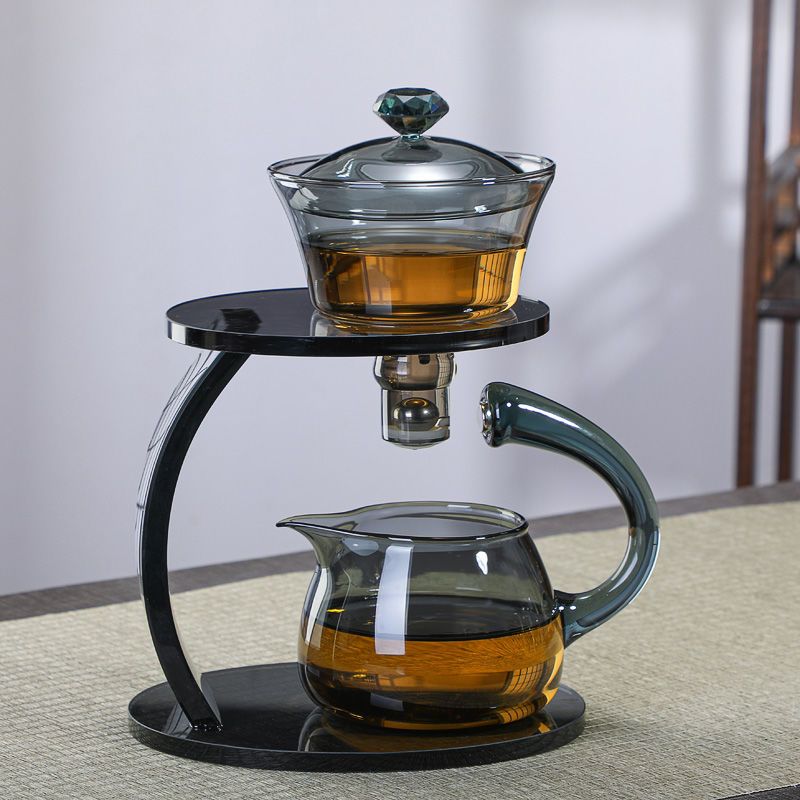
Some of my favorite modern pieces are designed specifically to remove the friction. The Minimalist Drip Set is a great example. It’s a glass and magnetic infusion system that lets you stop the brewing process with a simple magnetic separation, so the leaves don’t over-steep while you get distracted by your email. That kind of small engineering choice is the difference between a set you use and a set that sits on a shelf looking pretty.
Style and Aesthetic Fit: Buy for the Kitchen You Have, Not the One You Want
I am guilty of buying teaware to match a fantasy kitchen I do not live in. A hand-thrown, dark-glazed rustic pot for a kitchen that is, in reality, white laminate and chrome. The pot looked wrong every single time I used it, and I used it less, and eventually I gave it away.
My current rule: buy the tea set that looks like it belongs where you will actually use it. If your kitchen is modern and bright, lean into clean lines and lighter glazes. If you have a more traditional space, this is where the heavier ceramic and porcelain sets shine. Style fit is not vanity; it is the thing that makes you want to bring the set out of the cabinet in the first place.
Maintenance: The Real Cost of “Beautiful”
Every material has a maintenance profile, and ignoring it is how I ended up with a cracked Yixing pot I had to throw away. Here is the honest version:
- Glass: Easiest. Dishwasher-safe in most cases, no seasoning, no special drying. Just don’t thermal-shock it (cold water on a hot pot).
- Ceramic and porcelain: Mostly easy. Hand-wash decorative pieces, watch out for hairline cracks that harbor bacteria.
- Cast iron: Dry thoroughly after every use, never put in the dishwasher, oil occasionally. Not for the lazy.
- Unglazed clay: Dedicated to one tea type, never use soap, air dry completely. A commitment.
Whatever you buy, I have one universal rule: hand-wash the lid, the spout, and the infuser separately. Those three parts are where residue and mold hide, and they are also the three parts most people forget.
The Three Sets I Have Actually Lived With
Let me tell you about the three sets in my current rotation, and what each one has taught me. These are the sets I have actually used, not the ones I tested for a week and returned.
My Glass Daily Driver
For five days out of seven, I reach for a glass brewing setup. I like seeing the leaves, I like the clean taste, and I like that I can rinse it in thirty seconds and move on with my life. This is the set I have replaced most often, which tells you both something good (glass is affordable) and something bad (glass is breakable). When I want to browse what’s out there, I tend to look through the Glass Teapot Collection to see what new designs are out there.
My Gongfu Ceramic Set
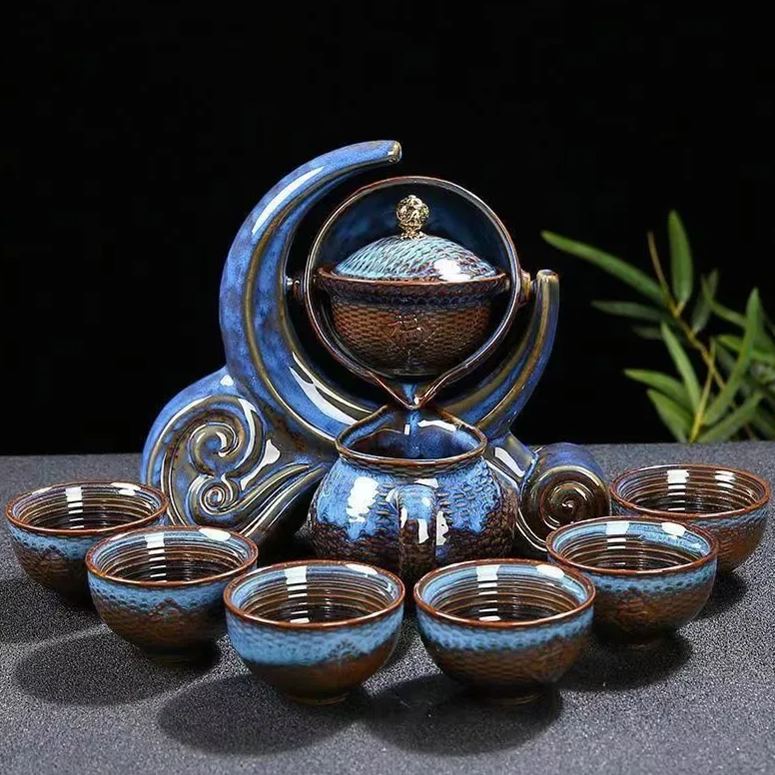
On weekends, when I have time and I want the ceremony, I use a ceramic gongfu set. I bought the Gongfu Ceramic Tea Set about a year ago, and it has changed my relationship with oolong. The set has a small brewing pot designed for concentrated infusions, plus a fairness pitcher that ensures every cup is identical in strength, plus the small cups that force you to sip slowly. It also has the convenience factor I didn’t expect: the pour is balanced, the spout doesn’t drip, and the multiple-styles option means I could pick a glaze that actually fits my kitchen. This is the set I reach for when I want tea to be the event rather than the backdrop.
My Semi-Automatic Brewing Pot
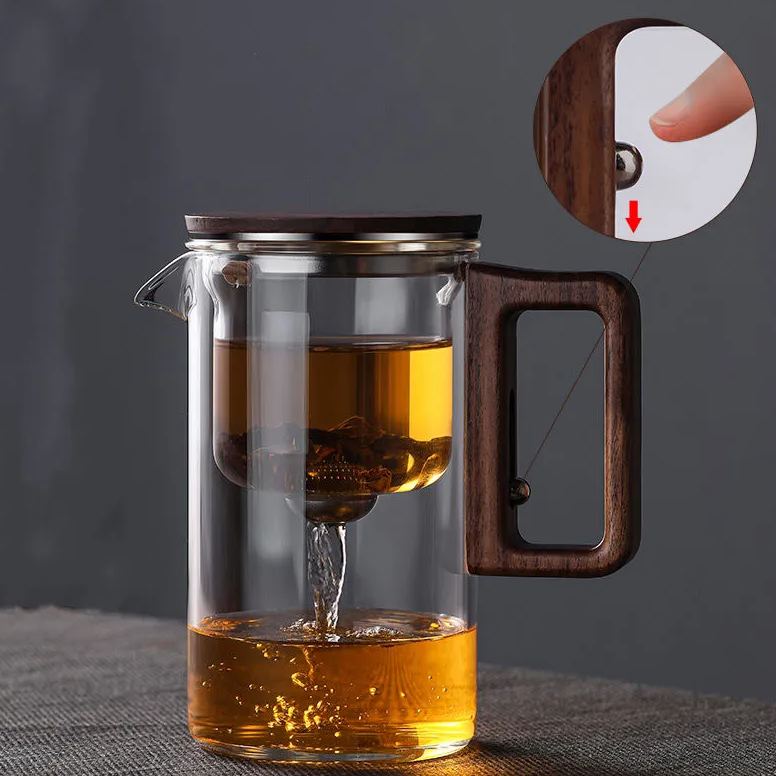
The newest addition to my shelf is a Semi-Automatic Teapot, and it has become my secret weapon for mornings when I want depth of flavor but not the attention cost. The semi-automatic mechanism controls pour speed, which means my infusions are more consistent than when I do it by hand. I have found that this matters more than I expected: the difference between “good” and “wow” in a pot of tea is often just whether the leaves got three minutes or five minutes, and the semi-automatic setup removes my own inconsistency from the equation.
The Seven Things I Wish I Knew (In Order of How Much They Would Have Saved Me)
Okay, here is the list. These are the actual lessons, in order of the money they would have saved me had I known them on day one.
1. Buy for the next year, not the next photo. That hand-painted set you saw on Instagram is gorgeous. Will you still want it next spring? Will it match your real kitchen? Buy for the kitchen you have.
2. Material is not interchangeable. Glass for clean taste and visibility, ceramic for heat retention and tradition, cast iron for winter and display, unglazed clay for a single dedicated tea. Pick your material first, then your design.
3. Smaller is more useful than bigger. A pot you fill completely is a pot you will only use for company. A pot you half-fill on a Tuesday morning is a pot you will use forever.
4. The infuser matters as much as the pot. A fine mesh infuser is essential for small-leaf teas. A basket infuser is fine for big-leaf. A built-in ceramic filter looks clean but often clogs. Test the infuser before you buy if you can.
5. Read the spout. A spout that drips is a spout that stains your tablecloth. Look for reviews that mention pour. Or buy from a shop that lets you evaluate this.
6. Match the set to your actual attention span. If you have fifteen minutes, buy a simple pot. If you have forty-five, buy the gongfu setup. The ceremony is not the point. The tea is the point.
7. Replace one piece at a time. You do not need a perfect matching set. You need pieces you like that work together. Most serious tea drinkers I know mix and match across years.
A Simple Decision Framework for Your First Purchase
Here is the framework I now use whenever I’m tempted by a new piece. It is not elegant, but it works.
- What is my primary use case? Solo morning, evening with a partner, weekend ceremony, hosting friends. Be honest.
- What material fits that use case best? Glass for solo and visibility, ceramic for heat and tradition, cast iron for winter, etc.
- What size matches how much I actually drink? Be conservative. You can always brew twice.
- What level of ritual am I willing to maintain? Be honest about this. I overestimated it for years.
- What does my kitchen look like? Match it, don’t fight it.
If you answer those five questions honestly, you will be in the top 10% of informed tea-set buyers. The remaining 90% is taste and budget, and that’s fine.
Common Mistakes I Have Made (So You Don’t Have To)
A short list of the dumbest things I have done, in the hope it saves you some money.
- Buying a set for the box, not the contents. Pretty packaging does not make a good teapot.
- Skipping the spout test. I have owned three pots that dripped onto my counter every single time. Each one taught me nothing.
- Choosing capacity over frequency. I thought a 1.2L pot was a smart buy. I used it four times in a year.
- Ignoring the infuser size. A too-small infuser is a daily irritation. A too-large one lets leaves float free.
- Treating the set as decoration. A beautiful pot I never used cost me more per cup than my cheap one I used every day.
- Not asking about the lid. Some lids fall off when you pour. Test this. It matters.
Buy the set you will use, not the set you want to be the kind of person who uses. That second set will end up on a shelf, judging you quietly, until you eventually give it away.
Final Thoughts: Start With One Piece You’ll Actually Use
After more than ten years of buying, replacing, gifting, and occasionally ruining tea sets, my honest advice is this: start with a single piece you will use every day. A good glass teapot, a small ceramic pot, a semi-automatic brewer—whatever fits the way you actually live. Use it for a few months. Pay attention to what you wish it did differently. Then, with that information, build out from there.
That is how I ended up with three pieces I genuinely love instead of fifteen pieces in a cabinet I never open. Each one taught me something. The glass teapot taught me that visibility and ease matter more than I thought. The gongfu ceramic set taught me that the ceremony is worth it when I have the time. The semi-automatic pot taught me that engineering has its place, and that consistency is a flavor enhancer I had been undervaluing for years.
If you are starting from scratch, I would begin by browsing the Magnetic Tea Set Collection for a low-friction entry point, and the Glass Teapot Collection for everyday options. Read the descriptions, think about the five questions I listed above, and trust the answer that comes from your real life, not your aspirational one.
Tea is a small, daily pleasure, and the set you use to make it should be the one that makes you reach for it, not the one that makes you feel guilty for not using it. Whatever you choose, I hope it brings you the kind of slow, easy mornings it has brought me.
 EN
EN  DE
DE  ES
ES  PT
PT  FR
FR  JA
JA