
How to Choose the Perfect Teapot: A Buyer’s Guide From Someone Who’s Tried Way Too Many
The Moment I Realized I Had Too Many Teapots
It started, as these things often do, with one innocent purchase. A small ceramic pot I found at a local market during my third year of drinking loose-leaf tea. Six years later, my kitchen cabinet looked like a museum exhibit. Glass teapots stacked beside cast iron kettles, a rotating ceramic set that came with matching cups, a magnetic draining design I’d bought on a whim, and a French press I swore I’d use for coffee but somehow kept steeping oolong in. There were fourteen teapots in total when I finally stopped counting.
The funny thing is, every single one of those pots taught me something. The glass teapot showed me how leaves unfurl and dance in hot water. The cast iron pot kept my black tea piping hot through a long winter afternoon. The ceramic set became my go-to for slow weekend mornings. None of them was the wrong purchase at the time. Each was right for a different version of my tea life.
So when people ask me how to choose a teapot, I never give a one-sentence answer. There isn’t one. What I can offer is a decade of trial, error, broken handles, stained interiors, and quiet mornings with the right pot in my hands. This guide is the conversation I wish someone had had with me before I started collecting. I’ll walk you through materials, sizes, use cases, the small mistakes that cost me money, and the pots that genuinely earned their place in my kitchen. By the end, you’ll have a clear sense of which direction to walk, even if the final choice still feels personal.
The best teapot isn’t the prettiest one on Instagram or the most expensive one in the shop. It’s the one that fits the way you actually drink tea, three or four times a week, for years to come.
The First Big Decision: Material Matters More Than You Think
Every teapot question starts, eventually, with material. Glass, ceramic, cast iron, porcelain, clay, and stainless steel all brew tea. They just brew it very differently, and they ask very different things of you in return. Before you fall in love with a shape or a color, you need to know how each material will behave in your hand, on your counter, and inside your mug.
Glass is the show-off of the teapot world. It’s transparent, lightweight, and lets you watch the leaves open up like little underwater flowers. For someone new to loose-leaf tea, glass is often the best teacher. You see the color changing, you watch the leaves expand, and you learn when to stop steeping before the brew turns bitter. The trade-off is heat retention. Glass cools faster than ceramic or cast iron, so if you like to nurse a pot for twenty minutes, you’ll notice the temperature dropping.
Ceramic is the warm, dependable middle ground. It holds heat reasonably well, comes in every color and pattern imaginable, and feels gentle in the hands. Most of my longest-running pots have been ceramic. They don’t show off like glass, but they don’t demand much either. Just don’t drop one on a tile floor, because they will absolutely shatter, and I learned this the hard way with a beautiful blue-glazed pot I’d had for three years.
Cast iron is the heavyweight champion of heat retention. A cast iron teapot, often enameled on the inside, will keep your tea hot for an hour or more. It also doubles as a stunning kitchen centerpiece. The catch is weight. Filling a cast iron pot and pouring it one-handed can be a workout, and they’re not cheap. Then there’s the magnetic draining category, which is a newer design that uses a magnetic filter mechanism to separate leaves from liquid with very little effort. More on that one in a moment.
Clay, especially the unglazed yixing-style variety, is a deeper rabbit hole I’ll touch on briefly. These pots absorb the flavors of the tea you brew in them, which means they eventually season into something magical, but they also demand that you dedicate one pot to one type of tea forever. Most casual drinkers don’t need that level of commitment, and I only mention it so you don’t accidentally buy one thinking it’s just a regular ceramic pot.
Glass Teapots: My Gateway Into Watching Leaves Dance
If you’re reading this guide, you might be exactly where I was ten years ago: drinking bag tea and thinking about going loose-leaf. Or maybe you’ve already made the leap and now you want a pot that lets you actually see what’s happening. Either way, glass is where I’d point you first.
The Glass Brewing Set sits on my counter right now as I write this. It’s a borosilicate glass pot with a removable stainless steel infuser, and it has done more to teach me about tea than any book or class. When I steep a flowering tea in it, the whole bud blooms into a small underwater garden. When I brew a rolled oolong, I can watch the leaves slowly uncurl and sink, which tells me exactly when the infusion is ready.
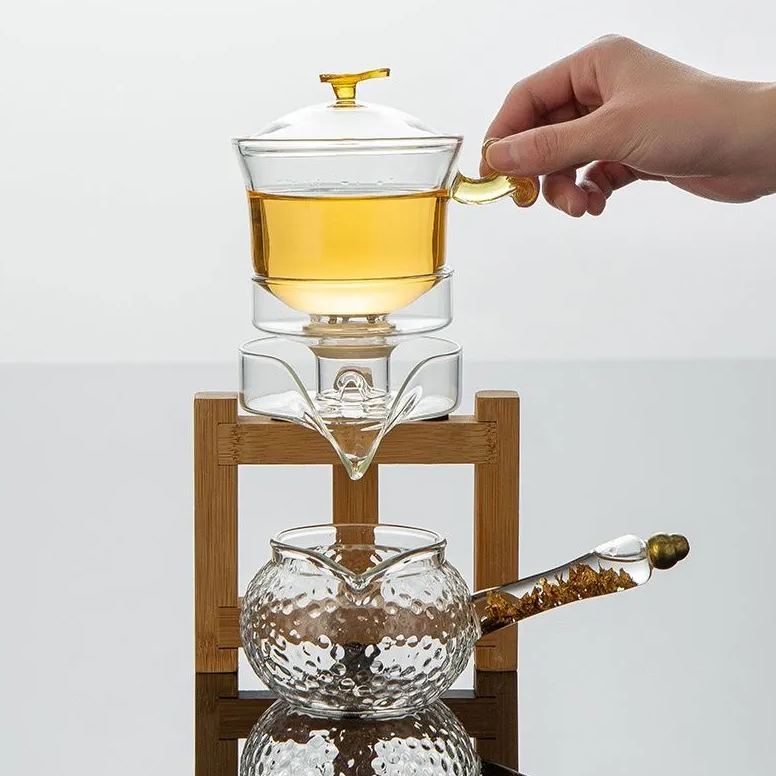
What I love most is how forgiving glass is for beginners. You can see the color of your brew, so over-steeping becomes a visual warning instead of a bitter surprise. The infuser is removable, which means I can pull the leaves out at exactly the moment I want, then pour the liquor into a cup at whatever strength I prefer. For someone still learning their own taste, that flexibility matters.
The honest drawback is heat. Glass loses temperature faster than ceramic or cast iron. If you’re the type to pour a cup, set the pot down, get distracted by your phone for fifteen minutes, then come back for another cup, that pot will be lukewarm by the second pour. The fix is simple: pre-warm the pot with hot water before you add the leaves, and brew a slightly larger amount than you think you’ll drink. I’ve also started pairing my glass pot with a tea warmer, which is a small candle or electric plate that keeps the pot gently warm between pours. It’s not essential, but it does extend the drinking window nicely.
For anyone curious about this category, our broader French Press Collection actually shares a lot of the same philosophy. Both styles let you watch the brew, control steeping time precisely, and clean up easily. If you already own a French press for coffee, you’ll find the rhythm of a glass tea brewer immediately familiar.
Ceramic Teapots: The Warm Hug for Your Tea
Ceramic is the category I recommend to the largest number of people, simply because it suits the largest number of tea habits. It holds heat better than glass, looks beautiful in almost any kitchen, and ranges from the simplest utilitarian pot to hand-painted heirloom pieces that feel like art objects.
The Cat Style Ceramic Set is the pot I reach for when I’m brewing for friends. It’s a rotating ceramic set, which means the teapot sits on a base that turns, so everyone at the table can angle the spout toward their own cup without lifting anything heavy. There’s something quietly delightful about a teapot that works as a small piece of furniture, and the playful cat design has started more conversations in my living room than any other single item I own.
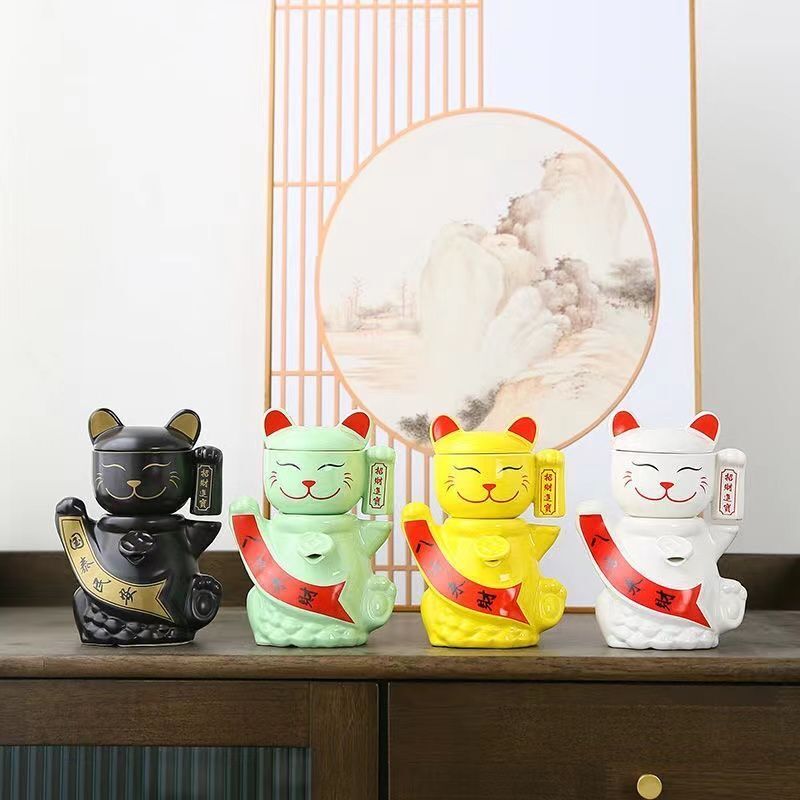
Ceramic shines in three specific situations. First, when you’re brewing for two or more people and you want the pot to stay warm through several rounds of pouring. Second, when you care about the visual feel of your tea ritual, because ceramic comes in colors and textures that glass simply can’t match. Third, when you want a pot that disappears into your routine, meaning it’s easy to clean, comfortable to hold, and presentable enough to leave on the table between uses.
There are two real downsides to ceramic. The first is fragility. Drop a glass teapot on a tile floor and you get a mess. Drop a ceramic one and you get a mess plus heartbreak. The second is weight variation. Some ceramic pots are surprisingly heavy when full, especially the larger ones, so if you have wrist or hand issues, test the empty weight in person before committing. I learned this the slow way after a few too many tired evenings trying to pour a full 1.2-liter ceramic pot with one hand.
Cast Iron and Magnetic Designs: When Heat Retention Changes Everything
Cast iron teapots are the old soul of this list. They originated in Japan as tetsubin, where they were used over open fires to boil water for green tea. The modern enameled versions you’ll find in most shops today are meant for brewing, not boiling, and they retain heat in a way no other material can match.
For someone who likes to sip a single pot of tea over the course of a long afternoon, cast iron is almost unbeatable. The thermal mass of the iron keeps the liquid at a stable, drinkable temperature far longer than glass or ceramic. It also has a satisfying heft that some people find grounding, though others will find cumbersome. I keep one cast iron tetsubin in my collection, and it comes out specifically when I’m brewing a strong black tea or roasted oolong on a cold day. The combination of retained heat and the iron’s subtle effect on the water produces a rounder, fuller cup.
The newer category I want to spend a moment on is magnetic tea sets, which solve a problem cast iron doesn’t. If you’ve ever poured a fully steeped pot and ended up with bitter tea because the leaves kept brewing in your cup, you’ll understand the appeal of the magnetic draining design.
The Draining Glass Teapot uses a magnetic filter mechanism. You steep the tea in the upper chamber with the leaves, then press a small lever or button that activates a magnet, releasing a valve at the bottom so the clear tea drains into the lower chamber while the leaves stay behind. The result is a pot of tea that stops steeping the moment you want it to, with no over-extraction and no bitter aftertaste.
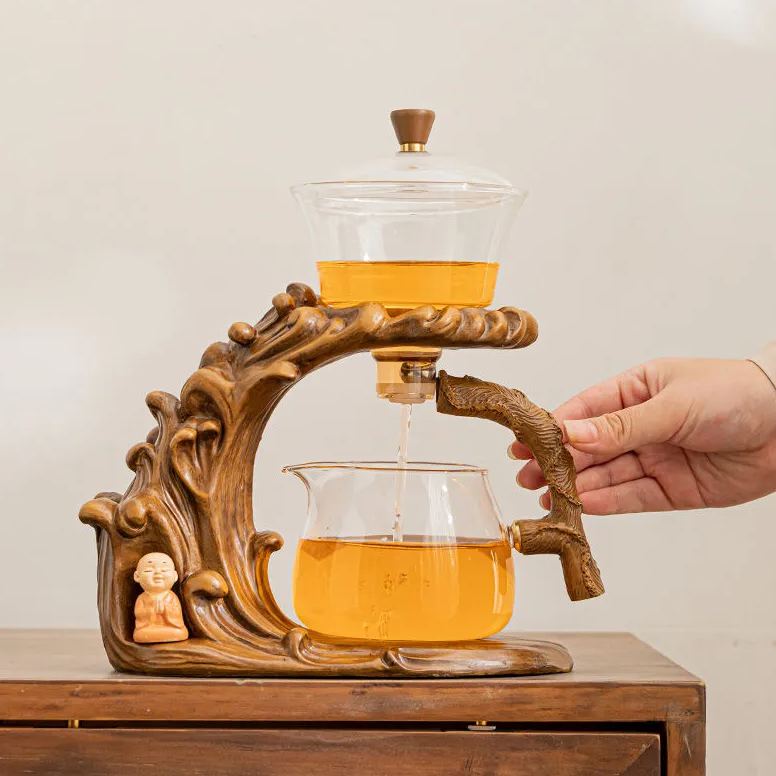
It sounds gimmicky until you try it. Then it becomes one of those small engineering moments where you realize how clever the design is. I use mine when I’m brewing multiple rounds from the same leaves, like a high-quality oolong that can give me six or seven infusions. The first pour comes out clean and bright, and the leaves stay submerged and ready for round two. For a tea lover who treats each infusion like a separate experience, this is the closest thing to a perfect tool I’ve found.
If you’re curious about other designs in this space, our Magnetic Tea Set Collection has a few different sizes and styles worth browsing. The category is small but thoughtfully built, and most of the sets are designed to handle the same workflow of steep, drain, re-steep.
Heat retention and steeping control are not luxuries. They are the difference between a cup of tea that tastes good and a cup of tea that tastes like the one you remember from a teahouse in a moment of pure contentment.
Getting the Size Right Without Overthinking It
Once you’ve narrowed down material, size is the next decision that actually affects your daily life. Buy a pot that’s too big and you’ll either waste tea by brewing more than you’ll drink, or you’ll end up with tea that sits in the pot too long and turns bitter. Buy a pot that’s too small and you’ll be refilling constantly, which is its own kind of annoyance, especially if you’re hosting.
For most solo drinkers, a 350 to 500 milliliter pot is the sweet spot. That gives you roughly two decent cups of tea, enough to enjoy one now and one in twenty minutes without either cup tasting different. My everyday glass pot is in this range, and it works for everything from a quiet morning black tea to a slow evening herbal blend.
For couples or small households, 600 to 800 milliliters is the comfortable middle. This is where the ceramic sets tend to land, and it’s also the size that handles a small group of friends without anybody waiting too long. The Cat Style Ceramic Set I mentioned earlier sits right in this range, and it’s the size I default to when I’m expecting one or two other people.
For larger gatherings, anything from 1 liter upward starts to make sense. These bigger pots are almost always cast iron or large ceramic, and they’re built to hold heat through multiple rounds of pouring. I use my big ceramic pot maybe once a month, but when I do, it’s the right tool for the job.
One trick I learned too late is to think about cup count rather than pot size. Count how many people you’ll be serving, multiply by the average amount each person drinks, and then add about 15 percent for spillage and the inevitable second round. That number, in milliliters, is your minimum pot size. It’s not glamorous math, but it saves you from buying the same pot twice.
Solo Sipping, Couple Sessions, and Group Gatherings
The way you actually drink tea matters more than the brand of leaf you buy. I know tea drinkers who brew a single cup every morning and never entertain with tea, and I know people who host weekly tea gatherings that last three hours. Those two drinkers need completely different equipment, even if they have the same taste in tea.
If you’re a solo drinker, prioritize pots that handle small volumes well and stay out of your way. A compact glass brewer with a removable infuser is almost ideal because it rinses clean in thirty seconds and doesn’t take up much cabinet space. You’ll also want a pot that handles the same kind of tea you drink most often, whether that’s a daily green, a black breakfast blend, or a varied rotation.
If you’re brewing regularly for two, think about pots that pour cleanly without dripping and stay warm through at least two rounds. Ceramic starts to shine here, and a rotating base becomes a small luxury that pays off every single time you use it. You’ll also want matching cups if possible, partly because it looks lovely and partly because matched cups tend to share the same heat retention, which keeps your drinking experience consistent from the first sip to the last.
If you entertain often, the calculus shifts again. Bigger ceramic sets, cast iron pots, or magnetic draining designs become worth the investment because they handle volume and heat well. You’ll also want a pot with a wide opening, because large leaves like a flowering tea or a hand-rolled oolong need room to expand. I’ve been embarrassed more than once trying to stuff a tightly curled leaf into a narrow-spouted pot that physically couldn’t fit them once they bloomed.
For anyone whose tea life involves movement, like camping trips, hotel stays, or a daily commute, there’s a category worth mentioning. Travel tea sets are designed to be compact, durable, and quick to clean. Our Travel Tea Set Collection has options that fit in a small bag and hold up to being packed and unpacked regularly. I take one with me on every trip longer than two days, because hotel kettles and random mugs are fine, but they’re never quite right.
Cleaning, Care, and the Honest Truth About Maintenance
Every material asks something of you when it comes to cleaning. Glass is the easiest. A rinse with warm water, a quick wipe with a soft sponge, and you’re done. Most glass teapots are dishwasher safe, though I always hand wash mine because the infuser mechanisms last longer with gentler handling. Glass also doesn’t absorb flavors, so you can brew green tea in the morning and a herbal blend in the evening without any cross-contamination.
Ceramic is also fairly easy, as long as you’re not dealing with unglazed clay. A mild dish soap, warm water, and a soft cloth will handle almost any ceramic pot. The trick is to avoid abrasive scrubbers, because they can scratch the glaze over time and create tiny crevices where tea stains settle in. I’ve had ceramic pots that looked brand new after five years of regular use, and others that developed a faint brown ring around the inside after two. The difference was almost always how gently I cleaned them.
Cast iron is the high-maintenance option, and this is where I have to be honest. Enameled cast iron is much easier than raw cast iron. You don’t have to season it, and you can wash it with soap without ruining the surface. But you do need to dry it thoroughly after every wash to prevent rust spots, especially around the spout and lid. I’ve been lazy about this exactly once, and the small rust freckle that appeared inside the lid still bothers me three years later. If you choose cast iron, commit to drying it.
Magnetic draining designs fall somewhere in between. The glass components clean easily, but the magnetic mechanism itself needs a little attention. Make sure the seal stays free of debris, dry the magnetic parts fully, and check occasionally that the valve is seating properly. Mine has held up beautifully for over a year, but I treat it like a small piece of equipment, not a carefree kitchen item.
Matching Your Teapot to Your Tea Lifestyle
There’s a quiet aesthetic decision hiding inside every teapot purchase. The pot you choose will sit on your counter, your table, or your desk, and it will quietly shape the feel of your daily tea moment. I don’t think aesthetics should override function, but I do think ignoring aesthetics entirely leads to pots that end up stored in the back of a cabinet because they never felt right.
Minimalist kitchens tend to gravitate toward clear glass or unadorned white ceramic. These pots disappear into the room when not in use and become the visual centerpiece when in use. A simple glass brewer on a wooden tray looks like a small ceremony, and it pairs well with modern, clean spaces.
Cozy, lived-in kitchens often shine with patterned ceramic or warm-toned cast iron. These pots feel like part of the family. The cat-style ceramic set I keep on my counter is exactly this kind of object. It has personality, it makes me smile, and it invites conversation. If your kitchen has warm wood, soft lighting, and a few plants, this is the aesthetic direction to lean into.
Functional, no-nonsense kitchens often do best with stainless steel or simple black cast iron. These pots prioritize heat retention and durability over visual flair, and they tend to be the workhorses that get used daily without a second thought. There’s nothing wrong with choosing function over form, especially if you know you’ll feel guilty every time you hand-wash a delicate pot.
The honest truth is that the right pot is the one you’ll actually use. A beautiful glass brewer that sits in a cabinet because you’re afraid to break it isn’t serving you. A cheap ceramic pot you grab every morning is doing exactly what a teapot should do. Don’t optimize for the teapot you wish you had. Optimize for the teapot that fits your real life.
Mistakes I Made So You Don’t Have To
I made nearly every mistake in the book during my first few years of teapot collecting, and I’d like to save you from repeating them. None of these are dealbreakers, but each one cost me time, money, or a small moment of disappointment.
My first mistake was buying a pot based purely on appearance. It was a delicate porcelain teapot with hand-painted cranes. It looked gorgeous. It also had a poorly designed spout that dribbled down the side of the pot every single time I poured, leaving a brown tea stain that I could never fully clean. Pretty is important, but pour quality matters more. Test the spout before you fall in love with the body.
My second mistake was underestimating size. I bought a beautiful 1-liter ceramic pot thinking it would be perfect for couples’ tea time. In reality, it was almost always too much tea, and the leftovers went bitter because neither of us would drink three cups in a row. A smaller pot, used twice when needed, would have served me better. Bigger is not automatically better, and it’s rarely better for solo or two-person households.
My third mistake was ignoring the infuser. Some pots come with built-in ceramic filters that are too coarse for fine teas. Others come with metal mesh filters that are too restrictive for large leaves. Before you buy, think about what kind of tea you’ll actually brew most often, and make sure the infuser is sized appropriately. I’ve had to supplement several pots with aftermarket infusers, which is a small hassle but solvable.
My fourth mistake was forgetting about storage. A teapot that doesn’t fit in your cabinet, on your shelf, or under your counter is a teapot that will become a clutter problem. Measure your available space before you order, especially if you’re buying a set with multiple cups. The rotating ceramic set I have looks lovely on the counter, but the reason it lives there permanently is partly because the cabinet is too small to hold it comfortably.
The best lessons in tea gear come from using the wrong tool at the wrong time. Every mistake I made taught me to pay attention to spouts, sizes, infusers, and storage in ways I never had before.
The One I’d Buy Again Tomorrow
If I had to keep only one teapot and start fresh, it would probably be the Glass Brewing Set. Not because the others are worse, but because it’s the one that taught me the most. The transparency turns every steep into a small lesson. The removable infuser gives me control. The size fits my daily rhythm. After ten years of tea drinking, this is the pot I reach for when I want to actually focus on the tea, not the gear.
If I were picking a second pot, it would be the magnetic draining design. The convenience of stopping a steep at the exact moment I want, and then being able to re-steep the same leaves multiple times without over-extraction, has genuinely changed how I drink oolong. For a tea enthusiast who treats each infusion as its own event, this is the pot that quietly raises the bar.
And if I were buying a gift for a friend who was just starting their tea journey, it would be the rotating ceramic set. It’s friendly, it’s functional, it doesn’t take itself too seriously, and it makes tea time feel like a small celebration. There’s a particular joy in using a pot that makes you smile before you’ve even poured a drop.
None of these are the only right answers. They’re the answers that fit my life. Yours will probably be slightly different, and that’s exactly how it should be.
Finding Your Own Perfect Match
The right teapot isn’t the one that gets the most five-star reviews or the one your favorite tea blogger swears by. It’s the one that becomes invisible in your daily routine, the one you reach for without thinking, the one that turns an ordinary cup of tea into a small moment of pause. That’s what I’ve been chasing for ten years, and that’s what I hope this guide helps you find faster than I did.
Start with material. Decide whether you want to see your leaves, hold heat for an hour, or land somewhere in the middle. Pick a size that matches how you actually drink tea, not how you wish you did. Pay attention to the spout, the infuser, and the storage footprint. Choose a design that you’ll enjoy looking at on your counter three hundred days a year. And if you’re still feeling uncertain, our full collection of French Press, magnetic, ceramic, and travel designs is worth browsing in one sitting. There’s no substitute for seeing the options side by side and feeling which one calls to you.
Whatever you end up choosing, take a quiet moment the first time you brew with it. Notice the weight in your hand. Watch the leaves unfurl. Smell the steam. That first pour is the beginning of a long relationship, and the right teapot will reward you with thousands of them.
 EN
EN  DE
DE  ES
ES  PT
PT  FR
FR  JA
JA