
What I Look for in a Tea Set Now (After Buying 15+ Sets Over the Years)
The Moment I Stopped Buying Tea Sets Like a Tourist
I still remember standing in a tiny shop in Anxi about nine years ago, holding a clay pot I had no business buying. The shopkeeper smiled. I smiled back. I handed over my money and walked out with a teapot that was far too small for my daily habits, wrapped in a cloth bag that I later discovered stained half my suitcase. That pot cracked within six months. I bought three more that year.
If you have been drinking tea for any length of time, you probably have a similar origin story. A drawer full of sets that seemed perfect at the time. A cupboard where the “good ones” got used once and the practical ones became the workhorses. A moment where you realized you were buying tea sets like a tourist rather than like someone who actually drinks tea every single day.
After more than fifteen sets over a decade of brewing, my approach has changed completely. I no longer chase beautiful objects. I chase objects that will still be in my kitchen five years from now, holding tea I actually drink, looking like they belong there. This is what I look for now, and the thinking behind each decision.
The Three Filters I Use Before I Even Look at a Tea Set
Before I open a single product page or step into a shop, I run three quick filters in my head. These filters have saved me from a lot of impulse buys, and they will probably help you too.
- Who is actually drinking from this set? Just me? My partner and me on weekends? Friends on a Saturday afternoon? The answer determines size, style, and even material.
- What kind of tea do I brew most often? Heavy roasted oolongs and shu pu’erh want clay. Greens and whites want glass. Black teas can go either way. Your dominant tea should drive the material choice, not the other way around.
- How much maintenance do I actually want to do? Be honest. I used to tell myself I would hand-wash a delicate porcelain set after every session. I did that for about two weeks. Now I pick sets I can clean without thinking.
If a tea set fails one of these three filters, I close the tab. There are too many good options out there to settle for one that does not fit your real life.
These three questions sound simple, but they eliminate roughly 70% of the options on the market. What is left is a much smaller, much more interesting shortlist.
Material Matters More Than I Used to Think
For my first few years of tea drinking, I assumed material was mostly aesthetic. Yixing looks traditional. Glass looks modern. Porcelain looks elegant. That framing missed the point entirely. Material changes how the tea actually tastes.
Unglazed clay, particularly the purple clay used in traditional Chinese teapots, absorbs oils and tannins over time. With heavy roasted oolongs and aged pu’erh, this seasoning process gradually deepens the flavor in a way I have not been able to replicate with any other material. The downside is that clay holds flavor memory. If you brew a strong roasted ti kuan yin in the morning and a delicate green in the afternoon, you will taste the morning in the afternoon. I learned this the hard way.
Glass does the opposite. It is neutral, transparent, and shows you exactly what your leaves are doing. If you love floral greens, silver needle whites, or any tea where watching the leaves unfurl is part of the joy, glass is hard to beat. There is something meditative about watching a tightly rolled oolong slowly bloom inside a clear pot. I had not fully appreciated this until I started brewing in glass regularly.
The Detachable Glass Teapot is the kind of set that changed how I think about material. The lid and strainer come apart completely, which means I can rinse every corner without fighting the spout. For daily greens and whites, it is the pot I reach for more than any other.
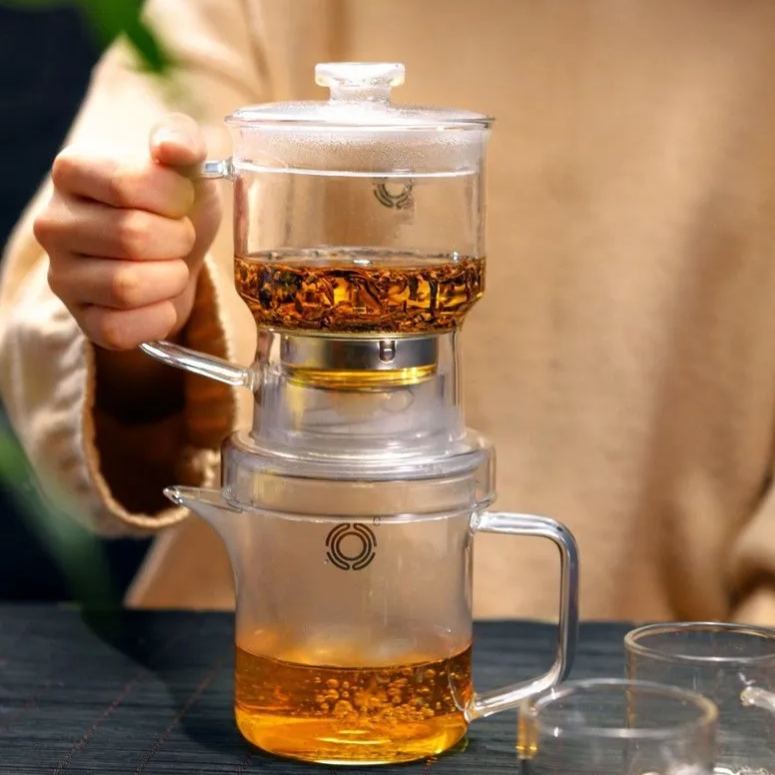
Porcelain and glazed ceramic sit in the middle. They are non-reactive, they hold heat reasonably well, and they are easy to clean. They do not season like clay, but they also do not hold onto yesterday’s tea. For people who rotate between different tea types throughout the day, a good porcelain pot is often the safest choice. If you want to browse a wider range, the Ceramic Teapot Collection has some lovely options across styles.
Glass Teapots and the Quiet Joy of Watching Tea Bloom
I want to spend a moment on glass specifically, because I underestimated it for years. I thought glass was for people who wanted a “starter” set, or for cafés displaying tea behind a counter. I was wrong.
Glass teapots have a few underrated advantages that only become obvious after you live with one for a while. They let you see the color of the liquor as it brews, which sounds trivial until you start adjusting steep times based on what you see rather than what a timer tells you. They let you spot when leaves are over-expanding. They are usually lighter than clay pots of similar volume, which matters when you brew multiple sessions in a day.
The Glass Brewing Set is my current favorite for slow weekend sessions. The infuser sits low enough that the leaves have room to open, and the wide base gives the liquor room to develop. I brew a competition-grade jin jun mei in it on quiet Sunday mornings and I genuinely look forward to it.
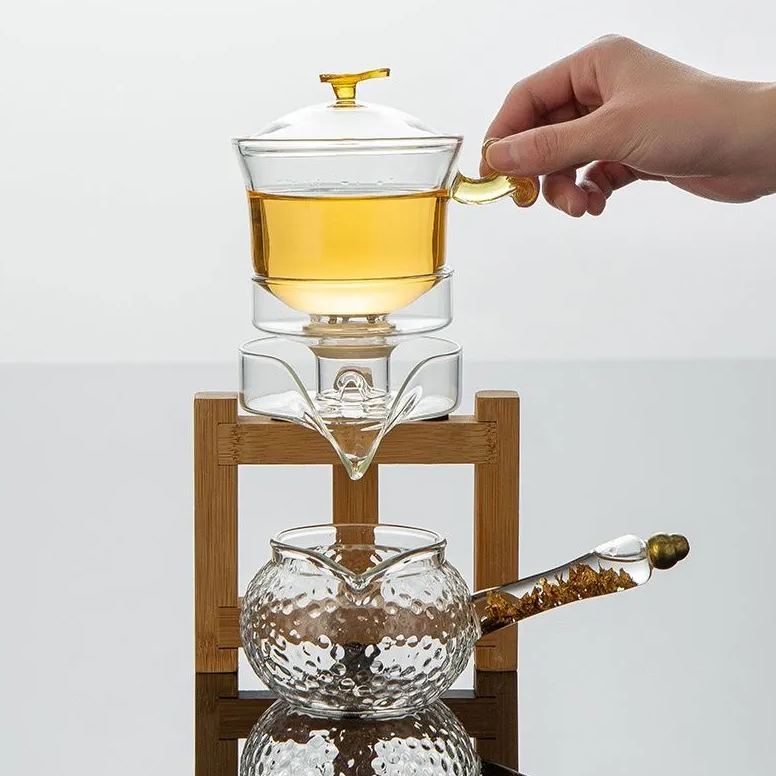
The honest downside of glass is heat retention. A thin glass pot will lose temperature faster than a thick clay or porcelain one, which can mute the aromatics of a roasted oolong. If you live somewhere cold or you tend to linger over a session, look for a double-walled glass design. If you brew mostly light teas in a warm room, standard glass is more than enough.
When Ceramic and Porcelain Become Essential
There is a category of tea where I will not use anything except porcelain or glazed ceramic: high mountain Taiwanese oolongs with delicate floral aromatics. I have tried them in clay and the aromatics get flattened. I have tried them in glass and the heat loss pulls them slightly off balance. Glazed porcelain hits the sweet spot.
There is also a category where I will not use glass at all: heavy roasted dong ding, aged sheng pu’erh, and anything where I want the pot to contribute to the flavor. For those, clay wins. The material really does matter and pretending otherwise leads to disappointment.
The best tea set in the world is the wrong tea set if it does not match the tea you actually brew most days. Match the pot to the leaf, not the leaf to the pot.
One thing I learned to stop doing is buying beautiful single-purpose pots for teas I drink twice a year. A dedicated clay pot for a once-in-a-blue-moon aged pu’erh sounds romantic. It is also a pot that sits in a cupboard for eleven months doing nothing. Match the pot to the leaf, not the leaf to the pot.
Size Is the Quiet Decision That Affects Everything
For my first five years, I bought teapots based on how they looked, then I bought cups based on how many people might show up someday. I ended up with gorgeous 80ml pots and a cupboard full of cups. The ratio was completely wrong.
Now I start with size and work backward. If 80% of my sessions are solo, the pot should be sized for solo. If I host a few times a month, the cups and fairness pitcher should be sized for that. The math is more practical than romantic, but it leads to a set you actually use.
For solo daily brewing, I prefer pots in the 150ml to 250ml range. Smaller than that and I am constantly refilling. Larger than that and the leaves cool before I finish. For shared sessions with two or three people, 350ml to 450ml hits the sweet spot. Anything bigger usually means a cha hai (fairness pitcher) and a thoughtful gaiwan session, which is a different conversation entirely.
If you are new to gongfu style brewing and want to explore it properly, the Gongfu Tea Set Collection is a useful starting point. Most of the sets in that range are sized around the proportions I just described, and they often come with the small cups that make the format work.
Gongfu Brewing and Why I Returned to It
I went through a phase where I thought gongfu was a performance. Tiny cups, repeated short steeps, all the ceremony. Then I started drinking better tea, and gongfu stopped being optional. A $40 oolong brewed western style tastes like a $12 oolong. The same leaves brewed gongfu style taste like the tea they actually are.
The format also forced me to slow down, which is a benefit I did not see coming. When I have fifteen seconds before the next steep, I pay attention. I notice the change in color from first steep to fourth. I notice how the aromatics shift. It is hard to scroll my phone and pour gongfu at the same time. That alone is worth the price of admission.
The Cartoon Kungfu Teapot was a bit of a surprise for me. I bought it because the design made me smile, then I realized it is genuinely functional. The magnetic semi-automatic drip mechanism means I do not have to fuss with a strainer between steeps, which matters more than I expected on busy mornings. The heat-resistant build means I can pour boiling water over leaves without worrying about cracking. It is the kind of pot that bridges the playful and the practical.
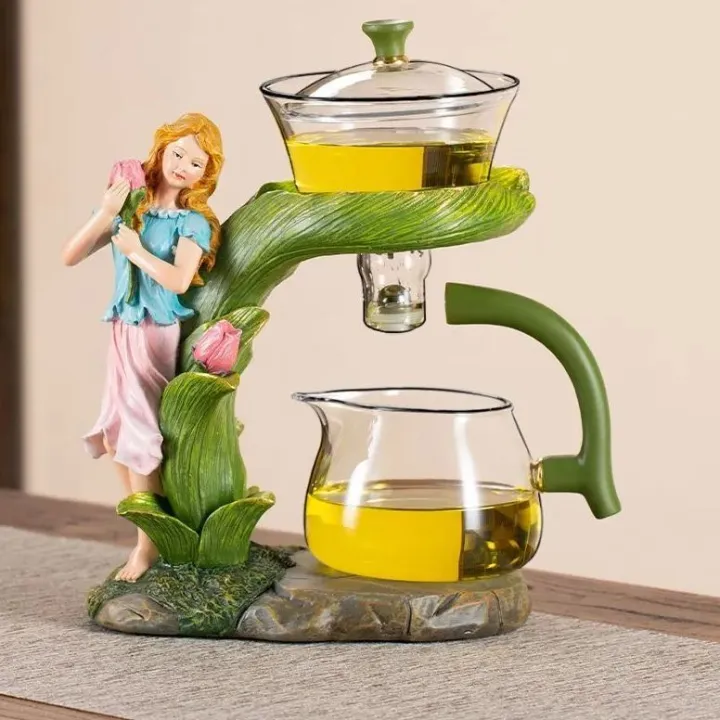
Not every gongfu pot needs to be traditional. I used to think a serious tea drinker had to use a yixing pot and a celadon cup set. After fifteen sets, I think the only serious requirement is that the pot lets you control the steep and that you actually drink the tea.
Easy Cleaning Is Not Optional Anymore
This might be the most unsexy section of this article, but it is the one that will save you the most regret. A tea set that is hard to clean becomes a tea set that sits in the cupboard. I have been through this cycle multiple times.
Things I now actively avoid: spouts that curve in ways I cannot fit a brush into, infusers that have tiny mesh gaps that trap leaf fragments, sets with too many separate pieces that have to be hand-washed in a specific order. None of these sound like problems until you are doing it for the tenth time in a week.
Things I actively look for: detachable lids and strainers (this is why I keep coming back to the Detachable Glass Teapot I mentioned earlier), wide-mouth pots I can wipe out with a soft sponge, and infusers that lift out in one piece. I also avoid sets where the lid sits so tightly that water gets trapped in the rim after pouring.
If a set requires a special cleaning ritual, that is not a feature. That is a job. Your tea set should feel lighter than your inbox at the end of the day, not heavier.
Aesthetic Fit and How It Shapes Daily Habits
I used to separate aesthetic from function, as if they were two different columns on a spreadsheet. After fifteen sets, I think they are the same column. A tea set you find ugly on the counter will not be used. A tea set that does not match your kitchen will get hidden in a cupboard. A tea set with proportions you find awkward will be replaced.
What this means practically is that I now think about where the set will live before I think about what it looks like in a product photo. My kitchen is mostly wood and warm light. My morning tea is in a quieter corner of the counter, near a window. My evening tea happens at a small desk in my study. Different sets for different spots, which is a luxury I earned by buying and failing repeatedly.
The Creative Tea Set is the one I keep in my study. The design has a quiet personality. It does not shout for attention, but it is interesting enough that I want to look at it while I drink. That sounds like a small thing, but it is the small thing that makes me brew tea at the end of the day instead of just drinking water at my desk.
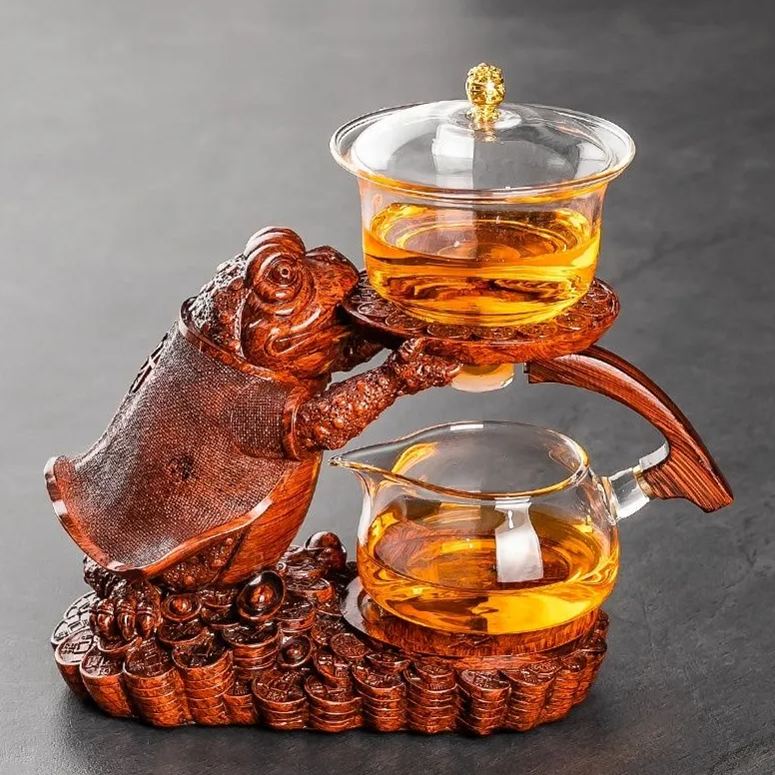
There is no single aesthetic that works for everyone. The right one is the one that makes you want to use the set tomorrow morning. Trust that instinct.
The Mistakes I Hope You Skip
I made most of the obvious mistakes so you do not have to. Here are the ones that cost me the most.
- Buying a beautiful set in the wrong size. I have owned three gorgeous 80ml pots and used exactly none of them regularly. Size before aesthetics, always.
- Assuming one pot has to do everything. There is no single material that is perfect for every tea. A small rotation of two or three pots covers almost any drinking style.
- Skipping the cups. I cannot tell you how many sets I have replaced because the cups were the wrong weight. A heavy cup sounds nice until you are holding it for the tenth steep. Look at the cup weight before you fall in love with the pot.
- Ignoring the spout pour. A spout that dribbles is a daily annoyance. A clean, fast pour is one of the underrated joys of a good pot. If you can, see a video of the pour before you buy.
- Treating tea cups as an afterthought. The cup is where the tea lands. It is where the aroma first reaches you. The right cup genuinely improves a tea. Our Tea Cup Collection has options across materials and weights if you want to explore.
After fifteen sets, the one piece of advice I wish someone had given me at set number one is this: buy fewer things, more deliberately. The set you use every day for five years is worth more than the five sets you rotate through.
What I Actually Recommend Based on Your Stage
Different stages of tea drinking call for different priorities. Here is what I would suggest if you are at a few common starting points.
If you are just beginning and want one set that will serve you well across many teas, go with a medium-size porcelain or glazed ceramic pot around 250ml to 350ml, a simple strainer, and four to six small cups. Skip anything complicated. You can always upgrade later, and many of the sets that beginners love are the ones they outgrow within a year. The Ceramic Teapot Collection is a good place to start browsing if that matches your stage.
If you already drink tea daily and you are upgrading from a starter set, think about which tea you drink most and let that drive the material. Daily green or white drinker, go glass. Daily oolong drinker, go porcelain or light clay. Daily pu’erh drinker, go clay and commit to seasoning one pot for one category of tea.
If you are exploring gongfu for the first time, start with a complete set that includes pot, fairness pitcher, and cups, then learn the basics of short repeated steeps. The Gongfu Tea Set Collection has bundles that make the early stages easier. You will learn faster with a matched set than with mismatched pieces from different sources.
If you have been drinking tea for years and you are honestly just looking for something that makes you smile, trust that instinct too. The Cartoon Kungfu Teapot and the Creative Tea Set are both pieces I bought mostly because they made me happy, and both have ended up among my most-used sets. Joy has a longer shelf life than I used to think.
Final Thoughts from a Decade of Buying Too Many Sets
If I could go back ten years and give myself one piece of advice before clicking “buy” on that little clay pot in Anxi, it would be this: slow down. The tea is going to be there tomorrow. The set will still be available next week. The rush is a trap.
The sets I regret are the ones I bought quickly to fill a moment. The sets I love are the ones I thought about, held in my imagination for a few days, and then welcomed into my kitchen. Material, size, cleaning, aesthetic, the tea it serves. Each of those is a small decision, but the small decisions are what make a tea set quietly perfect.
None of this means the perfect set exists. It does not. There is only the set that fits your tea, your counter, your habits, and your week. After fifteen purchases, I finally believe that the right set is the one you keep reaching for. Everything else is decoration.
If you are starting your own search, take a look around. Browse the Gongfu Tea Set Collection if ceremony matters to you, or the Ceramic Teapot Collection if you want flexibility across teas. Spend some time with the photos. Read the descriptions slowly. Imagine the set on your counter tomorrow morning. When something feels right, you will know. That has been the only reliable signal I have ever found.
 EN
EN  DE
DE  ES
ES  PT
PT  FR
FR  JA
JA