
Choosing Between Glass, Ceramic, and Cast Iron Teapots: My Honest Take After Years of Testing
A Saturday Morning That Changed How I Think About Teapots
I remember the morning clearly. My friend Lena stood in front of my kitchen shelf, hand hovering over three teapots, and asked the question I had answered a hundred times for other people but never quite put into words for her. “Which one would you actually keep if it was the only one you had?” She was helping me move, which meant everything in my kitchen was going to be evaluated. I had a glass teapot with a stainless steel frame, a ceramic pot I’d used almost daily for two years, and a cast iron beast I had inherited from my grandmother. The honest answer was that I would not choose one. But the more useful answer, the one I have since refined after many more mornings of testing, is that each material does something different, and the right choice depends entirely on how you actually drink tea.
That conversation with Lena has been the seed for almost every tea pot conversation I have had since. People do not really want a teapot. They want a tool that disappears into their routine and lets them focus on the leaf, the water, and the moment. The problem is that the material of the pot quietly shapes every part of that experience, from how fast your tea cools to how much ceremony you bring to your morning. This is the guide I wish I had handed Lena that Saturday. It is not a sales pitch. It is simply what I have learned after a decade of pouring, steeping, washing, breaking, and rebuilding my teapot shelf.
If I had to boil down a decade of teapot experience into one sentence, it would be this: the best teapot is the one that fits the way you actually live, not the one that photographs best on a styled kitchen shelf.
Why the Material Question Matters More Than You Think
Most people pick a teapot the way they pick a mug. They look at the color, the size, the price, and the vibe. Material gets a sentence, maybe two. “Oh, I like the look of glass,” or “Cast iron feels so sturdy.” Then they go home and within a week discover that the tea they love drinking at a friend’s house somehow tastes slightly off at their own kitchen table, or that their oolong turns bitter by the third steep, or that their green tea has gone lukewarm before they finished the cup.
None of those frustrations are about the tea. They are about the vessel. Material changes three things that actually matter to your daily cup: heat retention, brew visibility, and how the pot interacts with delicate or tannin-heavy leaves. A glass pot loses heat quickly but shows you exactly what is happening to the leaves. A ceramic pot holds heat steadily and quietly, the way a good wall holds warmth in a stone house. A cast iron pot holds heat like a fortress but treats the leaves very differently depending on the interior glaze.
I learned this the slow way, by accident, by over-steeping, by pouring, by talking to tea shop owners, by reading old books, and by stubbornly refusing to stop testing new pots even when my shelf was already crowded. If you are just starting out, or if you have been drinking tea from the same pot for five years and want to know whether upgrading is worth it, this guide is for you. Let me take you through each material the way I would explain it to Lena, with the honest trade-offs included.
Glass Teapots: Beauty You Can See Through
Glass is the gateway material for most people who are getting serious about tea. There is something almost theatrical about watching a tightly rolled oolong unfurl as it hits hot water, and glass is the only material that lets you enjoy that show. My first “real” teapot, after years of mugs and random pots, was a glass number, and I still have a soft spot for the clarity it offers.
The big advantage of glass is visibility. You can see exactly when the leaves are spent, when the color is right, when a delicate white tea has finished opening. That single feature has probably saved me from over-steeping more times than any brewing tip I have ever read. The second advantage is neutrality. Glass does not impart flavor, does not absorb oils the way clay can, and does not change the character of the leaf. If you want to taste the tea as the farmer intended it, glass is the most honest material you can buy.
The trade-offs are real, though. Glass loses heat faster than ceramic or cast iron. For delicate greens and whites, this is actually a feature, because the tea cools to a drinkable temperature sooner. For black tea, oolong, or pu’erh, it can mean the difference between a layered cup and a flat one. Glass is also more fragile than the other two materials, which matters if you brew on a busy countertop, have kids around, or tend to wash dishes with enthusiasm rather than care.
If glass appeals to you, I would point you toward something with thoughtful construction. The Conjunto de Vidro Triangular is one I have recommended to friends who want a starter setup that does not feel like a starter setup. The triangular silhouette is comfortable to hold, the borosilicate glass handles temperature swings without drama, and the matching cups give you a complete table moment without having to assemble pieces.
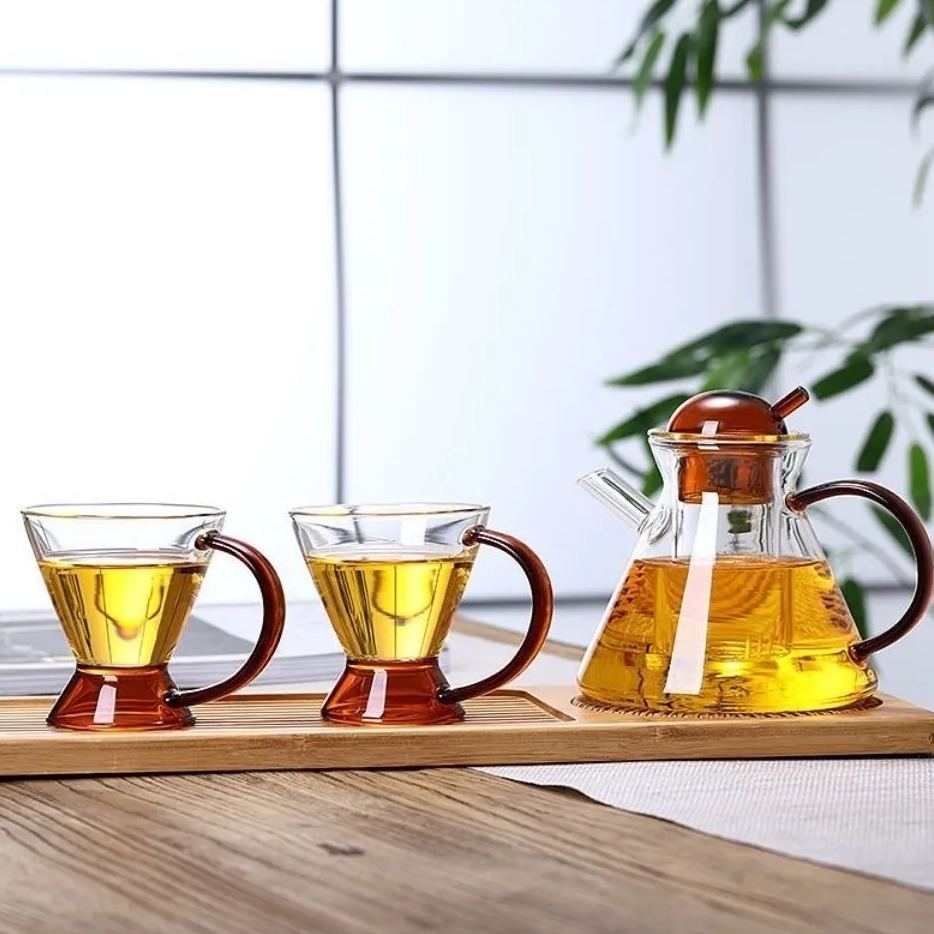
One small note about glass teapots in general: do not buy the cheapest option you can find. Cheap glass has a way of cracking the third time you pour boiling water into it on a cold morning. Borosilicate glass, which is what most reputable brands use, holds up beautifully, but the off-brand stuff at the discount store is more decorative than functional.
Ceramic Teapots: The Quiet Workhorses
If glass is the theatrical member of the family, ceramic is the steady, dependable cousin who shows up on time and never complains. Ceramic teapots have been around for centuries because they work. They hold heat well, they are tough enough to survive daily use, and they come in enough shapes and glazes to fit almost any kitchen. For most people drinking tea every morning, ceramic is the right starting recommendation, and I say that having spent years trying every alternative.
What ceramic gives you is balance. The walls are thick enough to keep your tea warm through a long session, but not so thick that they trap heat and turn a delicate green into a bitter mess. The clay, when fired properly, has a slight porosity that gently rounds the edges of a tea, softening tannins and pulling more nuance from the leaf. Good ceramic is also forgiving. You can brew oolong in the morning, green tea in the afternoon, and rooibos in the evening, all in the same pot, and the pot will not hold grudges against you.
The honest downside is that ceramic is opaque. You cannot watch your leaves, which is fine if you have learned to trust your timing and your nose. It is also heavier than glass, though much lighter than cast iron. And ceramic can chip if you are not careful, especially around the spout and handle, which are the most vulnerable points.
I have a particular soft spot for ceramic teapots that combine traditional materials with modern brewing systems. A few months ago I started using the Conjunto de Cerâmica Magnético on my desk while working, and it changed my afternoon. The magnetic filter system means you can control steep time by simply lifting the leaves out of the water without any fiddling, and the ceramic body keeps the tea at a steady temperature even when I get distracted by a long email. The metal frame gives it a contemporary look that fits a modern kitchen without feeling precious.
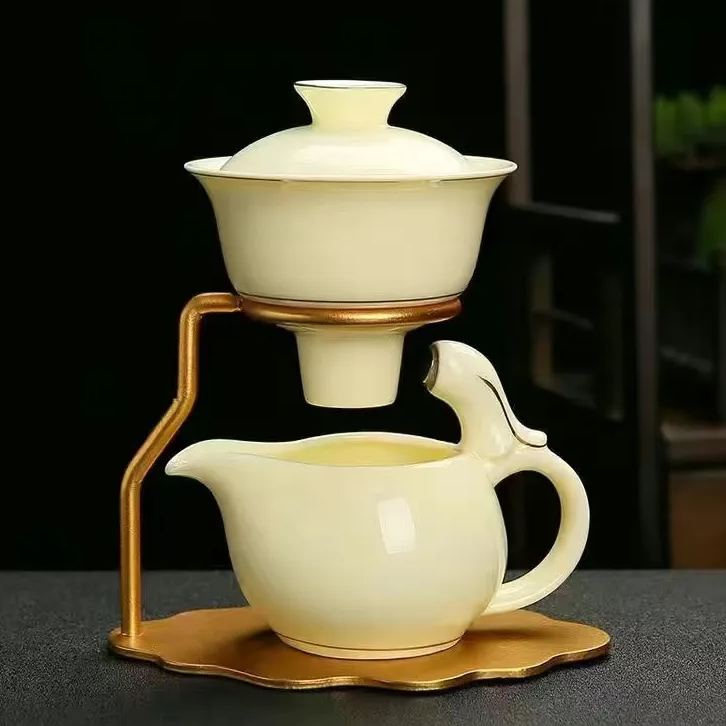
If ceramic appeals to you and you want to explore more options, our Coleção de Conjuntos de Chá Magnéticos has a few different sizes and styles that all share that same blend of traditional material and modern brewing sense. Whether you brew for one, two, or a small group, there is something in there that will probably fit your routine.
After ten years of testing, I have come to believe that ceramic is the most forgiving material for someone still learning their own taste. Glass shows you everything, but ceramic quietly teaches you to trust your nose and your tongue.
Cast Iron Teapots: Old Soul, Heavy Heart
Cast iron teapots are the dramatic centerpiece of any kitchen. They are heavy, they look like they have stories to tell, and they hold heat better than almost anything else you can put on your table. Mine is a tetsubin-style pot that belonged to my grandmother, and I keep it on the shelf as much for the memory as for the brewing. When I do brew with it, the tea stays piping hot for a long, long time, which is a genuine pleasure in winter or when you have guests who keep chatting and forgetting about their cups.
The advantage of cast iron is simple: heat retention is unmatched. If you are brewing a high-caffeine black tea, a roasted oolong, or a heavily oxidized tea that benefits from staying hot, cast iron will give you a warmer cup for longer than any other material. The weight also means it does not slide around on a tray, and the durability is almost absurd. With basic maintenance, a cast iron pot can outlive you. Many do.
The honest trade-offs, though, are larger than people expect. First, cast iron can react with tannin-heavy teas if the interior is not properly enameled. You want a tetsubin or a cast iron pot with a porcelain or enamel lining for brewing. Unlined cast iron is for heating water, not for steeping leaves. Second, cast iron is heavy. Truly heavy. If you have wrist issues or you brew at a small desk where lifting a heavy pot is awkward, this matters more than it sounds. Third, cast iron is not the right pot for delicate greens, whites, or lightly oxidized oolongs. The heat retention works against you, pulling bitter notes out of leaves that wanted gentler treatment.
I do not use cast iron for everyday brewing. I use it when I want a slow, ceremonial pot of roasted oolong on a Sunday afternoon, or when the weather turns cold and I want my tea to stay hot through a long conversation. If that is the kind of ritual you are looking for, cast iron is unbeatable. If you want a daily driver, it is more pot than you need.
Heat Retention: The Hidden Variable
Of all the things I have learned about teapots, the one that has surprised me most is how much heat retention quietly shapes the cup. People worry a lot about leaf quality, water temperature, and steep time. They worry very little about whether the pot is losing ten degrees of heat per minute while the leaves are still steeping.
Here is the simple version. Glass loses heat the fastest, ceramic holds a steady middle, and cast iron holds the most. If you brew a delicate sencha at 175 degrees in a glass pot on a cold morning, by the time the leaves have unfurled the water may be down to 160 or lower, which can mute the grassy sweetness you were after. Brew the same tea in a thick ceramic pot, and you stay closer to your target temperature for the full steep. Brew it in cast iron and you may actually overshoot, pushing the tea into bitter territory.
This is why most of my single-cup experiments ended up favoring ceramic for daily use. The walls keep the water hot enough to extract good flavor without staying so hot that they bully delicate leaves. Glass remains my choice when I want to learn a new tea, because the visual feedback helps me calibrate. Cast iron is reserved for teas that want to stay very hot through a long session.
Style of Brewing: Slow Watching Versus Hands-Off
Another thing people underestimate is how the pot changes their relationship with the brewing process. Glass turns brewing into something you watch. You see the leaves, you see the color deepening, you see the moment when the leaves are spent. This is wonderful if you enjoy a slow ritual, and it is genuinely educational if you are learning to steep by eye rather than by timer.
Ceramic turns brewing into something you trust. You learn your leaves, you trust your timer, and the pot quietly does its work without demanding your attention. For people who drink tea while working, parenting, or answering emails, this matters more than they think. You do not want to be chained to a visual cue when you are trying to get other things done.
Cast iron sits in between, but with a different character. Brewing in cast iron feels ceremonial, partly because of the weight, partly because of the aesthetic, partly because the tea stays hot long enough that you naturally slow down to match it. If you have ever wanted tea to feel like a pause in your day rather than a task on your list, cast iron is the material that delivers that feeling most reliably.
If you like the visual approach but want a little more brewing control, a setup like the Glass Tea Maker with Wooden Base gives you the visual experience of glass with a controlled drip system that lets you adjust steep time precisely. The wooden base is a small touch, but it changes the whole feeling of the pot on your counter. It feels less like laboratory equipment and more like something you would actually leave out on the shelf.
Size and the Way You Actually Live
Material is half the decision. Size is the other half, and most people get it wrong. They buy a small pot for one cup, then end up brewing twice as much as they want because the pot is too small for the strainer, or they buy a large pot for company and then never use it because they live alone. I have made both mistakes, and I have watched almost every friend make at least one.
Here is how I think about it now. If you live alone and you brew mostly for yourself, a 350 to 500 milliliter pot is plenty. You want enough room for the leaves to expand, but not so much that you are reheating the same pot of tea three times in a row. If you share a morning cup with one other person, you want roughly 600 to 800 milliliters, which gives you two full cups without forcing the leaves to keep steeping while you wait for the second pour. If you entertain, brew gongfu style, or drink tea through a long afternoon, look at one liter or above.
Another thing people forget is that the size of the strainer matters as much as the size of the pot. A tiny infuser in a large pot means your leaves have no room to expand, and you end up with a weak first pour and a bitter third. A well-proportioned strainer that reaches the right depth is worth more than a fancy pot with a useless infuser.
Mistakes I Have Made and Watched Others Make
The first mistake is chasing aesthetics without matching the material to your tea. The most beautiful pot in the world is the wrong one if it bullies the leaves you actually drink. I have a friend with a stunning glass teapot who loves roasted oolong. By the second steep, the leaves are cold and the cup is flat, and she has been blaming herself for not being able to brew properly. The fix is a ceramic pot, not a better technique.
The second mistake is treating cast iron like ceramic. People assume all heavy pots behave the same way. They do not. Cast iron is much hotter for much longer, and the wrong tea in the wrong cast iron pot becomes bitter in ways that are hard to diagnose unless you have experienced the difference.
The third mistake is buying based on a single use case. Someone buys a tiny glass pot because they love the look for their morning green tea, then discovers they want to host friends on weekends and cannot brew enough. Or they buy a one-liter cast iron pot for daily use and realize they are drinking lukewarm tea because the pot holds heat too long for the leaf they actually drink.
The fourth mistake is ignoring maintenance. Cast iron needs to be dried thoroughly after each use or it can rust on the rim. Glass needs to be washed gently to avoid thermal shock. Ceramic needs to be checked for chips, which can harbor old flavors and ruin a new pot of tea. None of this is complicated, but it is easy to forget when you buy a beautiful pot and want it to stay beautiful forever.
The single most useful question I have learned to ask before buying a teapot is this: which tea am I actually going to brew in this pot six months from now? Not which tea looks best in the photograph, not which one my favorite shop carries. Which one will I reach for on a normal Tuesday morning, half-awake, looking for a quiet cup before the day begins.
How I Now Help Friends Choose
When someone asks me which teapot to buy, I ask three questions. First, what tea do you drink most often? Second, do you want to watch the brewing or let the pot do the work quietly? Third, are you brewing mostly for yourself or with someone else? Those three answers narrow the choice faster than any list of features.
If the answers are delicate tea, visual learner, and brewing for one, I point them toward glass. The Conjunto de Vidro Triangular is usually my recommendation in that case. If the answers are a mix of teas, hands-off drinker, and brewing for one or two people, I point them toward ceramic. The Conjunto de Cerâmica Magnético is the one I have been recommending most this year. If the answers are roasted or dark teas, slow ritual, and brewing for a small group, I point them toward cast iron and warn them honestly about the weight and the maintenance.
If someone is brewing for a group or wants a more controlled system, I also suggest exploring a French Press Collection, which is not technically a teapot in the traditional sense but offers a similarly hands-off brewing experience and is great for serving multiple cups at once. It is a different tool with a different philosophy, but for certain kinds of tea drinkers it solves a problem that traditional teapots do not.
A Few Parting Reflections
Ten years of testing has taught me that the perfect teapot does not exist, but the right teapot for you almost certainly does, and you will know it within the first few mornings. The pot that disappears into your routine, that you reach for without thinking, that you wash without resentment, and that you would quietly grab from the shelf during a fire, that is your pot. The material is just one part of that fit.
If you are just starting out, I would say do not overthink it. Pick the material that matches the tea you already drink, get a reputable piece rather than a beautiful knockoff, and let yourself learn from the pot. After a few months you will know what you actually want from your next one, and the journey from there is much more interesting than the journey of trying to find a perfect first pot.
And if you are standing in front of a shelf right now, doing exactly what Lena was doing in my kitchen that Saturday morning, take a breath. Pick the pot that feels like your morning, not the one that feels like someone else’s Instagram. Your tea will thank you for it.
 PT
PT  EN
EN  DE
DE  ES
ES  FR
FR  JA
JA