
Glass vs Stainless Steel Teapot: Which One Should You Buy?
Nov
Introdução
conjunto de chá é também um instrumento visual. Observar as folhas se abrirem em um bule de vidro, ou ver a cor se aprofundar ao ser derramado no copo da justiça, ativa os mesmos canais sensoriais que o aroma e o sabor. De acordo com pesquisas resumidas pela glass vs stainless steel teapot decision is simpler than most material comparisons, and easier to get wrong. Two shoppers want the same pot for opposite reasons. One wants to watch a whole-leaf oolong unfurl. The other wants to put a pot in a rucksack, tip it over a hotel kettle, and forget it. Glass wins the first. Stainless steel wins the second. The mistake is buying the pot for the wrong job.
The materials behave differently in ways that matter more than any spec sheet, and that is what a useful glass vs stainless steel teapot comparison has to start from. Glass is inert and clear, so it adds nothing to the brew and lets you see the infusion. Steel is tough and light, so it survives a drop and packs flat. Neither is better. They suit different jobs, which is why a single glass vs stainless steel teapot ranking that never names the job is worthless.
There is a gap in the market that makes this comparison worth writing carefully. Most steel teapots sold online are plain, straight-walled vessels. Most glass teapots sold online are decorative soda-lime glass with thin walls. That is the version of each material most people actually receive, and rarely the version in the product photograph. This guide compares both materials on six dimensions, then gives six picks with an honest note on what each cannot do.
Principais Conclusões
- Glass is inert and clear, so it adds no flavour and lets you watch the infusion. Its limit is heat. Soda-lime glass melts at a high 1723 °C, which sounds like strength and behaves like one until you knock it off a counter (per the Wikipedia soda-lime glass reference).
- Stainless steel resists corrosion, and the 304 grade and the 316 grade are the two food-contact grades most often specified (per the Wikipedia stainless steel reference). Steel takes boiling water with no thermal-shock limit and packs small, which is why it wins the travel job outright.
- The thermal-shock number is the one spec worth demanding from a glass seller. Borosilicate glass can withstand temperature differentials of about 330 °F, which is 166 °C, without fracturing, whereas soda-lime glass can withstand only about a 100 °F, which is 40 °C, change in temperature (per the Wikipedia borosilicate glass reference).
- Neither thin glass nor thin steel holds heat across several rounds. That shared limit is why gongfu brewing uses 100 ml vessels and a denser leaf-to-water ratio rather than a bigger pot (per the Wikipedia gongfu tea reference), and why a cast iron tetsubin, the heavier Japanese cast iron kettle with a pouring spout and a lid (per the Wikipedia tetsubin reference), is the answer when heat across rounds is the requirement.
- Ceramic sits between the two. Porcelain is made from kaolin and fired in a kiln to temperatures between 1200 °C and 1400 °C, which is 2192 °F to 2552 °F (per the Wikipedia porcelain reference). The fired body gives it weight and a glaze.
- Ask for the coefficient, not the word on the listing. Borosilicate has a thermal expansion coefficient of about 3.3 × 10⁻⁶ K−1, and soda-lime glass handles about 100 °F of temperature change where borosilicate handles 330 °F (per the Wikipedia borosilicate glass reference). That number is what a glass vs stainless steel teapot buyer should ask for.
Why a Glass vs Stainless Steel Teapot Comparison Is the Real Question Behind Most Returns
Returns in this category rarely come from a defective pot. They come from a mismatch between the job and the material. A shopper buys a thin steel pot because the photograph shows a sleek, minimal object. They then find that a 30-second pour into a cold cup tastes thin, because the vessel gave up its heat at once. The same shopper buys a decorative glass pot because it looked good on a shelf. They then find that the spout drips and the walls are too thin to take a hot refill.
There is a second mismatch that runs the other way, and it is the one that catches out readers of a glass vs stainless steel teapot comparison written by someone who only brews one way. A pot bought for gongfu brewing is usually a small vessel. Gongfu uses smaller brewing vessels and a more potent leaf-to-water ratio than in Western-style brewing, a difference that catches out anyone applying a glass vs stainless steel teapot comparison to a small-ceremony setup (per the Wikipedia gongfu tea reference). That pot is excellent for its job and completely wrong for a table of six.
Tea in Britain grew out of a formal culture that ran from the Tang dynasty, where Lu Yu found that the plants growing under shady hillsides produced poor-quality tea, through the Song dynasty, when formal tea-tasting parties were held, comparable to modern wine tastings (per the Wikipedia tea culture reference).
So a glass vs stainless steel teapot comparison only becomes useful once the job is named. This guide names it six ways, and each way changes which material wins.
What Glass Does to a Cup of Tea (and What It Cannot Do)
Strength 1: full taste neutrality and complete visibility
Glass is chemically inert and transparent, and it has found widespread practical use in window panes, tableware, and optics (per the Wikipedia glass reference). In a teapot, chemically inert means the vessel contributes nothing to the infusion. There is no seasoning to do, no lining to worry about, and no flavour that grows more metallic after six months of use.
The transparency means you can watch the leaf open. That is the whole point of a glass brewing chamber, and it is why glass teapots remain the default for visual brewing even against capable steel rivals. Green tea being infused in a gaiwan is a working example of why visibility matters (per the Wikipedia tea reference).
Strength 2: you can see the infusion decide itself
In a steel pot, a steeping decision is a guess with a timer attached. In glass, it is an observation. You watch the colour move, watch the leaf expand, and pull the infusion when the colour turns rather than when a recipe says so. For a drinker who has never brewed loose leaf before, that difference decides whether the first attempt works.
That is the strongest argument for glass in any glass vs stainless steel teapot comparison, and it is the one that a steel pot cannot copy at any price. You can add a mesh basket to a steel body. You cannot add a window to it.
Weakness: thermal shock and the drop
Glass is brittle, but it can be laminated or tempered to enhance durability (per the Wikipedia glass reference). Ordinary soda-lime glass in a teapot gets neither treatment. Its high melting temperature of 1723 °C (per the Wikipedia soda-lime glass reference) sounds like a strength and behaves like one until you pour cold water into a hot pot, or knock it off a counter with a hard-glazed mug.
The material does not bend, and that single property drives most of the glass vs stainless steel teapot decisions made on a busy table. It breaks, and it usually breaks where it is held, which is the handle. This is the single fact that decides the glass vs stainless steel teapot question for anyone with a busy table, and it is why the glass picks in this guide are chosen for handle and wall design rather than for looks alone.
The borosilicate version is a different material, not a thicker soda-lime. Borosilicate glass has silica and boron trioxide as its main glass-forming constituents, is harder to break when dropped, and is more resistant to cracking from significant changes in temperature (per the Wikipedia borosilicate glass reference).
Its coefficient of thermal expansion is about 3.3 × 10⁻⁶ K−1, the lowest of all commercial glasses for large-scale technical applications (per the same reference). Even so, borosilicate glass can still crack or shatter when subjected to rapid or uneven temperature variations (per the same reference). Better is not unbreakable, and the glass vs stainless steel teapot answer stays the same.
What Stainless Steel Does to a Cup of Tea (and What It Cannot Do)
Strength 1: it survives the trip and the drop
Stainless steel resists corrosion, and 304-grade and 316-grade are the two food-contact grades most often specified (per the Wikipedia stainless steel reference). In practice the advantage in a glass vs stainless steel teapot comparison is not corrosion. It is that a thin-walled steel pot weighs less than the equivalent glass pot, survives being dropped on concrete, and can be gripped while hot without a cloth in between.
For a pot that travels, that combination is decisive. Steel is also why the magnetic teapot collection at Elysian Tea Shop leans on glass with a steel strainer rather than a solid steel wall, and it is the reason a glass vs stainless steel teapot review that only mentions the kitchen misses half the market.
Strength 2: a wide usable temperature band
A steel teapot takes boiling water without the thermal-shock conversation that glass demands, which is the practical core of this glass vs stainless steel teapot comparison. A 316-grade pot also stands up to salt and acid, which matters for anyone brewing a citrus-heavy or spice-heavy infusion. The steel wall also gives you a stovetop option that thin glass does not offer. None of this is about flavour. Steel’s job in a teapot is to be a durable, indifferent container.
Weakness: heat retention, and thin walls that taste thin
Steel moves heat far better than glass, which sounds like an advantage until you understand what that means for a table. A thin steel wall moves heat out of the brew quickly. That is why a steel pot is a poor match for gongfu-style service, where the method is a sequence of short infusions from a pot held at temperature.
It is also why a steel pot is a poor match for anyone who wants to pour a second and third cup from the same vessel. Steel is at its best when the brew is made once and poured straight away, which is the flip side of every glass vs stainless steel teapot comparison that favours steel. This is the strongest argument for glass in any glass vs stainless steel teapot comparison, and it is a weakness no amount of steel grade fixes.
There is a quieter steel weakness that turns up in reviews. Thin-walled steel pots can carry a metallic note into a delicate infusion. That is a function of wall thickness and seam quality rather than of the alloy being unsafe, and it is why a heavier, thicker steel body costs more. It is also the honest reason this guide does not treat steel as a universal upgrade over glass. It is a different bet.
Heat Retention: Which Material Holds the Brew
Heat retention is the dimension most likely to decide a purchase and the one least likely to be answered honestly by a product page, so it earns its own section in this glass vs stainless steel teapot comparison. Here is the honest ranking, from the heaviest and slowest to the lightest and fastest.
- Cast iron tetsubin — the heaviest option, and the only one here whose thermal mass is the design. A Japanese cast iron kettle is a cast iron kettle with a pouring spout, a lid, and a handle crossing over the top (per the Wikipedia tetsubin reference).
- Thick ceramic and porcelain — slow to heat, slow to cool. Porcelain is made from kaolin and fired in a kiln to temperatures between 1200 °C and 1400 °C (per the Wikipedia porcelain reference), and a thick glazed wall holds heat well.
- Thick-walled stainless steel — moderate retention, excellent durability, and the only material here with a stovetop option.
- Thin-walled stainless steel — poor retention, best travel characteristics.
- Thin borosilicate glass — the fastest heat loss of the group, and the only one where visibility pays for it.
For a glass vs stainless steel teapot comparison, this dimension mostly argues for glass in one situation and against steel in another. If you brew one pot and pour it straight into cups, the thin-wall heat loss barely registers, and glass wins on the infusion itself.
If you want one pot to hold a brew across several rounds of pouring while people talk, thin steel will disappoint. So will thin glass. The fix in that case is a heavier vessel or a warmer, not a different brand of the same thin material. That is the point of the glass vs stainless steel teapot table further down.
Flavour Neutrality: Does the Pot Taste of Anything
This is the cleanest result in the whole comparison, and the one where the two materials are close but not identical. Glass is chemically inert and transparent (per the Wikipedia glass reference), so it is as neutral as a brewing vessel can be. A good steel pot with a seamless interior is also effectively neutral.
The difference shows up at the low end of quality, not in the material name, so a glass vs stainless steel teapot comparison is really a finishing comparison. Thin or poorly finished steel seams can carry a faint metallic note. Cheap decorative glass can carry a faint soda note from poorly finished rims. Both are finishing problems, not material problems, and both are avoidable by asking one question before buying.
There is a third material worth naming, because it changes the flavour question more than either glass or steel does. Yixing ware is unglazed and porous, and a seasoned clay pot is meant to carry the memory of previous teas (per the Wikipedia Yixing ware reference).
That is a feature to a dedicated gongfu drinker and a real drawback to anyone who wants a neutral vessel. Porcelain sits on the other side of that line from clay, because it is glazed and fired at extreme heat, so it stays neutral while adding weight and heat retention. If you have read about clay pots and wondered how they fit a glass vs stainless steel teapot decision, that is the relevant distinction.
Breakage Risk: Glass on a Busy Table
Breakage is the risk that actually decides the purchase for anyone hosting, and it is easy to underestimate because a glass teapot looks harmless until it is knocked. Glass is brittle but can be laminated or tempered to enhance durability (per the Wikipedia glass reference). A teapot almost certainly is neither.
A thin-walled glass pot with a glass handle is the most breakable object you can put on a table where children or guests are moving around it, and no material rating changes that. Against that, steel simply does not have this failure mode. It dents and scratches instead of shattering, which is a far better outcome when the pot is full of hot water on a crowded table.
That asymmetry is why the glass tea set collection at Elysian Tea Shop reads as a display and brewing choice rather than a children-and-pets choice, and why this glass vs stainless steel teapot guide leads with breakage rather than with flavour. It is also why the same category leans on detachable and stand-mounted designs that lift the vessel off the counter edge entirely.
The counter-argument for glass is that breakage depends on wall thickness and handle construction, not on the word glass. A thick-walled glass pot with a solid handle and a base that stays clear of the table edge survives most of what a busy afternoon produces. It does not survive being dropped from a shelf. Only steel does that, which is where the two halves of a glass vs stainless steel teapot comparison finally separate.
This is why the honest version of the glass vs stainless steel teapot comparison is a placement question: how far from the edge, how many people, and how much traffic. A glass vs stainless steel teapot decision made without those three answers is guesswork.
Weight and Packing: Which One Travels
Travel is the cleanest win for stainless steel, and it is worth being blunt about it. A thin-walled steel pot packs flat, survives a bag, and weighs less than the equivalent glass. A glass pot does none of that. If the pot is going to a hotel room, an office desk, or a campsite, this dimension settles the glass vs stainless steel teapot question before flavour or heat retention enter into it.
The trap is that most steel travel vessels are electric kettles rather than teapots, and a kettle solves a different problem than the one a glass vs stainless steel teapot buyer is asking about. A kettle heats water. A teapot holds an infusion. The vessel that fills the gap is a glass or steel pot with an infuser that you can set on top of a hot kettle, and that hybrid is the practical answer in most glass vs stainless steel teapot comparisons.
That is exactly the use case behind the two-part glass teapot with a metal stand and the detachable semi-automatic designs in the semi-automatic tea sets category. Both keep the brew visible while the steel handles the work, which is the practical answer to a glass vs stainless steel teapot buyer who travels, and it is the part of a glass vs stainless steel teapot comparison that most product pages skip.
If you want the full decision framework for the office and travel case, the guide to the best teapot for office use covers the scenario constraints in detail, including why hot-desk and travel push toward the more robust end of the material range.
Cleaning and Maintenance Reality
Glass is the easiest material to keep neutral, because there is nothing to season and nothing to strip, and that is the strongest practical argument in this glass vs stainless steel teapot guide. A glass teapot is rinsed, and occasionally scrubbed for tannin build-up on the walls. The care note that matters is thermal. Never pour cold water into a hot glass pot, and never put a hot glass pot on a cold or wet surface.
Soda-lime glass survives a great deal, but a sudden temperature change is the failure it is least good at. The difference in tolerance between soda-lime and borosilicate is roughly 330 °F against 100 °F (per the Wikipedia borosilicate glass reference), which is the single number that decides the glass half of a glass vs stainless steel teapot comparison.
Stainless steel is low maintenance too, with two caveats. First, a steel pot with a removable mesh basket needs the basket cleaned properly, or the tannin will stain the steel. Mesh matters more than most people expect, because infusers with large holes may not catch all the leaves, requiring the use of a tea strainer to remove the remaining pieces (per the Wikipedia infuser reference).
Second, a steel pot used for a strong flavoured tea and then for plain green tea needs a proper wash, not a rinse, or the second pot will taste faintly of the first, and the same trap applies to any glass vs stainless steel teapot comparison that skips the cleaning section. The Wikipedia tea reference is clear that green tea being infused in a gaiwan is a sensitive method, and the same sensitivity applies to a pot you have just used for something bold.
O [espaço em branco no original] oferece uma abordagem diferente para o bule de vidro que enfatiza métodos e estética tradicionais. Enquanto meu equipamento prioriza consistência e conveniência, essa alternativa foca no ritual e no envolvimento do processo de preparação. Ambas têm mérito, e a escolha entre elas depende das prioridades individuais. guide to cleaning a glass teapot covers the tannin chemistry that applies to both materials, and it is the fastest fix for a pot that has started to taste of yesterday.
One material in this family does need real maintenance, and it is worth naming so this glass vs stainless steel teapot comparison stays complete. Unglazed clay is porous and carries seasoning between brews, which some drinkers consider the point and others consider a problem (per the Wikipedia Yixing ware reference). A steel or glass pot never behaves that way, and that predictability is a legitimate reason to buy one of them even when you also own clay.
Side-by-Side: 6 Dimensions That Decide the Winner
| Dimension | Vidro | Stainless Steel | Winner |
|---|---|---|---|
| Taste neutrality. | Chemically inert, no seasoning, no metallic note from a seamless interior. | Neutral in good-quality seamless steel; thin or poorly finished seams can carry a faint note. | Glass. |
| Visibility of the infusion. | Transparent, so the leaf and colour are visible during the steep. | Opaque, so steeping decisions are timed rather than observed. | Glass. |
| Thermal-shock tolerance. | Borosilicate withstands about 330 °F of differential; soda-lime only about 100 °F. | No meaningful thermal-shock limit for a steel wall. | Stainless Steel. |
| Drop and table durability. | Brittle; shatters rather than dents, usually at the handle. | Dents and scratches instead of shattering. | Stainless Steel. |
| Travel weight and packability. | Heavier per unit volume, fragile in a bag. | Lighter, packs flat, survives being dropped. | Stainless Steel. |
| Heat retention across rounds. | Low in thin walls, which is why visual brewing uses short infusions. | Moderate in thick bodies, low in thin ones. | Draw. |
Read across the table and the pattern is clear. Glass wins the two dimensions that affect the drink itself. Steel wins the three that affect what happens to the pot. That is why framing a glass vs stainless steel teapot comparison as a winner-takes-all contest is a mistake. The right question is which of those two groups of dimensions your own table cares about more.
3 Glass Teapot Picks (Brewing Visibility First)
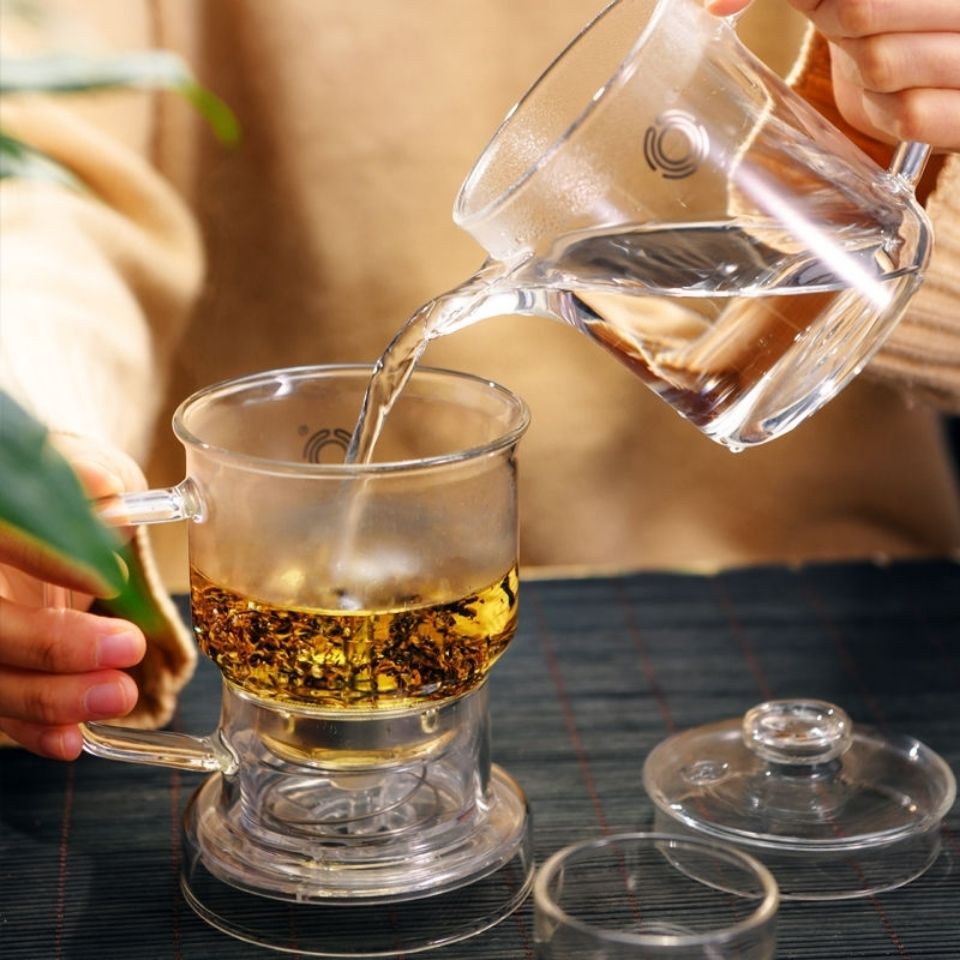
Glass Pick 1: the detachable semi-automatic glass teapot for clean brewing and easy cleaning
The detachable design is the first glass pick because it solves the one problem a glass pot creates that steel never has, and that single feature is what a glass vs stainless steel teapot buyer should look for first. You can wash a hot glass body without thermal shock, because the brewing chamber separates from the serving piece. The glass goes into the wash cold, on its own, with no shock and no handle to twist off while hot.
The visible chamber also keeps the infusion on display, which is the whole advantage glass has over steel. If your priority is watching the brew and owning a pot you will still use in five years, this is the shape to look for in the glass tea sets category. It is also the pick that most rewards the glass vs stainless steel teapot rule of watching the leaf.
Glass Pick 2: the triangular all-glass set for visual brewing and wide viewing
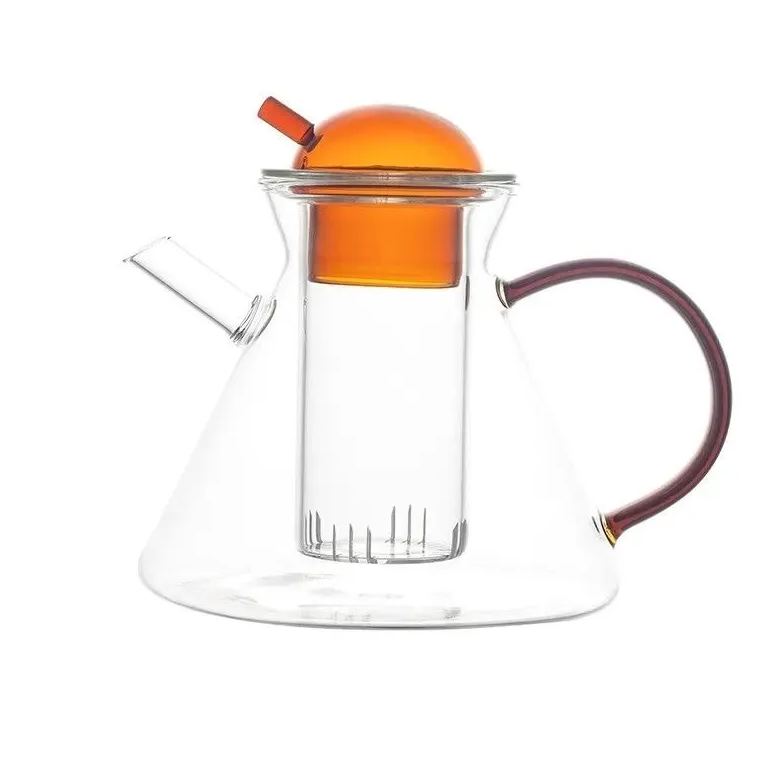
The triangular all-glass form is the second glass pick because the geometry is the feature, and because it is the clearest possible demonstration of what a glass vs stainless steel teapot comparison is really about. Flat triangular walls give an unusually clear view of the leaf from most angles around a table. An all-glass build also means there is no metal frame, no gasket and no plastic collar to discolour or to fail over time.
What it will not do is survive being knocked off the table. Treat it as the display-and-brew pot it is, and keep it away from the edge. That reasoning is the same one behind the guide to the best teapot for small apartments, where footprint and stability decide more than capacity does.
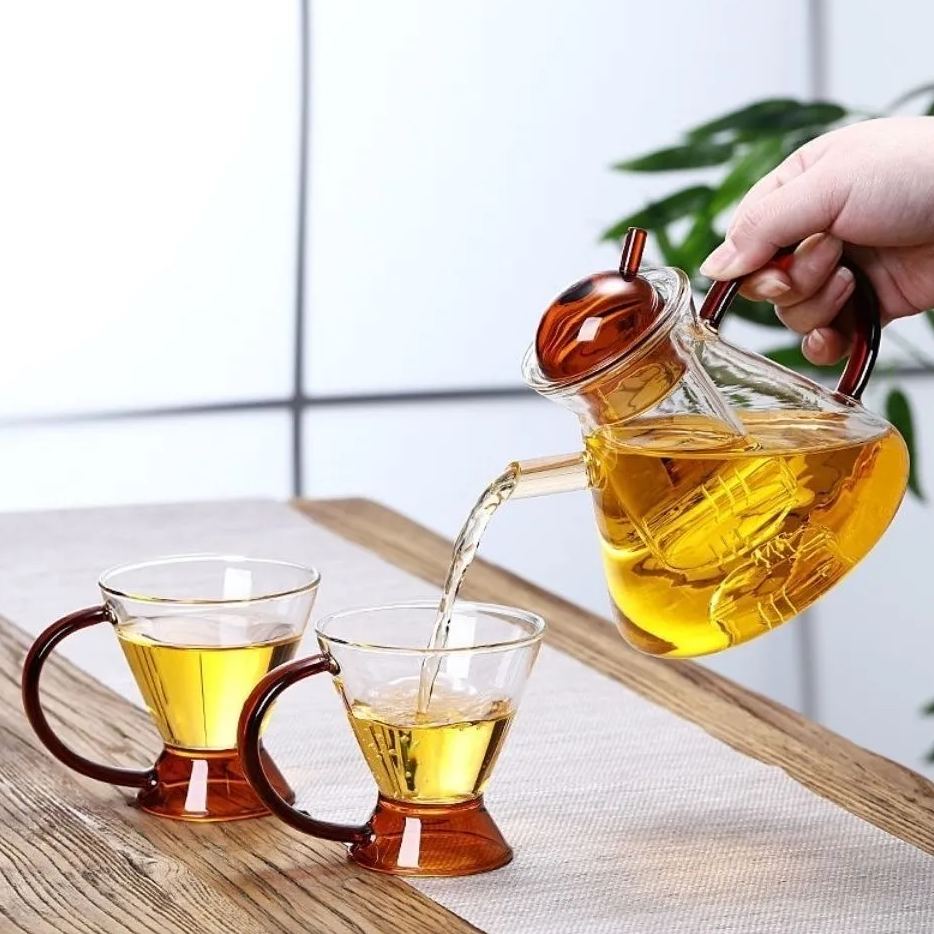
Glass Pick 3: the glass brewing set with a removable infuser for loose leaf
The third glass pick is the one built for loose leaf, with a removable infuser that separates from the glass vessel for cleaning, which is the part of the glass vs stainless steel teapot decision most often left to the buyer. This is the pick for anyone who wants glass for its neutrality and visibility but also wants a proper mesh basket.
Mesh is the reason, because infusers with large holes may not catch all the leaves, and mesh aperture is the detail most often left out of a glass vs stainless steel teapot comparison, requiring the use of a tea strainer to remove the remaining pieces (per the Wikipedia infuser reference). For the step-by-step on picking the right mesh aperture for a given leaf, the guide to brewing loose leaf tea the right way covers the aperture question in full.
3 Stainless Steel Picks (Durability and Travel First)
One honest note before the picks, because it changes how you should read them. Elysian Tea Shop does not sell solid stainless steel teapots. It sells glass, ceramic, magnetic and rotating designs, plus one dual-use French press with a steel frame. The three stainless picks below are therefore selection criteria and spec guidance drawn from the Wikipedia stainless steel reference and from what the market actually ships, not a product range.
Where a category on this site can serve the same job with a steel element built into it, that is what gets linked instead. This is deliberate, and it is the honest way to run a glass vs stainless steel teapot comparison from a shop that only stocks one of the two materials.
Stainless Pick 1: a dual-use glass and stainless French press for tea and coffee on one base
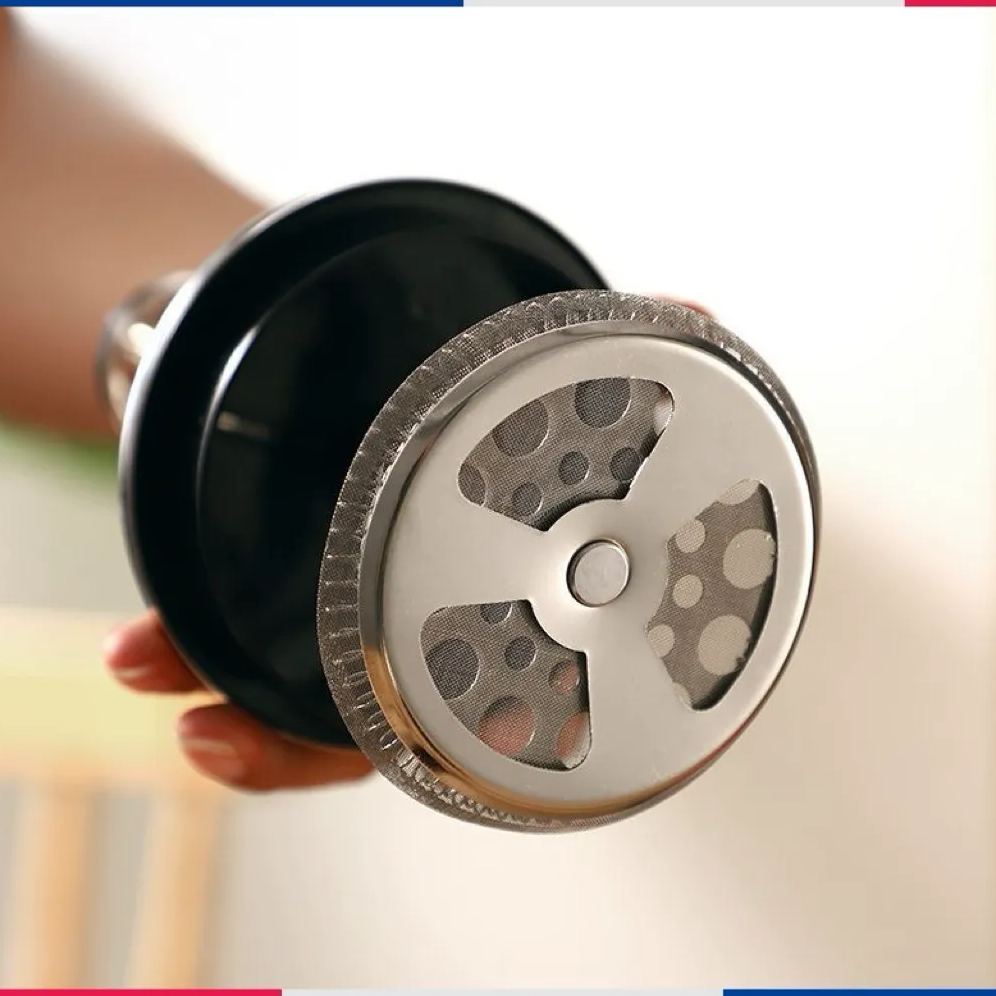
The only steel-vessel product this store sells is a dual-use French press with a glass beaker, a steel frame, and a fine steel mesh plunger, and it is the closest thing on the site to a glass vs stainless steel teapot match made in glass. It sits on this list because it solves the travel problem honestly. The plunger gives you a filter that stops the brew on command rather than at a timer, and the steel frame and lid take the knocks that would end a glass teapot on a campsite table.
The tradeoff is the one every French press carries. A plunger does not separate leaf from liquor the way a fine mesh basket does, so you get a full-bodied brew rather than a clean infusion. The guide to choosing a French press that actually works for tea covers that tradeoff in more detail.
Stainless Pick 2: a 304-grade seamless stainless teapot for the durability-first buyer
For a solid stainless steel teapot, 304-grade is the grade to specify, and it is the number that matters most in a glass vs stainless steel teapot comparison. The detail that matters is a seamless interior with no welded seam in the brewing chamber (per the Wikipedia stainless steel reference).
A seamless interior is what keeps a steel pot neutral, and it is the detail that decides the steel half of any glass vs stainless steel teapot comparison., and it is the one detail that separates a pot you will use daily from a pot you will use for a while and then stop using. Buy this one for a work kitchen, a shared house, or anywhere the pot gets handled by people who are not thinking about teaware.
Stainless Pick 3: a 316-grade thin-wall stainless pot for travel
For a pot that lives in a bag, the specification is 316-grade rather than 304-grade, because the extra corrosion resistance matters less than the weight saving and more than the price difference, and that is the one place a glass vs stainless steel teapot comparison should push you toward a steel pot (per the Wikipedia stainless steel reference).
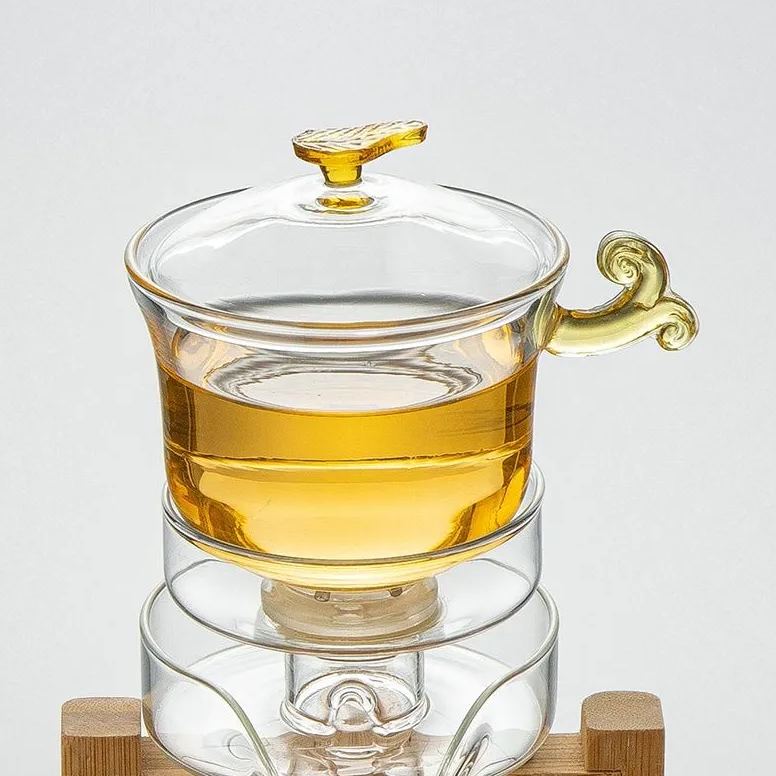
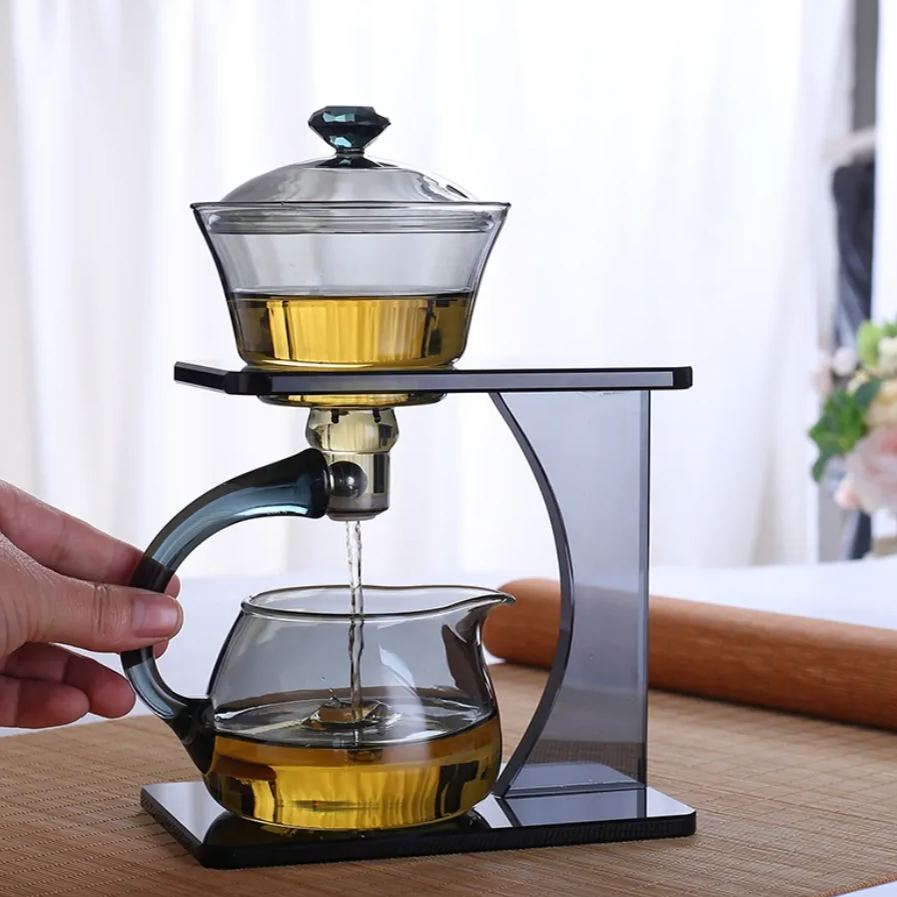
Thin-wall is the correct choice here, and accepting the low heat retention that comes with it is part of the deal, which is the trade at the centre of any glass vs stainless steel teapot comparison. The nearest thing this store sells to that brief is a glass brewing chamber with a steel filter assembly, which keeps the brew visible while the steel handles the work.
You can find it in the, and it is the closest thing on this site to the glass vs stainless steel teapot combination that actually travels. magnetic teapot category, where a magnetic ball valve separates the brewing chamber from the serving pitcher. That valve is the whole argument for steel in one part, and it is the reason a glass vs stainless steel teapot buyer who travels should look at steel parts rather than steel walls.
What to Ask a Seller Before You Buy
Most teapot listings omit the specs that decide the outcome, so the useful move in any glass vs stainless steel teapot decision is to ask for them in writing before you order. These five questions cover nearly everything that matters, and a seller who cannot answer them has told you something useful.
- Is the glass borosilicate, and what is the wall thickness? The tolerance figure is the practical answer. Borosilicate handles about 330 °F of temperature differential against about 100 °F for soda-lime (per the Wikipedia borosilicate glass reference).
- What is the capacity in millilitres? If the listing does not say, assume the seller does not know, and do not assume it is large.
- What is the infuser aperture, and is the mesh removable? Large holes will not catch all the leaf (per the Wikipedia infuser reference).
- Is the handle material the same as the body? On glass, a glass handle is the part that fails first.
- For steel: what grade, and is the interior seamless? 304 and 316 are the food-contact grades to ask for (per the Wikipedia stainless steel reference).
Those five answers cover most of the decision, and they cover most of a glass vs stainless steel teapot comparison as well. glass vs stainless steel teapot decision, and asking them takes less time than reading ten product pages.
Skip These 4 Glass vs Stainless Steel Teapot Decisions
Trap 1: thin decorative soda-lime glass marketed as a teapot
Decorative glass with a wide opening and thin walls is usually soda-lime, and it is designed to be looked at rather than heated, which is the first thing to check in a glass vs stainless steel teapot comparison. Its thermal differential tolerance is around 100 °F against borosilicate’s 330 °F (per the Wikipedia borosilicate glass reference). Ask which glass it is before you buy it for daily brewing.
Trap 2: thin-wall steel chosen to look minimal on a shelf
A thin-wall steel pot with a fine weld seam will not hold heat across a second round, and the seam is exactly where a metallic note enters a delicate infusion, which is the failure a glass vs stainless steel teapot buyer is most likely to meet. If the seller cannot specify the grade or the seam construction, you are buying a photograph.
Trap 3: a one-material answer to a two-material problem
Any article that ends with a single winner for all tea is not answering the question, and a glass vs stainless steel teapot comparison that ends that way has not read its own table. Glass is the right material for watching a delicate infusion. Steel is the right material for a pot that will be dropped. Those are different jobs, and buying one material for the other’s job is the mistake this whole glass vs stainless steel teapot comparison exists to prevent.
Trap 4: a tiny gongfu pot bought for a table of six
Gongfu uses smaller brewing vessels and a more potent leaf-to-water ratio than in Western-style brewing (per the Wikipedia gongfu tea reference), which makes the small pot excellent for its purpose and completely wrong for hosting. If the plan is a table rather than a ceremony, size wins, and no glass vs stainless steel teapot comparison will change that.
O [espaço em branco no original] oferece uma abordagem diferente para o bule de vidro que enfatiza métodos e estética tradicionais. Enquanto meu equipamento prioriza consistência e conveniência, essa alternativa foca no ritual e no envolvimento do processo de preparação. Ambas têm mérito, e a escolha entre elas depende das prioridades individuais. guide to picking the right teapot size works through the capacity decision, and the guide to the best gongfu tea set covers the small-vessel case properly.
FAQ
Is a glass or stainless steel teapot better for beginners?
Glass, because it teaches you to read the infusion, which is the single biggest advantage glass has in a glass vs stainless steel teapot comparison. A steel pot asks you to trust a timer, and a beginner does not yet know what the brew should look like when it is ready. A glass pot with a removable mesh basket makes the first three attempts self-correcting. Start with glass and move to steel if you need the durability rather than the visibility.
Does a stainless steel teapot make tea taste metallic?
A good seamless steel interior does not. Thin-wall steel with a welded seam can carry a faint metallic note into a delicate infusion, and that is a finishing problem rather than an alloy problem. It is also avoidable. Ask for the grade, ask whether the interior is seamless, and avoid the cheap welded bodies. If you want the neutral option with no question to ask, glass is chemically inert and removes the variable entirely.
Is a glass teapot safe to put boiling water into?
It depends on which glass it is, which is why the borosilicate question matters more than any other spec and the first thing to settle in a glass vs stainless steel teapot comparison. Borosilicate glass can withstand temperature differentials of about 330 °F without fracturing, whereas soda-lime glass can withstand only about a 100 °F change in temperature (per the Wikipedia borosilicate glass reference).
Even borosilicate can still crack or shatter when subjected to rapid or uneven temperature variations (per the same reference), so pour into the pot rather than onto it, and do not set a hot pot on a cold or wet surface. That is the short answer to the safety half of a glass vs stainless steel teapot question.
Which material is better for a pot that travels?
Stainless steel, without much argument, and that is the most one-sided result in a glass vs stainless steel teapot comparison. It is lighter, it survives being dropped, and it does not care how you pack it. The main thing to get right is the filter. You need a removable mesh basket with an aperture small enough to hold your leaf, since infusers with large holes may not catch all the leaves (per the Wikipedia infuser reference). A glass chamber with a steel strainer is a good compromise if you still want to watch the brew.
Does a glass vs stainless steel teapot choice affect tea temperature?
It does, through the wall rather than the material name, and that is the part of a glass vs stainless steel teapot comparison that matters most once the pot is already on the table. A heavier body holds the brew hotter for longer, and a cast iron tetsubin holds it longest of all, being a cast iron kettle with a pouring spout, a lid, and a handle crossing over the top (per the Wikipedia tetsubin reference).
Thin glass gives up its heat fastest, which is why visual brewing works in short infusions from a hot pot rather than long ones from a cooling one. If tea temperature across multiple pours is the goal, neither thin glass nor thin steel is the answer, and that is the one limit both sides of this glass vs stainless steel teapot comparison share.
Is a stainless steel teapot worth it if you already own a glass one?
Only for a specific job, usually travel, a shared kitchen, or anywhere the pot gets handled roughly, which is the honest conclusion of most glass vs stainless steel teapot comparisons. A glass teapot is already neutral, already visible, and already easier to keep neutral over its life. What steel adds is durability and packability, not a better cup of tea. If neither of those two situations applies to you, your existing pot already does the job, and this glass vs stainless steel teapot comparison has told you to keep it.
– Beleza tradicional
Pick glass if you want to see the infusion and taste nothing but the tea. Pick 1 if you want a brewing chamber that separates for cleaning, and you want to learn to read the leaf instead of the clock. Pick stainless steel if the pot is going to be carried, dropped, or handled by people who are not thinking about teaware, and you will not notice that you cannot see the brew. Pick 4 if you want one vessel for both tea and coffee, and you accept a full-bodied brew rather than a clean infusion.
Pick neither if the real requirement is a pot that holds heat across several rounds while people talk. That is a heavier vessel, and it is the one case where a cast iron tetsubin or a ceramic set beats both materials on their own terms. Pick both only if you brew one way and travel another, which is the arrangement most tea drinkers on this site end up with.
That is the whole glass vs stainless steel teapot comparison in short form. If you would rather skip the manual work, the full teapot and tea set collection at Elysian Tea Shop is already organised by material and mechanism. The guide to choosing a tea set for beginners is the shorter path if you have not brewed loose leaf before.
 PT
 EN
 DE
 ES
 FR
 JA