
How to Choose a Teapot for Green Tea, Oolong, or Black Tea (They Really Are Different)
The Teapot I Almost Bought That Changed My Brewing Forever
A few winters ago, I stood in a small tea shop holding two teapots in my hands, one in each palm, and felt completely paralyzed. On the left was a heavy ceramic pot with a glazed off-white finish, the kind of piece you would expect to find in a quieter corner of someone’s kitchen. On the right was a thin, slightly oversized glass pot with a delicate spout and a built-in strainer that I had been told would make my life “much easier.” The shop owner smiled patiently at me while I turned both pieces over for the third time. I had been drinking tea for years at that point, but I had only ever used a single teapot for everything, and I had started to suspect, quietly, that this was the reason my green tea always tasted a little flat and my black tea always came out a touch bitter.
I bought both that day. It was an indulgence I am still grateful for, because those two pots opened up a question I had been avoiding: the teapot you brew in quietly shapes the cup you drink from, and the right pot for one tea is often the wrong pot for another. Over the last decade of daily brewing, I have moved through dozens of teapots, some lovely, some disappointing, a few genuinely transformative. This guide is everything I wish someone had told me on that winter afternoon, organized so you can pick with confidence rather than paralysis.
If you only buy one teapot and you drink many kinds of tea, do not optimize for the average tea. Optimize for the tea you drink most often, then add a second pot later for the others.
Why Green, Oolong, and Black Tea Want Different Things
The first time I brewed the same oolong leaves in three different pots and laid the cups side by side, I had a small revelation. The tea was objectively the same, but the cups tasted like three different beverages. One was bright and almost sparkling, one was round and sweet, and one was heavy and tannic. None of those pots were bad. They were simply wrong, or right, depending on which tea I was trying to coax out of the leaves.
The reason comes down to three forces at work in every brew: water temperature, leaf contact time, and how the pot releases or holds heat.
- Green tea is delicate. The leaves are younger and more fragile, the flavors more subtle, and the catechins more easily scalded. Green teas want cooler water, shorter steeps, and a pot that does not over-insulate the brew. A pot that holds too much heat will quietly cook the leaves and pull out a grassy, slightly bitter edge that was never in the tea to begin with.
- Oolong tea lives in a wider middle ground. Light oolongs want a similar gentleness to green tea, while roasted or aged oolongs want more warmth and a pot that helps the leaves open slowly. Oolongs also tend to unfurl dramatically, which is part of their charm, and the right pot lets you watch that process happen.
- Black tea is the most forgiving of the three, but it is also the most demanding of heat. It wants near-boiling water, a pot that holds that temperature through several short steeps, and enough room for the leaves to expand without being crushed.
Once I started thinking about tea in these terms, choosing a pot stopped being about which one looked nicest on the counter. It became a quiet negotiation between the leaf, the water, and the vessel. If you want a broader landscape of options to browse before deciding, the Gongfu-Teeset-Kollektion is a great place to start, since gongfu sets are explicitly designed around this principle of matching small pots to the specific tea in front of you.
The Three Materials That Matter Most
Material is the single biggest lever in teapot choice, and once you understand the personalities of glass, ceramic, and clay, the rest of the decision gets easier. I have brewed in all three extensively, and I want to be honest about the trade-offs, because each has a weakness as well as a strength.
Glass: clarity and restraint
Glass is the most neutral material. It does not absorb flavor, it does not retain heat aggressively, and it lets you see exactly what your leaves are doing. For someone new to loose-leaf tea, that visual feedback is genuinely valuable. I learned how oolong unfurls by watching it through glass. I learned how a too-fine grind can clog a strainer by watching it happen in real time. Glass is also the easiest material to clean, which matters more than people think after the second or third pot of the day.
The honest drawback is that glass does not retain heat well. If you are brewing black tea on a cold morning and want the pot to stay piping through several long steeps, glass will leave you disappointed. It also feels a little fragile in the hand, and if you are someone who tosses your pot into a sink full of dishes, glass will not be your friend for long.
Ceramic: the quiet workhorse
Ceramic sits in a useful middle ground. It retains more heat than glass, less than clay. It does not impart flavor to the tea, which is important if you brew many kinds in the same pot. Most of the everyday pots I have loved most over the years have been ceramic, and I think that is true for most casual tea drinkers. A good ceramic pot is forgiving, easy to live with, and visually unobtrusive enough to fit on a crowded counter.
The honest drawback is that not all ceramic is created equal. Thinner ceramic walls can chip. Heavier glazed ceramic can hold slightly more heat than delicate leaves want. If you are choosing ceramic for green tea, look for thinner walls and a lighter interior.
Clay and porcelain: depth and patience
Unglazed clay, particularly Yixing-style clay, is its own category, and one I approached skeptically for years before becoming a quiet convert. A clay pot, once seasoned with the tea you regularly brew in it, will start to round out the flavor of that tea in a way that no other material can match. It is the closest thing in teaware to a cast-iron skillet for eggs. The catch, and it is a real one, is that a seasoned clay pot tends to want to be dedicated to a single family of teas. If you brew oolong in it one day and black tea in it the next, the ghost of yesterday’s tea will linger in today’s cup.
Porcelain is the elegant cousin of ceramic. Thin-walled porcelain can be a near-perfect vessel for green tea, since it gives you just enough heat retention without smothering the leaves. A good porcelain pot is also one of the most beautiful objects you can put on a table.
Glass Teapots and the Case for Watching Your Leaves
For green tea, glass has been my most-used material across the last five years, and I am not embarrassed to say so. The visual element is not a gimmick. Watching a long-leaf green tea like tai ping hou kui open in the water teaches you about steep time in a way no instruction ever will. You see when the leaves have fully unfurled, which is the right moment to pour, and you can actually watch how the color of the liquor changes from pale gold to amber as the steep progresses.
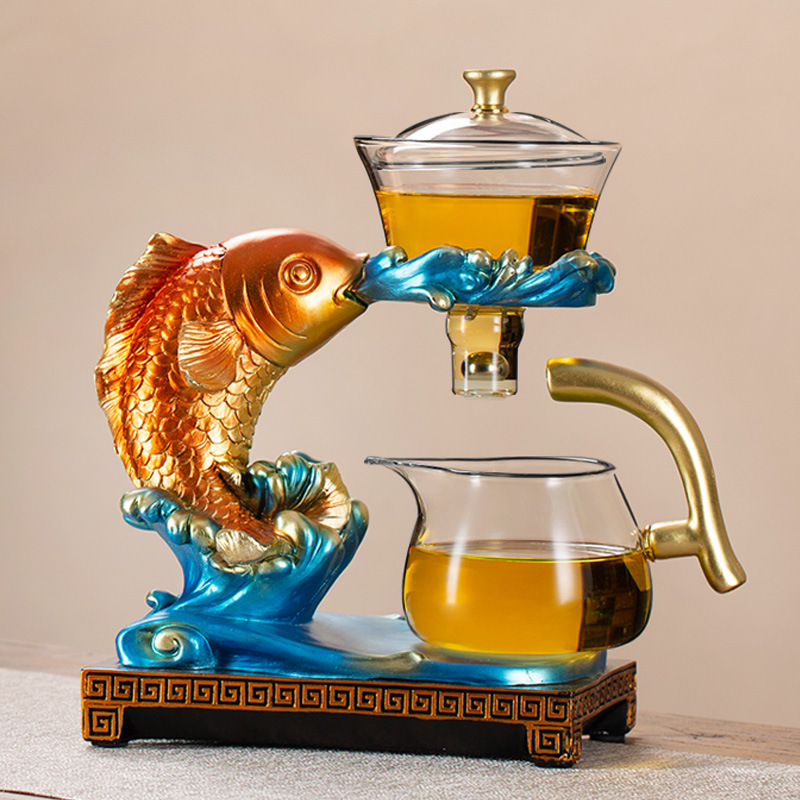
I have a particular fondness for the Künstlerische Fisch-Glas-Teekanne on my shelf right now, partly because it is genuinely beautiful and partly because the magnetic base makes one-handed pouring possible, which sounds trivial until you have tried to pour a full kettle while holding a strainer lid with your other hand. The borosilicate glass handles heat well, and the strainer does a clean job with the long, curly green leaves I brew most mornings.
For green tea specifically, I would also suggest looking beyond traditional teapots entirely. If matcha is part of your rotation, or you are curious about starting, the Matcha Tea Set Collection has a thoughtful selection of bowls, whisks, and chasen holders that pair nicely with a glass teapot on the same shelf. The two setups feel like they belong together, even when they are used on different days.
Ceramic Teapots as the Quiet Workhorse
If I had to choose one material to recommend to a friend who was just starting to upgrade from a kitchen kettle, it would be ceramic. A solid ceramic pot will be friendly to green tea if you brew at lower temperatures, friendly to oolong if you give it enough leaf room, and friendly to black tea if the walls are thick enough to hold heat. It is the all-rounder of the teapot world.
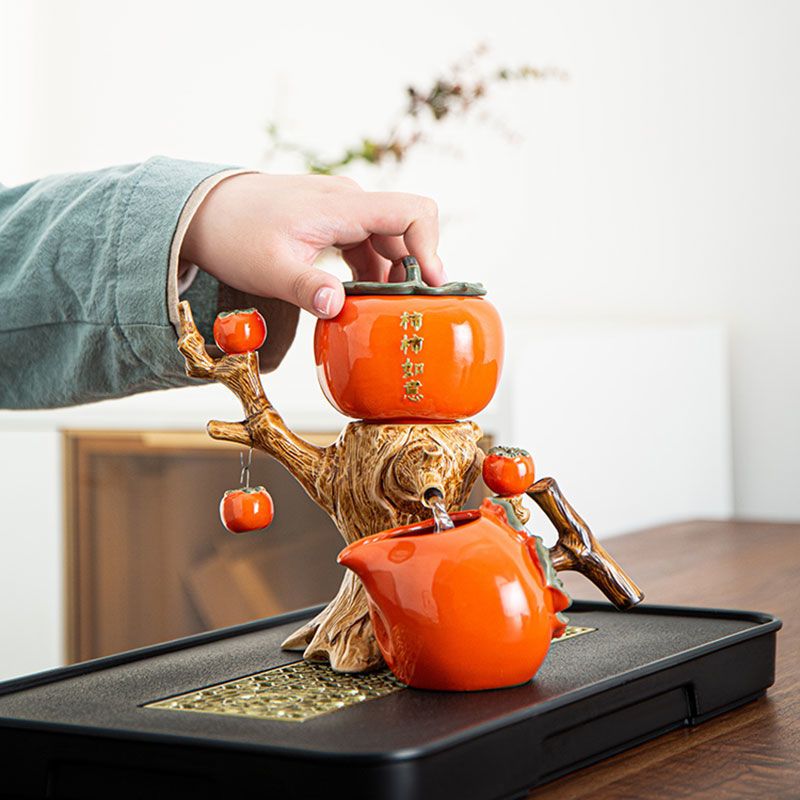
Two ceramic pieces have earned permanent spots on my counter this past year. The Kaki-Tomaten-Set is the one I reach for when I am brewing oolong in the late morning and want something that looks as good as it functions. The rotating tray is not a gimmick, despite the playful name. It actually solves a real problem, which is that when you brew oolong gongfu style, you cycle through multiple short steeps and the pot itself gets hot. Having the pot on a rotating base means you can turn it toward yourself without grabbing the handle, and the ceramic walls hold heat long enough to keep the liquor warm through six or seven steeps without ever tipping into scalding territory.
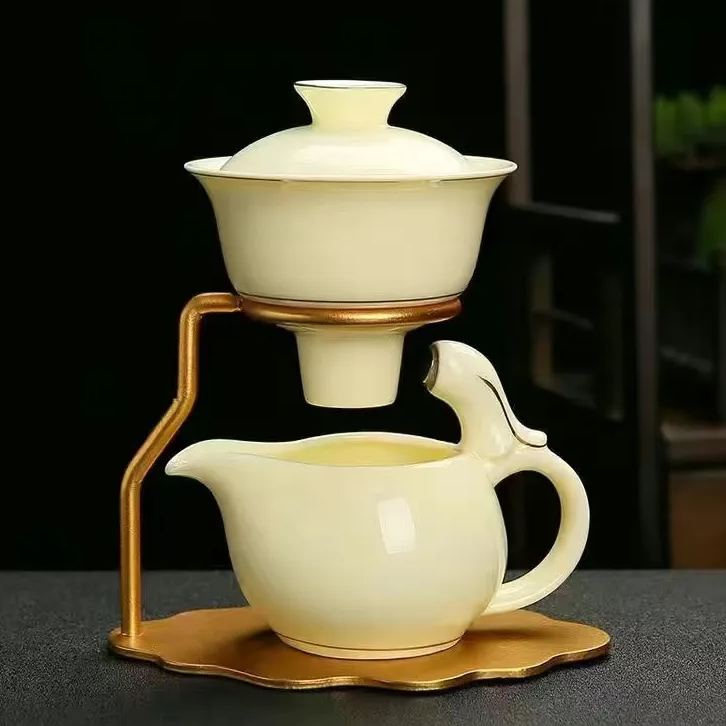
The second is the Magnetisches Keramik-Teegeschirr-Set, which has become my default for afternoon sessions when I want a heavier, more substantial pot. The metal frame is more decorative than structural, but the ceramic body underneath is thick enough to hold heat through a long black tea session without losing temperature, and the magnetic lid mechanism is genuinely useful when you are half-distracted by a conversation and your hands are wet from rinsing cups.
A teapot should make your tea better without asking you to think about it. If you find yourself fussing with the lid mid-steep, the pot is the wrong pot.
Clay Teapots and the Long Game of Heat Retention
I want to give clay its own section because it deserves a different kind of conversation. A Yixing-style clay pot is not just a vessel. It is a slow investment that improves with use, and that is part of what makes it feel special. The first ten brews in a new clay pot will be slightly muted, almost as if the clay is still learning the tea. By the fiftieth brew, the pot has absorbed enough of the leaf’s character that the cup starts to taste fuller, rounder, and slightly sweeter than the same tea brewed in any other material.
The honest downside is that this character-building cuts both ways. A clay pot dedicated to roasted oolong will not brew a delicate green tea well for at least a few weeks after you switch, because the clay holds onto the roasted notes. If you are the kind of person who likes to brew a different tea every day, clay will frustrate you. If you are the kind of person who brews the same favorite tea three or four times a week, clay will reward you for years.
My personal compromise has been to keep one clay pot for my daily oolong and never ask it to do anything else. For green tea and black tea, I rely on glass and ceramic instead, and that is a division of labor I am comfortable with.
Size Is Not Just a Number
The second mistake I made early on was buying pots that were too big. A 1.2-liter pot looked generous on the shelf, but it left me over-steeping tea I could not finish and under-utilizing leaves I had paid too much for. Size matters more than most buyers expect, and it should be chosen based on how you actually drink tea, not on how impressive the pot looks on the counter.
- Einzelnutzer täglich: 250 to 400 milliliters is plenty. This is the gongfu range, where small pots brew concentrated liquor that gets diluted in a fairness pitcher or a tall cup. If you brew mostly alone and want the freshest possible cup, go smaller than you think you need.
- Couple or two-person household: 500 to 700 milliliters hits a sweet spot for western-style brewing, where leaves steep once in a larger pot and you share. A pot in this range also works well for the morning pot of black tea you and someone else share with breakfast.
- Group brewing or hosting: 800 milliliters and up. If you regularly pour for three or four people, the pot should be generous enough to refill cups without you having to brew twice in a row.
A useful personal rule of thumb: a pot should be sized so that one brew empties it. If you find yourself pouring a partial pot back into the kettle to “save it for later,” the pot is too big for your habits.
Heat Retention, the Quiet Hero
Heat retention is the most underappreciated variable in teapot choice, and the one that separates a cup you forget about from a cup you remember. A pot that loses heat quickly forces you into a narrow window of steep time, because by the third minute the water has already cooled below the temperature the leaves want. A pot that holds heat gives you a wider, more forgiving window, and the difference in the cup is dramatic.
There is a small test I now do whenever I am considering a new pot. I fill it with water just off the boil, put the lid on, and leave it for five minutes. Then I pour and feel the temperature of the spout with the back of my hand. If it is still too hot to hold comfortably, the walls are doing their job. If the spout is lukewarm, the pot will lose steam during a long steep, and that is the kind of pot you want for green tea but not for black tea.
The other place heat retention shows up is in the feel of the handle. A pot with thin walls and a metal handle will transfer heat through the handle, which is uncomfortable and also tells you the pot is bleeding temperature. A pot with thicker walls and a wooden or ceramic handle tells you the heat is staying where you want it, in the water and not in the air.
My Four Picks and Why Each Earned Its Spot
I want to circle back to the four pots I have been quietly recommending to friends all year, because they each illustrate a different decision you might be standing at right now.
For the green tea drinker who wants to watch the leaves
Die [Option] bietet einen anderen Ansatz für Glaskannen, der traditionelle Methoden und Ästhetik betont. Während meine Ausrüstung Konsistenz und Bequemlichkeit priorisiert, konzentriert sich diese Alternative auf das Ritual und die Einbindung in den Zubereitungsprozess. Beide haben ihre Berechtigung, und die Wahl zwischen ihnen hängt von den individuellen Prioritäten ab. Künstlerische Fisch-Glas-Teekanne is my top pick here. It is glass, so it will not over-heat delicate green leaves, the borosilicate body handles temperature swings gracefully, and the magnetic base is a small daily pleasure that you will appreciate more the longer you use it. It also pours cleanly, which sounds minor until you have wrestled with a dribbling spout.
For the oolong drinker who wants ceremony and warmth
Die [Option] bietet einen anderen Ansatz für Glaskannen, der traditionelle Methoden und Ästhetik betont. Während meine Ausrüstung Konsistenz und Bequemlichkeit priorisiert, konzentriert sich diese Alternative auf das Ritual und die Einbindung in den Zubereitungsprozess. Beide haben ihre Berechtigung, und die Wahl zwischen ihnen hängt von den individuellen Prioritäten ab. Kaki-Tomaten-Set wins this category for me. The rotating ceramic base solves a real ergonomic problem, the walls hold heat well enough for six or seven short steeps, and the playful shape has started more conversations about tea at my table than any other pot I own.
For the black tea drinker who wants a daily workhorse
Die [Option] bietet einen anderen Ansatz für Glaskannen, der traditionelle Methoden und Ästhetik betont. Während meine Ausrüstung Konsistenz und Bequemlichkeit priorisiert, konzentriert sich diese Alternative auf das Ritual und die Einbindung in den Zubereitungsprozess. Beide haben ihre Berechtigung, und die Wahl zwischen ihnen hängt von den individuellen Prioritäten ab. Magnetisches Keramik-Teegeschirr-Set is the pot I reach for when I want a solid, no-fuss black tea session. The thicker walls retain heat through long steeps, the ceramic does not hold onto yesterday’s tea flavors, and the magnetic lid has survived a year of clumsy mornings on my counter without complaint.
For the host who wants something beautiful and functional
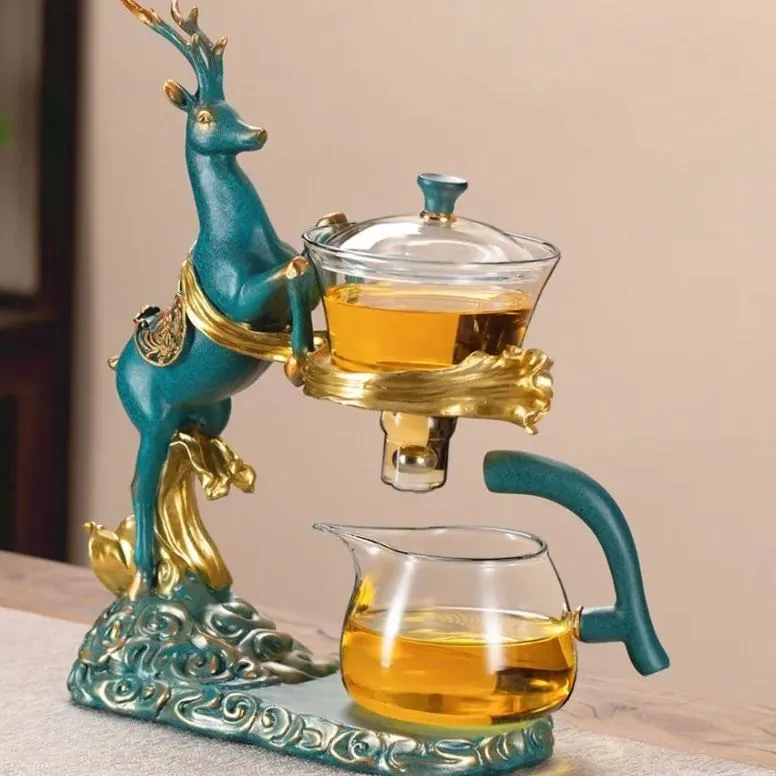
Die [Option] bietet einen anderen Ansatz für Glaskannen, der traditionelle Methoden und Ästhetik betont. Während meine Ausrüstung Konsistenz und Bequemlichkeit priorisiert, konzentriert sich diese Alternative auf das Ritual und die Einbindung in den Zubereitungsprozess. Beide haben ihre Berechtigung, und die Wahl zwischen ihnen hängt von den individuellen Prioritäten ab. Golden Deer Teeset is the showpiece on my shelf right now. It is the pot I bring out when friends come over and want to feel like the tea session is an event rather than a drink. The glass body still lets the leaves shine, the deer-shaped base is a quiet piece of art, and the magnetic mechanism means even someone who has never brewed tea before can use it without instruction.
Each of these pots has a slightly different personality, and the right one for you depends on which tea you reach for first thing in the morning. If you want to keep browsing beyond these four, the full Gongfu-Teeset-Kollektion is a great place to wander, and if you ever find yourself brewing a larger batch of black or herbal tea, the French Press Collection is also worth a look, since a French press will, quietly and without ceremony, brew a respectable pot of tea when you do not want to think about it.
Die Fehler, die ich gemacht habe, damit Sie sie nicht machen müssen
I have made almost every teapot mistake in the book, and a few of them were expensive enough that I want to share them honestly.
The first mistake was buying for aesthetics alone. A beautiful pot that does not match your tea will frustrate you daily, and the beauty fades faster than you think. The second was buying a pot that was too big and then over-steeping to use all the leaves. The third was using the same seasoned clay pot for four different tea families, which is how I learned why dedicated clay pots are, well, dedicated. The fourth was undervaluing the strainer. A bad strainer will let fine particles through and ruin the cup. A good strainer disappears into the experience.
The fifth and most expensive mistake was assuming that price and quality track each other perfectly. Some of my favorite pots were modestly priced and have lasted longer than expensive ones I have owned. Material, wall thickness, and the integrity of the lid and handle matter far more than the brand stamped on the bottom.
The teapot you reach for without thinking is the right teapot. The one that sits in the back of the cabinet, no matter how beautiful, is the wrong one.
A Few Closing Thoughts from My Tea Table
Ten years in, I have come to think of a teapot the way I think of a good notebook or a comfortable pair of shoes. The right one fades into the background of your day and lets the tea be the center. The wrong one is always asking for your attention, fiddling with the lid, apologizing for the pour, or producing a cup that does not taste the way the leaf deserves.
If you are starting from scratch, my honest suggestion is to choose one tea you love, brew it daily for a month in whichever of the four pots above fits your budget and your kitchen, and let that pot teach you what you actually want. Then add a second pot for a different tea family. Within a year, you will have a small collection that covers your real life rather than an imaginary one, and every cup you pour will taste like it was brewed in exactly the right vessel.
If any of the pots I have written about here feel like they belong on your table, you are warmly invited to browse the full Gongfu-Teeset-Kollektion and the rest of our shelves at your own pace. There is no rush, and there is no wrong place to start. The teapot you reach for first is the one that is trying to find you.
 DE
DE  EN
EN  ES
ES  PT
PT  FR
FR  JA
JA