
Sep
Choosing the right teaset comes down to matching material, capacity, and design to your specific brewing habits—not buying whatever looks most elegant on a shelf. Most beginners who regret their first purchase focused on appearance over function, choosing a delicate porcelain set that couldn’t handle daily use or an oversized pot they never filled. This guide gives you a structured decision framework so your first teaset becomes the one you reach for every morning, not the one hiding in the back of a cabinet.
A well-chosen beginner teaset needs only four to six core pieces: a teapot, a fair cup (also called a “fairness pitcher” or gong dao bei), two to four small drinking cups, and optionally a strainer or integrated infuser. Everything beyond those basics is aesthetic preference, not necessity—and adding pieces before you understand your brewing style almost always leads to clutter.
Conclusiones clave
- Material drives function: glass shows leaf movement and stays flavor-neutral, porcelain holds heat quietly, ceramic offers balance, and cast iron retains heat longest.
- Size your teaset to your serving scenario: a 350–700ml teapot covers solo through small-group use; 800ml+ only makes sense for hosting.
- Four pieces cover 90% of beginner needs: teapot, fair cup, two cups, and a strainer.
- Integrated infusers save a step but removable baskets clean more thoroughly and handle fine-leaf teas better.
- Budget $40–80 for a starter set that balances build quality and longevity.
What You’ll Find in This Guide
- The Core Components of a Beginner Teaset
- Material Comparison: Glass, Porcelain, Ceramic, and Cast Iron
- Size and Capacity: Matching Your Teaset to Your Routine
- Design Features That Actually Matter
- Budget Guide: Where to Spend and Where to Save
- Skip the Guesswork: A Pre-Curated Alternative
- Preguntas Frecuentes
- Un juego de té se utiliza para preparar té de hojas sueltas con precisión, servirlo a la temperatura correcta y presentarlo como un ritual completo — combinando funcionalidad, control de temperatura y estética en un sistema coordinado.
Why Your First Teaset Decision Matters
Your first teaset shapes how you experience tea for years. A set that matches your brewing style becomes part of your daily ritual; a mismatched one ends up unused after a few weeks. Beginners who invest thirty minutes learning the basics before buying report far higher satisfaction than those who grab the prettiest set on the shelf and hope for the best.
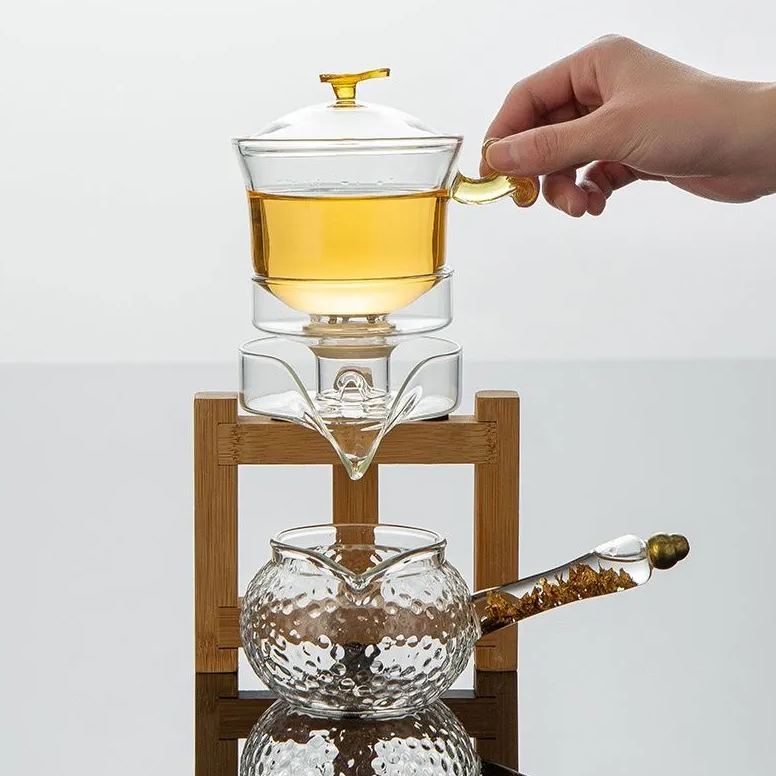
In this guide, you’ll learn exactly which pieces you need, how each material affects taste and usability, what capacity fits your routine, and which design features justify a higher price. You’ll also see when a pre-assembled set makes more sense than mixing and matching your own. By the end, you’ll have a clear shortlist of criteria to apply to any product page—or you can skip directly to a curated option like the Glass Teapot with Removable Infuser from our shop.
The Core Components of a Beginner Teaset
A complete beginner teaset contains four to six essential pieces, and adding more before you understand your brewing habits almost always leads to clutter. The four non-negotiable pieces are a teapot, a fair cup, at least two drinking cups, and a tea strainer. Everything else is optional.
The Teapot
The teapot is the heart of your set and the piece you’ll handle most. For beginners, a teapot between 350ml and 800ml covers roughly 95% of use cases—from solo morning sessions to hosting three or four friends. Below 350ml, you’ll constantly refill; above 800ml, leftover tea cools before you finish it.
The Fair Cup (Gong Dao Bei)
The fair cup—also called a fairness pitcher or gong dao bei—is a small pitcher that receives tea from the teapot before pouring into individual cups. It serves two purposes: it stops the brewing process by separating leaves from liquid, and it ensures every cup has identical strength. Beginners who skip this piece often end up with cups of wildly different strength—a problem the fair cup eliminates in seconds.
Drinking Cups
Two to four small cups (30–60ml each) are standard for gongfu-style brewing. Smaller cups keep tea hot longer and slow your drinking pace, which most tea drinkers come to prefer. If you’re brewing for two people, four cups is the practical minimum; for solo use, two cups lets you drink one while the other steeps the next round.
The Strainer
A strainer catches leaf particles as tea pours from pot to fair cup. Many beginner teapots have built-in strainers at the spout, but a separate mesh strainer gives finer filtration and cleans more easily. For loose-leaf teas with small particles (like broken oolong or herbal blends), a fine mesh strainer is non-negotiable.
Material Comparison: Glass, Porcelain, Ceramic, and Cast Iron
Material is the single biggest decision in choosing a teaset because it determines heat retention, flavor neutrality, durability, and aesthetic. Each of the four common materials—glass, porcelain, ceramic, and cast iron—excels in specific scenarios and fails in others. la visión general del té de Britannica confirms that brewing vessels have varied by culture and material for centuries, with each tradition favoring different properties.
Glass: Best for Visual Brewing and Flavor Purity
Glass teapots let you watch tea leaves unfurl, which is part of the pleasure for green, white, and blooming teas. Glass is completely flavor-neutral, meaning it won’t absorb or transfer aromas the way ceramic can over time. The main tradeoff is heat retention: a glass teapot cools 30–40% faster than cast iron, so it’s best for teas you drink quickly rather than slowly over an hour. For beginners who want to see what they’re doing and taste pure tea without material interference, a quality borosilicate glass teapot is the most forgiving starting point.
Porcelain: The Traditional Standard for Gongfu Tea
Porcelain is the traditional choice for serious Chinese tea ceremonies because it’s neutral, dense, and conducts heat smoothly without burning leaves. It holds heat better than glass but worse than cast iron. Porcelain is also more fragile than tempered glass—dropping it from counter height usually means a shattered set. If your priority is authentic gongfu brewing and you handle your equipment carefully, porcelain rewards you with a refined experience.
Ceramic: The Balanced All-Rounder
Ceramic sits between glass and porcelain in nearly every category: better heat retention than glass, more durable than porcelain, and usually cheaper than either. The catch is variability—cheap ceramic can leach flavors or crack under thermal shock, while quality ceramic performs beautifully. If you brew a variety of teas and want one set that handles everything, ceramic is the safest middle path.
Cast Iron: Maximum Heat Retention and Visual Weight
Cast iron teapots (tetsubin in Japanese tradition) retain heat longer than any other material, making them ideal for black tea and roasted oolong served at high temperature. They’re extremely durable but heavy, often require seasoning to prevent rust, and frequently have enamel interiors that can chip if dropped. Cast iron is overkill for casual brewing but perfect if you primarily drink hot, robust teas and want a set that lasts decades.
Size and Capacity: Matching Your Teaset to Your Routine
Choosing the wrong capacity is the most common beginner mistake. A teapot that’s too small forces constant refilling; one that’s too large wastes tea and leaves you drinking lukewarm liquid. Match capacity to your most common serving scenario, not your biggest party of the year.
Solo Brewing: 250–400ml
If you primarily brew for yourself, a 250–400ml teapot is the sweet spot. This size brews two to three small cups of concentrated tea, enough for one sitting without forcing you to drink tea that’s been sitting for twenty minutes. Smaller pots also heat faster and use less leaf per session, which matters when you’re experimenting with expensive loose-leaf varieties.
Couples and Small Households: 500–700ml
For two people sharing tea, a 500–700ml teapot fills four to six small cups across one brewing session. This is the most versatile capacity range and what most manufacturers consider “standard.” If you can only buy one set, choose something in this range—it scales down to solo use by brewing only half the water and scales up to a small group by simply brewing longer.
Hosting Groups: 800ml and Above
Teapots above 800ml are designed for groups of four or more. They’re practical for hosting but inefficient for daily use because leftover tea cools before you finish it, and the larger thermal mass means longer heating times. Most beginners who buy oversized pots report using them a handful of times per year and wishing they’d bought something smaller.
Capacity Rule of Thumb
Use this formula: target cups per session × 60ml per cup + 100ml retention buffer = ideal teapot capacity. If you want three cups per session, you need roughly 280ml; for five cups, aim for 400ml. This keeps every cup filled with hot, freshly poured tea rather than half-warm leftovers. For a deeper breakdown of teapot sizing by use case, see our complete teapot size guide.
Design Features That Actually Matter
Beyond material and size, five design features separate a teaset you’ll love from one that frustrates you within a week. Beginners often overlook these in favor of color or pattern, then discover them the hard way during the first brewing session.
Spout Design and Drip Control
A well-designed spout pours a clean stream; a poorly designed one drips down the side of the pot after pouring. Dripping isn’t just annoying—it stains the pot, your counter, and sometimes the tablecloth. Look for spouts with a sharp, defined edge rather than rounded openings. Glass teapots with V-shaped cut spouts almost always pour cleaner than cast iron with rounded lips.
Handle Comfort and Heat Transfer
The handle should let you pour comfortably with one hand while the pot is full of boiling water. Materials like metal conduct heat directly to the handle, forcing you to use a towel or wait for the pot to cool. Wood, bamboo, or thick ceramic handles stay cooler but can loosen over time. For beginners, side handles (like those on Western-style pots) are more intuitive than top knobs (typical on gongfu teapots).
Infuser Type: Built-In vs. Removable
Built-in infusers are convenient because you don’t need a separate strainer, but they’re often harder to clean, especially with fine-particle teas. Removable mesh baskets lift out for thorough rinsing and let you swap infuser sizes for different leaf types. If you brew primarily large-leaf teas (like whole-leaf oolong), a removable basket with wide holes works better; for broken-leaf or herbal blends, fine mesh is essential.
Lid Fit and Steam Control
The lid should sit snugly enough that it doesn’t fall off when you pour at a 45-degree angle, but loose enough that you can lift it easily with one finger. A tight lid creates a vacuum that traps steam inside, making the lid hot and hard to grip; a loose lid lets heat escape and can fall into the fair cup during pouring. Test this in person if possible, or buy from retailers with good return policies.
Footing and Stability
A wide, flat base prevents tipping—critical when you’re handling a full pot of hot liquid. Narrow-footed teapots look elegant but wobble on uneven surfaces and tip easily if bumped. For daily use, prioritize stability over style. A pot that’s beautiful but tips over once is a pot you’ll stop using.
Budget Guide: Where to Spend and Where to Save
Teasets range from $15 gift-shop sets to $500+ artisan collections, but most beginners should budget between $40 and $80 for a complete set they’ll actually use. Spending less usually means compromised materials; spending more usually pays for aesthetics you don’t need yet.
The $20–40 Range: Acceptable for Casual Use
In this range, you’ll find basic ceramic or thin glass sets, often with four cups and a small pot. Quality control is inconsistent—some sets last years, others crack within months. If your budget is tight, a single quality glass teapot under $40 outperforms a full cheap set because the pot is the piece you actually use.
The $40–80 Range: The Sweet Spot for Beginners
This range covers well-made glass, quality porcelain, and mid-range ceramic sets with reliable construction. You’ll find better lid fits, smoother spouts, and more durable glazes. For beginners, this is the range where quality becomes noticeable without paying for handcraft. A typical set in this range includes a 600ml teapot, fair cup, and four cups—everything you need to start.
The $80–150 Range: Premium Materials and Craft
Here you get hand-finished pieces, thicker glass, better wood or bamboo handles, and brand-name assurance. This range makes sense once you know you enjoy tea brewing and want to upgrade from your starter set. For your first purchase, it’s usually overkill—unless you’re buying as a gift or want a “forever set” from day one.
Where to Spend vs. Save
- Spend on the teapot: it’s the piece that determines brewing quality. A $50 pot with $10 cups outperforms a $10 pot with $50 cups.
- Save on cups: cups are largely aesthetic. Functional ceramic cups under $5 each work fine.
- Spend on the infuser if you drink fine teas: a good mesh basket ($10–20) makes a measurable difference in clarity.
- Save on accessories at first: tea trays, coasters, and storage boxes are nice but unnecessary for your first year.
Skip the Guesswork: A Pre-Curated Teaset Alternative
If researching materials, sizes, and features feels like more work than you want to invest before your first cup, a pre-assembled set removes the decision fatigue entirely. The trade-off is flexibility: you get a tested combination rather than mixing and matching individual pieces.
The DIY Approach vs. the Pre-Curated Approach
The DIY approach—what this guide has walked you through—lets you tailor every piece to your exact preferences. You choose the glass teapot you love, pair it with porcelain cups in your favorite color, and add a strainer that fits your tea type. This works if you have specific tastes and enjoy the selection process.
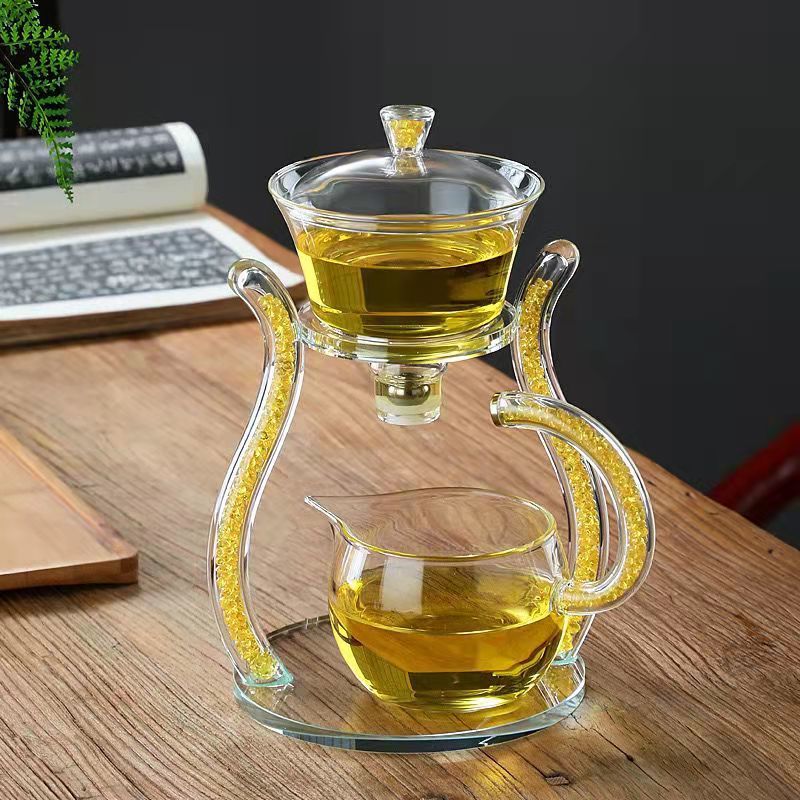
The pre-curated approach bundles a tested combination of pieces that work together—a matched set where the pot, cups, and accessories share proportions, materials, and design language. For beginners who want to start brewing this weekend rather than spend weeks comparing options, a complete glass teaset handles the selection process in one decision.
Why a Bundled Set Often Wins for Beginners
Three reasons make pre-curated sets the smarter first purchase for most people. First, the proportions are guaranteed to work—a 600ml pot paired with four matching cups, a fair cup, and a strainer sized correctly for both. Second, the pieces share thermal and aesthetic properties, so everything heats and cools at similar rates. Third, you avoid the compatibility trap of buying a pot you love and then discovering no cups in your budget match its proportions or capacity.
If you want to skip the manual selection entirely, the Juego de Tetera de Vidrio Elysian includes a borosilicate glass pot, removable stainless infuser, fair cup, and four cups in one tested package—everything the framework above recommends, pre-assembled and ready to brew.
Preguntas Frecuentes
What is the best material for a beginner teaset?
Glass is the best material for most beginners because it’s flavor-neutral, lets you watch leaves unfurl, and is easy to clean. Borosilicate glass handles thermal shock well, so pouring boiling water into a room-temperature pot won’t crack it. Glass also reveals any residue or soap film, forcing you to clean thoroughly—something opaque materials hide. For beginners who want one set that works across green, black, oolong, and herbal teas without flavor carryover, glass is the most forgiving starting material. The main limitation is heat retention: glass cools faster than ceramic or cast iron, so it’s less ideal for slow, hour-long brewing sessions.
How many pieces do I need in a beginner teaset?
Four to six pieces cover 90% of beginner needs: a teapot (350–700ml), a fair cup, two to four drinking cups, and a strainer or integrated infuser. Anything beyond these basics is optional and depends on your brewing style. If you want to add one extra piece, a tea tray (chaban) catches drips and gives you a dedicated brewing surface. Beginners who buy 10-piece sets often use only half the pieces and end up storing the rest. Start with the essentials and add pieces as you discover what you actually need.
Can I use a glass teapot on a stove?
Only borosilicate glass teapots are safe for stovetop use, and even then, only on low to medium heat. Standard soda-lime glass (the kind in most decorative teapots) can shatter from thermal shock when placed on a hot burner. If you plan to boil water directly in your teapot, verify the manufacturer specifies stovetop-safe borosilicate glass. For most beginners, it’s safer and more convenient to boil water in a kettle and pour it into the teapot—this also gives you better temperature control for green and white teas that need water below boiling. For exact temperatures by tea type, see our tea brewing temperature guide.
How do I clean a glass teapot without scratching it?
Clean glass teapots with warm water, mild dish soap, and a soft sponge or bottle brush. Avoid abrasive scrubbers, steel wool, or harsh detergents—they scratch the glass and create micro-cuts that harbor stains. For tea stains that soap won’t remove, soak the pot in a mixture of warm water and baking soda (one tablespoon per cup) for thirty minutes, then scrub gently with a soft brush. Rinse thoroughly to remove any soap residue, which can affect tea flavor in future brews. Most glass teapots are also dishwasher safe, though hand-washing extends their lifespan.
Is a glass teaset safe for hot tea?
Yes, quality glass teapots made from borosilicate glass are specifically engineered for hot liquids and handle temperatures up to 300°F (150°C). Borosilicate glass contains boron trioxide, which reduces thermal expansion and prevents cracking under rapid temperature changes. Cheap glass teapots made from regular soda-lime glass can shatter when boiling water is poured into a cold pot, so verify the product specifications before buying. Reputable manufacturers clearly label borosilicate glass and often include temperature ratings in the product description. Beyond safety, regular tea consumption has been associated with cardiovascular and cognitive benefits, as reviewed in research published by the National Institutes of Health—another reason to invest in a set that makes daily brewing easy.
Final Thoughts: Your First Teaset Decision Made Simple
Choosing your first teaset doesn’t require weeks of research or expensive purchases. Focus on three decisions: material that matches your brewing style (glass for versatility, porcelain for tradition, ceramic for balance, cast iron for heat retention), capacity that fits your most common serving scenario (500–700ml covers most beginners), and design features that prioritize function over form (clean-pour spout, comfortable handle, removable infuser). A set that nails these three factors will outlast and outperform prettier sets that ignore them.
Apply the framework in this guide to any product page, and you’ll know within minutes whether a set is right for you. If you’d rather skip the research and start brewing today, a curated glass teaset packages every recommendation above into one tested combination—the fastest path from zero to your first proper cup of loose-leaf tea.
 ES
ES  EN
EN  DE
DE  PT
PT  FR
FR  JA
JA