
Teapot vs Mug: Which Loose Leaf Tea Workflow Fits You?
Nov
Points clés à retenir
- Compare 2 workflows, not cup sizes: teapot vs mug means pouring a finished infusion from a separate vessel or removing a basket from the cup you drink from. These are the two setups defined below.
- The mug route has 1 drinking vessel in this comparison. Add a removable basket and a drip dish; fewer pouring steps do not mean no wet parts.
- The pot route has 2 liquid-holding vessels before accessories: the brewing pot and its receiving cup. This is a setup count, not a capacity claim.
- Use 3 checks before buying: how leaves leave the water, where wet parts rest, and whether every tea-contact surface is reachable. These are editorial checks, not test results.
- Compare 4 reset tasks: empty leaves, rinse the filter, wash the vessel, and dry the parts. The best setup is the one whose routine you will actually complete.
Contents
- The decision
- What defines the mug setup
- What defines the teapot setup
- Side-by-side comparison
- Stopping the infusion
- Handling and visual feedback
- Cleaning and durability
- Recommended teapot routes
- A practical buying checklist
- FAQ
- Options en Céramique
Teapot vs Mug Starts With Where Brewing Ends
Does a cup of loose leaf tea need a separate brewing vessel? Often it does not. A mug with a removable basket can brew the leaves and hold the finished drink without a transfer. A teapot adds a distinct serving stage. That extra stage can be useful, but it should solve a real problem rather than merely make a tea setup look complete.
The useful teapot vs mug comparison is therefore about workflow. The mug here is an open drinking cup fitted with a basket that can be lifted out. The teapot here is a separate brewer that delivers tea into a receiving cup, either through a spout or through a draining arrangement. Neither label guarantees a particular volume, filter quality, temperature rating, or flavour.
A fair teapot vs mug decision asks how the infusion stops, where wet leaves rest, what must be lifted, and what happens at the sink. The sections below compare those actions, identify situations where keeping an existing mug makes sense, and show several catalogued teapot alternatives. Product examples illustrate different layouts; they are not laboratory-tested winners or promises of better-tasting tea.
What Defines the Mug-and-Basket Workflow
The drinking cup is also the brewing chamber
In the mug route, the leaves sit in a removable basket while water surrounds them in the drinking cup. When brewing is finished, lift the basket and set it on a suitable drip dish. The drink remains where it was brewed. That direct path is the main reason to choose this side of teapot vs mug, especially when pouring offers no benefit.
Wikipedia describes an infuser as a device that holds loose leaves for steeping in a mug or teapot. The filter is therefore not exclusive to either vessel. A pot can contain a basket too. Comparing a roomy mug basket with a cramped tea ball would compare filter designs, not prove that all mugs or all pots brew better.
Check that the basket sits securely on the rim and reaches the water at your normal fill level. A lid that doubles as a rest may be convenient only if its instructions permit that use. A separate dish is still useful when the lid is hot, unstable, or needed elsewhere. In teapot vs mug, treat the resting place as part of the setup rather than an afterthought.
This teapot vs mug route suits someone who wants to keep the finished drink in the original vessel. It is less appealing if handling a dripping basket is the part of brewing they dislike most. The solution might be a different basket or a better resting dish, not a new pot. Check the actual source of inconvenience before replacing equipment that already works.
What Defines the Separate Teapot Workflow
Brewing and drinking happen in different vessels
A separate pot holds the infusion before the tea reaches the drinking cup. Wikipedia defines a teapot as a vessel for steeping and serving tea, commonly with a lid, handle, and spout. In teapot vs mug, the defining difference is that serving transfer. The shape and material of the brewer are separate questions.
The transfer can be a normal hand pour or a drain from an upper chamber into a lower receiver. Those layouts move different parts at different moments. Before choosing a decorative system, identify where the leaves remain and where the finished liquor collects. An attractive stand does not, by itself, tell you whether the infusion is fully separated when the release ends.
A pot is useful when the serving stage has a purpose: a clear view of the liquor in another cup, deliberate decanting before drinking, or a repeated sequence that keeps wet leaves away from the drinking rim. None of those reasons requires a large batch. A solo drinker can prefer a pot, and someone serving a visitor can still use separate mugs.
In teapot vs mug, the extra vessel creates another object to rinse and put away. That is an honest cost of the teapot vs mug choice, not a defect to disguise. A system should earn its place through a serving action you value. If your present routine already stops brewing cleanly and feels comfortable, there is no general rule that a pot is the necessary upgrade.
Teapot vs Mug: Side-by-Side Workflow Comparison
The table compares the specific setups defined here, not every cup or pot on sale. The counts describe objects and actions in these examples. They are not measured brewing times, thermal results, or specifications for any listed product. Use this teapot vs mug table to ask better questions about a real listing rather than to predict taste from a vessel name.
| Decision point. | Mug with removable basket. | Separate teapot and cup. |
| Liquid-holding vessels. | 1: the drinking mug. | 2: brewer and receiving cup. |
| Stopping leaf contact. | Lift the basket clear of the water. | Remove its basket or decant the liquor fully. |
| Wet-leaf resting place. | Basket needs a suitable dish or approved lid rest. | Leaves can remain in the emptied brewer if the design allows. |
| Serving action. | Drink from the vessel used for brewing. | Pour or release tea into another vessel. |
| Reset inspection. | Check basket mesh, rim, and cup interior. | Also check spout, outlet, receiver, and accessible seals. |
| Visual feedback. | Depends on cup transparency and basket position. | Depends on chamber transparency and serving layout. |
| Purchase priority. | Rim fit and easy basket removal. | A clear separation action and reachable tea-contact parts. |
An open mug does not automatically lose the comparison because it lacks a spout. If basket removal is clean and secure, it already has a clear end to brewing. Conversely, the pot is not automatically more work during every action. A well-understood draining arrangement may avoid carrying a wet filter across the table, while adding more parts to clean later.
Separate what is visible in a listing from what remains unknown. A photograph can show a receiver under a brewer, but it cannot establish how long the tea stays warm or whether every leaf fragment is captured. This teapot vs mug comparison gives no percentage advantage to either route because no controlled taste, cooling, or cleaning trial was performed.
The most useful side-by-side test is a dry rehearsal with equipment you already own. Place each part where it will rest, then trace the actions without hot water. Notice crossed hands, awkward reaches, and unstable resting places. This is an editorial planning method, not a safety certification, and it does not replace the care instructions supplied with the vessel.
Stopping the Infusion Matters More Than the Label
Remove leaves or move the liquor
The practical teapot vs mug question is whether leaf-water contact ends when you intend it to end. Wikipedia notes that many teas are infused for a limited time and then removed from the water. With a basket mug, the separation action is visible: the leaves leave the drink. With a pot, that action depends on the design and how completely it is emptied.
Pouring a little tea from a pot while leaving the rest around the leaves does not perform the same separation as removing a mug basket. A pot with a removable infuser can use the same lift-out method as a mug. A draining brewer instead sends liquor into a receiver. Learn which action your chosen system uses before treating it as a hands-off solution.
For teapot vs mug, follow the tea supplier’s starting recipe in either vessel and adjust only after comparing similar brews. Do not change leaf amount, water, and brewing method together and then credit the pot for the result. This article does not prescribe a universal steeping temperature or time, since neither a vessel label nor a photograph establishes what a particular tea requires.
Filter openings are another independent variable in teapot vs mug. The Infuser entry notes that larger holes may let pieces escape and require a separate strainer. That supports checking the actual filter, not claiming that all glass pots produce clear tea. The existing teapot-with-infuser guide addresses filter selection in more detail; the present decision is whether you want a separate brewing vessel at all.
Handling and Visual Feedback During the Brew
Follow the hot and wet parts
A teapot vs mug decision should include the removal action, not just the first pour of water. With a mug, ask whether the basket handle can be reached without brushing the hot rim. With a pot, consider the loaded handle, lid retention, and receiving vessel placement. Photographs can identify the parts, but they cannot prove comfortable grip or safe handling for every user.
The visual difference is partly a material choice. A transparent chamber lets you see liquor and leaf position, whereas an opaque mug hides much of that view. Yet colour alone is not a calibrated strength meter. Lighting, the vessel background, and the tea itself affect what you see. Use the view as feedback rather than a guarantee that the infusion has reached the desired taste.
Separate brewing can also make the serving movement part of a deliberate pause. A basket mug keeps the process direct and puts less emphasis on the transfer. Those are preferences, not a hierarchy of seriousness. A teapot vs mug choice made for pleasure is valid, as long as pleasure is not repackaged as an unmeasured claim of superior extraction or better health.
Neither route should be treated as a travel system unless the actual product is rated for that use. An open cup and a glass stand-mounted brewer are not sealed bottles. Place hot-water equipment on a stable surface and follow its instructions. For readers considering a fuller serving sequence, the gongfu tea set guide explains a different ritual without making that ritual mandatory for an everyday drink.
Cleaning, Durability, and the Parts You Can Reach
Count tasks rather than promise faster washing
The simplest teapot vs mug cleaning comparison follows the tea-contact surfaces. A mug basket has an interior, mesh, seams, and a rim that may trap leaves. A separate pot can add a spout, outlet, receiver, and removable parts. More visible components do not always mean harder washing, but concealed passages deserve attention before you buy.
For this article, the reset checklist has 4 tasks: discard leaves, rinse the filter, wash the vessel, and dry the parts. That is an editorial checklist, not a timed cleaning result. Work through it for each setup and include the wet-leaf dish. Otherwise the comparison credits the mug for a tidy cup while ignoring the accessory that catches its drips.
Do not assume that glass means dishwasher safe, or that ceramic means resistant to every temperature change. Follow the particular product’s care instructions. If instructions do not confirm dishwasher or stovetop use, ask rather than infer permission from appearance. Capacity, loaded weight, glass grade, and thermal-shock ratings are not supplied here for the catalogued examples because the retrieved copy does not establish them.
For teapot vs mug, a damaged basket may be replaceable without replacing the mug. A specialized brewer may depend on a matching outlet or receiver. Ask about replacement parts before committing to a mechanism. The glass teapot cleaning guide covers that material’s care topic separately. The teapot vs mug decision here remains about whether the additional serving path is worth maintaining.
Recommended Teapot Routes, Not Reasons to Replace Every Mug
If you want to skip the manual research, begin with a layout that addresses the exact action you want to change. The live catalog supplies examples of separated brewing, not evidence that a pot beats a mug in blind tasting. For teapot vs mug, keeping a comfortable existing mug remains the default when no part of its workflow is troublesome.
Pick 1: a visible separated brewing layout
Elegant Glass Tea Brewing Set with Infuser is described in its product copy as a two-tiered system for steeping and separating leaves from brewed tea. Its gallery shows a glass vessel and a round metal filter. This makes it a candidate when you want to inspect a separate brewing path. It does not establish a specific mesh opening, liquid capacity, or guaranteed sediment-free result.
Pick 2: a stand-mounted magnetic layout
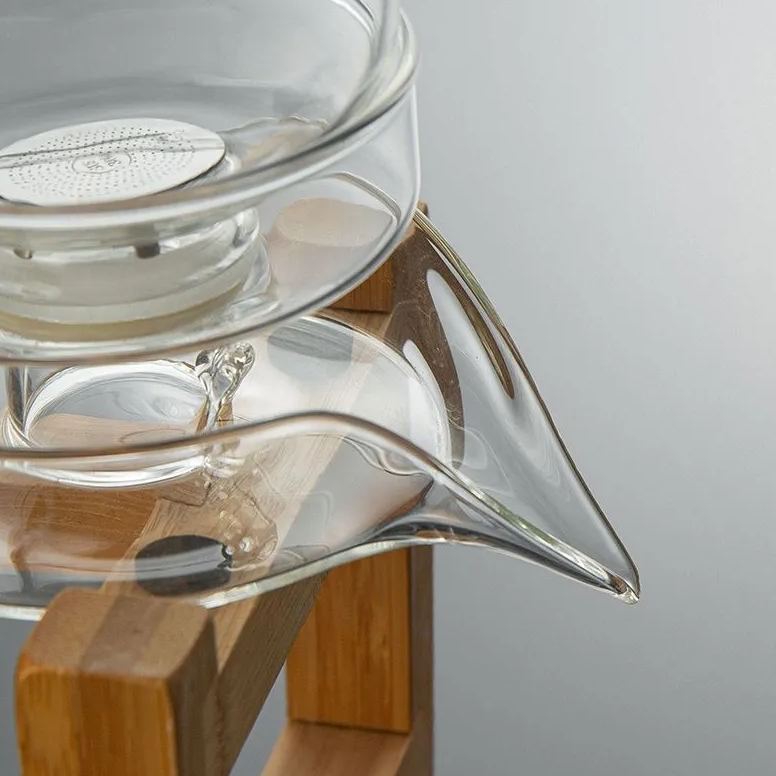
Service à thé en verre à infusion goutte semi-automatique magnétique minimaliste moderne is a candidate when the question is where the brewer and receiver sit during release. The product name identifies the magnetic arrangement; the gallery detail below shows its transparent stand rather than a complete brewing demonstration. In teapot vs mug, assess the full setup and its release instructions before deciding that this arrangement removes an action you dislike.
Pick 3: a ceramic brewer with a separate receiver
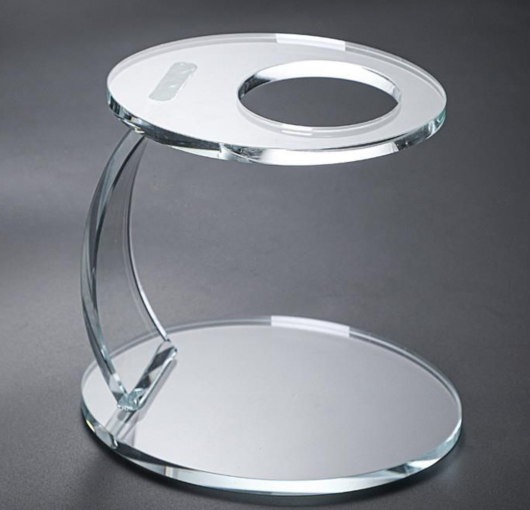
Automatic Pouring Ceramic Gongfu Tea Set is described in catalog copy as a tilting arrangement with a serving pitcher and teacups. The pictured style shows the brewer above a separate receiver. Choose this route for a deliberate serving sequence, not as a claim that ceramic automatically keeps tea hotter. Check the selected variation and supplied pieces before ordering because the listing offers several styles.
- Browse glass tea sets for a visible brewing layout.
- Browse semi-automatic tea sets for separated serving arrangements.
- Browse ceramic tea sets for a different serving presentation.
These categories are starting points, not endorsements of every mechanism they contain. No mug is linked as a store product because this comparison does not establish a standalone basket-mug offering in the retrieved catalog. The teapot vs mug comparison would be misleading if every answer ended in buying a pot. A suitable basket for a mug you already own can be the more direct choice.
A Buying Checklist That Keeps the Comparison Fair
Begin teapot vs mug by describing the action you want to improve in plain language. Perhaps the wet basket has nowhere to sit, or perhaps pouring is the enjoyable part. Those problems point in different directions. Buying a pot to avoid washing a basket may simply replace visible mesh with an outlet that is harder to inspect.
Use 3 checks, defined here as editorial buying checks. First, identify how leaves and liquor separate. Second, place every wet component somewhere stable after that action. Third, verify that the parts touching tea can be reached for cleaning. A setup that fails a check needs further information, not a more flattering product description.
Then ask the seller about unresolved specifications. Request the actual dimensions and filled weight if fit or lifting matters, and ask for material and care documentation if heat compatibility matters. Do not substitute a category label for those answers. The teapot vs mug decision should stay provisional when the feature that matters most cannot be confirmed.
Finally, teapot vs mug includes deciding whether you need a purchase at all. A mug with an ill-fitting basket may need a better basket; a pot left partly full may need a different decanting habit. Neither requires replacing the whole tea collection. Choose a new vessel only when its verified layout improves the specific part of your routine that prompted the comparison.
FAQ
Does tea taste better from a teapot than a mug?
Not as a general rule established here. In teapot vs mug, the filter, leaf amount, water, and stopping point can change alongside the vessel. Without holding those variables steady, a different cup is not proof of a vessel advantage. This comparison did not conduct a blind tasting, so its recommendations concern workflow and serving preference rather than a measured flavour ranking.
Can a mug with an infuser stop steeping as well as a pot?
It can provide a clear separation action when the basket is lifted fully out of the liquid. A pot needs its own separation action, such as removing a basket or decanting into a receiver. The teapot vs mug distinction does not give either route automatic control. What matters is whether leaves remain in contact with the drink after you intended the brew to end.
Is a teapot only useful for sharing?
No. A solo drinker may value decanting, a separate serving cup, or the movement of pouring. Conversely, separate basket mugs may suit people who prefer different teas. Teapot vs mug is not a size chart, and no capacities are assigned to the products shown here. Choose the serving sequence first, then confirm the actual vessel specifications before deciding whether the item fits your routine.
Which setup is easier to clean?
That depends on reachable parts, not just the number of objects on the table. A mug basket may hold leaves in mesh seams, while a pot may add a narrow spout or outlet. The teapot vs mug checklist follows leaves, filter, vessel, and drying rather than claiming a measured washing-time advantage. Inspect the actual design and confirm care instructions for anything that cannot be taken apart.
Should someone with a working infuser mug buy a teapot?
Only if a separate brewing and serving stage solves a problem or adds an experience they value. Keeping an existing mug is a valid teapot vs mug outcome. A more secure basket or a suitable drip dish may address the inconvenience without another vessel. The catalog examples illustrate optional layouts; they do not make a pot a prerequisite for brewing loose leaf tea well.
Final Verdict: Choose the Separation Action You Prefer
The sound teapot vs mug decision starts at the end of brewing. Choose the mug route if removing a basket is comfortable, the drink stays where you want it, and a separate pour adds nothing. Choose the pot route if you value decanting into a receiver, viewing a separate infusion, or making serving part of the pause. Neither route earns a universal taste or heat-retention advantage from its name.
Pick 1 if the catalogued two-tier glass layout addresses the separation action you want. Pick 2 if a stand-mounted arrangement appeals and its release instructions answer your handling questions. Pick 3 if a ceramic brewer and receiver fit the serving sequence you enjoy. These are conditional editorial choices, not results from comparative product testing.
Keep the existing mug if none of those conditions applies. Before purchasing a pot, confirm the missing specifications and the care requirements rather than guessing from photographs. Let a verified workflow improvement, not the promise of a more impressive tea collection, settle the teapot vs mug choice. Use the category routes above to compare the relevant layouts.
 FR
 EN
 DE
 ES
 PT
 JA