
Budget vs Premium Tea Sets: Where I Actually Spend the Money (And Where I Don’t)
The Tea Set Trap I Fell Into Early On
My first proper tea set was a complete gongfu kit I bought in a small shop about a decade ago. I didn’t know what I was doing. I saw a beautiful box, a purple clay pot, six tiny cups, a tray, a pair of tongs, and a price tag that made my eyebrows rise. The shopkeeper told me it was “the real way” to drink tea, so I pulled out my card and walked home feeling like I’d leveled up as a person.
I used that set maybe six times. Two of the cups chipped within a year. The tongs lived in a drawer forever. The teapot was lovely, but I was brewing grocery-store teabags in it, which is like putting discount gasoline in a Ferrari. Eventually I sold the whole thing at a garage sale for forty dollars.
That early mistake taught me something I now share with everyone who asks: the price of a tea set has almost nothing to do with how much better your tea will taste. What matters is matching the gear to how you actually brew, what you actually drink, and what you’ll actually use. Once I figured that out, I stopped spending money where it didn’t help and started spending it where it did.
So this is the breakdown I wish someone had handed me at that shop. It’s not a buying chart or a comparison matrix. It’s just what I’ve learned after ten years of brewing daily, replacing teapots, gifting sets to friends, and quietly returning the occasional impulse purchase.
The most expensive tea set in the world cannot fix bad tea. And the cheapest glass pot on the shelf can brew a genuinely beautiful cup if you know what you’re doing.
Why Material Drives Almost Every Price Decision
When you start browsing tea gear, the price spread between sets that look similar on a webpage can be genuinely confusing. A glass teapot might cost thirty dollars. A similar-sized ceramic one might cost sixty. A purple clay pot the same size can run two hundred, three hundred, or twenty times that depending on who made it.
The material is doing a huge amount of the price-setting work. Glass is cheap to produce, easy to mold, and doesn’t need firing at extreme temperatures. Ceramic requires higher heat and skilled glazing. Purple clay (zisha) comes from specific mines, is hand-shaped, and is treated almost like art. None of this is a scam, by the way. It’s just the reality of what different materials demand from the people who make them.
The trick is figuring out what the material actually does for your cup of tea, not just what the marketing says it does.
Glass shows you the liquor as it brews, holds heat about as well as you’d expect thin transparent material to, and never adds any flavor. Ceramic holds heat better, can absorb and round out flavors over time, and feels more substantial in the hand. Both are perfectly good. They’re just different.
You can browse a wide range of options in our full Ceramic Teapot Collection if you want to see how varied ceramic really gets once you start scrolling.
Where I Actually Spend the Money Without Hesitating
After years of going back and forth, I have one rule that has saved me a lot of regret: spend on the vessel that holds the tea while it brews, and save on almost everything that touches it afterwards.
The teapot is the center of the experience. It’s the thing that gets hot, that you pour from, that you clean every single time. A poorly fitted lid, a dribbling spout, or a handle that gets too hot will ruin your brewing day after day, and no amount of pretty cups will fix that.
I now look for three specific things when I’m willing to pay more:
- Lid fit. The lid should sit snugly without wobbling and should have a small hole or notch that lets air in for a clean pour. Cheap lids rattle or seal too tightly, which causes weird glugging and drips.
- Spout design. The pour should be a clean, predictable stream that cuts off sharply. Spendy sets usually have a hand-finished or carefully tooled spout that pours better. This is one detail where money genuinely shows up in your cup.
- Heat retention matched to the tea. Oolong, black, and dark teas want to hold heat. Greens, whites, and most herbal infusions don’t. So the right vessel depends on what you drink, not what costs more.
Beyond that, I keep my wallet in my pocket.
Where Budget Buys Me Everything I Need
Cups are my favorite example of where spending more is almost always wasted money on me. A good drinking cup is a good drinking cup. Whether it’s a fifty-cent factory cup or a small handmade one from a local potter, it holds roughly the same amount of tea, holds roughly the same heat, and feels roughly the same against the lip. Taste the difference? Honestly, no.
Trays, coasters, tea towels, tongs, scoops, kettles, and warming stands fall into the same category for me. Budget versions of these do ninety percent of what premium versions do. The remaining ten percent is usually aesthetics or a tiny functional improvement that doesn’t change how the tea tastes.
The piece I bought that genuinely impressed me for the price was the Glass Automatic Tea Set, a borosilicate pot with a little automatic brewing mechanism built into the spout. I expected it to be a fun gadget and a bit disposable. Three years later, it’s still on my counter and I’ve replaced almost nothing on it. Heat-resistant glass, no metal parts to rust, simple design, easy to clean. The “automatic” piece is a clever little valve that holds the leaves in the upper chamber while water sits in the lower one. Press the button when you’ve had enough steeping, and it drains the tea away from the leaves. No bitterness, no over-extraction.
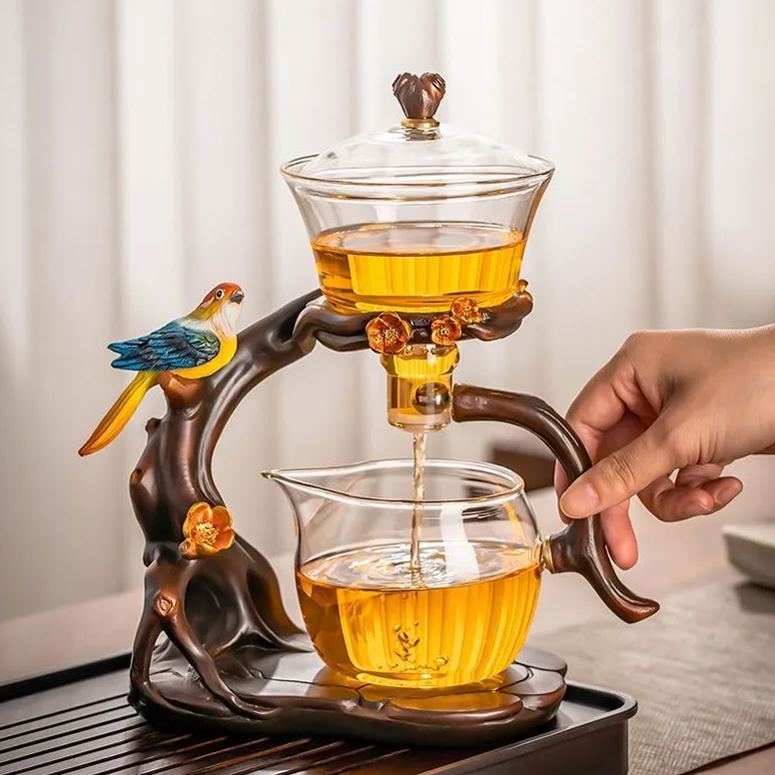
For under what a fancy coffee shop charges for a single latte, I got a complete small-format tea set that does everything I ask of it. That’s the kind of gear I now actively look for: budget price, well-designed, doing exactly one job well.
Glass Versus Ceramic Through Real Daily Use
I rotate between glass and ceramic pots depending on what I’m brewing, and I’ve ended up thinking about them very differently than I used to.
My glass pots get the most use. I brew everything from light greens to strong blacks in them, and I love being able to watch the leaves unfurl and the color develop. After ten years of pouring dark tea in a ceramic pot and wondering if I over-steeped it, having a window into the actual brewing is a small daily joy that I genuinely value.
The place where glass falls short is heat retention. A glass pot on a cold morning will lose temperature fast, which means your tea cools before you finish pouring six small cups. If your morning routine involves sitting with one big cup, this doesn’t matter. If you’re doing a slow gongfu session with five steeps, it matters quite a lot.
That’s where ceramic comes in. My ceramic pot holds heat for noticeably longer, and it has the pleasant habit of absorbing trace flavors over weeks of use, which can subtly round out sharper notes in oolong and black tea. If you only brew one tea, this roundness becomes a kind of seasoning that you’d miss if you switched back to glass.
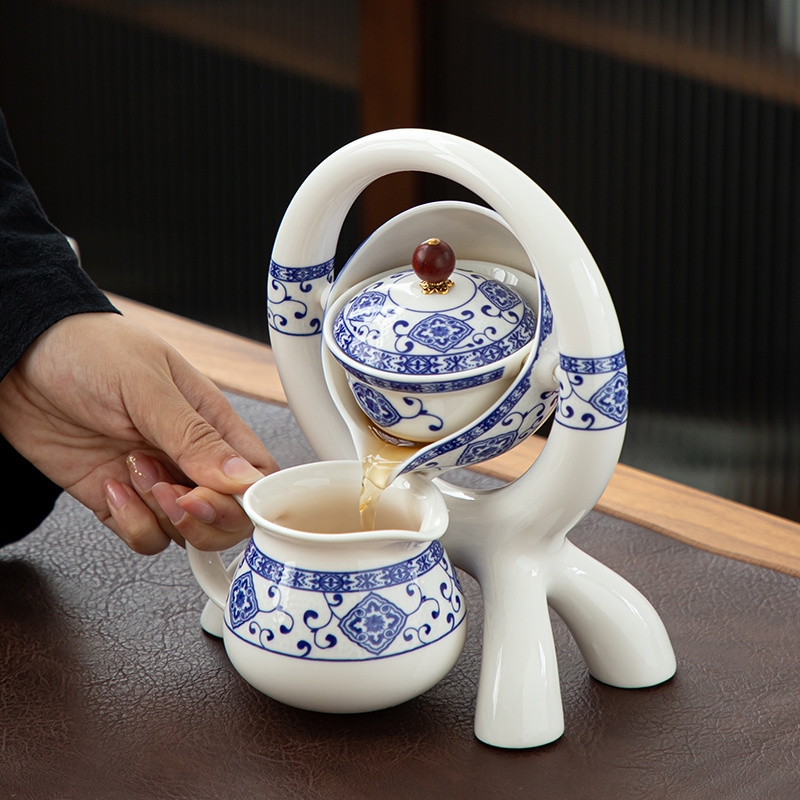
The White Blue Ceramic Set is the piece I reach for most often when I want that ceramic experience. The blue-and-white pattern is the classic look you see in tea houses, but the small built-in pouring mechanism is what makes it daily-use gear for me. I don’t have to lift the lid or guess at the timing; I just set the dial and let it pour. It’s not the cheapest set on the market, but for what it does and how long it’ll last, it’s the kind of mid-tier purchase that has paid for itself many times over.
If you’re trying to decide between committing to glass or ceramic first, I’d suggest glass for variety drinkers and ceramic for people who know exactly which two or three teas they’ll brew forever. There’s a deeper range on our Ceramic Teapot Collection page if you want to compare a few styles side by side.
The Case for Novelty Teapots That Don’t Need to Be Premium
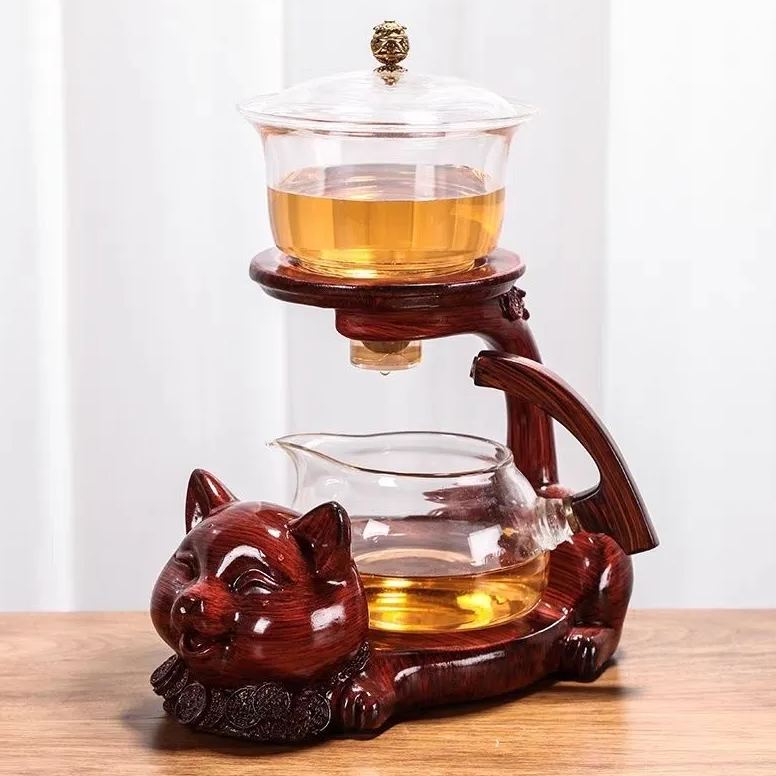
I have a small confession: there’s a pig-shaped teapot on my shelf that I bought as a joke gift for someone, then kept for myself. It’s ridiculous. It pours unevenly if you fill it past the line. The lid doesn’t seal the way a “real” teapot should. It is genuinely joyful to use, and it brews tea perfectly fine.
That pot is the Pig Shaped Teapot, and I’m including it here because it represents an entire category of gear I used to dismiss. Novelty teapots get unfairly written off as cheap gifts or office desk clutter. Some of them are. But the well-made ones are a kind of low-stakes joy that the tea world sometimes forgets to celebrate.
For novelty pots specifically, I’d recommend:
- Don’t pay premium prices. Even a well-designed novelty pot doesn’t need to cost a lot, and you’ll enjoy it more knowing you didn’t over-invest.
- Skip the ones with elaborate multi-part mechanisms that are hard to clean. The novelty wears off when you’re scrubbing ten small pieces at midnight.
- Use them for green or white teas where exact temperature control matters less. They’re forgiving pots.
- Treat them as the conversation piece they are. When friends come over, the novelty pot brews the second round.
You can find this whole category of fun, often semi-automatic designs in our Magnetic Tea Set Collection, which includes lots of creative shapes alongside the more traditional pieces.
Magnetic Draining and Other Features Worth Paying For
I had a moment about two years ago when I borrowed a friend’s pot with a built-in magnetic draining system. I brewed an oolong, lifted the little magnetic knob on the lid, and the tea drained cleanly away from the leaves without me lifting the pot, pouring it elsewhere, or doing any of the usual gongfu dance. It felt like cheating.
I bought my own version shortly after. The Draining Glass Teapot with a wooden stand has become my most-used piece of tea gear, full stop. Yes, it’s more expensive than a plain glass pot. But here’s why I think it’s worth every dollar of the difference.
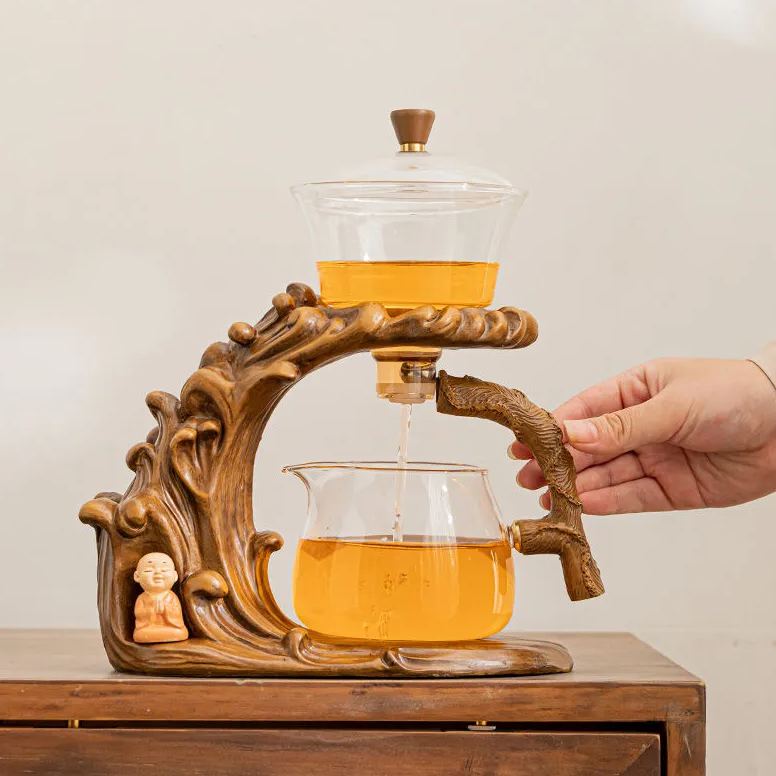
The draining mechanism solves a real problem I’ve had for years: over-steeping. With traditional pots, you either have to decant quickly into another vessel or commit to staying close enough to interrupt your steep. With this design, you decide in advance how long the leaves should sit, lift the magnet when the time is up, and walk away. The tea drains into the bottom chamber while the leaves stay up top, undrained and undamaged.
Is the engineering fancy for what it is? Yes. Is fancy engineering worth paying for? In this case, yes, because the time you save and the consistency you gain compounds over years of daily use. This is the second piece where I’ll happily spend more.
Premium features earn their price when they solve problems you have every single brew. They lose their value fast when they’re a solution you only use once a month.
Solo Sipping, Couples, and Group Brewing
One of the biggest money mistakes I see people make is buying a set sized for the group they host on holidays, then using it alone for the rest of the year. A six-cup gongfu set that you only use once a month is a much worse purchase than two smaller sets you use every day.
Solo drinkers, in my experience, get the most joy out of small-format gear. A 150 to 300ml pot, two cups, a simple tray. Brewing for one becomes a meditative ritual rather than an elaborate performance. Pieces like the Glass Automatic Tea Set I mentioned earlier are sized exactly right for this. You pour, you sit, you clean up in three minutes.
Couples do well with mid-size pots and matching cups. Look for sets that come with two cups included or buy a two-piece set as your base. Most couples I know who love daily tea have settled into a rhythm where one person brews while the other does something else nearby, and the gear that supports this lazy, conversational style is gear that gets used.
Group brewing is where a proper gongfu set starts to pay off, but only if you actually host. If you have guests once a month, buy once a month. If you have them weekly, the investment adds up to less per use than your daily driver. A complete Gongfu Tea Set Collection gives you everything you need for this, and the variety of options means you can pick a size and style that suits your actual hosting habits rather than your imagined lifestyle.
The honest question to ask yourself is: how many cups per session, how many sessions per month, and how many of those sessions involve other people? That math will save you far more money than any price comparison ever could.
Common Mistakes I Made So You Don’t Have To
Here are the budget mistakes I’ve personally made and now see clearly in other people.
Buying a complete set when I only needed three pieces. Early on, I kept buying these gorgeous boxed sets with twelve items when I really used three of them. The boxes looked impressive in my kitchen and almost never made it onto the table. The lesson is brutal but simple: buy what you’ll use, not what photographs well.
Skipping the spout test. I have bought teapots online without checking pour videos or reviews, and I’ve been burned by dribbling spouts more times than I’d like to admit. Now I never buy a teapot without seeing it pour. Reputable sellers post videos. If they don’t, I move on.
Treating novelty as cheapness. For years I assumed a funny shape meant poor quality. Some novelty pots are flimsy, sure, but plenty are built just as well as their traditional counterparts. The Pig Shaped Teapot I mentioned earlier is a perfect example: it’s a fully functional brewing vessel that happens to look like a pig.
Ignoring lid quality. The lid is the part of the teapot most people overlook. It’s also the part that decides whether your pot pours cleanly or dribbles down the side. Hold the pot. Tilt it. Watch the lid. If it rattles, put it back.
Buying purple clay because I read I should. I bought a “real” zisha pot for three hundred dollars because every tea blog said purple clay was the only proper way to brew oolong. The pot is gorgeous. I use it twice a year because it’s too precious to enjoy daily. The ceramic and glass pots I use every day have taught me more about what I actually want than that precious object ever has.
Upgrading before I wore out what I had. Tea gear lasts. The first glass pot I bought is still in a cupboard, perfectly functional, just less pretty than my newer one. I should have used it until it cracked.
My Honest Framework for Deciding
When I’m thinking about a new piece of tea gear now, I ask three questions, and they cut through almost all the marketing noise.
How often will I use this? Daily-use gear deserves real investment because the cost-per-use drops to almost nothing. Monthly-use gear deserves only what I’d pay for a nice dinner out. Once-a-year gear, unless it’s a meaningful ritual item, probably shouldn’t be bought at all.
What problem does this solve? Premium features like magnetic draining solve real, ongoing problems. Premium “features” like gold rims and ornate carvings solve no problem at all. The first kind is worth the money. The second is decoration, and decoration should cost what decoration costs.
Does this match the tea I drink? This is the one nobody wants to hear. If you love greens and whites, premium clay is a waste. If you live on oolong and shu pu-erh, glass is a poor choice no matter how pretty it is. Match the gear to the tea, not the other way around.
If a piece answers all three questions well, I buy it without much hesitation, even if it costs more than I’d planned. If it fails even one of them, I keep my wallet closed.
The Routine That Actually Saved Me Money
What genuinely helped me build a tea setup I love, rather than one I regret, was slowing down. I stopped buying sets in one go. Instead, I added one piece every month or two, used it, washed it, lived with it. Some pieces got used daily and earned their place. Some sat on a shelf for two months before I quietly listed them on a resale group.
This sounds slower and more annoying than just buying a complete set, but it’s the only method I’ve found that prevents the kind of regret I had with that very first gongfu kit. After a few years of this habit, you end up with a setup that’s specifically yours. Not the setup you were sold. Not the setup you saw on a tea forum. The one that fits how you actually brew on a Tuesday morning when nobody’s watching.
I now think of it less as a “tea set” and more as a small collection of tools, each chosen for a reason. Some are premium. Some are novelty. Most are budget. All of them get used.
The Honest Bottom Line
If I had to summarize ten years of tea-gear mistakes and successes into a single paragraph for someone standing in front of a confusing product page right now, it would be this: spend on the main brewing vessel if you brew every day, get a feature like magnetic draining if it solves an over-steeping problem you actually have, choose ceramic for heat-holding teas and glass for everything else, treat novelty teapots as low-stakes joy rather than serious gear, and skip the matching twelve-piece sets unless you host a lot.
The premium tier of the tea world has some genuinely brilliant gear in it. The budget tier has some genuinely brilliant gear in it too. The trick isn’t choosing one side. It’s being honest about how you actually use tea in your life, and putting your money where that honest answer points.
If you’re starting to put a setup together and want to browse by category, our Gongfu Tea Set Collection is a great place to begin if you’re brewing traditional Chinese teas, the Ceramic Teapot Collection covers the heat-retention side beautifully, and the Magnetic Tea Set Collection is where I’d look if you want brewing features that solve real problems without spending a fortune.
Whatever you end up choosing, brew what’s in your cupboard, drink what you’ve made, and don’t let the price tag convince you that the tea tastes better than it does. The best tea set is the one you reach for tomorrow morning. Nothing more, nothing less.
 EN
EN  DE
DE  ES
ES  PT
PT  FR
FR  JA
JA