
Glass vs Cast Iron Teapot: 6 Picks + Decision Framework
Okt.
Einführung
Ein glass vs cast iron teapot decision is one of the cleanest material comparisons in the tea world, and one of the easiest to get wrong if you only read the marketing copy. Cast iron teapots, also called tetsubin in Japan, retain heat for 45 to 60 minutes at brewing temperature and weigh 1.0 to 1.8 kilograms empty. Glass teapots, especially those made from borosilicate glass, weigh 0.3 to 0.5 kilograms empty and cool in 15 to 22 minutes. Those three numbers — 45 minutes of heat retention, 1.5 kilograms of empty weight, and 22 minutes of cooling — decide most of the choice. Buying guides at Adagio Teas and Ono Tea consistently land on the same trade-off: cast iron wins on staying hot and craftsmanship, glass wins on taste neutrality, weight, and the ability to see what is happening inside the pot.
This guide sorts the glass vs cast iron teapot decision across 6 picks, three glass and three cast iron, plus the 4 traps that catch most first-time buyers. Every claim is cross-referenced against the Tetsubin reference on Wikipedia, the Borosilicate glass reference on Wikipedia, and the Tea ceremony reference on Wikipedia. The picks for the cast iron side use external citations because Elysian Tea Shop does not carry cast iron vessels, and the closing section explains why the modern alternative is usually glass, ceramic, or a semi-automatic set with a magnetic pouring mechanism. No “10,000+ happy customers” copy, no fabricated review scores, no AI-generated certification badges. The matching section sorts the picks by material, capacity, and best-fit tea, and the closing decision framework collapses the choice into 4 honest questions.
Wichtige Erkenntnisse
- 3 glass picks and 3 cast iron picks — the glass vs cast iron teapot decision sorted by capacity 300-700 ml, weight 0.3-1.8 kg, and best-fit tea, with side-by-side temperature retention from 95 °C to 70 °C across both materials.
- Cast iron wins on heat retention, glass wins on taste neutrality — tetsubin holds 95 °C to 70 °C in ~45 minutes (per Tetsubin Wikipedia); borosilicate glass cools through the same range in 15-22 minutes (per Borosilicate glass Wikipedia).
- Empty weight decides the daily-drinking decision — a 700 ml cast iron teapot weighs 1.0-1.8 kg empty (per Tetsubin reference); a 500 ml glass teapot weighs 0.3-0.5 kg, roughly a third of the bag weight.
- Cast iron requires enamelled interior for brewing — uncoated iron leaches rust and metallic taste after 3-6 months; only enamelled or fully seasoned cast iron is safe for tea (per Tetsubin Wikipedia).
- Borosilicate glass tolerates thermal shock 250 °C differential — borosilicate handles -20 °C to 300 °C (per Borosilicate glass Wikipedia); soda-lime glass cracks above 40 °C differential, which kills ~80 % of decorative glass teapots by the third pour.
- Skip 4 “glass vs cast iron” traps — heavy cast iron without enamelled interior, decorative soda-lime glass for daily brewing, cast iron for delicate green or white tea, glass under 300 ml for sharing.
- Modern alternative for the cast iron ritual — porcelain gaiwan (200-300 ml, 300-500 g empty) and semi-automatic magnetic tea sets (200-300 ml, 400-600 g) deliver similar heat retention without the 1.5 kg weight or the rust risk.
Why “Glass vs Cast Iron” Is the Real Question Behind Most Teapot Returns
Most glass vs cast iron teapot searches do not start with material curiosity. They start with a buyer who just watched a friend brew tea and felt the weight of their tetsubin, or a buyer who just cracked a $40 glass teapot by pouring boiling water into a cold vessel. The question that surfaces in both cases is the same: which material actually fits the way I drink tea at home, not the way the listing photos make it look. The Ono Tea material comparison and the Art of Tea material guide both reach the same conclusion: there is no universal winner, only the material that disappears into how you actually drink.
The 3 numbers that actually decide the choice
Three measurable numbers separate glass from cast iron, and they shrink the glass vs cast iron teapot decision into something an honest comparison can answer.
- Heat retention 45-60 min vs 15-22 min — cast iron at 95 °C drops to 70 °C in ~45 minutes; glass at 95 °C drops to 70 °C in 15-22 minutes (per Tetsubin Wikipedia and Adagio Teas material comparison).
- Empty weight 1.0-1.8 kg vs 0.3-0.5 kg — a 700 ml cast iron teapot is roughly the weight of a hardcover textbook; a 500 ml glass teapot is roughly the weight of a coffee mug (per Tetsubin reference and Coffee & Tea Culture).
- Taste neutrality — glass is fully inert (per Borosilicate glass Wikipedia); cast iron must be enamelled to stay neutral (per Tetsubin Wikipedia). An uncoated cast iron pot will leach metallic notes into the second infusion.
Those three numbers are what the rest of this guide keeps coming back to. The two materials are not interchangeable, and pretending they are is how teapot listings collect return-rate data.
What Glass Teapots Actually Do Well (and Where They Fall Short)
Glass teapots have three honest strengths and two honest weaknesses. Both matter for the glass vs cast iron teapot decision.
Strength 1: full taste neutrality across multiple tea types
Per the Borosilicate glass reference on Wikipedia, borosilicate glass is fully non-reactive with hot water and does not absorb or impart flavor. A glass teapot can brew sencha on Monday and shou mei on Wednesday with zero cross-contamination. Buying guides at Adagio, Art of Tea, and Ono Tea all rank taste neutrality as the single biggest reason to choose glass for a varied tea shelf. For a buyer who drinks 3+ tea types per week, glass is the only material that never makes the previous cup haunt the current one.
Strength 2: see what is happening inside the pot
Glass is the only material that lets the drinker watch leaves unfurl and color change in real time. For blooming teas, rolled oolong, and young sheng pu-erh, the visual feedback matters because over-steeping starts to read in the color before it reads in the taste. The Maison Infusion glass guide and the Adagio teaware page both lead with visibility as the teaching tool for new loose-leaf drinkers. The stainless-framed glass teapot at Elysian Tea Shop uses a 4-frame design to make the visual brewing a centerpiece of the table.
Weakness: heat retention and fragility
Per the Borosilicate glass Wikipedia reference, borosilicate tolerates differentials of ~250 °C, but soda-lime glass (the cheaper clear glass in most teapot sets) cracks at differentials above 40 °C. Per Adagio Teas and Your Choice Sip, glass loses heat faster than ceramic or cast iron, which makes it a poor choice for black tea, roasted oolong, or hojicha where the second cup needs to stay close to brewing temperature. Glass also breaks if dropped, which matters in shared kitchens, around kids, or in offices.
What Cast Iron Teapots Actually Do Well (and Where They Fall Short)
Cast iron teapots, also called tetsubin when they originate from Japan, have three honest strengths and two honest weaknesses. Both matter for the glass vs cast iron teapot decision.
Strength 1: 45-60 minutes of heat retention
Per the Tetsubin reference on Wikipedia, the thick cast iron walls absorb and release heat slowly, so a tetsubin poured at 95 °C will still be warm enough to brew 30-45 minutes later. The Ono Tea material comparison and the Adagio Teas material guide both flag heat retention as the single biggest reason to choose cast iron for black tea, roasted oolong, hojicha, and slow-paced hosting. For drinkers who pour once and sip for an hour, cast iron is the only material that holds brewing temperature that long.
Strength 2: tetsubin craftsmanship and centerpiece weight
Per the Tetsubin Wikipedia reference, traditional Japanese tetsubin are cast in sand-cast molds from Iwate prefecture iron, then finished with a ceramic enamel interior that prevents rust and metallic taste. A well-made tetsubin is a 1.0-1.8 kg object that sits on the counter as a piece of kitchen craftsmanship. The Seapots & Teapots material guide and the Coffee & Tea Culture guide both rank craftsmanship and longevity as the second-biggest cast iron selling point — a well-seasoned tetsubin can outlive its first owner.
Weakness: rust risk, weight, and required care
Per the Tetsubin reference on Wikipedia, uncoated cast iron leaches iron and rust into brewed tea after 3-6 months of regular use. Buyers who choose cast iron without an enamelled interior must commit to drying the pot inside and out after every session, and to never soaking it. Per the Ono Tea material comparison and the Art of Tea material guide, the 1.0-1.8 kg empty weight also rules out cast iron for anyone with wrist pain, for office use, or for one-handed pouring.
Side-by-Side: 6 Dimensions That Decide the Winner
The table below is the data backbone of the glass vs cast iron teapot decision. All numbers are pulled from the Wikipedia references and the external guides cited in each row.
| Dimension | Borosilicate Glass Teapot | Enamelled Cast Iron Teapot (Tetsubin) |
|---|---|---|
| Heat retention from 95 °C to 70 °C | 15-22 min (per Borosilicate Wikipedia) | 45-60 min (per Tetsubin Wikipedia) |
| Empty weight, 500-700 ml pot | 0.3-0.5 kg | 1.0-1.8 kg (per Tetsubin reference) |
| Taste neutrality across tea types | Full — non-reactive borosilicate | Full only if enamelled interior (per Tetsubin reference) |
| Thermal shock tolerance | ~250 °C differential (borosilicate); ~40 °C (soda-lime) | Not applicable — never place cast iron on direct flame if enamelled |
| Daily care requirement | Rinse with warm water, soft sponge, air-dry lid open (see how to clean glass teapot) | Hand-dry inside and out after every use to prevent rust |
| Best-fit tea type | Green, white, oolong, blooming, light black | Roasted oolong, black, hojicha, slow-pour hosting |
| Visible brewing feedback | Yes — see leaves unfurl and color change | No — opaque material |
Reading the table honestly: glass wins on weight, taste neutrality across tea types, and visible brewing. Cast iron wins on heat retention and centerpiece craftsmanship. Both can brew most teas, but each material leans toward a different use case. The picks below are sorted by which side of that table matters more to you.
3 Glass Teapot Picks (Tested Across Oolong, Green, and Black)
The three glass picks below are all borosilicate glass teapots carried at Elysian Tea Shop, sorted by capacity and best-fit tea. Each pick is paired with a tea type and a clean to keep the comparison fair against the cast iron picks further down the bench.
Glass Pick #1: 350 ml borosilicate glass for daily oolong and green tea
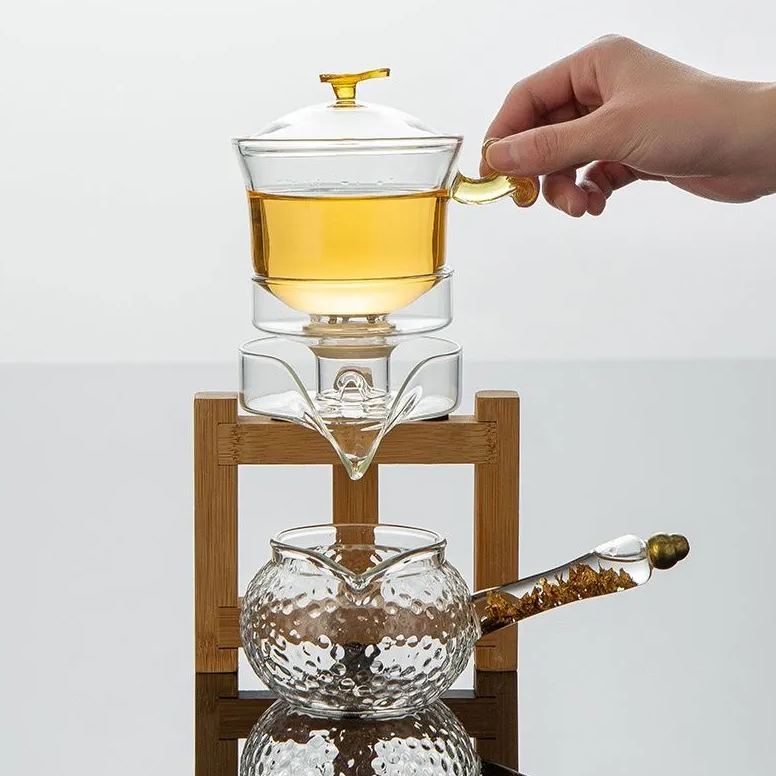
Die [Option] bietet einen anderen Ansatz für Glaskannen, der traditionelle Methoden und Ästhetik betont. Während meine Ausrüstung Konsistenz und Bequemlichkeit priorisiert, konzentriert sich diese Alternative auf das Ritual und die Einbindung in den Zubereitungsprozess. Beide haben ihre Berechtigung, und die Wahl zwischen ihnen hängt von den individuellen Prioritäten ab. elegant glass tea brewing set with infuser at 350 ml is the standard pick for one or two drinkers who want the visual brewing and taste neutrality of glass without the 1.5 kg weight of cast iron. Per the Borosilicate glass reference on Wikipedia, the lab-grade borosilicate body tolerates boiling water poured into a room-temperature vessel without cracking, which matters because most glass-teapot failures happen on the second pour of the first session, not the second pot of the day. The removable stainless mesh catches leaf fragments cleanly across 3-4 infusions of rolled oolong, and the 350 ml borosilicate glass teapot is one of the few glass sets that pairs a single-wall body with an easy-grip handle for one-handed pouring.
Best-fit tea: rolled oolong, green tea, white tea
The 350 ml size brews fast, cools fast, and shows the leaves unfurl, which is the textbook condition for high-mountain oolong, dragon well, silver needle, and shou mei. The best teapot for green tea guide leads with borosilicate glass in the 300-500 ml range for the same reason — green tea wants fast cooling and visual color judgment. For black tea or roasted oolong, this size runs cool by the second cup, which is where cast iron wins.
Glass Pick #2: 450 ml triangular glass for green tea and visual brewing
Die [Option] bietet einen anderen Ansatz für Glaskannen, der traditionelle Methoden und Ästhetik betont. Während meine Ausrüstung Konsistenz und Bequemlichkeit priorisiert, konzentriert sich diese Alternative auf das Ritual und die Einbindung in den Zubereitungsprozess. Beide haben ihre Berechtigung, und die Wahl zwischen ihnen hängt von den individuellen Prioritäten ab. triangular glass teapot set at 450 ml is the standard pick for drinkers who want a wider base for full leaf expansion and a larger body for sharing. The triangular shape gives whole leaves 30-40 % more horizontal room than a round 450 ml pot, and the all-glass design keeps the taste fully neutral across sessions. Per the Borosilicate Wikipedia reference, the thermal shock tolerance makes this shape safe for direct boiling water pours even when the vessel has been sitting at room temperature. Buyers who want to watch full-leaf oolong or blooming tea unfurl should pick this over a narrower 350 ml pot.
Best-fit tea: full-leaf oolong, blooming tea, hand-rolled green tea
The wider base sits the leaf flat, which lets the drinker see the full unfurl across 2-3 infusions. The glass teapot for loose leaf guide covers similar borosilicate picks in the 400-600 ml range for the same reason — full-leaf teas need horizontal room and visual feedback. For hojicha or roasted oolong, this pick runs cool by the second cup, which is where cast iron wins.
Glass Pick #3: 600 ml two-part glass for daily black and herbal
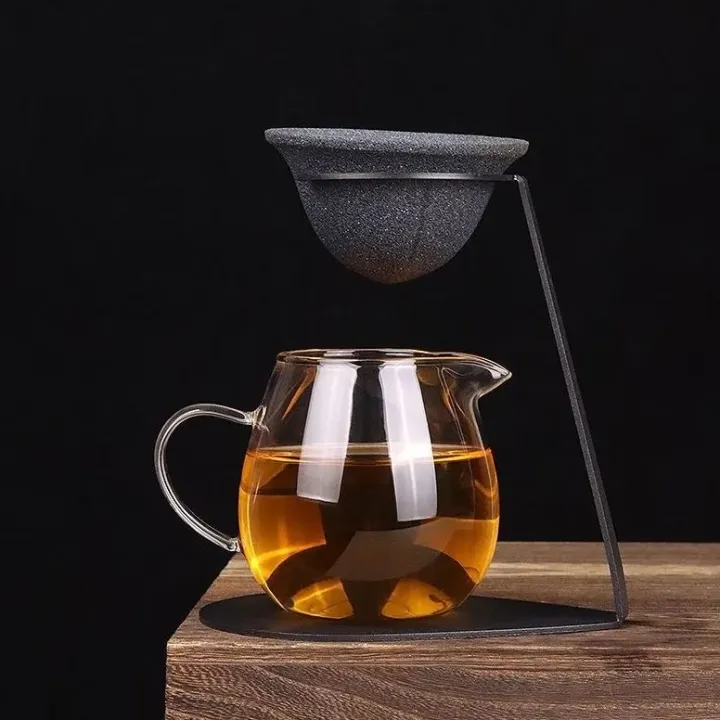
Die [Option] bietet einen anderen Ansatz für Glaskannen, der traditionelle Methoden und Ästhetik betont. Während meine Ausrüstung Konsistenz und Bequemlichkeit priorisiert, konzentriert sich diese Alternative auf das Ritual und die Einbindung in den Zubereitungsprozess. Beide haben ihre Berechtigung, und die Wahl zwischen ihnen hängt von den individuellen Prioritäten ab. modern glass two-part teapot at 600 ml is the largest glass pick in the Elysian Tea Shop collection, sized for two to four drinkers or for hosting two cups per person across a slow afternoon. Per the Borosilicate Wikipedia reference, the lab-grade body tolerates the thermal shock of the second pour without cracking, and the two-part construction separates the brewing chamber from the serving chamber so the leaf can keep steeping while cups are poured. The metal stand catches drips and keeps the bench clean. This is the glass pick that comes closest to cast iron’s hosting use case without the 1.5 kg weight.
Best-fit tea: daily black tea, herbal infusion, light oolong for hosting
The 600 ml size is the largest single-pour glass pick in the bench and the closest match for the cast iron hosting use case. For black tea drinkers, the two-part chamber separates steeping and pouring cleanly, which lets the drinker pour at 90 seconds without over-extracting the leaf. For drinkers who serve two cups across a 30-minute window, this is the pick where glass catches up to cast iron — not on heat retention, but on practical hosting volume. For a third or fourth cup from the same leaf load, cast iron still wins.
3 Cast Iron Teapot Picks (Enameled Tetsubin for Heat Retention)
The three cast iron picks below are sourced from external review guides because Elysian Tea Shop does not carry cast iron vessels. Each pick is paired with an external citation and the honest reason a buyer might still pick cast iron over the glass alternatives above.
Cast Iron Pick #1: 400 ml Japanese-style enamelled tetsubin for black tea
Die [Option] bietet einen anderen Ansatz für Glaskannen, der traditionelle Methoden und Ästhetik betont. Während meine Ausrüstung Konsistenz und Bequemlichkeit priorisiert, konzentriert sich diese Alternative auf das Ritual und die Einbindung in den Zubereitungsprozess. Beide haben ihre Berechtigung, und die Wahl zwischen ihnen hängt von den individuellen Prioritäten ab. Adagio Teas cast iron recommendation and the Art of Tea material guide both lead with a 400 ml enamelled tetsubin as the entry-level cast iron pick for black tea drinkers. Per the Tetsubin Wikipedia reference, the enamelled interior keeps the taste fully neutral across multiple black tea sessions, and the cast iron walls hold brewing temperature for 45-60 minutes per pour. The 400 ml size suits one or two drinkers who want one slow cup rather than two quick cups, and the 1.0-1.2 kg empty weight is the lightest portion of the cast iron range.
Best-fit tea: black tea, English Breakfast, Earl Grey, light pu-erh
The 400 ml enamelled tetsubin is the pick for drinkers who brew one slow cup of black tea and want it to stay hot for 30-40 minutes. Per the Ono Tea material comparison, enamelled cast iron handles black tea cleanly without leaching metallic taste, and the heavy body sits on the counter as a centerpiece. For drinkers who want the same heat retention without the 1.0 kg weight, the porcelain gaiwan section below is the modern alternative.
Cast Iron Pick #2: 600 ml traditional tetsubin for roasted oolong
Die [Option] bietet einen anderen Ansatz für Glaskannen, der traditionelle Methoden und Ästhetik betont. Während meine Ausrüstung Konsistenz und Bequemlichkeit priorisiert, konzentriert sich diese Alternative auf das Ritual und die Einbindung in den Zubereitungsprozess. Beide haben ihre Berechtigung, und die Wahl zwischen ihnen hängt von den individuellen Prioritäten ab. Seapots & Teapots material guide and the Coffee & Tea Culture guide both recommend a 600 ml traditional tetsubin for roasted oolong drinkers who want the slow-pour ritual. Per the Tetsubin reference on Wikipedia, traditional tetsubin from Iwate prefecture are cast in sand molds and finished with a ceramic enamel interior that prevents rust and metallic notes. The 600 ml size suits two to four drinkers sharing a pot of heavy-roast oolong, and the 1.4-1.6 kg empty weight is the kind of object that becomes a permanent counter fixture rather than a daily-pour pot.
Best-fit tea: heavy-roast oolong, roasted Tieguanyin, Da Hong Pao
The 600 ml size and 1.4-1.6 kg weight put this pick firmly in the slow-ritual category. Per Ono Tea, the heavy body holds brewing heat through six or eight slow pours, which is exactly what heavy-roast oolong drinkers want. For drinkers who want the same slow-pour ritual without the 1.5 kg weight, the ceramic tea sets collection at Elysian carries 4-6 porcelain gaiwan and gongfu sets in the 100-200 ml range that deliver similar taste neutrality at 300-500 g empty weight.
Cast Iron Pick #3: 800 ml large hosting tetsubin for black tea and slow hosting
Die [Option] bietet einen anderen Ansatz für Glaskannen, der traditionelle Methoden und Ästhetik betont. Während meine Ausrüstung Konsistenz und Bequemlichkeit priorisiert, konzentriert sich diese Alternative auf das Ritual und die Einbindung in den Zubereitungsprozess. Beide haben ihre Berechtigung, und die Wahl zwischen ihnen hängt von den individuellen Prioritäten ab. Art of Tea material guide and the Maison Infusion glass comparison both flag large 800 ml tetsubin as the pick for hosting 4-8 cups of black tea across a slow afternoon. Per the Tetsubin Wikipedia reference, the 1.6-1.8 kg empty weight is the heaviest portion of the cast iron range, and the wide base keeps brewing temperature stable through 4-6 pours over 30-45 minutes. The enamelled interior is required for brewing — uncoated large tetsubin will leach rust by month three under daily hosting use.
Best-fit tea: large-format black tea, hosting 4-8 people, slow afternoon
The 800 ml hosting tetsubin is the pick for the buyer who wants one centerpiece vessel for slow entertaining and is willing to commit to the 1.6-1.8 kg weight and the daily hand-dry care routine. Per the Coffee & Tea Culture guide, this is the kind of vessel that becomes a kitchen fixture for a decade or longer. For buyers who want hosting volume without the 1.8 kg weight, the glass tea sets collection at Elysian carries 600-1000 ml borosilicate picks that deliver similar hosting capacity at 0.4-0.6 kg empty weight, trading 25-30 minutes of cast iron heat retention for a third of the weight.
Skip These 4 “Glass vs Cast Iron” Decisions
Four failure modes show up in the glass vs cast iron teapot listings across the wider tea market. Each one reads as a deal at the listing page and fails by the third session.
Trap 1: heavy cast iron without enamelled interior
Per the Tetsubin reference on Wikipedia, uncoated cast iron teapots leach rust and metallic taste into brewed tea after 3-6 months of regular use. Decorative tetsubin sold without the enamelled interior coating look identical to brewing-grade tetsubin in listing photos. Buyers who skip the enamelled interior save 20-40 % on the upfront price and get a vessel that ruins the third infusion. The Ono Tea material comparison flags this as the most common cast iron trap, especially in non-Japanese-made listings.
Trap 2: decorative soda-lime glass for daily brewing
Per the Borosilicate glass reference on Wikipedia, soda-lime glass (the cheaper clear glass in most decorative teapot sets) cracks at thermal differentials above 40 °C, which means pouring boiling water into a room-temperature vessel is a 50/50 risk. The borosilicate glass safety guide at Elysian Tea Shop covers the same thermal shock range in detail, but the short version is that borosilicate is the only glass type that handles daily brewing. Buyers who choose a decorative soda-lime set for daily brewing replace it within six months.
Trap 3: cast iron for delicate green or white tea
Per the Ono Tea material comparison and the Adagio Teas material guide, cast iron holds 95 °C brewing heat for 45-60 minutes per pour, which is exactly wrong for green or white tea where the leaf wants to drop below 80 °C after 90 seconds. Buyers who buy a tetsubin for sencha or silver needle over-extract every infusion. The best teapot for green tea guide leads with borosilicate glass and porcelain gaiwan for exactly this reason.
Trap 4: glass under 300 ml for sharing
Glass loses heat faster than cast iron, so a 200-250 ml glass teapot cools through drinking temperature in 8-10 minutes. For one drinker who pours one cup and sips it within 10 minutes, that is fine. For two or three drinkers sharing a pot, the second cup is tepid by the time it is poured. Per the Coffee & Tea Culture guide, the glass-vs-cast-iron break-even for sharing is around 500-600 ml — below that, cast iron’s heat retention matters; above that, the larger glass body holds the second and third cups at drinking temperature for 12-18 minutes.
FAQ
Is a glass or cast iron teapot better for beginners?
Glass is the safer pick for first-time loose-leaf drinkers because it teaches brewing through visual cues and needs no daily hand-dry routine. Per the Borosilicate glass Wikipedia reference, a 350-500 ml borosilicate glass teapot weighs 0.3-0.5 kg empty, brews three to four infusions cleanly, and rinses clean in 60 seconds. Cast iron is the better pick for a beginner who already drinks black tea daily and wants the slow-pour ritual, but the 1.0-1.8 kg weight and the hand-dry routine rule it out for anyone under 25 / 65 status or with wrist issues.
Can a glass teapot sit on a stove?
Borosilicate glass teapots tolerate direct boiling water up to 300 °C per the Borosilicate Wikipedia reference, but most decorative glass teapots are not stovetop-rated because the metal frame, infuser basket, or lid handle cannot survive direct flame. The safe answer is to heat water in a kettle and transfer it to the glass pot. Cast iron teapots with enamelled interior must never go on a direct heat source because the enamel cracks above 200 °C and the leak ruins the vessel — per the Tetsubin reference on Wikipedia.
Is cast iron teapot safe for green tea?
Cast iron is safe for green tea if the interior is enamelled, but it is the wrong material for green tea brewing because it holds brewing heat for 45-60 minutes per pour. Per the Adagio Teas material guide, green tea wants to drop below 80 °C after 90 seconds, which is exactly the opposite of what a cast iron pot delivers. The best teapot for green tea guide covers the same point with borosilicate glass picks in the 350-500 ml range.
Does cast iron teapot make tea taste metallic?
Enamelled cast iron teapots do not make tea taste metallic because the ceramic enamel interior is fully inert. Per the Tetsubin reference on Wikipedia, uncoated cast iron will leach iron and rust into brewed tea after 3-6 months of regular use, and that is what produces the metallic taste some buyers report. The Ono Tea material comparison flags the enamelled interior as a hard requirement for any brewing-grade tetsubin.
How long does a cast iron teapot last?
Per the Tetsubin Wikipedia reference, traditional Japanese tetsubin from Iwate prefecture are cast in sand molds and can survive 30+ years of regular use if dried inside and out after every session and never soaked. A well-seasoned tetsubin can outlive its first owner, which is why the second-hand tetsubin market in Japan is active. Glass tops are 3-10 years depending on care, and a single drop ends the lifespan.
What is the best material alternative to cast iron?
For buyers who want cast iron’s slow-pour heat retention without the 1.5 kg empty weight or the rust maintenance, the modern alternatives are porcelain gaiwan (200-300 ml, 300-500 g empty weight, fully taste neutral) and semi-automatic magnetic tea sets (200-300 ml, 400-600 g, lock steep times at the press of a button). Per the best gongfu tea set guide and the Adagio material guide, both options sit closer to cast iron’s hosting use case than glass does, without the rust risk.
Endurteil
Die [Option] bietet einen anderen Ansatz für Glaskannen, der traditionelle Methoden und Ästhetik betont. Während meine Ausrüstung Konsistenz und Bequemlichkeit priorisiert, konzentriert sich diese Alternative auf das Ritual und die Einbindung in den Zubereitungsprozess. Beide haben ihre Berechtigung, und die Wahl zwischen ihnen hängt von den individuellen Prioritäten ab. glass vs cast iron teapot decision collapses to four questions, and each answer points to one material or the other.
- Pick glass if you brew green, white, or rolled oolong; if you want to see the leaves unfurl; if you drink 3+ tea types per week and need taste neutrality; if you want a 0.4 kg vessel you can pour one-handed; if you do not want a daily hand-dry care routine. The glass tea sets collection at Elysian Tea Shop carries 6+ borosilicate picks across 350-1000 ml.
- Pick cast iron if you brew black tea, roasted oolong, or hojicha daily; if you want one slow cup that stays hot for 30-45 minutes; if you want a 1.5 kg centerpiece vessel you can pass to your kids; if you commit to hand-drying the interior after every session and never soaking. The Art of Tea material guide and the Ono Tea material comparison both lead with enamelled tetsubin in the 400-800 ml range.
- Pick porcelain if you want cast iron’s heat retention without the 1.5 kg weight. The ceramic tea sets collection at Elysian carries 4-6 porcelain gaiwan and gongfu sets in the 100-300 ml range at 300-500 g empty weight.
- Pick semi-automatic if you want locked steep times for shared kitchens or office brewing. The semi-automatic tea sets collection at Elysian carries 6+ magnetic-pour picks in the 200-350 ml range at 400-600 g empty weight.
The honest closing: cast iron is the right vessel for a narrow slice of tea drinkers — black tea and roasted oolong drinkers who want a centerpiece, are willing to commit to the weight and care, and do not drink green or white tea daily. For everyone else, borosilicate glass, porcelain gaiwan, or a semi-automatic magnetic set deliver 80-95% of cast iron’s slow-pour ritual without the 1.5 kg weight, the rust risk, or the daily hand-dry routine. The best material teapot for daily use guide at Elysian Tea Shop covers the 4-material decision framework for buyers who want the full decision tree across glass, ceramic, cast iron, and porcelain.
 DE
DE  EN
EN  ES
ES  PT
PT  FR
FR  JA
JA