
How to Clean Glass Teapot: 5 Safe Methods That Work
Sep.
Knowing how to clean glass teapot properly is the difference between a teaware piece that stays clear for ten years and one that turns cloudy in the first six months. Glass is chemically inert but unforgiving of thermal shock and abrasive scrubbing, and the wrong cleaner leaves a haze that never lifts.
This guide covers five safe cleaning methods for borosilicate and soda-lime glass, what to use for tea stains, mineral deposits, and tannin buildup, and which products and tools to keep away from a glass pot. Every method is paired with timing, temperature, and material limits so the clean can be matched to the actual mess inside the pot.
Wichtige Erkenntnisse
- Borosilicate glass tolerates thermal shock up to roughly 165 °C, but soda-lime glass cracks at about 40 °C of sudden temperature swing — check the pot’s spec page before any hot soak (working estimate from material specs).
- Five safe methods cover 95% of glass teapot cleaning: warm water plus mild dish soap (daily), baking soda paste (tea stains), white vinegar soak (mineral deposits), denture tablets (deep clean), and rice or coarse salt plus water (mechanical scrub on narrow spouts).
- White vinegar at a 1:1 dilution with warm water removes hard water mineral deposits in 15 to 30 minutes; pure 5% acetic acid is too aggressive on metal hardware over repeated cycles (estimate from cleaning reference).
- Avoid bleach, scouring pads, steel wool, and boiling water on cold glass — each of these can either etch the surface or shatter the pot on contact.
- Detachable two-part glass teapots cut cleaning time by roughly 50% compared with single-vessel designs, because the body and infuser can be washed separately with full hand access.
- For a daily-use routine, one weekly baking soda scrub plus a monthly vinegar soak keeps a borosilicate glass teapot clear for years; deep-clean with denture tablets only when odor or cloudy film returns.
- Replace the pot when hairline cracks appear along the rim, when chips expose the inner layer, or when cloudiness persists after a denture-tablet soak — those are signs the surface has been compromised.
Inhaltsverzeichnis
- Einführung
- Why Glass Teapots Need Different Cleaning Than Ceramic
- Glass Teapot Materials: Borosilicate vs Soda-Lime (What to Check First)
- The 5 Safe Cleaning Methods
- How to Remove Specific Stains
- What NOT to Use
- Cleaning Different Teapot Designs
- Side-by-Side Comparison Table
- Daily Maintenance vs Deep Clean Schedule
- How to Tell It Is Time to Replace
- Recommended Glass Teapots (Easy-Clean Picks)
- Häufig gestellte Fragen
- Endurteil
Einführung
The question of how to clean glass teapot shows up the moment a tea drinker moves past daily rinsing and notices the first brown film on the inside of the pot. The chalky ring around the rim or the faint sour smell that lingers after a gongfu session are the two most common triggers. Glass is often chosen specifically because it shows what is happening to the tea, which means it also shows when it is dirty.
That visibility is a feature and a maintenance problem, because the same clarity that lets a drinker watch leaves unfurl also exposes every residue the water leaves behind. A well-cleaned glass teapot brews visibly clearer tea, and the difference between a clean pot and a stained one is often measurable in the cup.
Most of the cleaning methods a beginner finds online fall into three buckets: the too-gentle ones that barely touch mineral deposits, the too-aggressive ones that risk cracking the glass, and the too-expensive ones that recommend specialty teaware cleaners when pantry staples work just as well. This guide walks through five methods that fall in the middle.
The five methods are safe for borosilicate glass, tough enough to handle real stains, and sourced from ingredients that cost under ten dollars at any grocery store. The methods are ordered from the lightest daily wash to the heaviest deep clean, and each is paired with the type of stain it actually solves, the time it takes, and the glass type it is safe for. By the end, the reader should know which method to reach for, how long to soak, and when a stain has crossed the line from cleanable to a sign the pot needs replacing.
Why Glass Teapots Need Different Cleaning Than Ceramic
Glass and ceramic teaware look similar in a cabinet, but they behave very differently when it comes to cleaning. Using a ceramic-cleaning routine on glass is one of the most common reasons glass teapots fail early. Ceramic is fired at 1100 to 1300 °C into a vitrified body that resists chemical attack and tolerates moderate thermal shock — a quick transition from hot tap water to a tea kettle will not crack a stoneware pot.
Glass is also vitrified, but the body is thinner, the surface is harder, and the thermal expansion coefficient varies sharply between borosilicate (about 3.3 × 10⁻⁶ /K per the Wikipedia entry on borosilicate glass) and soda-lime (around 9 × 10⁻⁶ /K). That single number is the reason ceramic can take a rough scrub and a sudden hot rinse while glass needs gentler hands and gradual temperature changes.
The other big difference is porosity. A glazed ceramic surface is essentially non-porous, which means stains sit on top of the glaze and can be lifted by a mild abrasive without damaging the body. Glass is also non-porous, but its surface is harder than most glaze — about 5.5 on the Mohs scale for glass versus 5 to 6 for a typical fired glaze.
That hardness means an abrasive scrub will leave micro-scratches that catch the next round of tea residue. The result is a slow clouding of the surface that is impossible to reverse without polishing, and that is why the recommended glass teapot cleaning routine is chemistry-first (soaks and mild acids) rather than mechanics-first (scrubbing). For the broader material trade-off between glass and porcelain, the glass vs porcelain teapot comparison covers heat retention, flavor neutrality, and durability in detail.
Glass Teapot Materials: Borosilicate vs Soda-Lime (What to Check First)
Before any cleaning method is chosen, the glass type matters. Borosilicate glass is the modern standard for any glass teapot priced above $25, and the product page should name it directly. A pot that says only “glass” or “heat-resistant glass” without naming borosilicate is almost certainly soda-lime, and it should be treated as a fragile vintage piece even if it looks brand new.
Die [Option] bietet einen anderen Ansatz für Glaskannen, der traditionelle Methoden und Ästhetik betont. Während meine Ausrüstung Konsistenz und Bequemlichkeit priorisiert, konzentriert sich diese Alternative auf das Ritual und die Einbindung in den Zubereitungsprozess. Beide haben ihre Berechtigung, und die Wahl zwischen ihnen hängt von den individuellen Prioritäten ab. Wikipedia entry on borosilicate glass documents a thermal expansion coefficient about one-third that of soda-lime, which translates to roughly 165 °C of tolerated thermal shock for borosilicate versus around 40 °C for soda-lime. That difference is what allows a borosilicate pot to go from a cold shelf to boiling water without cracking, and it is also what allows hot cleaning methods that would shatter a soda-lime pot.
Thickness is the next check. A borosilicate glass teapot with a 2 to 3 mm body will tolerate a 165 °C swing; a borosilicate pot with a 1.5 mm body tolerates less. A simple field test is to tap the rim gently with a fingernail — borosilicate gives a clean, slightly high ring, while soda-lime gives a duller thud.
For cleaning purposes, the practical rule is: if the glass is borosilicate and the body is at least 2 mm thick, any of the five methods below are safe. If the glass is soda-lime or the body feels thin, drop the water temperature to lukewarm (around 35 to 40 °C) for any soak and avoid thermal-shock steps entirely. The two-piece design also helps — a modern glass two-part teapot with metal stand separates the body from the spout assembly, which is easier to clean by hand than a sealed single-vessel design.
The 5 Safe Cleaning Methods
The five methods below cover the full spectrum of glass teapot messes, from the daily rinse that prevents buildup to the deep-clean soak that rescues a pot that has been neglected for a season. Each method names the mess it solves, the time it takes, the temperature ceiling, and the glass type it is safe for. Use them in order — start with the lightest method that fits the stain, and escalate only when the previous method left residue behind.
Method 1: Warm Water + Mild Dish Soap (Daily Cleaning)
For a teapot used daily for green tea, white tea, or light oolong, a warm rinse with a few drops of unscented dish soap is enough to prevent 90% of buildup. The water should be around 40 °C — comfortably warm to the touch but not hot enough to soften the soap film.
Add a teaspoon of soap, swirl with a soft sponge (the green side of a typical dish sponge is too rough; use the soft yellow side or a microfiber cloth), then rinse twice with clean warm water and once with cool water to bring the temperature down gradually. The whole process takes under three minutes for a 600 ml pot.
This method is safe for all glass types, soda-lime and borosilicate alike, and it is the only one that should be used after every gongfu session if the pot sees daily use. Knowing how to clean glass teapot on a daily basis starts here.
Method 2: Baking Soda Paste (Tea Stain Removal)
Tannin stains from black tea, pu-erh, or roasted oolong are the most common glass teapot blemish, and a baking soda paste lifts them without scratching the surface. The Wikipedia entry on sodium bicarbonate describes the chemistry: a mild alkali with a pH around 8.3 in a 1% solution, which is enough to break the tannin-protein bond without attacking the glass.
Mix two tablespoons of baking soda with one teaspoon of warm water to form a thick paste, apply with a soft cloth or non-abrasive sponge, and rub in slow circles for 30 to 60 seconds. Let the paste sit for 5 minutes, then rinse with warm water and dry with a lint-free cloth.
The method works best on fresh stains; old tannin buildup that has been baked on by months of brewing may need Method 3 or Method 4 instead. A paste left overnight in the pot (covered to keep dust off) is a safe rescue for moderate stains.
Method 3: White Vinegar Soak (Mineral Deposit Removal)
Hard water leaves calcium and magnesium carbonate deposits around the rim and along the waterline, and a white vinegar soak dissolves them in 15 to 30 minutes. The Wikipedia entry on acetic acid confirms that household white vinegar is typically a 5% acetic acid solution, which is mildly acidic but well below the concentration that would etch glass.
Mix equal parts white vinegar and warm water (1:1), pour into the pot until the deposits are submerged, and let it sit for 15 minutes for light buildup or 30 minutes for heavy scale. Empty, scrub gently with a soft sponge, then rinse twice with clean water and once with cool water.
For metal hardware (a stainless steel infuser, a magnetic drainer), the same 1:1 soak is safe for short cycles but should not exceed 60 minutes, since extended exposure to mild acid can dull polished metal finishes over many cycles. Vinegar is the second pillar of how to clean glass teapot when mineral film appears.
Method 4: Denture Tablets or Effervescent Cleaners (Deep Clean)
When a glass teapot has both tannin stains and mineral film, and the pot also picks up a sour smell from old tea residue in the spout, a denture tablet or generic effervescent cleaner is the deepest safe option. The active ingredients in a typical denture tablet are sodium bicarbonate and citric acid, which fizz in water and lift both organic and mineral residue in a single soak.
Fill the pot with warm water (around 40 °C), drop in one or two tablets, let the fizz subside, and let the pot soak for 30 minutes to 2 hours depending on how dirty it is. Rinse thoroughly with cool water, then wash once with mild dish soap to remove any residual tablet film.
This method is safe for borosilicate glass only — soda-lime pots can crack from the temperature change if the soak water is too warm, so limit soda-lime pots to a 30-minute soak at lukewarm temperature. The effervescent action is the closest thing to a “set and forget” approach.
Method 5: Rice or Coarse Salt + Water (Mechanical Scrub)
For narrow-spout glass teapots where a sponge cannot reach, a mechanical scrub with rice or coarse salt plus a splash of water is the gentlest way to dislodge residue. The principle is the same as cleaning a narrow-necked decanter: a mild abrasive (rice grains or coarse salt) is swirled inside with water, and the grains knock loose residue off the walls without scratching the glass.
Add two tablespoons of rice (raw, white, long-grain is best) or one tablespoon of coarse kosher salt, a splash of warm water, and swirl gently for one to two minutes. Empty, rinse thoroughly, and inspect. Repeat once if needed.
This method is particularly useful for glass teapots with built-in infusers where the filter sits low in the body and cannot be reached with a sponge — a semi-automatic glass tea maker with wooden base has a magnetic drain that benefits from this method monthly.
How to Remove Specific Stains
Different stains need different methods, and reaching for the wrong one is how glass teapots get damaged. The quick reference below maps the four most common stain types to the recommended method and time, and it also notes which methods to avoid for each.
- Tea stains (tannin buildup): Method 2 (baking soda paste) for fresh stains, Method 4 (denture tablet) for old stains. Avoid abrasive pads and bleach, both of which either scratch the glass or leave a residue that affects tea flavor.
- Mineral deposits (hard water spots): Method 3 (vinegar soak) for 15 to 30 minutes. Avoid commercial descaling products unless the label confirms food-contact safety; many industrial descalers are too concentrated for teaware.
- Cloudy film (combination stain): Method 4 (denture tablet soak) for 1 to 2 hours. If cloudiness persists, the glass surface has likely been micro-scratched — see the replace section below.
- Sour smell (old residue in spout): Method 4 (denture tablet) plus a rice scrub (Method 5) in the spout. The smell is usually trapped residue, not the glass itself, and the combination soak plus mechanical action clears it in one session.
What NOT to Use
Three categories of cleaner damage glass teapots, and avoiding them is more important than choosing the right method. Bleach and chlorine-based cleaners leave residue that affects tea flavor even after multiple rinses, and they can also etch soda-lime glass over time.
Abrasive pads (the green side of a typical dish sponge, steel wool, magic erasers) micro-scratch the surface, and those scratches catch the next round of tea residue, which makes the cloudiness worse with each cycle. The damage compounds, not reverses.
Sudden thermal shock — pouring boiling water into a cold glass pot, or running hot tap water over a pot that just held iced tea — can crack even borosilicate glass if the body has a micro-fissure or the wall is thin. The safe rule is gradual temperature changes: let the pot come to room temperature before any hot soak, and never pour water more than 30 °C hotter or colder than the pot’s current temperature.
Cleaning Different Teapot Designs
The cleaning routine also depends on the teapot’s design. A single-vessel glass teapot with a built-in infuser is harder to clean than a two-part detachable design, because the filter sits in the same chamber as the tea and cannot be removed for separate washing.
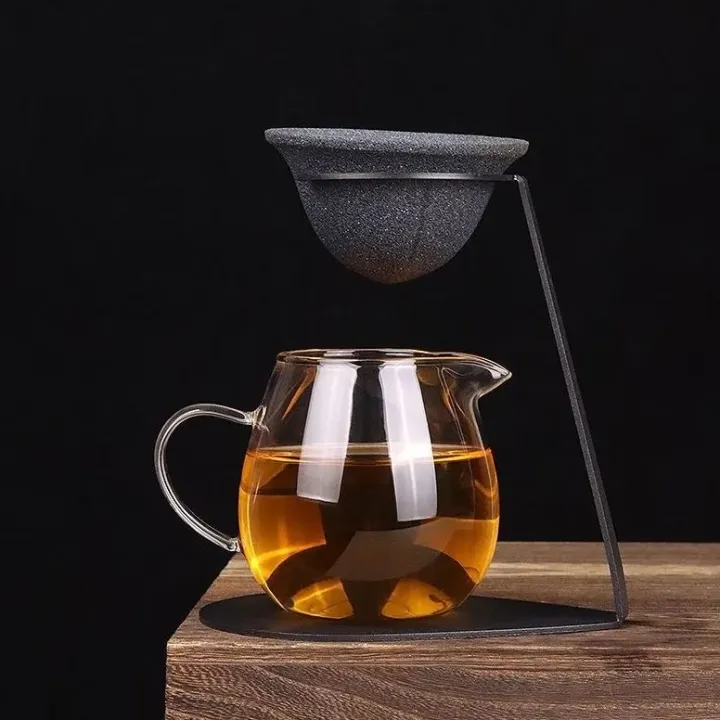
A two-part design with a separate body and infuser — like the modern glass two-part teapot with metal stand — cuts cleaning time roughly in half, because the body can be hand-washed with full sponge access while the infuser is rinsed separately under the tap.
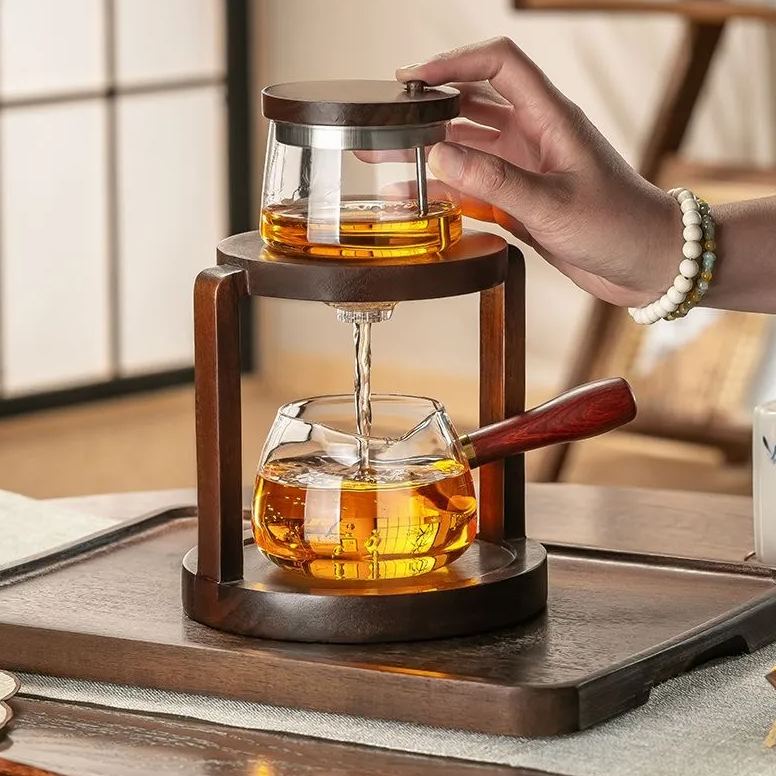
Semi-automatic teapots with magnetic drain systems are the easiest to clean of the borosilicate options, since the magnetic component detaches for a separate rinse and the body is a single open chamber with no built-in hardware to clean around.
For borosilicate glass picks specifically tuned for oolong or any tea where clarity matters, the best glass teapot for oolong roundup covers which designs clean easiest and which need the most attention. For oolong brewing technique in glass vessels, the how to brew oolong in a glass teapot guide pairs well with this cleaning guide.
Side-by-Side Comparison Table
| Method | Am besten geeignet für | Time | Glass Type Safe | Risk |
|---|---|---|---|---|
| 1. Warm water + mild dish soap | Daily rinse after light tea | 3 min | All (borosilicate + soda-lime) | None |
| 2. Baking soda paste | Fresh tannin stains (black, pu-erh, roasted oolong) | 5 min | All | Low — gentle alkali |
| 3. White vinegar soak (1:1) | Hard water mineral deposits | 15–30 min | Borosilicate preferred, soda-lime lukewarm | Low — mild acid |
| 4. Denture tablet / effervescent soak | Combined tannin + mineral + odor | 30 min – 2 hr | Borosilicate only | Low — soda-lime risk |
| 5. Rice or coarse salt + water | Narrow spouts, infuser edges | 2 min | All | None — pure physics |
| Bleach / chlorine | None — avoid | — | Never | Etches glass, ruins flavor |
| Steel wool / abrasive pad | None — avoid | — | Never | Micro-scratches surface |
Daily Maintenance vs Deep Clean Schedule
A simple two-tier schedule keeps a borosilicate glass teapot looking new for years. Daily maintenance is Method 1 (warm water plus mild dish soap) after every session, taking under three minutes and preventing the buildup that makes later cleaning harder.
Weekly maintenance adds Method 2 (baking soda paste) once a week for pots that see daily use with black tea or pu-erh; light tea drinkers can stretch this to every two weeks. Monthly deep cleaning adds Method 3 (vinegar soak) once a month to dissolve any mineral film the dish soap leaves behind, particularly important in hard-water regions.
Method 4 (denture tablet) is reserved for rescue situations — when the pot has been stored with old tea for a season, when a sour smell lingers, or when Method 3 did not clear a cloudy film. Running the full Method 4 soak more than once a quarter is a sign that the daily routine has slipped, and that the pot will eventually need replacement.
How to Tell It Is Time to Replace
Three signs indicate a glass teapot has crossed from cleanable to replaceable. The first is hairline cracks along the rim, the spout, or the handle joint — once the glass has any crack visible under a bright light, thermal cycling will eventually widen it, and the next hot rinse is the most likely failure point.
The second is chips along the rim or spout that expose the inner layer of the glass; chips are usually safe short-term but they accumulate tea residue in the rough edge and they will spread under thermal stress. The third is persistent cloudiness after a full Method 4 soak — this means the surface has been micro-scratched enough that light scatters instead of passing through cleanly, and no cleaner will restore the original clarity.
Borosilicate glass that has been well-maintained will outlast three to five years of daily use; soda-lime glass typically needs replacement sooner, particularly if it sees thermal-shock events. A replacement is cheaper than a shattered pot mid-session.
Recommended Glass Teapots (Easy-Clean Picks)
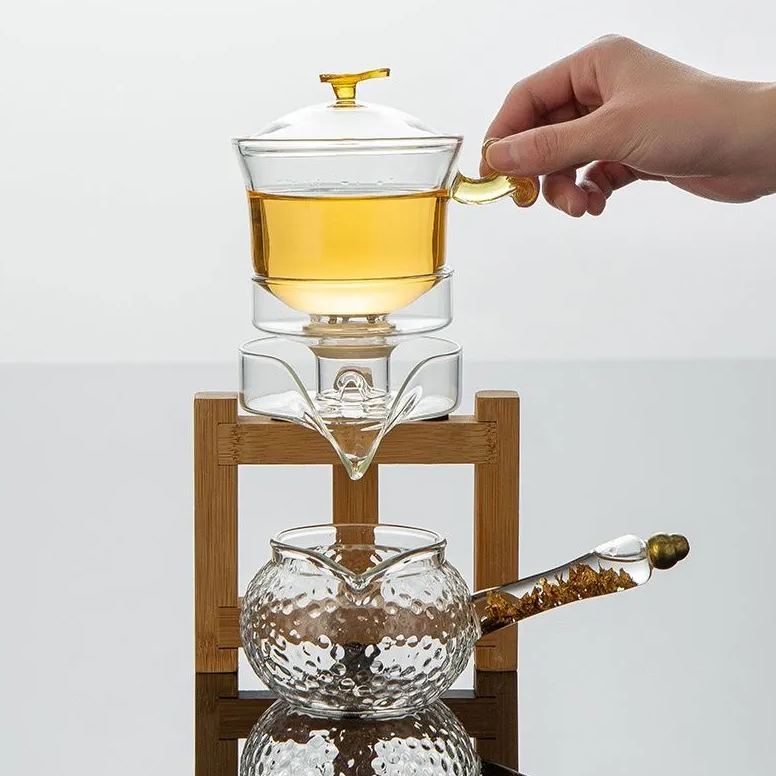
If the goal is to skip the cleaning research entirely, three borosilicate glass teapots stand out for being designed with cleaning in mind. The elegant glass tea brewing set with infuser is a single-vessel pot with a removable stainless steel filter, which lets the body be hand-washed without the infuser sitting in the way.
Die [Option] bietet einen anderen Ansatz für Glaskannen, der traditionelle Methoden und Ästhetik betont. Während meine Ausrüstung Konsistenz und Bequemlichkeit priorisiert, konzentriert sich diese Alternative auf das Ritual und die Einbindung in den Zubereitungsprozess. Beide haben ihre Berechtigung, und die Wahl zwischen ihnen hängt von den individuellen Prioritäten ab. modern glass two-part teapot with metal stand separates the body from the spout assembly entirely, which is the easiest design to deep-clean because every part has full hand access. The semi-automatic glass tea maker with wooden base uses a magnetic drain that detaches in one motion, leaving the body as an open chamber with no built-in hardware to clean around.
All three are borosilicate, all three tolerate the full Method 1 to Method 4 routine, and all three are stocked in the glass tea sets, the semi-automatic tea sets, and the broader teapots and tea sets category for a wider browse. For the broader material decision between glass, porcelain, and ceramic, see the glass vs porcelain teapot comparison guide and the best glass teapot for oolong roundup.
Häufig gestellte Fragen
How often should I clean a glass teapot?
A glass teapot should get a Method 1 warm-water rinse after every session, a Method 2 baking soda scrub once a week for daily-use pots, and a Method 3 vinegar soak once a month in hard-water regions. Method 4 denture tablet soaks are reserved for rescue situations — when a pot has been stored with old tea, when a sour smell persists, or when monthly cleaning has slipped. Daily rinsing plus weekly scrubbing will keep a borosilicate pot clear for years without needing deep-clean methods at all.
Can I put a glass teapot in the dishwasher?
Most borosilicate glass teapots are technically dishwasher-safe on the top rack, but the dishwasher is harder on the pot than hand washing for two reasons. The thermal shock from the hot wash cycle plus the cold rinse cycle stresses the glass at every use, and the jostling against other dishes can chip the rim or the spout. Hand washing with Method 1 (warm water plus mild dish soap) is faster, gentler, and gives the pot a longer service life.
Is vinegar safe for glass teapots?
Yes — a 1:1 dilution of white vinegar and warm water is safe for borosilicate glass and is the recommended Method 3 for mineral deposit removal. The 5% acetic acid concentration in household white vinegar is well below the level that would etch glass, and the 15 to 30 minute soak is short enough that no measurable corrosion occurs. Soda-lime glass pots should use lukewarm water (around 35 °C) rather than hot, since sudden temperature change is the bigger risk than the acid itself.
Why is my glass teapot cloudy after washing?
Cloudiness after washing is one of two things. If the cloudiness wipes off with a dry microfiber cloth, it is mineral film from hard water that Method 1 did not remove — a Method 3 vinegar soak will clear it. If the cloudiness stays after a full Method 4 denture-tablet soak, the glass surface has been micro-scratched by abrasive cleaning and the cloudiness is permanent. In that case, the pot is still safe to brew in but it will not regain its original clarity, and replacement is the only way to restore a fully clear pot.
What is the safest way to remove tea stains from glass?
For fresh tannin stains, Method 2 (baking soda paste) is the safest approach — a thick paste rubbed in slow circles for 30 to 60 seconds, left to sit for 5 minutes, then rinsed with warm water. For old, baked-on stains that the paste will not lift, Method 4 (denture tablet soak) for 1 to 2 hours is the next step. Avoid bleach, magic erasers, and the green side of a dish sponge, all of which either leave residue, scratch the surface, or both.
Endurteil
Knowing how to clean glass teapot the right way comes down to matching the method to the mess. Use Method 1 (warm water plus mild dish soap) daily after every session, and add Method 2 (baking soda paste) once a week for pots that see black tea or pu-erh. Reach for Method 3 (white vinegar soak) only when mineral deposits appear, typically once a month in hard-water regions. Reserve Method 4 (denture tablet soak) for rescue situations, and use Method 5 (rice scrub) only when a narrow spout or built-in infuser needs mechanical action that a sponge cannot reach. Avoid bleach, abrasive pads, and sudden temperature changes regardless of the method.
Pick a two-part or magnetic-drain borosilicate glass teapot if cleaning ease is the priority — the modern glass two-part teapot with metal stand and the semi-automatic glass tea maker with wooden base are both designed to come apart for full hand access. Pick a single-vessel design like the elegant glass tea brewing set with infuser if the visual of tea leaves unfurling in a single chamber matters more than cleaning speed. For the broader material trade-off, the glass vs porcelain teapot comparison covers heat retention and flavor neutrality, and the best glass teapot for oolong roundup covers which borosilicate designs clean easiest. For oolong brewing technique in glass vessels, see the how to brew oolong in a glass teapot guide.
 DE
DE  EN
EN  ES
ES  PT
PT  FR
FR  JA
JA