
Fairness Pitcher: Do You Need One for Better Tea Service?
Nov
Points clés à retenir
- A fairness pitcher has 2 distinct jobs in this article’s editorial framework: receive the finished infusion and distribute it. Wikipedia’s gongfu tea reference supports the underlying role: collecting the brew lets it blend before serving.
- Compare 2 layouts before buying: a freestanding receiver and a nested receiver. These are this guide’s visual categories, not a traditional ranking; the product photographs below show the difference.
- Use the 3-part capacity check in this guide’s editorial checklist: finished infusion, receiver’s usable fill level and a clear pour. No product capacity is inferred from a photograph.
- Check 2 separations: leaves from liquor, then brewer from serving vessel. This editorial check explains why a strainer alone does not replace a fairness pitcher.
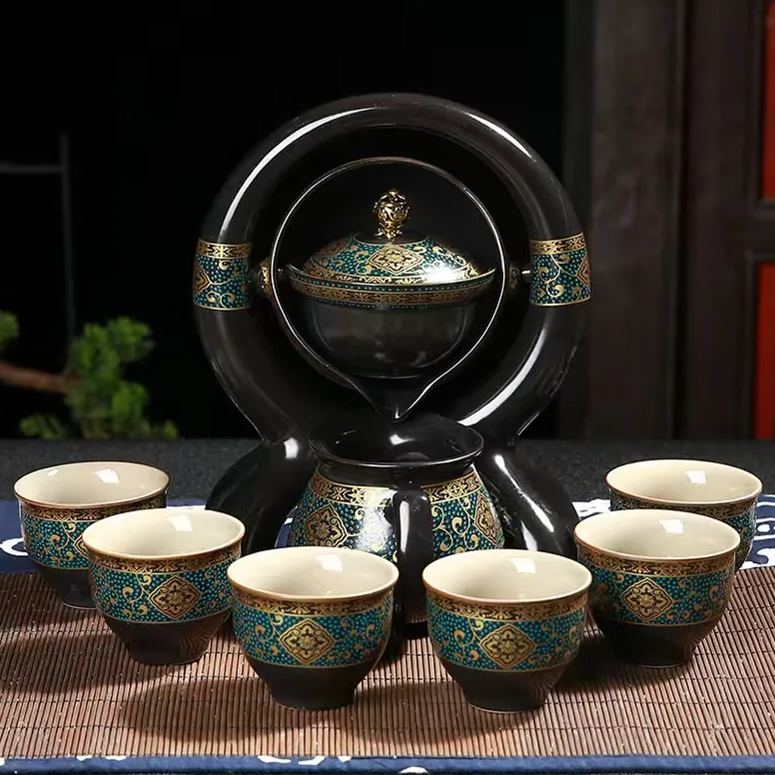
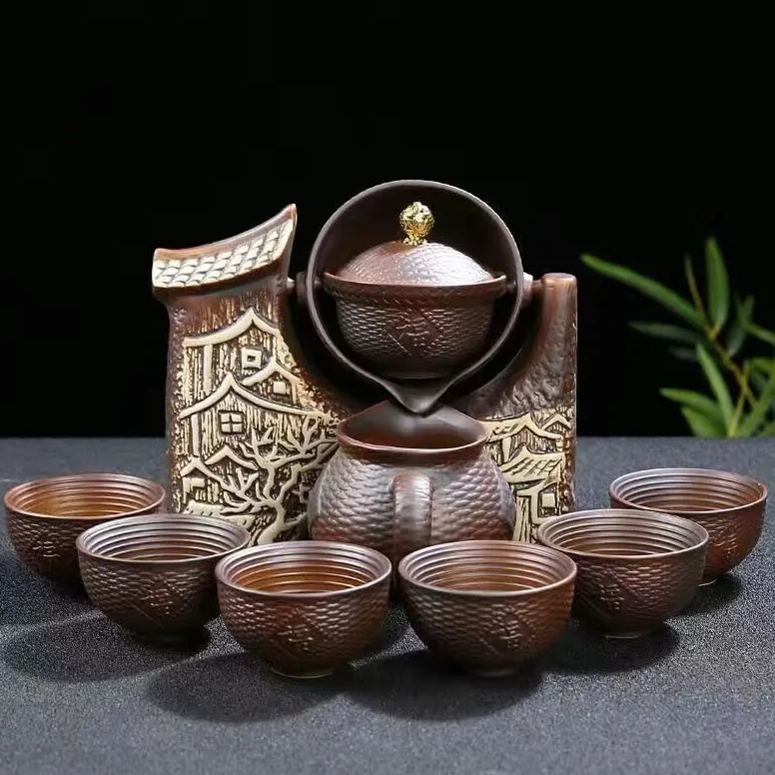
- The pictured ceramic sets show 6 cups each, per the product images. That is a photographed arrangement, not proof that any selected variant includes that quantity or holds a full round.
- Apply the 4 buying questions below: Does it receive the batch, pour comfortably, clean fully and suit your existing brewer? These are editorial checks, not laboratory performance scores.
Contents
- The missing serving step
- What the pitcher actually does
- When you need one
- Separate and nested layouts
- Capacity without guessed numbers
- Quick comparison
- Buying and care checks
- Current tea-set examples
- 常见问题解答
- Final decision
Introduction
The extra jug on a tea table can look like decoration until the brewer needs somewhere to empty a finished infusion. Small cups may not be ready, a guest may pause, or the next round may need to start. A receiving vessel solves a serving problem without asking the leaves to wait in hot water. That is the practical starting point for choosing a fairness pitcher.
The useful question is not whether a complete tea table ought to include one. It is whether the tea can leave the brewing chamber at the right moment and reach the drinking cups in a way that suits the session. A removable infuser may already solve the leaf-contact problem. A separate jug may still make sharing easier. Conversely, adding another vessel to a solo routine may create washing without adding a useful function.
This guide treats the fairness pitcher as a piece of serving equipment, not a promise of better taste. It compares independent and nested receivers, explains how to check their usable capacity, and uses current product photographs to show what listings do and do not establish. The recommendations are editorial judgements based on documented functions and visible layouts, not hands-on tests.
What a Fairness Pitcher Actually Does
In Wikipedia’s gongfu tea reference, the tea pitcher is also called a fairness cup, gongdao bei or cha hai. The reference describes it as holding tea after brewing and explains that decanting into a pitcher before serving helps guests receive tea of the same strength. It also notes that the liquid can blend into a more uniform composition. Those are the functions used here; the name is not a guarantee about every pour.
A fairness pitcher receives a completed infusion before that infusion is divided. This separates a brewing decision from a serving decision. You can finish draining the brewer while cups are being moved or while deciding how much each guest wants. It does not require every guest to receive the same quantity, only that the tea being distributed comes from the collected batch.
Receiving Is Not Filtering
A strainer catches leaf particles passing through it. A receiver holds liquid. Those functions can occur together when a strainer rests over the pitcher, but neither proves the other. The Wikipedia infuser reference notes that larger infuser holes may allow fragments through and require a strainer. Adding a fairness pitcher does not change the filter aperture or make cloudy tea automatically clear.
Keep the leaf-containing chamber out of contact with the collected liquor when the design permits. If an insert remains immersed, calling the outer vessel a serving pitcher does not by itself end infusion. Look at where the water sits after draining rather than trusting the product’s name. A photograph may show separate spaces but cannot prove how a valve works under everyday use.
This is why the 2-job distinction in the opening editorial framework matters: receiving the batch is not the same action as brewing it. A vessel can perform both roles in sequence, but the transition must be clear. The fairness pitcher is useful when that transition gives you control rather than simply another attractive object on the table.
When You Need One—and When You Can Skip It
A fairness pitcher earns its place when the brewer should empty before all the drinking cups can receive the batch. That is common in shared sessions, but the number of guests is not the deciding factor. What matters is the mismatch between the brewing vessel, the available cups and the moment you want leaf contact to end.
It can also help a solo drinker who uses a small cup and wants the full infusion out of the brewer before taking a sip. The receiver holds what will be served next. This is a workflow preference, not a rule that solo drinkers need a complete gongfu set. An existing heat-suitable pouring jug may perform the same receiving task if it is clean, stable and intended for the liquid’s temperature.
Skip the Extra Vessel If Its Job Is Already Done
If the infuser lifts out completely and all the brewed tea fits comfortably in your drinking cup, a fairness pitcher may add no necessary step. You have already separated leaves from water and have somewhere to hold the finished drink. Keep that simpler routine unless sharing, cup size or your preferred table layout gives the receiver another job.
Likewise, an outer serving pitcher in a nested brewer may already supply the receiving function. Buying another jug just because a traditional equipment list includes one can duplicate what you own. The teapot versus mug workflow guide compares the wider brewing-and-drinking decision; the narrower question here is whether a dedicated intermediate receiver is still missing.
Do not buy a fairness pitcher to rescue incorrect leaf quantity, water temperature or steeping time. It cannot reverse an over-steeped batch or standardize different teas without a controlled method. Its contribution is handling the infusion after you choose to finish brewing. Treat that practical improvement separately from any claim about taste.
Compare Separate and Nested Receiving Layouts
The 2 layouts below are this guide’s editorial visual categories, not a claim that all tea equipment fits neatly into them. A freestanding fairness pitcher sits apart from the brewing vessel. A nested arrangement places the leaf chamber inside or above an outer receiving jug. Both can provide a place for finished tea; their handling and cleaning trade-offs differ.
A separate receiver can often be used with an existing brewer, provided the outlet clears its rim and the receiver holds the intended batch. It can move to another part of the table while the brewing vessel stays in place. The trade-off is another independent item to position, wash and store. Compatibility has to be checked rather than assumed from matching colours.
What a Nested Receiver Changes
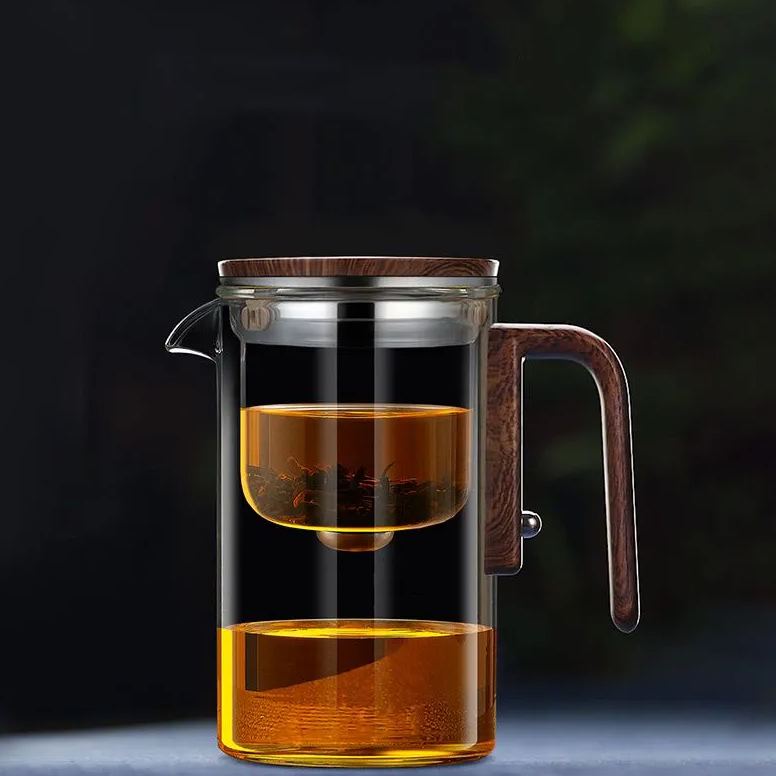
In a nested design, the fairness pitcher role belongs to the outer vessel once the tea has left the leaf chamber. This can keep the serving path compact, but the chamber may need to move before a comfortable pour. Confirm where the wet insert goes, whether its base drips when removed and whether the maker describes the intended handling sequence.
Do not infer automatic timing from a release button, lid or the phrase semi-automatic. A device may assist transfer without deciding when to stop brewing. The Wikipedia teapot reference describes the usual brewing vessel and its serving spout; product-specific control claims still require instructions. The fairness pitcher role says where finished tea goes, not who controls the clock.
Choose between the layouts by following the whole movement: fill, steep, drain, set down the wet part, then serve. The better fairness pitcher arrangement is the one whose awkward moment you can manage comfortably. This is an editorial ergonomics check, not evidence that a nested design is universally easier or that a separate jug pours better.
Check Capacity Without Guessing Product Specifications
The fairness pitcher must accommodate the infusion you intend to decant, with enough room to handle and pour without filling to the lip. Nominal vessel capacity and comfortable working capacity are not interchangeable. A listing that gives only an overall size cannot establish the volume left after a nested chamber occupies part of the outer jug.
Use the 3-part capacity check from this article’s editorial checklist. First, establish the finished batch you actually want to collect. Next, find the receiver’s stated usable capacity or ask the seller to confirm it. Finally, check that the receiving position and pouring motion remain workable at that fill level. These checks replace guessed recommendations, not create a universal headroom percentage.
A fairness pitcher does not have to match a teapot’s advertised maximum volume. The useful comparison is the liquid that will actually leave your normal brew against the receiver’s verified working volume. Leaves occupy space and your preferred fill level may be below the rim. Do not convert either observation into an invented product specification.
Use Cool Water to Check Fit After Delivery
Before using a new setup with hot tea, a cool-water rehearsal can reveal whether the receiver fits beneath the outlet and whether the planned batch approaches the rim. This editorial fit check is not a heat-safety test and cannot establish thermal-shock resistance. Follow the maker’s material and temperature guidance before hot use, especially when the listing provides no glass grade.
Check the fairness pitcher while lifting it as well as while it sits on the table. A handle may leave little finger room beside a stand, or an upper chamber may obstruct the tilt needed to serve. Ask for the actual receiver and brewer measurements when clearance is uncertain. A styled product photograph is not a scale drawing.
Quick Comparison: Which Receiving Setup Fits?
This table is an editorial comparison of tasks, not a laboratory ranking. Its 6 checks correspond to the choices discussed above and below. Read the entire receiving-and-serving path rather than looking for an overall winner. A fairness pitcher that solves sharing can still be unnecessary beside a single drinking cup with a removable infuser.
| Check. | Separate receiver. | Nested receiver. | Buying decision. |
|---|---|---|---|
| Receiving the infusion. | A separate jug receives the drained batch. | An outer jug receives tea from its inner chamber. | Confirm the working fill level. |
| Sharing finished tea. | The receiver can move away from the brewer. | Serving may require moving the wet inner part. | Check the intended handling sequence. |
| Matching existing equipment. | Outlet height and jug clearance matter. | Parts are designed as a linked arrangement. | Do not assume cross-brand fit. |
| Seeing the liquor. | Depends on the receiver’s actual wall material. | Depends on the outer jug and inner chamber. | A clear wall shows colour, not strength by measurement. |
| Cleaning and drying. | A separate jug has its own rim and interior. | Nested parts add contact surfaces to inspect. | Follow the supplied disassembly instructions. |
| Buying another receiver. | Useful if your brewing setup lacks somewhere to drain. | May duplicate the outer jug’s existing job. | Buy for a missing function, not a checklist. |
Four Buying Questions, Plus Care Checks
Use these 4 buying questions as this article’s editorial checklist: Can the fairness pitcher receive your batch? Can you grip and pour it comfortably? Can you reach and clean its food-contact surfaces? Does it work with the brewer you already own? A convincing answer needs specifications, clear photographs or instructions, not just a decorative product name.
Start with the handle and rim. Photographs can show where a handle sits and whether the mouth is open, but they cannot prove how hot the grip gets or how the spout behaves with your normal fill. Avoid turning visible shape into a drip-free guarantee. If those qualities matter, ask for the maker’s operating guidance and return terms before ordering.
Next, check what is included. A photograph may show a fairness pitcher beside many cups without establishing the contents of the selected variant. The pictured ceramic arrangements here each show 6 cups, per the product images. That visible count is evidence about the scene only; confirm the selected set’s contents and whether the receiver can hold your intended round.
Clean the Receiver as a Food-Contact Vessel
A fairness pitcher is not merely a display accessory. Empty finished tea after use, clean it by the manufacturer’s method and let the parts dry before storage. Inspect the rim, handle attachment and any surfaces under a nested insert. Do not prescribe an acid soak or abrasive cleaner without knowing the material and care instructions.
Visible staining is a different question from cracks, chips or a damaged release component. Stop using damaged pieces and seek a compatible replacement rather than attempting an improvised repair on a hot-liquid vessel. The glass teapot cleaning guide addresses cleaning as its own topic; it is not proof that every decorative surface or nested mechanism tolerates the same treatment.
Current Tea-Set Examples, Not Standalone Jug Picks
If you want to skip the manual research, start by looking at the receiving layout within a complete set. The examples below are listed as in stock and purchasable in the current catalogue API check. They illustrate fairness pitcher configurations, not a claim that this shop sells a separate universal replacement jug. Confirm the selected variant and specifications before ordering.
L' semi-automatic pouring gongfu tea set in multiple colours is the separate-receiver example pictured above. Image 290 shows a handled jug beneath a ring-mounted ceramic brewing bowl. Choose it for further investigation if you want a receiver that is visibly separate from the brewer. The photograph alone cannot establish safe working volume, handling temperature or whether the mechanism suits your reach.
L' semi-automatic teapot with nested glass chamber illustrates an outer receiver around an inner leaf chamber. Image 283 shows the spout and handle of the outer pitcher, plus collected tea below the insert. Consider it if you prefer an integrated arrangement, but ask how to remove or position the wet chamber before serving. Do not add another fairness pitcher until you know which job remains unsolved.
L' automatic pouring ceramic gongfu tea set provides another distinct-receiver layout. Image 381 shows a dark, textured jug below the elevated brewer and a decorative architectural stand. The receiver’s independence is visible; the listing name does not prove automatic timing. Confirm how the brewing bowl releases and how the receiver can be removed when full.
Browse ceramic tea sets with visible receiving arrangements for separate receivers, semi-automatic tea sets with assisted transfer to compare the whole serving path, or glass tea sets for a view of the collected liquor when visibility matters. These collections are browsing routes, not evidence that every item includes the same fairness pitcher.
Once you choose the equipment, the gongfu tea set operating guide covers the wider brewing sequence. This page deliberately stops short of repeating its leaf ratios and steeping schedules. Its decision is whether a fairness pitcher is missing, which receiving layout fits and what still needs confirmation before purchase.
Questions Fréquemment Posées
Is a Fairness Pitcher the Same as a Teapot?
Not by function. A teapot normally holds leaves while they brew; a fairness pitcher receives the finished infusion for serving. Some nested designs combine those roles in the same overall product, but the leaf chamber and the receiving space still do different jobs. Look at where the leaves remain after draining. The name on a listing does not prove that the outer vessel can safely serve while the inner chamber stays in place.
Do You Need One When Brewing Alone?
Only if it solves a real receiving or serving problem. A fairness pitcher can hold the full infusion while you drink from a smaller cup, or free the brewing vessel for another round. If all the tea fits in your drinking cup and the infuser lifts clear, you may not need it. Choose by the actual path from leaves to cup rather than by an assumed requirement to complete a traditional table.
Can Any Small Jug Replace It?
A suitable jug can perform the receiving role, but suitability requires more than a spout. Check that it is intended for the beverage temperature, holds the intended batch comfortably and fits the brewer’s outlet. A milk jug or decorative vessel is not automatically heat-suitable. The fairness pitcher label itself is not a safety certification either. Use the maker’s instructions and avoid guessing material properties from transparency, weight or appearance.
Does It Make Every Cup Exactly the Same?
Collecting an infusion before distributing it helps blend that batch, as the gongfu reference explains. It does not guarantee identical temperature, volume or sensory experience in every cup. Cup size, serving delay and handling still differ. A fairness pitcher is best understood as a practical way to share a collected infusion, not a precision measuring device or evidence that a particular set produces objectively better-tasting tea.
Should the Receiver Have Its Own Strainer?
That depends on the particles you want to catch and the existing brewing chamber. A fairness pitcher holds tea; a strainer catches fragments. If the brewer already retains the leaves adequately for your preference, another strainer may add little. If fragments pass through, a suitable separate strainer can sit in the transfer path. Check the rim fit and cleaning access rather than assuming the receiver’s shape tells you its filtration performance.
Final Verdict: Buy for the Missing Function
Choose a separate fairness pitcher if you need somewhere to collect the full infusion, move finished tea away from the brewer or serve several cups from the same batch. Choose an integrated outer receiver if its handling sequence already provides those functions without an extra jug. Skip the purchase if removing your infuser leaves all the finished tea comfortably in the drinking vessel you actually use.
The deciding checks are usable receiving capacity, outlet clearance, a comfortable pouring path and care instructions you can follow. Those are this guide’s editorial criteria, not measured product rankings. The photographs establish that receiving vessels exist in the illustrated arrangements; they do not establish thermal properties, exact volume or drip-free performance. Ask for missing specifications rather than filling the gaps with assumptions.
For a visibly separate receiver, begin with the ceramic arrangements above. For a compact nested receiver, inspect the glass example’s wet-chamber handling before buying. The right fairness pitcher is the one that removes a serving bottleneck without creating another, and the ceramic tea set collection is the starting point for comparing the independent layouts shown here.
Sources and Editorial Limits
Wikipedia’s gongfu tea reference supports the tea pitcher’s receiving and blending role. The Wikipedia infuser reference distinguishes leaf retention from added straining; the Wikipedia teapot reference describes the brewing vessel. Current product API records and visually checked gallery images support the pictured layouts only. No hands-on testing, taste comparison, measured heat retention or unstated product specification is claimed.
 FR
 EN
 DE
 ES
 PT
 JA